| Ultimi arrivi |

Titan-N00188978-86-MF-EB-LXTT-IPF-2.jpgPossible Aurora at Titan (Superdefinition and Absolute Natural Colors; credits for the additional process. and color.: Elisabetta Bonora and Marco Faccin/Lunexit Team)86 visitenessun commentoMareKromiumMag 30, 2012
|
|

Titan-W00074172-79-CB3Filter-MF-EB-LXTT-IPF.jpgFull Titan (Superdefinition and Enhanced Natural Colors; credits for the additional process. and color.: Elisabetta Bonora and Marco Faccin/Lunexit Team)81 visitenessun commentoMareKromiumMag 30, 2012
|
|

Titan-N00188978-86-MF-EB-LXTT-IPF-1.jpgPossible Aurora at Titan (Superdefinition; credits for the additional process. and color.: Elisabetta Bonora and Marco Faccin/Lunexit Team)82 visitenessun commentoMareKromiumMag 30, 2012
|
|

ESP_025665_1825-PCF-LXTT-00.jpgUnnamed Crater with Layers of Water-deposited Sediments (CTX Frame - Absolute Natural Colors; credits for the additional process. and color.: Dr Paolo C. Fienga - Lunexit Team)79 visiteMars Local Time: 14:56 (Early Afternoon)
Coord. (centered): 2,317° North Lat. and 307,960° East Long.
Spacecraft altitude: 269,9 Km (such as about 168,7 miles)
Original image scale range: 54,0 cm/pixel (with 2 x 2 binning) so objects ~ 1 mt and 62 cm across are resolved (with 4 x 4 binning)
Map projected scale: 50 cm/pixel
Map projection: EQUIRECTANGULAR
Emission Angle: 2,3°
Sun - Mars - MRO (or "Phase") Angle: 48,9°
Solar Incidence Angle: 47° (meaning that the Sun is about 43° above the Local Horizon)
Solar Longitude: 58,1° (Northern Spring/Southern Fall)
Credits: NASA/JPL/University of ArizonaMareKromiumMag 30, 2012
|
|

ESP_025646_1440-PCF-LXTT-00.jpgIcy Flows (Absolute Natural Colors; credits for the additional process. and color.: Dr Paolo C. Fienga - Lunexit Team)77 visiteMars Local Time: 15:06 (Early Afternoon)
Coord. (centered): 35,452° South Lat. and 112,094° East Long.
Spacecraft altitude: 253,5 Km (such as about 158,5 miles)
Original image scale range: 50,7 cm/pixel (with 2 x 2 binning) so objects ~ 1 mt and 52 cm across are resolved (with 4 x 4 binning)
Map projected scale: 50 cm/pixel
Map projection: EQUIRECTANGULAR
Emission Angle: 4,8°
Sun - Mars - MRO (or "Phase") Angle: 69,0°
Solar Incidence Angle: 72° (meaning that the Sun is about 18° above the Local Horizon)
Solar Longitude: 57,5° (Northern Spring/Southern Fall)
Credits: NASA/JPL/University of ArizonaMareKromiumMag 30, 2012
|
|
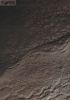
ESP_025680_1350-PCF-LXTT-01.jpgUnnamed Crater with "Pedestal" in Terra Cimmeria (EDM - Absolute Natural Colors; credits for the additional process. and color.: Dr Paolo C. Fienga - Lunexit Team)85 visiteMars Local Time: 15:08 (Early Afternoon)
Coord. (centered): 44,814° South Lat. and 264,976° East Long.
Spacecraft altitude: 247,7 Km (such as about 154,8 miles)
Original image scale range: 49,6 cm/pixel (with 2 x 2 binning) so objects ~ 1 mt and 49 cm across are resolved (with 4 x 4 binning)
Map projected scale: 50 cm/pixel
Map projection: EQUIRECTANGULAR
Emission Angle: 0,3°
Sun - Mars - MRO (or "Phase") Angle: 79,1°
Solar Incidence Angle: 79° (meaning that the Sun is about 11° above the Local Horizon)
Solar Longitude: 58,6° (Northern Spring/Southern Fall)
Credits: NASA/JPL/University of ArizonaMareKromiumMag 26, 2012
|
|
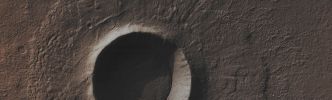
ESP_025680_1350-PCF-LXTT-00a.jpgUnnamed Crater with "Pedestal" in Terra Cimmeria (CTX Frame - Absolute Natural Colors; credits for the additional process. and color.: Dr Paolo C. Fienga - Lunexit Team)92 visiteMars Local Time: 15:08 (Early Afternoon)
Coord. (centered): 44,814° South Lat. and 264,976° East Long.
Spacecraft altitude: 247,7 Km (such as about 154,8 miles)
Original image scale range: 49,6 cm/pixel (with 2 x 2 binning) so objects ~ 1 mt and 49 cm across are resolved (with 4 x 4 binning)
Map projected scale: 50 cm/pixel
Map projection: EQUIRECTANGULAR
Emission Angle: 0,3°
Sun - Mars - MRO (or "Phase") Angle: 79,1°
Solar Incidence Angle: 79° (meaning that the Sun is about 11° above the Local Horizon)
Solar Longitude: 58,6° (Northern Spring/Southern Fall)
Credits: NASA/JPL/University of ArizonaMareKromiumMag 26, 2012
|
|
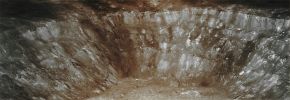
LRO-2500-Aristarchus_Crater_Wall-LROC_2000-PCF-LXTT.jpgFeatures of Aristarchus Crater (Absolute Natural Colors; credits for the additional process. and color.: Dr Paolo C. Fienga - Lunexit Team)162 visiteAristarchus is a prominent Lunar Impact Crater that lies in the North/Western portion of the Moon's Near Side. It is considered the brightest of the large formations on the Lunar Surface, with an Albedo that is nearly two times brighter that the one of most of the Lunar Features. In fact, Aristrachus is bright enough to be visible to the naked eye, and it becomes dazzling in a large telescope. It is also relatively easy to identify when most of the Lunar Surface is illuminated by the Earthshine.
This Crater lies at the South/Eastern Edge of the Aristarchus Plateau: an elevated rocky rise located within the Oceanus Procellarum and that contains a number of Volcanic Features and that is also well known for the occurrence of a large number of reported Transient Lunar Phenomena (or TLP), as well as for very recent emissions of Radon Gas (emission which were duly registered and measured by the Lunar Prospector Spacecraft). As additional reference points, we remind you that Aristarchus Crater is located just to the East of the Crater Herodotus and the Vallis Schröteri, and South of a system of narrow Sinuous Rilles named Rimae Aristarchus. Probably, the main reason for Aristarchus' brightness is that it is a (relatively, of course) young formation (such as approximately 450 Million Years old) and so the Solar Wind has not yet had enough time to darken the excavated material via the process known as "Space Weathering". The impact which created Aristarchus likely occurred after the creation of the Rayed Crater Copernicus, but some time before the appearance of the Crater Tycho.
Aristarchus was originally named after the Greek Astronomer Aristarchus of Samos, by the Italian map maker Giovanni Riccioli. His work "Almagestum Novum", published in 1651, gave to the, in that time known "spot-shaped telescopic features" (such as the Impact Craters) the eponyms of famous Astronomers and Philosophers. Although the name of Aristarchus Crater has always been widely accepted and adopted, it actually did not become "official" (from an International point of view), until the International Astronomical Union (IAU) so decided to name it, during a General Assembly that was taken in the AD 1935.
As we already wrote hereabove, the Region of the Aristarchus Plateau (and the Crater Aristarchus in particular) has been (and still is) the site of many reported Transient Lunar Phenomena, with a total of 122 reports by the AD 2007: the highest recorded for any Lunar Feature.
Such a TLPs include, among others, Temporary Obscurations and Colorations of the Surface; the appearence of Star-like Shinings (either fixed or slightly moving) as well as isolated Flashes of Red, Blue or even Green light. Official Catalogues mentioning these TLPs show that more than one-third of the most reliable observations came from Aristarchus Crater and its immediate surroundings.
In 1971, when the NASA Apollo 15 Spacecraft passed at about 110 Km from the Surface of the Aristarchus Plateau, a significant rise in Alpha Particles was detected and these particles are thought to be caused by the presence of huge amounts, in the area, of Radon-222: a radioactive and colorless Noble Gas that forms naturally during and as part of the normal Decay Chain of Uranium or Thorium; the Radon -222 possesses a so-called "half-life" of only 3,8 days.
The Lunar Prospector Mission later confirmed Radon-222 emissions from Aristarchus. Some of these fascinating (and still not totally understood) observations could be explained by the occurrence of discrete Explosive Events (Outgassings).MareKromiumMag 21, 2012
|
|

ESP_026378_1730-PCF-LXTT-01.jpgFeatures of West Candor Chasma (EDM - Absolute Natural Colors; credits for the additional process. and color.: Dr Paolo C. Fienga - Lunexit Team)135 visiteMars Local Time: 15:13 (early afternoon)
Coord. (centered): 6,733° South Lat. and 284,485° East Long.
Spacecraft altitude: 266,6 Km (such as about 166,6 miles)
Original image scale range: 26,7 cm/pixel (with 1 x 1 binning) so objects ~ 80 cm across are resolved (with 4 x 4 binning)
Map projected scale: 25 cm/pixel
Map projection: EQUIRECTANGULAR
Emission Angle: 9,8°
Sun - Mars - MRO (or "Phase") Angle: 50,0°
Solar Incidence Angle: 57° (meaning that the Sun is about 33° above the Local Horizon)
Solar Longitude: 82,4° (Northern Spring)
Credits: NASA/JPL/University of Arizona
Additional process. and coloring: Lunar Explorer ItaliaMareKromiumMag 21, 2012
|
|

OPP-SOL2927-2928-MF-EB-LXTT-IPF.jpgThe Surface of Meridiani Planum - Sol 2927 AND 2928 (Enhanced Natural Colors; credits for the additional process. and color.: Elisabetta Bonora and Marco Faccin - Lunexit Team)120 visitenessun commentoMareKromiumMag 20, 2012
|
|

Dione-EB-MF-LXTT-IPF-2.jpgDione (Enhanced Natural Colors; credits for the additional process. and color.: Elisabetta Bonora and Marco Faccin)107 visitenessun commentoMareKromiumMag 20, 2012
|
|

Titan-MF-EB-LXTT-IPF.jpgThe Atmosphere of Titan (an Image-Mosaic by Elisabetta Bonora and Marco Faccin - Lunexit Team)135 visitenessun commentoMareKromiumMag 20, 2012
|
|
| 25353 immagini su 2113 pagina(e) |
 |
|
|
|
|
109 | |
|
|
|
|





