| |
| Ultimi arrivi |

LRO-Mare_Ingenii-M191830503LR-PCF-LXTT-IPF.jpgFeatures of Mare Ingenii (Absolute Natural Colors; credits for the additional process. and color.: Dr Paolo C. Fienga - Lunexit Team)141 visiteDear Friends, shall we go back to the Moon! The answer, of course, is "Yes", but...How? Well, since (apparently) there are no human missions planned in the very near Future (and for the time being), in order to do so (and possibly a little earlier than the AD 2025...), we decided to offer you, in Today's APOD, a really suggestive and impressive photographic panorama of the Lunar Mare Ingenii (such as the "Sea of Ingenuity") that was obtained by the NASA - Lunar Reconnaissance Orbiter.
Mare Ingenii is one of the few Lunar "Mare-like" Surface Features that is located in the so-called Far (or either "Dark") Side of the Moon. As a matter of fact, this Mare sits in the Ingenii Basin, whose material (according to some Planetary Scientists) can be related to the Pre-Nectarian Epoch or Period (note that the so-called Pre-Nectarian Period of the Lunar Geologic Timescale, runs from approx. 4,5 Billion Years ago - such as the time of the alleged formation of the Moon - to about 3,9 Billion Years ago, when the Nectaris Impact Basin formed after the occurrence of a large Meteor Strike); however, the Surface Material located in the Mare Ingenii itself, as well as in the Impact Craters which are immediately surrounding it, seems to relate, instead, to the Late Imbrian Epoch (remember that the Late Imbrian Epoch occurred, on the other hand, between approx. 3,8 to about 3,2 Billion Years ago and it is believed to be the Lunar Epoch during which the Mantle existing below the Major Lunar Impact Basins partially melted, and so filled them up with - mostly - Basalt).
The Dark Circular Surface Feature which dominates the Mare Ingenii is the Impact Crater named Thomson (a Crater that is approx. 112 Km in diameter). The Mare Ingenii also appears to be unevenly and thinly covered by a Layer of Lava (a fact, this one, which leads us to believe, once again, that the very distant past of the Moon was characterized by an almost continuous and, somehow, extraordinary violent Volcanic Activity, which was likely caused - if not entirely, at least for a very large part - by the occurrence of some powerful Tidal Stress which we believ that can be related to the action of the Earth itself). Furthermore, the Mare Ingenii contains one of the very few "Lunar (Collapse) Pits" which have so far been located on the Moon (but, anyway and for sake of clarity, just one of the VERY MANY Collapse Features located outside our Home Planet Earth).
The frame has been colorized in Absolute Natural Colors (such as the colors that a normal - meaning "in average" - human eye would actually perceive if someone were onboard the NASA - Lunar Reconnaissance Orbiter and then looked outside, towards the Surface of the Moon), by using an original technique created - and, in time, dramatically emproved - by the Lunar Explorer Italia Team.
MareKromiumGiu 23, 2012
|
|

Hyperion-PIA07740-PCF-LXTT-IPF.jpgFeatures of Hyperion (CTX and EDM Frames in Absolute Natural Colors; credits for the additional process. and color.: Dr Paolo C. Fienga - Lunexit Team)113 visiteThese beautiful Absolute Natural Color views of the Saturnian moon Hyperion reveal crisp details across the strange, tumbling moon's Surface. Differences in color represent differences in the composition of the Surface Materials; both views (CTX Frame and EDM) were obtained during the Cassini's close Fly-By that occurred on September, 26, 2005.
The images were taken by the NASA - Cassini Spacecraft's narrow-angle camera at a distance of approx. 62.000 Km (about 38.500 miles) from Hyperion and at a Sun-Hyperion-Cassini Angle (a.k.a. "Phase Angle") of 52°. The image scale is 362 mt (about 1200 feet) per pixel.
These two frames have been colorized in Absolute Natural Colors (such as the colors that a human eye would actually perceive if someone were onboard the NASA - Cassini Spacecraft and then looked outside, towards the Saturnian moon Hyperion), by using an original technique created - and, in time, dramatically emproved - by the Lunar Explorer Italia Team.MareKromiumGiu 23, 2012
|
|

as15-87-11849-0.jpgAS 15-87-11849 - Surface Anomaly? (Extremely Enhanced Natural Colors; credits for the additional process. and color.: Dr Paolo C. Fienga - Lunar Explorer Italia/Italian Planetary Foundation)174 visitenessun commentoMareKromiumGiu 16, 2012
|
|

as15-87-11849-1.jpgAS 15-87-11849 - Surface Anomaly? (Extremely Enhanced Natural Colors; credits for the additional process. and color.: Dr Paolo C. Fienga - Lunar Explorer Italia/Italian Planetary Foundation)135 visitenessun commentoMareKromiumGiu 16, 2012
|
|

as15-87-11849-2.jpgAS 15-87-11849 - Surface Anomaly? (Extremely Enhanced Natural Colors; credits for the additional process. and color.: Dr Paolo C. Fienga - Lunar Explorer Italia/Italian Planetary Foundation)206 visite...ebbene, per quanto assurdo possa sembrare, l'oggetto che - APPARENTEMENTE - aveva causato un artefatto da (cosiddetta) "sovrasaturazione", potrebbe anche essere il risultato di un difetto della pellicola e cioè, nella fattispecie, la presenza di un piccolo buco (sfrangiato, simile ad una sorta di bruciatura chimica) sulla medesima. Purtroppo la NASA, da noi interpellata in passato sulla natura del dettaglio (che ritenevamo essere un oeggetto reale), non si è MAI pronunciata. Peccato. Soprattutto per loro...MareKromiumGiu 16, 2012
|
|

as15-87-11849-4.jpgAS 15-87-11849 - Surface Anomaly? (False Colors; credits for the additional process. and color.: Dr Paolo C. Fienga - Lunar Explorer Italia/Italian Planetary Foundation) 157 visiteIl dettaglio è effettivamente intrigante, ma la nostra opinione (maturata attraverso l'esperienza e la comparazione fra questa immagine ed altre similari che riprendono lo stesso scorcio) è che la "Columnar Feature" - conficcata nella coliina più distante rispetto all'Osservatore e che sembra proiettare un'ombra scura e definita - non è altro che un artefatto fotografico di un qualche tipo (probabilmente un vizio fisico del negativo - eventualità, quest'ultima, assai ricorrente nelle immagini della Serie "Apollo"). MareKromiumGiu 16, 2012
|
|
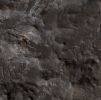
ESP_025296_1535-PCF-LXTT-02-B.jpgExposed "Uplifted" Bedrock (CTX Frame "D" - Absolute Natural Colors; credits for the additional process. and color.: Elisabetta Bonora and Marco Faccin - Lunexit Team)136 visiteMars Local Time: 14:54 (early afternoon)
Coord. (centered): 26,3° South Lat. and 305,2° East Long.
Spacecraft altitude: 255,8 Km (such as about 159,9 miles)
Original image scale range: 25,6 cm/pixel (with 1 x 1 binning) so objects ~ 77 cm across are resolved
Map projected scale: 25 cm/pixel
Map projection: EQUIRECTANGULAR
Emission Angle: 1,2°
Sun - Mars - MRO (or "Phase") Angle: 62,0°
Solar Incidence Angle: 61° (meaning that the Sun is about 29° above the Local Horizon)
Solar Longitude: 45,4° (Northern Spring)
Credits: NASA/JPL/University of Arizona
Additional process. and coloring: Lunar Explorer Italia MareKromiumGiu 01, 2012
|
|
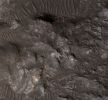
ESP_025296_1535-PCF-LXTT-02-A.jpgExposed "Uplifted" Bedrock (CTX Frame "C" - Absolute Natural Colors; credits for the additional process. and color.: Elisabetta Bonora and Marco Faccin - Lunexit Team)128 visiteMars Local Time: 14:54 (early afternoon)
Coord. (centered): 26,3° South Lat. and 305,2° East Long.
Spacecraft altitude: 255,8 Km (such as about 159,9 miles)
Original image scale range: 25,6 cm/pixel (with 1 x 1 binning) so objects ~ 77 cm across are resolved
Map projected scale: 25 cm/pixel
Map projection: EQUIRECTANGULAR
Emission Angle: 1,2°
Sun - Mars - MRO (or "Phase") Angle: 62,0°
Solar Incidence Angle: 61° (meaning that the Sun is about 29° above the Local Horizon)
Solar Longitude: 45,4° (Northern Spring)
Credits: NASA/JPL/University of Arizona
Additional process. and coloring: Lunar Explorer Italia MareKromiumGiu 01, 2012
|
|

ESP_025665_1825-PCF-LXTT-01.jpgUnnamed Crater with Layers of Water-deposited Sediments (EDM - Absolute Natural Colors; credits for the additional process. and color.: Dr Paolo C. Fienga - Lunexit Team)129 visiteMars Local Time: 14:56 (Early Afternoon)
Coord. (centered): 2,317° North Lat. and 307,960° East Long.
Spacecraft altitude: 269,9 Km (such as about 168,7 miles)
Original image scale range: 54,0 cm/pixel (with 2 x 2 binning) so objects ~ 1 mt and 62 cm across are resolved (with 4 x 4 binning)
Map projected scale: 50 cm/pixel
Map projection: EQUIRECTANGULAR
Emission Angle: 2,3°
Sun - Mars - MRO (or "Phase") Angle: 48,9°
Solar Incidence Angle: 47° (meaning that the Sun is about 43° above the Local Horizon)
Solar Longitude: 58,1° (Northern Spring/Southern Fall)
Credits: NASA/JPL/University of Arizona MareKromiumGiu 01, 2012
|
|

ESP_025715_2605-PCF-LXTT.jpgNorth Polar Layers in Springtime (Darkened Absolute Natural Colors; credits for the additional process. and color.: Dr Paolo C. Fienga/Lunexit Team)136 visiteMars Local Time: 14:08 (Early Afternoon)
Coord. (centered): 80,268° North Lat. and 4,645° East Long.
Spacecraft altitude: 318,7 Km (such as about 199,2 miles)
Original image scale range: 31,9 cm/pixel (with 1 x 1 binning) so objects ~ 96 cm across are resolved (with 4 x 4 binning)
Map projected scale: 25 cm/pixel
Map projection: POLAR STEREOGRAPHIC
Emission Angle: 5,4°
Sun - Mars - MRO (or "Phase") Angle: 56,4°
Solar Incidence Angle: 60° (meaning that the Sun is about 30° above the Local Horizon)
Solar Longitude: 59,8° (Northern Spring/Southern Fall)
Credits: NASA/JPL/University of Arizona MareKromiumMag 30, 2012
|
|
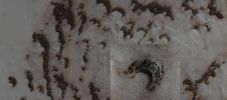
ESP_025579_2580-PCF-LXTT-00.jpgDefrosting Northern Dunes (CTX Frame and EDM - Absolute Natural Colors; credits for the additional process. and color.: Dr Paolo C. Fienga - Lunexit Team)135 visiteMars Local Time: 13:57 (Early Afternoon)
Coord. (centered): 77,982° North Lat. and 115,529° East Long.
Spacecraft altitude: 318,6 Km (such as about 199,1 miles)
Original image scale range: 63,7 cm/pixel (with 2 x 2 binning) so objects ~ 1 mt and 91 cm across are resolved (with 4 x 4 binning)
Map projected scale: 50 cm/pixel
Map projection: POLAR STEREOGRAPHIC
Emission Angle: 5,0°
Sun - Mars - MRO (or "Phase") Angle: 63,1°
Solar Incidence Angle: 59° (meaning that the Sun is about 31° above the Local Horizon)
Solar Longitude: 55,2° (Northern Spring/Southern Fall)
Credits: NASA/JPL/University of Arizona MareKromiumMag 30, 2012
|
|

Titan-W00074172-79-MF-EB-LXTT-IPF-3.jpgPossible Aurora at Titan (an Image-Mosaic by Elisabetta Bonora and Marco Faccin/Lunexit Team)141 visitenessun commentoMareKromiumMag 30, 2012
|
|
| 25353 immagini su 2113 pagina(e) |
 |
|
|
|
|
108 | |
|
|
|
|
|
|





