| |
| Ultimi arrivi |
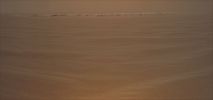
OPP-SOL943-1NN943EFF76CYL00P1968L000M2-B944R1-PCF-LXTT-IPF-01.jpgHigh Tau at Victoria Crater - Sol 943 (Absolute Natural Colors; credits for the additional process. and color.: Dr Paolo C. Fienga - Lunexit Team)107 visitenessun commentoMareKromiumLug 08, 2012
|
|

The_Rings-N00191888-N00191985-GB-LXTT-IPF.gifIn the Rings (a GIF-Movie by Dr Gianluigi Barca - Lunar Explorer Italia/Italian Planetary Foundation)105 visiteSince all the Beauties of the Universe in general - as well as many of the ones of our Solar System in particular - cannot always be adequately understood nor explained (and, please, forgive us if and when we say that those who state and declare that today's Science can really explain everything, in our opinion, as IPF, do not have the least idea of what they are talking about...), we have learned that, sometimes, and in front of certain phenomena which, as we just said, are not only impossible to recreate but (and for now), are also impossible to be observed from a REALLY close distance (thus making them extremely difficult to be fully understood and therefore explained in a satisfying way), it is Science itself that calls for some speculation.
This small foreword was absolutely necessary because the very few lines that shall follow (and which relate to the possible origin of Saturn's Rings) are, in our humble opinion, almost pure Scientific Speculation. Yes, of course we know that the hypothesis which we shall try to illustrate do represent an "informed Scientific Speculations", but still we have no actual proof (and, likely, we shall never have it) that even one of them is correct, either in full or just in part.
Given all that, we can start by saying that, according to several (either recent and/or less recent) Theories, the Rings of Saturn should be EXTREMELY old, meaning that they could be dating to the formation of Saturn (as well as of the whole Solar System) itself. Furthermore (and as a matter of fact), nowadays there are just 2 (two) Main Theories regarding the origin of Saturn's Rings which are thought to be sufficiently believable: the first one, originally proposed by the French Astronomer Édouard Robert Roche in the 19th Century, is that the Rings were once a moon of Saturn (named "Veritas", after a Roman Goddess) whose orbit, for (obviously...) unknown reasons, decayed (however, we suggest, as IPF and among many other possibilities, the occurrence of a powerful impact, that was strong enough to disrupt Veritas' orbit but NOT to disintegrate - at least, not entirely - the moon itself), until the moon came close enough to its Parent Planet so to be litterally ripped apart by the Saturnian Tidal Forces (in other words, and assuming that this Theory is basically correct, "Veritas" must have been some sort of a "Rubble-pile moon", such as a Celestial Body which was so fragile that it could not pass the so-called "Roche Limit" without being - almost - completely disintegrated). A variation of this first Main Theory (a variation that, however, we believe - as IPF - to be extremely unlikely) is that the "Veritas" moon simply disintegrated after being struck by a large Comet or an Asteroid.
The second Main Theory is that the Rings of Saturn were never part of a moon, but they are, instead, some physical leftovers of the original Proto-Planatary Nebula (i.e.: Nebular-like Material) from which Saturn itself was formed.MareKromiumLug 08, 2012
|
|

The_Rings-N00191994-N00192059-GB-LXTT-IPF.gifIn the Rings (a GIF-Movie by Dr Gianluigi Barca - Lunar Explorer Italia/Italian Planetary Foundation)100 visiteThe densest Regions of the Saturnian Ring System consist of the A and B-Rings, which are separated by the so-called "Cassini Division" (which was discovered in the AD 1675 by the Italian Astronomer Giovanni Domenico Cassini). Along with the C-Ring, which was discovered 75 years later (such as in the AD 1850), these three Regions together form the Main Rings of the Giant Gas Planet Saturn.
The Main Rings are denser and contain larger Water Ice and Rocky Particles than the very tenuous so-called Dusty Rings, which include the D-Ring (extending inward, towards Saturn's Cloud Tops), the G and E-Rings, as well as other and even more tenuous (or also "diffuse") Rings and Ringlets (and, perhaps, even some Ring Arcs) which are all located beyond the three Main Rings (which can also be named as the "Main Ring System").
These "Diffuse Rings" are known as "dusty" because of the extremely small size of the Water Ice and Dust Particles which form them (and whose size can often be in the order of just one or two micrometers). Last, but not least, the narrow F-Ring - which rotates just off the Outer Edge of the A-Ring - is the most difficult one to be categorized, and that is because some parts of it are very dense, while others are extremely tenuous.
The brightness and purity of the Water Ice contained in the Rings has been often cited as evidence that they should (and could very well be) much younger than Saturn (some Scientists say - but this is, of course, just a speculation - that their age could be of approx. 100 Million Years only, since the infall of Meteoric Dust would have led to some very obvious darkening of the Rings themselves, if they had been older. However, a new research also indicates that the B-Ring may be massive enough to have diluted the infalling Meteoric Dust Material and thus avoided any substantial darkening of the entire Ring System. In addition to the above, the material forming the Rings may also be periodically recycled, as "Clumps" form within the Rings and then are disrupted by occasional Impacts. This last theory, if proven correct, could substantially explain the apparent youth of some of the Material existing within the whole Ring System.
The NASA - Cassini - UVIS Team, led by Dr Larry Esposito, used the so-called "Stellar Occultation Method" to discover something like 13 (thirteen) new Celestial Objects, ranging from approx. 27 metres to about 10 Km across, and all located within the F-Ring. These Objects appear to be translucent, thus suggesting that they could be temporary aggregates of Water Ice Boulders, each one of them being a few meters across. Dr Esposito believes that this could be the Basic (Mechanical) Structure that allows the formation and (somehow periodic) renewal of the entire Saturnian Ring System, such as Water Ice and Rocky Dust Particles first clumping together, and then being - as we suggested, maybe occasionally, maybe periodically - blasted apart.MareKromiumLug 08, 2012
|
|

The_Rings-N00191724-N00191763-GB-LXTT-IPF.gifIn the Rings (a GIF-Movie by Dr Gianluigi Barca - Lunar Explorer Italia/Italian Planetary Foundation)98 visiteOnce (actually, only a few decades ago...), we used to think that the Rings of the Gas-Giant Planet Saturn were something unique in the Universe. Now, after we have seen Rings and/or Ring-Arcs and Ringlets around each and every one of the other three Gas-Giant Planets Jupiter, Uranus and Neptune, we do know that the Rings of Saturn are just the Most Extensive (---> i.e.: the Widest) Planetary Ring System in the Solar System. The Rings of Saturn - according to the majority of the Planetary Scientists - mostly consist of countless, small particles of Ice and Dust (ranging, in size, from micrometres to a few metres), which orbit around Saturn. As a matter of fact, the Ring Particles are made almost entirely of Water Ice, with some contamination from Dust and - maybe - other (minor) Elements.
As everybody should know, although reflection from the Rings increases the brightness of Saturn, the Rings themselves are not visible from Earth with unaided vision. In the AD 1610, however (such as one year after the Italian Astronomer Galileo Galilei first turned a telescope to the Sky), the Rings of Saturn appeared in all their beauty and Galileo Galilei became the very first person to observe them, even though he could not see them well enough to discern their true nature. Afterwards, in the AD 1655, the Dutch Mathematician and Astronomer Christiaan Huygens was the first one to describe them as a Disk made by (some kind of) Material surrounding (---> orbiting around) Saturn. Although many people still believe that the Rings of Saturn are made by a series of tiny Ringlets (a concept that goes back to Laplace), it is way more correct to think of them (like some NASA Scientists recently suggested) as an Annular Disk with concentric Local Maxima and Minima in both Density and Brightness. The Rings have numerous Gaps where the Particles' Density drops sharply: two of these Gaps opened because of the action of small (and known) really small moons which are actually "embedded" within them, while many others are located in specific places where the Tidal Forces exercized by (resonating) Saturnian moons create a phenomenon of Gravitational Destabilization of entire regions of the Rings themselves. Stabilizing resonances, on the other hand, can be considered responsible for the stability (and longevity) of several Rings (think about, for instance, to the Titanian Ringlet and the G-Ring). Well beyond the Main Rings, there is the so-called "Phoebe Ring", which is tilted at an angle of 27° as to the other Rings and, just like Phoebe, orbits in a Retrograde fashion.
Furthermore, and just out of Intellectual Curiosity, we wish to highlight that we believe, as IPF, after we examined (in extreme detail) several hundreds of close-up pictures of the Rings which were all obtained during the last Saturnian Equinox, that there should (and could well) be a few (relatively wide) Regions of the Rings themselves that are NOT made by Orbiting Ice and Dust Particles, but rather by orbiting "Pavings", such as by Aggregated Particles of Ring Material that, since they were positioned/located in specific regions within the Rings where they neither did nor do suffer any - or, maybe, just a negligible - Tidal Stress, in time joined together and formed something like "Floating Rocky Slates" (which means, in other words, the "flat" equivalent of a so-called "rubble-pile" Asteroid).MareKromiumLug 08, 2012
|
|

OPP-SOL2971-1N391940652EFFBRNAP0605L0M2.jpgHorizon - Sol 2971 (Absolute Natural Colors; credits for the additional process. and color.: Dr Paolo C. Fienga - Lunexit Team) 94 visitenessun commentoMareKromiumLug 08, 2012
|
|
OPP-SOL2971-1N391940615EFFBRNAP0605L0M1.jpgHorizon - Sol 2971 (Absolute Natural Colors; credits for the additional process. and color.: Dr Paolo C. Fienga - Lunexit Team) 91 visitenessun commentoMareKromiumLug 08, 2012
|
|

Memories_of_the_Fall-1.jpgMemories of the last Fall (CTX Frame - By Ermes Sansottera)166 visite"Desolante l'indifferenza diffusa e lo scoramento generale.
A farne le spese sempre e solo i più deboli, dentro una
Società che di civile possiede solo il nome.
Eppure gli occhi cantano un'allegra sofferenza, come di chi,
Giorno dopo giorno, tira avanti in una bestiale sopravvivenza.
Si è in mezzo. Offesi da un vento gelido, un vento dal ghigno di clown".
(Anonimo)MareKromiumLug 08, 2012
|
|

Memories_of_the_Fall-2.jpgMemories of the last Fall (EDM - By Ermes Sansottera)164 visite"Perché vivere felicemente da illusi
Se è possibile sopravvivere da
Allegri sofferenti?
Non è una vita che abbiamo chiesto.
Non sono sofferenze che ci spettano.
Ci hanno imprigionato da bambini.
Adesso ci tengono per il collo.
Non esiste equilibrio. Non vi è delicatezza.
Sfruttamento e persecuzione.
Antisemitismo e ghettizzazione.
Il male trionfa dentro un tragico teatro,
Ove non esiste pace. Solo guerra e sfruttamento.
"Tenetevi le catene, vi tiranneggiamo dall'alto"
Quale democrazia, quale civiltà.
Solo animali con la bava alla bocca.
Che il Cielo vi punisca. Noi deboli soccombiamo,
inesorabilmente".
(Anonimo)MareKromiumLug 08, 2012
|
|

ORIGINAL_NASA_APOLLO_15_-_AS_15-87-11849-1.jpgAS 15-87-11849 - Image-Artifact or a True "Luminous Event" on the edge of the Hadley Mountain? (credits for the additional process.: Ciro Casizzone and Lorenzo Leone)162 visiteInnanzitutto, un GRAZIE di Cuore ai nostri Amici e Partners di lunga data, Lorenzo Leone (alias "Anakin") e Ciro Casizzone (alias "Cicas65").
In secondo luogo, solo una considerazione: nessuno di noi sa (nè può) dire con certezza assoluta che cosa sia la possibile Anomalìa che è stata isolata (Sx) ed ingrandita (Dx). E' un image-artifact (ossìa un vizio dell'immagine)? Forse si, ed infatti, nel frame NASA - Original ottenuto dal National Space Science Data Center- NSSDC (a differenza di quanto si vede in quello ottenuto dal Lunar Planetary Institute - LPI), il dettaglio NON appare.
Ma può anche essere un qualcosa di reale e di "Alieno"? Si, certo, ed infatti, nel frame ottenuto dal Lunar and Planetary Institute (che, a nostro parere, costituisce un'Autorità in senso assoluto in materia di immagini NASA) esso, anche se la CTX Picture è vecchia e mostra la sua "vecchiaia" - specie in termini cromatici -, può comunque essere isolato con facilità e NON SEMBRA essere il prodotto di una mera aberrazione del frame il quale, colore a parte, conserva una magnifica definizione e profondità (a differenza di quello NSSDC che, va detto, sebbene cromaticamente più corretto, qualitativamente fa davvero pena, ci appare - leggermente - sfuocato e comunque è stato sovrasaturato in maniera ovvia ed eccessiva).
Morale: decidete Voi, nella quieta consapevolezza che la Verità, al momento, nessuno la possiede (tranne, come ovvio, i nostri Amici di Pasadena e gli Astronauti che scattarono le foto che noi, sempre umilmente, proviamo a commentare).MareKromiumLug 01, 2012
|
|

Titan-MF-EB-LXTT-02.jpgNot an Aurora! (a GIF-Movie by Elisabetta Bonora and Marco Faccin - Lunar Explorer Italia/IPF)74 visiteUn suggerimento: mentre osservate la "nuvola" (quale che ne sia la natura) che ruota lentamente attorno al Polo Sud di Titano, provate a guardare anche il bordo (---> limb) del Corpo Celeste in oggetto e, in particolare, osservate le variazioni (a nostro parere eclatanti) della sua Coltre Atmosferica Alta. Potrebbe esistere una correlazione tra simili variazioni e l'Evento Anomalo Sud-Polare? Oppure le variazioni di consistenza, texture e luminosità della Coltre Atmosferica Alta di Titano sono solo un effetto ottico derivante dal cambio di Angolo di Fase (e cioè l'Angolo esitente tra il Sole, Titano e la Sonda CASSINI) ed evidenziato in forma curiosamente eclatante dal montaggio dei diversi frames che vanno a comporre il filmato GIF? Domande, domande, domande.....MareKromiumLug 01, 2012
|
|

Titan-MF-EB-LXTT-01.jpgNot an Aurora! (False Colors; credits for the additional process. and color.: Elisabetta Bonora and Marco Faccin - Lunar Explorer Italia/IPF)77 visiteDall'ingrandimento del dettaglio controverso (frame superiore) non è possibile ricavare alcuna certezza, se non che il Fenomeno (probabilmente) Atmosferico che interessa le estreme Regioni Sud-Polari di Titano è soggetto a rapidi cambiamenti nel tempo. La sua forma, poi (decisamente irregolare), ci spinge a preferire - diremmo in via definitiva - l'ipotesi transitoria e meteorologica per quanto attiene la natura del Fenomeno in questione (i.e.: nuvola, super-nuvola, nuvola semi-permanente o colonnare da post-impatto che sia).MareKromiumLug 01, 2012
|
|

Titan-MF-EB-LXTT-00.jpgNot an Aurora! (Extremely Enhanced Natural Colors; credits for the additional process. and color.: Elisabetta Bonora and Marco Faccin - Lunar Explorer Italia/IPF)80 visiteL'ipotesi "Aurorale" del bizzarro Fenomeno occorso alle estreme Latitudini Sud di Titano è tramontata. Nuove ipotesi? Diciamo questo: accanto a quelle "classiche" (e cioè 1) nube alta di gas "pesanti" e 2) "nuvola colonnare" derivante da un impatto meteorico) ce ne potrebbe essere un'altra. Si potrebbe trattare, a nostro parere, di un Fenomeno Meteorologico Ciclico, collegato al verificarsi di una specifica configurazione spaziale tra Sole, Saturno e Titano. Nulla di esotico, sia chiaro: solo una particolare configurazione di "fase" che, da un lato, consente la creazione "fisica", su Titano, di una formazione nuvolosa semi-permanente e, dall'altro, consente la individuazione "ottica" della nuvola stessa (ovviamente a condizione di avere uno strumento "in loco" o quasi...). Pensiamoci sopra...MareKromiumLug 01, 2012
|
|
| 25353 immagini su 2113 pagina(e) |
 |
|
|
|
|
107 | |
|
|
|
|
|
|





