| Ultimi arrivi |

SOL0001-673758main_PIA15974-43_full.jpgLinearized Rear-View - Sol 1 (RAW Absolute Natural Colors; credits for the additional process. and color.: Dr Paolo C. Fienga - Lunexit Team)81 visiteCaption NASA:"This is a version of one of the first images taken by a Rear Hazard-Avoidance Camera (HazCam) on NASA's Curiosity Rover, which landed on Mars the evening of Aug. 5 PDT (morning of Aug. 6 EDT), 2012. It was taken through a "fisheye" wide-angle lens but has been "linearized" so that the Horizon looks flat rather than curved. The image has also been cropped. It is one-half of full resolution. Part of the Rim of Gale Crater, which is a feature the size of Connecticut and Rhode Island combined, stretches from the top middle to the top right of the image. One of the Rover's Wheels can be seen at bottom right. As planned, the Rover's early engineering images are taken at Low Resolution". MareKromiumAgo 08, 2012
|
|

SOL0000-Mars_Descent_Imager_0000MD9999000027I1_DXXX-0000MD9999000621I1_DXXX-2-PIA15989.jpgLooking Down, at Gale - Sol 0 (Natural Colors; credits: NASA/JPL-Caltech/MSSS)74 visiteCaption NASA:"This color thumbnail image was obtained by NASA's Curiosity Rover during its descent to the Surface of Mars on Aug. 5 PDT (Aug. 6 EDT). This image from Curiosity's Mars Descent Imager reveals several Surface Features, including relatively Dark Dunes, degraded Impact Craters and other Geologic Features including small Escarpments that range in size from a few feet (meters) to many tens of feet (meters) in height". MareKromiumAgo 08, 2012
|
|

SOL0001-PIA15969.jpgWelcome to Gale Crater: Curiosity's Shadow - Sol 1 (RAW b/w Original NASA Frame; credits: NASA/JPL-Caltech)92 visitenessun commentoMareKromiumAgo 06, 2012
|
|
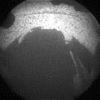
SOL0001-PIA15970.jpgWelcome to Gale Crater: Curiosity's Shadow - Sol 1 (RAW b/w Original NASA Frame; credits: NASA/JPL-Caltech)87 visitenessun commentoMareKromiumAgo 06, 2012
|
|

SOL0001-PIA15972.jpgWelcome to Gale Crater! - Sol 1 (RAW b/w Original NASA Frame; credits: NASA/JPL-Caltech)82 visitenessun commentoMareKromiumAgo 06, 2012
|
|

SOL0001-PIA15971.jpgWelcome to Gale Crater! (First Light) - Sol 1 (RAW b/w Original NASA Frame; credits: NASA/JPL-Caltech)109 visiteNASA's most advanced Mars Rover Curiosity has landed on the Red Planet. The one-ton Rover, hanging by ropes from a Rocket Backpack, touched down onto Mars Sunday to end a 36-week flight and begin a two-year investigation. The Mars Science Laboratory (MSL) Spacecraft that carried Curiosity succeeded in every step of the most complex landing ever attempted on Mars, including the final severing of the bridle cords and flyaway maneuver of the Rocket Backpack.
"Today, the wheels of Curiosity have begun to blaze the trail for human footprints on Mars. Curiosity, the most sophisticated Rover ever built, is now on the Surface of the Red Planet, where it will seek to answer age-old questions about whether life ever existed on Mars - or if the Planet can sustain life in the future", said NASA Administrator Charles Bolden. "This is an amazing achievement, made possible by a team of scientists and engineers from around the world and led by the extraordinary men and women of NASA and our Jet Propulsion Laboratory. President Obama has laid out a bold vision for sending humans to Mars in the mid-2030's, and today's landing marks a significant step toward achieving this goal".
Curiosity landed at 10:32 p.m. Aug. 5, PDT, (01:32 a.m. EDT Aug. 6, 2012) near the foot of a Mountain 3 (three) miles tall and 96 miles in diameter inside Gale Crater. During a nearly two-year prime mission, the rover will investigate whether the region ever offered conditions favorable for microbial life.
"The Seven Minutes of Terror has turned into the Seven Minutes of Triumph", said NASA Associate Administrator for Science John Grunsfeld. "My immense joy in the success of this mission is matched only by overwhelming pride I feel for the women and men of the mission's team".
Curiosity returned its first view of Mars, a wide-angle scene of Rocky Ground near the front of the Rover. More images are anticipated in the next several days as the mission blends observations of the Landing Site with activities to configure the Rover for work and check the performance of its instruments and mechanisms.
"Our Curiosity is talking to us from the surface of Mars", said MSL Project Manager Peter Theisinger of NASA's Jet Propulsion Laboratory in Pasadena, Calif. "The landing takes us past the most hazardous moments for this project, and begins a new and exciting mission to pursue its scientific objectives."
Confirmation of Curiosity's successful landing came in communications relayed by NASA's Mars Odyssey orbiter and received by the Canberra, Australia, antenna station of NASA's Deep Space Network.
Curiosity carries 10 science instruments with a total mass 15 times as large as the science payloads on the Mars rovers Spirit and Opportunity. Some of the tools are the first of their kind on Mars, such as a laser-firing instrument for checking elemental composition of rocks from a distance. The rover will use a drill and scoop at the end of its robotic arm to gather soil and powdered samples of rock interiors, then sieve and parcel out these samples into analytical laboratory instruments inside the Rover.
This is the first image taken by NASA's Curiosity Rover, which landed on Mars the evening of Aug. 5 PDT (morning of Aug. 6 EDT). It was taken through a "fisheye" wide-angle lens on one of the Rover's Rear Left Hazard-Avoidance Cameras at one-quarter of full resolution. The camera is the left eye of a stereo pair positioned at the back left, or port, side of the Rover.
The Clear Dust Cover on the camera is still on in this view, and dust can be seen around its edge, along with three cover fasteners. One of the Rover's wheels is in the lower right corner. As planned, the Rover's early engineering images are lower resolution. Larger color images are expected later in the week when the Rover's Mast, carrying high-resolution cameras, is deployed.MareKromiumAgo 06, 2012
|
|

Northern_Regions-Utopia_Planitia-Dust_Storm_and_Clouds-PIA15959.jpgDust Storm over Utopia Planitia148 visiteThis close-up image of a Dust Storm on Mars was acquired by the Mars Color Imager instrument onboard NASA's Mars Reconnaissance Orbiter on Nov. 7, 2007, around 15:00 Local Time on Mars. Scientists working with NASA's Curiosity Rover, which is set to land on Mars on Aug. 5 PDT (Aug. 6 EDT), are monitoring Mars each day for similar small Storms that could either drift over the Landing Site or stir up dust that moves as haze over the Site.
This image is centered on Utopia Planitia (53,6° North Latitude and 147,9° East Longitude), along the North Seasonal Polar Cap Edge as it is in late Northern Winter.
When NASA's Curiosity Rover lands on Mars, it will be late Southern Winter. Scientists are looking at similar small storms that form near the South Seasonal Polar Cap Edge. The Dust Storm pictured here was short-lived, lasting less than 24 hours. The image also shows the Seasonal North Polar Cap (at the top of the frame) and gravity-wave Water-Ice Clouds coming off of Mie Crater, just South of the Storm.
Gravity-Wave Clouds, also called "Lee-Wave Clouds", are Clouds that result from changes in Atmospheric Pressure, Temperature and height because of "Vertical Displacement", such as when Wind blows over a Mountain or a (huge) Crater Wall.
The projection of the image is Polar Stereographic and the image has a resolution of about 0,6 miles (1 Km) per pixel. North is indicated with an arrow in this image. The white scale bar is 93 miles (approx. 150 kilometers).MareKromiumAgo 06, 2012
|
|

SOL0001-673560main_msl5_full.jpgWelcome to Gale Crater! - Sol 1 (RAW Natural Colors; credits for the additional process. and color.: Dr Paolo C. Fienga - Lunexit Team/IPF)101 visiteCaption NASA:"About two hours after landing on Mars and beaming back its first image, NASA's Curiosity Rover transmitted a higher-resolution image of its new Martian home, Gale Crater. Mission Control at NASA's Jet Propulsion Laboratory in Pasadena, Calif., received the image, taken by one of the vehicle's lower-fidelity, black-and-white Hazard Avoidance Cameras (or "HazCams").
"Curiosity's Landing Site is beginning to come into focus", said John Grotzinger, Project Manager of NASA's Mars Science Laboratory mission, at the California Institute of Technology in Pasadena. "In the image, we are looking to the North/West. What you see on the Horizon is the Rim of Gale Crater. In the foreground, you can see a Gravel Field. The question is, where does this Gravel come from? It is the first of what will be many scientific questions to come from our new home on Mars".MareKromiumAgo 06, 2012
|
|
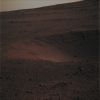
OPP-SOL3019-GB-PCF-LXTT-IPF-2.jpgLooking Around... - Sol 3019 (Absolute Natural Colors; credits for the additional process. and color.: Drr Gianluigi Barca and Paolo C. Fienga - Lunexit Team)110 visitenessun commentoMareKromiumLug 29, 2012
|
|
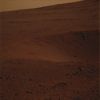
OPP-SOL3019-GB-PCF-LXTT-IPF-1.jpgLooking Around... - Sol 3019 (RAW Absolute Natural Colors; credits for the additional process. and color.: Drr Gianluigi Barca and Paolo C. Fienga - Lunexit Team)89 visitenessun commentoMareKromiumLug 29, 2012
|
|
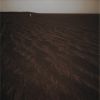
OPP-SOL359-1N160055781EFF40FWP1612R0M1-PCF-LXTT.jpgHeading South and bye-bye, Heat-Shield!... - Sol 359 (2 - Absolute Natural Colors; credits for the additional process. and color.: Dr Paolo C. Fienga - Lunexit Team) 85 visiteRight Navigation Camera Non-linearized Full frame EDR acquired on Sol 359 of Opportunity's mission to Meridiani Planum at approximately 13:23:51 Mars Local Solar Time.MareKromiumLug 29, 2012
|
|
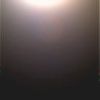
OPP-SOL359-1P160052242EDN40FWP2617L234567M1-PCF-LXTT.jpgThe Sky of Mars - Sol 359 (Absolute Natural Colors; credits for the additional process. and color.: Dr Paolo C. Fienga - Lunexit Team)120 visiteUna risposta, diciamo "credibile" (e comunque informata), in relazione all'annoso quesito sul colore, la luminosità e l'apparenza del Cielo di Marte. Siamo durante il Sol 359 di Opportunity, questo è un frame (Downsampled EDR e Non -linearized) ottenuto dalla Panoramic Camera Sinistra del Rover a, circa, le 12:26:26 dell'Ora Solare Locale Marziana. Il Sole, come da nostre precedenti congetture, splende brillante (certamente accecante, se fossimo lì a guardarlo) ed alto nel Cielo.
Tuttavia, subito dopo un (ampio) alone di Luce - che coniuga innumerevoli tonalità di rosa e celeste chiarissimo -, ecco che il Cielo diviene scurissimo, color rosa/arancio cupo. Le microparticelle di Particolato, Polvere e Ghiaccio d'Acqua in sospensione, costantemente attraversate dai raggi di un Sole bianco e luminosissimo, dffondono la Luce Bianca in maniera - per noi Terrestri - alquanto "anomala", conferendo quindi alla nostra visione un "che" di peculiare, molto affascinante e suggestivo, ma terribilmente (ed inevitabilmente) alieno.
Il frame in discussione è stato addizionalmente processato e colorizzato in Colori Naturali Assoluti e poi ricalibrato (mediante l'applicazione di un Gamma Correction Filter) e leggermente sfuocato.MareKromiumLug 29, 2012
|
|
| 25353 immagini su 2113 pagina(e) |
 |
|
|
|
|
105 | |
|
|
|
|





