| |
| Ultimi arrivi |

SOL1717-PIA26699_figA.jpgCrocodile Bridge19 visiteNASA’s Perseverance Mars rover used its Mastcam-Z camera system to capture this 360-degree panorama of a region nicknamed “Crocodile Bridge” on Jezero Crater’s rim. The panorama is made up of 980 images, 971 of which were taken on Dec. 18, 2025, the 1,717th Martian day, or sol, of the mission. An additional nine were taken on Jan. 25, 2026, Sol 1,754. This natural-color view has been processed to show the landscape as the human eye would see it.
Jezero Crater’s rim and the regions around it hold some of the oldest rocks anywhere in the solar system; they serve as time capsules of the Red Planet’s early history, when its crust and atmosphere were still forming. No terrain this ancient exists on Earth, where tectonic plates constantly recycle the surface. (Mars lacks tectonic plates, allowing some of this very old material to be preserved.)
“Crocodile Bridge” represents a transition into an area nicknamed “Lac de Charmes,” which Perseverance will explore for several months later this year.MareKromiumMag 07, 2026
|
|

SOL4887-PIA26696_figA.pngNevado Sajama - Horizon11 visiteThe image was taken at a ridgetop site nicknamed “Nevado Sajama,” where Curiosity collected a rock sample using a drill on the end of its Robotic Arm.
Since May 2025, Curiosity has been exploring a region full of geologic formations called boxwork, which crisscross the surface for miles and look like giant spiderwebs when viewed from space.
The new panorama shows them as they really are: low ridges standing roughly 3 to 6 feet (1 to 2 meters) tall and about 30 feet (9 meters) across with sandy hollows in between.MareKromiumMag 07, 2026
|
|

SOL4887-NLB_831328705EDR_S1220000NCAM00593M_.jpgNevado Sajama - Horizon (Sol 4887)20 visiteThis image was taken by the Left Navigation Camera onboard NASA's Mars Rover Curiosity on Sol 4887 (2026-05-06 - 09:48:49 UTC).MareKromiumMag 07, 2026
|
|

Voyager_1A.jpgFarewell...25 visiteOn April 17, 2'26, engineers at NASA’s Jet Propulsion Laboratory (JPL) in Southern California sent commands to shut down an instrument aboard Voyager 1 called the Low-energy Charged Particles experiment, or LECP. The nuclear-powered spacecraft is running low on power, and turning off the LECP is considered the best way to keep humanity’s first interstellar explorer going.
The LECP has been operating almost without interruption since Voyager 1 launched in 1977 — almost 49 years. It measures low-energy charged particles, including ions, electrons, and cosmic rays originating from our solar system and galaxy. The instrument has provided critical data about the structure of the interstellar medium, detecting pressure fronts and regions of varying particle density in the space beyond our heliosphere. The twin Voyagers are the only spacecraft that are far enough from Earth to provide this information.
Like Voyager 2, Voyager 1 relies on a radioisotope thermoelectric generator, a device that converts heat from decaying plutonium into electricity. Both probes lose about 4 watts of power each year. After almost a half-century in space, power margins have grown razor thin, requiring the team to conserve energy by shutting off heaters and instruments while making sure the spacecraft don’t get so cold that their fuel lines freeze.
During a routine, planned roll maneuver on Feb. 27, Voyager 1’s power levels fell unexpectedly. Mission engineers knew any additional drop in power could trigger the spacecraft’s undervoltage fault protection system, which would shut down components on its own to safeguard the probe, requiring recovery by the flight team — a lengthy process that carries its own risks.
The Voyager team needed to act first.
“While shutting down a science instrument is not anybody’s preference, it is the best option available,” said Kareem Badaruddin, Voyager mission manager at JPL. “Voyager 1 still has two remaining operating science instruments — one that listens to plasma waves and one that measures magnetic fields. They are still working great, sending back data from a region of space no other human-made craft has ever explored. The team remains focused on keeping both Voyagers going for as long as possible.”
Far-out plan
The choice of which instrument to turn off next wasn’t made in the heat of the moment. Years ago, the Voyager science and engineering teams sat down together and agreed on the order in which they would shut off parts of the spacecraft while ensuring the mission can continue to conduct its unique science. Of the 10 identical sets of instruments that each spacecraft carries, seven have been shut off so far. For Voyager 1, the LECP was next on that list. The team shut off the LECP on Voyager 2 in March 2025.
Because Voyager 1 is more than 15 billion miles (25 billion kilometers) from Earth, the sequence of commands to shut down the instrument will take 23 or so hours to reach the spacecraft, and the shutdown process itself will take about three hours and 15 minutes to complete. One part of the LECP — a small motor that spins the sensor in a circle to scan in all directions — will remain on. It uses little power (0.5 watts), and keeping it running gives the team the best chance of being able to turn the instrument back on someday if they find extra power.
What comes next
Engineers are confident that shutting down the LECP will give Voyager 1 about a year of breathing room. They are using the time to finalize a more ambitious energy-saving fix for both Voyagers they call “the Big Bang,” which is designed to further extend Voyager operations. The idea is to swap out a group of powered devices all at once — hence the nickname — turning some things off and replacing them with lower-power alternatives to keep the spacecraft warm enough to continue gathering science data.
The team will implement the Big Bang on Voyager 2 first, which has a little more power to spare and is closer to Earth, making it the safer test subject. Tests are planned for May and June 2026. If they go well, the team will attempt the same fix on Voyager 1 no sooner than July. If it works, there is even a chance that Voyager 1’s LECP could be switched back on.MareKromiumMag 07, 2026
|
|
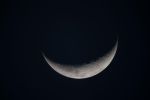
0022-Crescent_Moon.jpgCrescent Moon8 visiteart002e019570 (April 7, 2026) – On flight day seven, following their Lunar Fly-By, the Artemis II crew captured this view of a delicate crescent Moon on their journey back to Earth.
Along the Terminator, where low-angle Sunlight casts long shadows that accentuate craters, ridges, and subtle variations in terrain.
The softly illuminated surface highlights the Moon’s rugged landscape, while much of it remains in shadow.MareKromiumMag 07, 2026
|
|
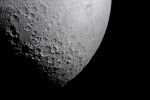
0021-The_Orientale_Basin.jpg8 visiteart002e020686 (April 6, 2026) – A portion of the Moon’s Far Side (a.k.a. "Dark Side") is seen along the Terminator, where low-angle Sunlight casts long shadows across the surface.
A section of the Orientale Basin is visible along the upper right portion of the lunar disk, its structure subtly revealed under grazing illumination. This lighting enhances contrast across the cratered terrain, highlighting variations in Surface Features and providing insight into the Moon’s Geologic History.MareKromiumMag 07, 2026
|
|

0020-Lunar_Limb.jpgThe Lunar Limb and the Terminator Line12 visiteart002e014045 (April 6, 2026) - This view of the Moon captures the Terminator — the shifting boundary between day and night — where sunlight grazes the surface at a low angle.
Taken by the crew during the Artemis II Mission, the lighting accentuates the Moon’s rugged terrain, casting long shadows that reveal the depth and structure of craters, ridges, and surrounding highlands.MareKromiumMag 07, 2026
|
|

0019-Aristarcus_and_more.jpgA hint of Lunar Geography13 visiteart002e012114 (April 6, 2026) - A diverse set of Lunar Surface Features is visible in this view, including the brightly colored Aristarchus Crater, whose high reflectivity stands out against the surrounding terrain.
Nearby, the Marius Hills Region reveals a field of volcanic domes and cones, evidence of past lunar volcanism.
The sinuous Reiner Gamma swirl contrasts with the darker mare surface, while rays from Glushko crater streak across the plains.
At the bottom of the frame, the dark-floored Grimaldi Crater anchors the scene.MareKromiumMag 07, 2026
|
|
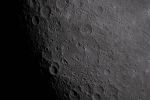
0018-Hertzprung_Basin_Rim.jpgVavilov Crater Along the Hertzsprung Basin Rim15 visiteart002e012093 (April 6, 2026) - Hertzsprung Basin comes into view with its distinctive two concentric rings of mountains, revealing the scale of this ancient impact structure.
Near the lower left, Vavilov crater — identified by its Central Peak — stands out, a feature often described by the Artemis II crew during their Lunar Fly-by.MareKromiumMag 07, 2026
|
|
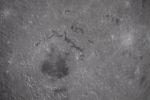
0017-The_Orientale_Basin.jpgThe Orientale Basin13 visiteart002e012090 (April 6, 2026) - In this view of the Moon, the Artemis II crew captured an intricate snapshot of the rings of the Orientale Basin, one of the Moon’s youngest and best-preserved large Impact Craters on his first shift during the Lunar Fly-By observation period.MareKromiumMag 07, 2026
|
|
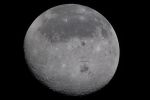
0016-The_Orientale_Basin.jpegThe Orientale Basin11 visiteThe Artemis II crew became the first humans to see the Moon's Orientale Basin, a nearly 600-mile-wide Impact Crater, visible in the bottom half of this image.MareKromiumMag 07, 2026
|
|

0015-In_the_Night.jpegIn the Night11 visiteFrom the crew’s perspective, the Moon appeared large enough to completely block the Sun, creating nearly 54 minutes of eclipse totality. The corona forms a glowing halo around the dark lunar disk, revealing details of the Sun’s outer atmosphere typically hidden by its brightness. The faint glow of the nearside of the Moon is visible in this image, having been illuminated by light reflected off the Earth.
Moments to honor the past infused the entire day of the lunar flyby, the sixth of the mission. Upon waking, the crew heard a message from Jim Lovell, the astronaut who piloted Apollo 8 and commanded Apollo 13, and who recorded the missive for Artemis II before his death in August 2025. “Welcome to my old neighborhood!” Lovell said. “When Frank Borman, Bill Anders, and I orbited the moon on Apollo 8, we got humanity’s first up-close look at the moon and got a view of the home planet that inspired and united people around the world. I’m proud to pass that torch on to you.”
And in a particularly heartfelt moment, shortly after the crew reached the farthest point ever traveled in space, Canadian Astronaut Jeremy Hansen communicated the crew’s desire to name a crater close to the moon’s nearside-farside boundary after Commander Reid Wiseman’s late wife, Carroll Wiseman who died from cancer in 2020. “It’s a bright spot on the moon,” Hansen said. “We would like to call it Carroll.” And then the crew embraced.MareKromiumMag 07, 2026
|
|
| 25353 immagini su 2113 pagina(e) |
1 |
 |
|
|
|
|
|
|
|
|
|
|
|





