| Ultimi arrivi - Asteroids and Comets |

Comets-Comet_Hartley_2-EB-LXTT3.jpgComet "Hartley 2" (credits for the additional process. and color.: Elisabetta Bonora - Lunexit Team)81 visitenessun commentoMareKromiumNov 07, 2010
|
|

Comets-Comet_Hartley_2-EB-LXTT4.jpgComet "Hartley 2" (credits for the additional process. and color.: Elisabetta Bonora - Lunexit Team)69 visitenessun commentoMareKromiumNov 07, 2010
|
|
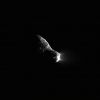
Comets-Comet_Hartley_2-EB-LXTT5.jpgComet "Hartley 2" (credits for the additional process. and color.: Elisabetta Bonora - Lunexit Team)60 visitenessun commentoMareKromiumNov 07, 2010
|
|

Comets-Comet_Hartley_2-MF-LXTT3.jpgComet "Hartley 2" (possible Natural Colors; credits for the additional process. and color.: Dr Marco Faccin - Lunexit Team)119 visitenessun commentoMareKromiumNov 07, 2010
|
|
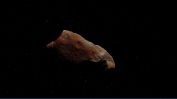
Ida-MF-LXTT.jpgAsteroid "Ida" (possible Natural Colors; credits for the additional process. and color.: Dr Marco Faccin - Lunexit Team)79 visitenessun commentoMareKromiumLug 28, 2010
|
|

Asteroids.jpgAsteroids (an Image-Mosaic by Emily Lakdawalla - Planetary Society - & Ted Stryk)104 visiteDalla Rubrica "NASA - Picture of the Day" del giorno 26 Luglio 2010:"As humans explore the Universe, the record for largest Asteroid visited by a Spacecraft has increased yet again. Earlier this month, ESA's robotic Rosetta Spacecraft zipped past the asteroid 21 Lutetia taking data and snapping images in an effort to better determine the history of the Asteroid and the origin of its unusual colors.
Although of unknown composition, Lutetia is not massive enough for gravity to pull it into a sphere.
Pictured above on the upper right, the 100-Km across Lutetia is shown in comparison with the other nine Asteroids and four Comets that have been visited, so far, by human-launched spacecraft. Orbiting in the Main Asteroid Belt, Lutetia shows itself to be a heavily cratered remnant of the early Solar System.
The Rosetta Spacecraft is now continuing onto comet Churyumov-Gerasimenko where a landing is planned for the AD 2014".MareKromiumLug 27, 2010
|
|
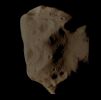
Lutetia-04-PCF-LXTT.jpgAsteroid "Lutetia" (possible Natural Colors; credits for the additional process. and color.: Dr Paolo C. Fienga - Lunexit Team)100 visiteMareKromiumLug 11, 2010
|
|

Lutetia-01.jpgAsteroid "Lutetia"68 visiteAsteroid Lutetia will no longer remain a mystery as the European Space Agency's (ESA) Rosetta has captured the first close-up images of this Celestial Body, which will help them gain insights into the composition of the space rock that has long puzzled the scientists.
In what can be termed as the closest encounter with one of the largest asteroid, ever visited ESA led robotic spacecraft mission, Rosetta, raced past Lutetia as close as 3200 Km, with the closest encounter at 18:10 CEST (Central Europe Standard Time), when the spacecraft was just 3162 Km away from the giant asteroid.
Rosetta, which had a first look of Lutetia in January 2007, has this time “triumphed at asteroid” and captured images like never before.MareKromiumLug 11, 2010
|
|

Lutetia-02.jpgAsteroid "Lutetia"63 visiteThough the first look of the giant asteroid, through nearly 400 images, has revealed a lot about the primitive survivor's cratered surface, a lot more needs to be unlocked.
The data collected by Rosetta Spacecraft, with the help of multi-wavelength cameras, spectrometers etc., will unravel the mysteries surrounding the composition of Lutetia. Some asteroids are a broken part of iron-rich cores of proto-planets or they may just be composed of Carbon.MareKromiumLug 11, 2010
|
|

Lutetia-03.jpgAsteroid "Lutetia"57 visiteA closer look at the asteroid that orbits between Mars and Jupiter reveals that Lutetia's Surface is battered with many craters, indicating that during the 4,5 BY (Billion Years) of existence, the primitive survivor has suffered many impacts.
The information gathered also confirm that Lutetia, discovered by French painter turned astronomer Hermann Goldschmidt in 1852, is approx. 100 Km in diameter, has a elongated body, and its longest side measures about 130 Km.
In a statement, David Southwood, ESA Director of Science and Robotic Exploration, said:“It has been a great day for exploration, a great day for European science. The clockwork precision is a great tribute to the scientists and engineers in our Member States in our industry and, not least, in ESA itself”.MareKromiumLug 11, 2010
|
|

Itokawa.gifRevolving around Itokawa (a GIF-Movie by Dr Gianluigi Barca - Lunexit Team)59 visitenessun commentoMareKromiumGiu 14, 2010
|
|
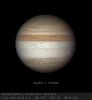
Comets-Wesley-Jupiter_Impact-2.jpgCometary Impact on Jupiter 178 visitenessun commentoMareKromiumGiu 09, 2010
|
|
| 282 immagini su 24 pagina(e) |
 |
|
|
|
6 | |
|
|
|
|
|





