| Ultimi arrivi - The Moon from JAXA - The "Kaguya" Lunar Probe |

Kaguya-013-20071128_kaguya_tc02_04.jpgDyson Crater (2)69 visitenessun commentoMareKromiumDic 02, 2007
|
|
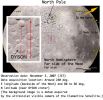
Kaguya-014-20071128_kaguya_tc04_01_e.jpgDyson Crater Region as to the North Pole of the Moon54 visitenessun commentoMareKromiumDic 02, 2007
|
|
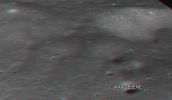
Kaguya-015-20071128_kaguya_tc03_04_l.jpgDyson Crater Region (3-D)54 visitenessun commentoMareKromiumDic 02, 2007
|
|

Kaguya-007-20071113.jpgThe rising "Blue Marble", from Lunar Orbit (Kaguya is near the Lunar North Pole)75 visiteCaption JAXA:"The Japan Aerospace Exploration Agency (JAXA) and NHK (Japan Broadcasting Corporation) have successfully performed the world's first high-definition image taking of an Earth-rise* by the Lunar Explorer "KAGUYA" (SELENE,) which was injected into a lunar orbit at an altitude of about 100 km on October 18, 2007 (Japan Standard Time. Following times and dates are all JST.)
The Apollo project was the first mission to take images of Earth rising over the Moon. The KAGUYA successfully shot high-definition images of the Earth-rise showing an impressive image of the blue Earth which was the only floating object in pitch-dark space.
These are the World's first high-definition earth images taken from about 380.000 Km away from the Earth in space.
The image taking was performed by the KAGUYA's onboard High Definition Television (HDTV) for space use developed by NHK. The moving image data acquired by the KAGUYA was received at the JAXA Usuda Deep Space Center, and processed by NHK.
The satellite was confirmed to be in good health through telemetry data received at the Usuda Station".
* Note: we use the expression "Earth-rise" in this press release, but the Earth-rise is a phenomenon seen only from satellites that travel around the Moon, such as the KAGUYA and the Apollo Class spaceships.
The Earth-rise cannot be observed by a person who is on the Moon as they can always see the Earth at the same position.
This still image was cut out from a moving image (wide shot) taken by the HDTV onboard the KAGUYA at 02:52 p.m. on November 7, 2007 (JST) then sent to the JAXA Usuda Deep Space Center.
In the image, the Moon's surface is near the North Pole, and the Arabian Peninsula and Indian Ocean can be observed on the Earth disc.MareKromiumNov 13, 2007
|
|

Kaguya-008-20071113.jpgThe setting "Blue Marble", from Lunar Orbit (Kaguya is near the Lunar South Pole)76 visiteCaption JAXA:"This still image was cut out from a moving image (tele shot) taken by the HDTV onboard the KAGUYA at 12:07 p.m. on November 7, 2007 (Japan Standard Time, JST,) then sent to the JAXA Usuda Deep Space Center.
In the image, the Moon's surface is near the South Pole, and we can see the Australian Continent (center left) and the Asian Continent (lower right) on the Earth.
(In this image, the upper side of the Earth is the Southern Hemisphere, thus the Australian Continent looks upside-down)".MareKromiumNov 13, 2007
|
|
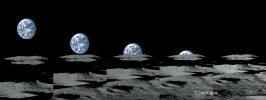
Kaguya-009-20071113.jpgThe setting "Blue Marble", from Lunar Orbit (full sequence - Kaguya is near the Lunar South Pole)72 visiteCaption JAXA:"These images are the Earth setting to the horizon near the Moon's South Pole.
It took about 70 seconds from the left image to the right image (complete setting)". MareKromiumNov 13, 2007
|
|

Kaguya-010-20071113.gifRelative locations of the KAGUYA Probe, the Moon, and the Earth66 visitenessun commentoMareKromiumNov 13, 2007
|
|

001-Kaguya-20071009_kaguya_02l.jpgRstar Separation from Kaguya (1) - before separation102 visiteKAGUYA consists of the Main Orbiter and two small satellites (Relay Satellite and VRAD Satellite). The Main Orbiter will reach the vicinity of the Moon. Once it has reached the Moon, it will be placed into a peripolar orbit at an altitude of 100 Km. The Relay Satellite will be placed in an elliptic orbit at an apogee of 2400 Km, and will relay communications between the Main Orbiter and the ground station.
The VRAD Satellite will play a significant role in measuring the gravitational field around the Moon.
The Main Orbiter will be employed for about one year and will observe the entire Moon.
(in this picture: on the left is the Rstar, and on the right is the VRAD Satellite).MareKromiumNov 08, 2007
|
|

002-Kaguya-20071009_kaguya_03l.jpgRstar Separation from Kaguya (2) - after separation57 visiteCaption JAXA:"The Rstar has been released and moving toward the upper left of the image.
The right one, the VRAD satellite, was scheduled to be released on Oct. 12th, 2007).MareKromiumNov 08, 2007
|
|

003-Kaguya-20071009_kaguya_05l.jpgKaguya is approaching the Moon (1)70 visiteCaption JAXA:"The upper right dark area is a Lunar Ocean: it is the Western rim of the Oceanus Procellarum".
(This image was taken around 14:50 on Oct. 5th (JST), at a distance of about 1.500 Km from the Moon) MareKromiumNov 08, 2007
|
|

004-Kaguya-20071009_kaguya_06l.jpgKaguya is approaching the Moon (2)84 visiteCaption JAXA:"Almost the same area as in the previous image, but closer to the Moon".
(This image was taken around 15:00 on Oct. 5th (JST) at a distance of about 1.200 Km from the Moon)MareKromiumNov 08, 2007
|
|

005-Kaguya-20071009_kaguya_07l.jpgKaguya is approaching the Moon (3)82 visiteCaption JAXA:"A boundary in the lower left is the line between the area that receives sunshine and the shaded area at around 80° North Latitude.
It was too dark to observe the North Pole".
(This image was taken around 15:10 on Oct. 5th (JST) at a distance of about 800 Km from the Moon)"MareKromiumNov 08, 2007
|
|
| 55 immagini su 5 pagina(e) |
 |
|
4 |
|





