| Ultimi arrivi - A Tribute To Mars Global Surveyor |

Chaotic_Terrain-Aram_Chaos-R2200155-09.jpgThe "Many Faces" of Aram Chaos (10 - EDM n. 9 - Original NASA/MGS/MSSS b/w Frame)67 visiteE dunque, alla fine, qual'è il "vero volto" di Aram Chaos, come del resto di Marte? Noi non lo sappiamo, ovviamente, però, come fa il Dr Skipper (che comunque stimiamo) e tanti altri Ricercatori, noi continuiamo a cercarlo...Feb 26, 2006
|
|

Chaotic_Terrain-Aram_Chaos-R2200155-07.jpgThe "Many Faces" of Aram Chaos (8 - EDM n. 7 - Original NASA/MGS/MSSS b/w Frame)78 visitePremesso e ribadito dunque che Marte è soggetto - ormai da secoli (noi diremmo sin dal momento in cui iniziarono le prime osservazioni dei suoi Canali) - ad un massiccio effetto-serra, come le foto della Residual Cap e delle Regioni Polari e Presso-Polari (nettamente recedenti) ci dimostrano (e come anche il Dr Skipper stesso ha evidenziato in altri suoi articoli ed investigazioni) - non ci pare esatto nè corretto teorizzare poi un qualcosa che va in diretta opposizione con quanto comunemente e scientemente ritenuto esatto (o, se non esatto, almeno "fortemente plausibile") e, di conseguenza, accettato.
Se Marte si sta davvero "scaldando", allora - con ogni probabilità - le sue (presunte) acque superficiali devono essere "acque emergenti".
Se invece si tratta di acque superficiali recedenti, allora Marte NON si sta riscaldando e l'effetto-serra è un'invenzione (come un'invenzione o una frode dovranno anche essere le immagini che ci mostrano le aree polari che recedono rapidamente di anno in anno).Feb 26, 2006
|
|

Chaotic_Terrain-Aram_Chaos-R2200155-06.jpgThe "Many Faces" of Aram Chaos (7 - EDM n. 6 - Original NASA/MGS/MSSS b/w Frame)90 visiteChe quanto appare nelle immagini MGS di Aram Chaos (e non serve stare a fare chissà quali ingrandimenti ed elaborazioni per cogliere un'infinità di stranezze e di possibili - ed effettive - evidenze della presenza di acque di superficie) sia incredibile e fortemente in contrasto con quanto viene ufficialmente asserito, è dato ovvio ed evidente.
Ciò che - a nostro parere - è meno evidente è un'eventuale presenza di strutture artificiali nella Regione (che non riusciamo assolutamente a vedere, neppure nelle elaborazioni operate dal Dr Skipper stesso); ciò che non ci convince è il fatto secondo cui Aram Chaos, al pari di altre Regioni di Marte, presenti "acque superficiali recedenti". Secondo noi, dati alla mano (e considerato il riscaldamento globale che è certamente in atto su Marte - un greenhouse effect davvero smodato), se davvero le acque superficiali ci sono, allora dovrebbero essere "emergenti" e NON recedenti. Feb 26, 2006
|
|

Chaotic_Terrain-Aram_Chaos-R2200155-05.jpgThe "Many Faces" of Aram Chaos (6 - EDM n. 5 - Original NASA/MGS/MSSS b/w Frame)74 visiteDunque: manipolazione delle immagini spinta sino a livelli estremi; Aram Chaos è una Regione di Marte su cui ancora scorrono, sia pure in misura minima, acque superficiali; questa Regione, al pari di altre, si è in parte - e recentemente - stabilizzata (climatologicamente e geologicamente) ma è ancora soggetta ad un generale processo di desertificazione, con costante perdita delle acque superficiali le quali vengono "ingoiate" da Marte a vantaggio della sua "rete idrica sotterranea".
Questi - e scusateci se siamo stati troppo sommari - ci sembrano essere i punti nodali della costruzione del Dr Skipper su Aram Chaos.
"If what we are seeing of these elevated mounts in this poor resolution imaging as released to us is mostly real visual evidence as opposed to evidence mostly obscured and/or created by image tampering, then we may be looking at camouflaged fortified elevated but partially underground civilization places. The nozzle shooting spray evidence in Report #029 suggests that there may be artificiality and possibly advanced technology associated with this mount evidence capable of not only capitalizing on this ground water rich environment but influencing and modifying this environment through technology as well"Feb 26, 2006
|
|

Chaotic_Terrain-Aram_Chaos-R2200155-04.jpgThe "Many Faces" of Aram Chaos (5 - EDM n. 4 - Original NASA/MGS/MSSS b/w Frame)81 visiteUn punto focale - e che ci vede in perfetta sintonìa con il Dr Skipper - attiene l'orrenda manipolazione distorsiva (o "tampering") che viene fatta sulle immagini MGS (o meglio: su tutte le immagini in arrivo dallo Spazio).
Una manipolazione sulle cui reali origini e motivazioni non vale davvero la pena parlarne ora e qui.
"The accumulative evidence that I've seen indicates that the suspicious rounded and oval mounts possibly represents at least indirectly different life equally dependent on this surface water resource but which adopted a different survival strategy. They do not locate on slopes or grades but in more level terrain shallow water pools or where the ground is extra water saturated for a sustained period and then form these large elevated forms. Their plentiful numbers here in Aram Chaos but smaller size relative to some that I've seen may suggest that the shrinking water conditions in Aram Chaos is a relatively more recent phenomena as opposed to a even more ancient scenario"Feb 26, 2006
|
|
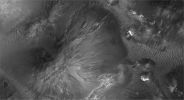
Chaotic_Terrain-Aram_Chaos-R2200155-03.jpgThe "Many Faces" of Aram Chaos (4 - EDM n. 3 - Original NASA/MGS/MSSS b/w Frame)82 visiteIl Dr Skipper, da Ricercatore equilibrato quale è, non sembra optare in maniera netta e decisa (come invece fa il Prof. Hoagland e la sua Scuola) verso l'ipotesi "artificiale e tecnologica" di alcuni degli stranissimi rilievi di Aram Chaos, ma la possibilità - più o meno remota - che qualcuno o qualcosa stia cercando di preservare qualche frammento del "Marte che fu" non è da buttar via aprioristicamente.
Ciò su cui Skipper sembra essere davvero certo, invece, è lo status attuale di Aram Chaos: un tempo un grande lago, oggi un'area soggetta a desertificazione e progressivo inaridimento.
"The older more ancient ecology was no doubt one of a lake in this crater depression. The more recent ecology then is one of a gradually drying old lake bed with diminishing shallow water flowing down many elevated slopes and grades in this generally rough uneven terrain accumulating in the bottom lowest depression catch basin areas. I suspect that some kind of life as represented by the ridge form evidence has followed the receding shallow water flows spreading down the slopes and grades in this shrinking water environment. The orientation of the ridge form evidence many parallel ridges identifies the direction of the shallow water flow down between the ridges as what ever life this represents attempts to follow and husband this gradually diminishing natural resource"Feb 26, 2006
|
|
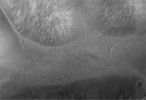
Chaotic_Terrain-Aram_Chaos-R2200155-02.jpgThe "Many Faces" of Aram Chaos (3 - EDM n. 2 - Original NASA/MGS/MSSS b/w Frame)77 visiteUna speculazione ulteriore del Dr Skipper è che una possibile forma di Civiltà Indigena Marziana stia cercando di "salvare il salvabile", ossìa - impiegando sistemi e tecnologie che non riusciamo a comprendere (nè a vedere) - stia tentando in tutti i modi di mantenere almeno un minimo di acque correnti sulla superficie di Marte.
"If so and there are actually extensive civilization populations on Mars, it may seem strange at first blush that so many of them appear to be so focused on water on such a generally arid planet to the point of even getting in the water that is left with their developments. On the other hand, if these populations have historically been part of this drying planetary reality for a very long time and have a historical memory base of more water plentiful times, it may be understandable that they may a bit compulsively try to preserve as much as possible a current semblance of the older loved conditions. Of course there may be other reasons as well"Feb 26, 2006
|
|

Chaotic_Terrain-Aram_Chaos-R2200155-01.jpgThe "Many Faces" of Aram Chaos (2 - EDM n. 1 - Original NASA/MGS/MSSS b/w Frame)84 visiteIl Dr Skipper, per quanto attiene la Regione di Aram Chaos, ritiene di aver individuato (e secondo noi ha ragione) delle aree le quali ci mostrano la presenza di acque superficiali: prevalentemente si tratta di laghi e piccoli fiumi.
Egli dice che, a suo parere, queste aree rappresentano solo un modesto residuo di quelle che, un tempo, circolavano sulla superficie di Marte e che comuque anche queste acque stanno - di fatto - recedendo.
O meglio: esse stanno avviandosi a rinforzare quello che è già il sistema acquifero Marziano. Un sistema fatto di acque correnti e che, come già in molti credono (anche alla NASA...) è prevalentemente - diremmo al 95% - sotterraneo.
"I suspect that water poured into this Aram Chaos depression over a very long period of time saturating it and the subterranean ground systems under it with water. Then came along the current general long lasting dry period producing the remnants of an old very rough uneven lake bed bottom where shallow water still flows down elevated uneven portions of the chaotic terrain accumulating in the lowest catch basin areas you seen here. The cracked plate evidence seen in my first image in the right split screen in the southern part of Aram Chaos is probably washed in and compacted bottom old lake bed sediment collections in more elevated terrain there that has eventually drained dry into the lower areas and the sediment has cracked like great dry mud flats in the process"
Feb 26, 2006
|
|

Chaotic_Terrain-Aram_Chaos-R1501664-00.jpgThe "Many Faces" of Aram Chaos (1 - Original NASA/MGS/MSSS CTX b/w Frame)86 visiteVi avevamo già parlato, in passato, degli studi fatti da un tale Dr Joseph Skipper sia sulla Luna che su Marte. Si trattava - e si tratta - di analisi fotografiche seguite da analisi (giustamente) speculative sul "che cosa si veda effettivamente" in tanti frames NASA.
RinviandoVi al Sito del Dr Skipper per la lettura di tutta la sua (notevole e ben argomentata) teorizzazione - www.marsanomalyresearch.com - abbiamo deciso di proporVi nelle nostre pagine una "summa" di una sua inchiesta, prendendo ad esempio le spettacolari immagini di una porzione della enigmatica Regione Marziana conosciuta come Aram Chaos.
E' evidente che su alcuni dati ed aspetti siamo in accordo con lui; per altri dati ed aspetti, no: ma questo fa parte della Umana Natura, non credete?
Caption originale:"MOC red wide-angle context image R22-00156 -
Local True Solar Time: 14:35 (approx)
Emission angle: 18.05°
Incidence angle: 43.52°
Phase angle: 35.00°
Spacecraft altitude: 388,48 Km
Slant distance: 406,36 KmFeb 26, 2006
|
|
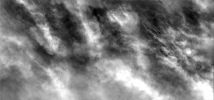
Clouds-South_Polar_Regions-PIA02182-1.jpgThick Clouds over the South Pole (Original NASA/MGS/MSSS b/w Frame)74 visiteCaption originale:"In this image the Martian Surface is completely hidden from view by thick clouds. The thickness of the clouds indicates the dust is a major component of the clouds. Images like this one can provide vital information about the atmosphere and climate of Mars today. This image was collected during late Summer near the South Pole".
Image information: VIS instrument;
Latitude: - 69,9° N;
Longitude: 235,3° E;
Resolution: 17 meter/pixel.Feb 18, 2006
|
|

Craters-Unnamed_Crater_in_Chrise_Planitia-01.jpgUnnamed Crater in Chrise Planitia (Original NASA/MGS/MSSS b/w Frame)97 visiteCaption originale:"This MGS-MOC image shows an impact crater in western Chryse Planitia that is approximately 850 mt (~2790 ft) in diameter, surrounded by a flat plain riddled by hundreds of smaller impact craters".
Location near: 27,6° N; 47,3° W
Image width: ~3 Km (~1,9 mi)
Illumination from: lower left
Season: Northern Winter
Nota: la natura da impatto del cratere ripreso dalla Sonda MGS non può essere, a nostro parere, nè dedotta, nè confutata dalle immagini di cui disponiamo. Ciò che possiamo dire è: qualunque sia l'origine di questo cratere senza nome, come spiegare i curiosi rilievi che sono chiaramente visibili sul suo bordo, ad ore 2, 3 e 6? Si tratta di "gullies"? Diremmo proprio di no. Cedimenti o frane? Difficile dirlo, ma siffatti rilievi, allorchè visti dall'alto, si configurano - di regola - in maniera diversa.
E che dire, in particolare, delle due formazioni oblunghe visibili ad ore 6 (e simili a due craterini ovali...)? Esse sembrano essere il risultato di attività geologicamente "recenti", a nostro avviso, ma la domanda è "quali attività"? Forse nuovi impatti? Certamente no. E allora? E allora noi rilanciamo l'invito, a Studiosi e Ricercatori, affinchè si inizi una radicale riconsiderazione sulla genesi dei crateri: la teoria dell'impatto funziona SOLO sino ad un certo punto. Poi è notte fonda... Feb 13, 2006
|
|
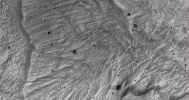
Landslides-Tithonium_Chasma-MGS-02.jpgHuge Landslide near Tithonium Chasma (Original NASA/MGS/MSSS b/w Frame)70 visiteCaption originale:"This MGS-MOC image shows a small portion of a large landslide deposit located on the floor of western Tithonium Chasma".
Location near: 4,3° South Lat. and 87,9° West Long.
Image width: ~3 Km (~1,9 mi)
Illumination from: lower left
Season: Southern SummerFeb 12, 2006
|
|
| 512 immagini su 43 pagina(e) |
 |
|
|
|
|
27 | |
|
|
|
|








