| |

| Ultimi commenti - MOON |
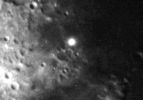
ZZ-ZZ-U-Flare.jpgLunar Flare (1953)262 visitenessun commentoMareKromium07/28/22 at 11:49Paolo C. Fienga: Grazie Frà, un Abbraccio Forte: mi hai commosso...
|
|
ZZ-ZZ-U-Flare.jpgLunar Flare (1953)262 visitenessun commentoMareKromium07/28/22 at 10:30Anakin: E' stato uno dei motivi per cui mi ? piaciuto ...
|
|
ZZ-ZZ-U-Flare.jpgLunar Flare (1953)262 visitenessun commentoMareKromium07/27/22 at 14:15Paolo C. Fienga: Grande Anakin! No, non ricordo quanto scrissi, ma ...
|
|

ZZ-ZZ-U-March-2013-lunar-impact-as-seen-from-Earth_NASAS-Scientific-Viz-Studio.jpgImpact or Volcanic Residual Activity?187 visiteFor a while now, astronomers with their telescopes pointed at the Moon have noticed short flashes of light, multiple times a week on the Moon's surface. The flashes seemed to begin, light up a part of the moon's landscape and die off in a matter of seconds. Other times, it's the exact opposite: the surface grows darker in a small region than the rest of the Moon very briefly.
Oddly, this phenomena has been observed on-and-off by astronomers for over 60 years, but without an explanation for it. A team of researchers from the Julius-Maximilians-Universitat Wurzburg (JMU) in Bavaria, Germany decided they've had enough of the mystery — they're decoding the strange, regular flashes with the hope of finding what's causing the "transient lunar phenomena".
The team has built a special telescope for the task that uses artificial intelligence (AI) to autonomously watch for and pick up on the light flashes.
The telescope collects video and photographs whenever it picks up on a flash of light, which will then be studied by scientists to decode the underlying cause. The team is planning to upgrade it soon with a neural network that can also filter out false positives, like birds and airplanes, from actual flashes from the lunar surface. For now, researchers do have some ideas about what could be causing them.
One of the causes could be the Moon's seismic activity, Hakan Kayal, professor of space technology at JMU, told Metro. "When the surface moves, gases that reflect sunlight could escape from the interior of the moon. This would explain the luminous phenomena, some of which last for hours".
However, the brief flashes that only last minutes or seconds are less understood. The leading theory for these shorter flashes is meteorite impacts. "Such flashes could also occur when electrically charged particles of the solar wind react with moon dust".MareKromium07/27/22 at 14:09Paolo C. Fienga: Grazie Anakin. E' il "Metodo Sperimentale...
|
|
ZZ-ZZ-U-Flare.jpgLunar Flare (1953)262 visitenessun commentoMareKromium07/27/22 at 09:15Anakin: Fosti tu stesso, molti anni fa, a scrivere (pi? o ...
|
|
ZZ-ZZ-U-March-2013-lunar-impact-as-seen-from-Earth_NASAS-Scientific-Viz-Studio.jpgImpact or Volcanic Residual Activity?187 visiteFor a while now, astronomers with their telescopes pointed at the Moon have noticed short flashes of light, multiple times a week on the Moon's surface. The flashes seemed to begin, light up a part of the moon's landscape and die off in a matter of seconds. Other times, it's the exact opposite: the surface grows darker in a small region than the rest of the Moon very briefly.
Oddly, this phenomena has been observed on-and-off by astronomers for over 60 years, but without an explanation for it. A team of researchers from the Julius-Maximilians-Universitat Wurzburg (JMU) in Bavaria, Germany decided they've had enough of the mystery — they're decoding the strange, regular flashes with the hope of finding what's causing the "transient lunar phenomena".
The team has built a special telescope for the task that uses artificial intelligence (AI) to autonomously watch for and pick up on the light flashes.
The telescope collects video and photographs whenever it picks up on a flash of light, which will then be studied by scientists to decode the underlying cause. The team is planning to upgrade it soon with a neural network that can also filter out false positives, like birds and airplanes, from actual flashes from the lunar surface. For now, researchers do have some ideas about what could be causing them.
One of the causes could be the Moon's seismic activity, Hakan Kayal, professor of space technology at JMU, told Metro. "When the surface moves, gases that reflect sunlight could escape from the interior of the moon. This would explain the luminous phenomena, some of which last for hours".
However, the brief flashes that only last minutes or seconds are less understood. The leading theory for these shorter flashes is meteorite impacts. "Such flashes could also occur when electrically charged particles of the solar wind react with moon dust".MareKromium07/27/22 at 09:07Anakin: Sei stato chiaro ed effettivamente questa analisi ...
|
|
ZZ-ZZ-U-Flare.jpgLunar Flare (1953)262 visitenessun commentoMareKromium07/26/22 at 16:08Paolo C. Fienga: Ti quoto Anakin. Io sono pi? familiare con le Tavo...
|
|
ZZ-ZZ-U-March-2013-lunar-impact-as-seen-from-Earth_NASAS-Scientific-Viz-Studio.jpgImpact or Volcanic Residual Activity?187 visiteFor a while now, astronomers with their telescopes pointed at the Moon have noticed short flashes of light, multiple times a week on the Moon's surface. The flashes seemed to begin, light up a part of the moon's landscape and die off in a matter of seconds. Other times, it's the exact opposite: the surface grows darker in a small region than the rest of the Moon very briefly.
Oddly, this phenomena has been observed on-and-off by astronomers for over 60 years, but without an explanation for it. A team of researchers from the Julius-Maximilians-Universitat Wurzburg (JMU) in Bavaria, Germany decided they've had enough of the mystery — they're decoding the strange, regular flashes with the hope of finding what's causing the "transient lunar phenomena".
The team has built a special telescope for the task that uses artificial intelligence (AI) to autonomously watch for and pick up on the light flashes.
The telescope collects video and photographs whenever it picks up on a flash of light, which will then be studied by scientists to decode the underlying cause. The team is planning to upgrade it soon with a neural network that can also filter out false positives, like birds and airplanes, from actual flashes from the lunar surface. For now, researchers do have some ideas about what could be causing them.
One of the causes could be the Moon's seismic activity, Hakan Kayal, professor of space technology at JMU, told Metro. "When the surface moves, gases that reflect sunlight could escape from the interior of the moon. This would explain the luminous phenomena, some of which last for hours".
However, the brief flashes that only last minutes or seconds are less understood. The leading theory for these shorter flashes is meteorite impacts. "Such flashes could also occur when electrically charged particles of the solar wind react with moon dust".MareKromium07/26/22 at 16:00Paolo C. Fienga: La domanda ? pertinente Anakin. Io conosco un solo...
|
|
ZZ-ZZ-U-March-2013-lunar-impact-as-seen-from-Earth_NASAS-Scientific-Viz-Studio.jpgImpact or Volcanic Residual Activity?187 visiteFor a while now, astronomers with their telescopes pointed at the Moon have noticed short flashes of light, multiple times a week on the Moon's surface. The flashes seemed to begin, light up a part of the moon's landscape and die off in a matter of seconds. Other times, it's the exact opposite: the surface grows darker in a small region than the rest of the Moon very briefly.
Oddly, this phenomena has been observed on-and-off by astronomers for over 60 years, but without an explanation for it. A team of researchers from the Julius-Maximilians-Universitat Wurzburg (JMU) in Bavaria, Germany decided they've had enough of the mystery — they're decoding the strange, regular flashes with the hope of finding what's causing the "transient lunar phenomena".
The team has built a special telescope for the task that uses artificial intelligence (AI) to autonomously watch for and pick up on the light flashes.
The telescope collects video and photographs whenever it picks up on a flash of light, which will then be studied by scientists to decode the underlying cause. The team is planning to upgrade it soon with a neural network that can also filter out false positives, like birds and airplanes, from actual flashes from the lunar surface. For now, researchers do have some ideas about what could be causing them.
One of the causes could be the Moon's seismic activity, Hakan Kayal, professor of space technology at JMU, told Metro. "When the surface moves, gases that reflect sunlight could escape from the interior of the moon. This would explain the luminous phenomena, some of which last for hours".
However, the brief flashes that only last minutes or seconds are less understood. The leading theory for these shorter flashes is meteorite impacts. "Such flashes could also occur when electrically charged particles of the solar wind react with moon dust".MareKromium07/26/22 at 10:12Anakin: Quando vedo queste immagini la prima domanda che m...
|
|
ZZ-ZZ-U-Flare.jpgLunar Flare (1953)262 visitenessun commentoMareKromium07/26/22 at 10:04Anakin: Nei testi antichi Vedici, che risalgono a migliaia...
|
|

ZZ-ZZ-U-September-2013.jpgAnother "Meteor Strike"?170 visiteAny type of clustering in sightings would be significant because one would expect a rather random distribution across the surface of the moon. This has not been the case. During Moon-Blink, NASA discovered that almost a third of the known sightings at the time came from the Aristarchus crater. The first known sighting was on February 4th, 1821, by Captain Kater and several more were seen for the next 100 years. Many described the event as resembling a star appearing momentarily in the crater or a wall being illuminated (Armagh, Hanks).
The first notable modern observation of the event took place on October 13, 1959, when E.H. Rowe looked at the crater through his 36-inch telescope. He also saw the white flash, but unlike others, he also spotted a reddish glow that was at the perimeter of the white flash. It lasted a few seconds, then only the normal glow remained. Just over 4 years later, on October 29, 1963, James A, Greenacre and Edward Barr (both at Lowell Observatory) examined the crater. They too saw red, orange, and pink colors but did not secure any pictures. However, Greenacre was established as a well-respected lunar expert, so the findings had some weight to them. And a few days later, on November 1 and 2, 1963 Zdenek Kopal and Thomas Rackham see similar luminescence on the moon and were able to photograph them. These findings were published in Scientific American that year, and more and more sightings of the event were being recorded by others. Astronauts even got a first-hand view of this. During Apollo 11, NASA was told that a TLP was happening at that moment in the crater. They asked the Apollo 11 crew to look at the crater from their vantage point and found that indeed the general area seemed to glow (Seargent 14, Hanks).
The usual theories came into play with the crater to explain its glowing aspects, and it should be noted that Aristarchus has some interesting properties in and of itself that make the seemingly anomalous clustering make more sense. For starts, its albedo (reflectivity) is much higher than its surroundings. Also, it has a central peak in its center that is rather high, catching lots of sunlight and adding to the contrast of its surroundings. And it’s in a prime viewing spot, being easy to spot and also visually interesting to look at. All of these make it a prime location for seeing TLPs.
Hanks, Micah. “The Aristarchus Anomaly: A Beacon on the Moon?” mysteriousuniverse.org. 8th Kind Pty Ltd, 28 Nov. 2013. Web. 25 Sept. 2018MareKromium07/24/22 at 18:46walthari: down, very down...
|
|
ZZ-ZZ-U-Flare.jpgLunar Flare (1953)262 visitenessun commentoMareKromium07/24/22 at 18:43walthari: troppe Paolo, troppe....
|
|
| 1781 immagini su 149 pagina(e) |
|
|
|
|
|
18 | |
|
|
|
|
|
|





