| |

| Ultimi commenti - THE LUNAR EXPLORER ARCHIVES |
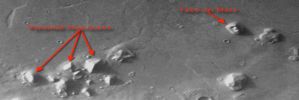
z-The_Face_on_Mars.jpgThe Face on Mars123 visiteIn the AD 1976, many Astronomers were astounded by a (Viking Orbiter) satellite image resembling a Face on the Surface of Mars. What really is that “Face”? Read on to learn more about the face on Mars.
We have already discussed in the past the term "pareidolia". It causes people to see patterns (such as faces and other familiar images) in everyday objects. Many people think that the “Face” on Mars is merely a case of Pareidolia. However, some people believe that the Face exists as a structure created by intelligent design.
But: what exactly do we see when looking at the images of Mars? Mountains? Ancient ruins like the Sphinx or the Pyramids? It seems that everyone has an opinion. And what started this obsession with the face on Mars? In 1976, the Mars Orbiter Viking 1, took a series of pictures of the Martian Region known as Cydonia Mensae. The pictures showed several mountains over a large area. In addition to the hills, and one, in particular, looked like a face. NASA thought it would gain publicity by promoting it to the public. As a consequence, people believed that aliens built this structure on Mars. Located in the Northern Hemisphere of Mars, Cydonia’s Geological Formations suggest the existence of standing water, lakes or even an ocean here for an extended period.
There are several "Mesa-like" structures and smaller flat-topped mountains in the Region. Planetary Researchers believe that parts of these Northern Lowland Plains were once the bed of an ocean or many, and extremely large lakes. Incidentally, they were covered by many layers of various materials (such as, maybe, lava), airborne particles (such as Volcanic Ashes or Atmospheric Particulate), or even Sedimentary Deposits whose depth was of many hundreds of meters. After a long period, erosion removed (some of) these layers. This is just a theory. You may like it or not, but that is it. And it has not been either confirmed or denied. So...
But what about the "Face"? The Martians (accepting the idea that the feature is NOT natural!) thought that another Civilization, in a given period of Time, would have seen and photographed a "Face"? The Mountaintop looks like a three-kilometer-long Face. Why? Because, many Scientists said, the "Terrain features and the angle of shadows led to the creation of the Face". All of the Mars Researchers at the time believed it was an optical illusion. In addition, the HRSC camera captured the Face on Orbit 3253, and the images were published in September 2006. Based on the new photos, the Mountain in question no longer contained a "Face". The angle and lighting removed the “Face” from the image. As a matter of fact, the Mountain now resembles the other Mountains in the area.
This High-Resolution (HR) Images from the Mars Orbiter Camera located on the Mars Global Surveyor Spacecraft showed the famous “Face on Mars” in detail, clearly "demonstarting" that it was a "Natural Geological Formation".
Suspicions of Aliens? The internet has various articles full of ideas and speculation with regards to the Face on Mars. However, it seems everyone wants to believe that Ancient Cvilizations (BUT NOT NECESSARILY INDIGENOUS OF MARS!) once inhabited the Red Planet. Some pictures taken from other man-made satellites seem to suggest the existance of "Pyramidal Structures" near the Face. Furthermore, they think the PyramidS exist nearly (and only) 5 km away from the Face. Dr. John Brandenburg, who worked for NASA, has been speaking about this for years. Brandenburg has worked on Space Plasma Technologies, Nuclear Fusion, and advanced Space Propulsion (and so we think that he's not exactly an "idiot" or just an "incompetent").
“We have found, in a nutshell, that Mars used to seem Earth-like, in the past, and became, eventually, the home not only to life, but a Humanoid Civilization, and that Civilization was apparently destroyed by a Nuclear (?) attack from Space. We have to send our (human) Astronauts there to find out what exactly happened. Did the people on Mars know who did this to them? And how can we make sure that this doesn’t (or won't) happen to us as well?”
Think about this, Ladies and Gentlemen...MareKromium01/11/23 at 13:17Paolo C. Fienga: Ok, ma bloccato perch?? Anch'io son stato bloc...
|
|
z-The_Face_on_Mars.jpgThe Face on Mars123 visiteIn the AD 1976, many Astronomers were astounded by a (Viking Orbiter) satellite image resembling a Face on the Surface of Mars. What really is that “Face”? Read on to learn more about the face on Mars.
We have already discussed in the past the term "pareidolia". It causes people to see patterns (such as faces and other familiar images) in everyday objects. Many people think that the “Face” on Mars is merely a case of Pareidolia. However, some people believe that the Face exists as a structure created by intelligent design.
But: what exactly do we see when looking at the images of Mars? Mountains? Ancient ruins like the Sphinx or the Pyramids? It seems that everyone has an opinion. And what started this obsession with the face on Mars? In 1976, the Mars Orbiter Viking 1, took a series of pictures of the Martian Region known as Cydonia Mensae. The pictures showed several mountains over a large area. In addition to the hills, and one, in particular, looked like a face. NASA thought it would gain publicity by promoting it to the public. As a consequence, people believed that aliens built this structure on Mars. Located in the Northern Hemisphere of Mars, Cydonia’s Geological Formations suggest the existence of standing water, lakes or even an ocean here for an extended period.
There are several "Mesa-like" structures and smaller flat-topped mountains in the Region. Planetary Researchers believe that parts of these Northern Lowland Plains were once the bed of an ocean or many, and extremely large lakes. Incidentally, they were covered by many layers of various materials (such as, maybe, lava), airborne particles (such as Volcanic Ashes or Atmospheric Particulate), or even Sedimentary Deposits whose depth was of many hundreds of meters. After a long period, erosion removed (some of) these layers. This is just a theory. You may like it or not, but that is it. And it has not been either confirmed or denied. So...
But what about the "Face"? The Martians (accepting the idea that the feature is NOT natural!) thought that another Civilization, in a given period of Time, would have seen and photographed a "Face"? The Mountaintop looks like a three-kilometer-long Face. Why? Because, many Scientists said, the "Terrain features and the angle of shadows led to the creation of the Face". All of the Mars Researchers at the time believed it was an optical illusion. In addition, the HRSC camera captured the Face on Orbit 3253, and the images were published in September 2006. Based on the new photos, the Mountain in question no longer contained a "Face". The angle and lighting removed the “Face” from the image. As a matter of fact, the Mountain now resembles the other Mountains in the area.
This High-Resolution (HR) Images from the Mars Orbiter Camera located on the Mars Global Surveyor Spacecraft showed the famous “Face on Mars” in detail, clearly "demonstarting" that it was a "Natural Geological Formation".
Suspicions of Aliens? The internet has various articles full of ideas and speculation with regards to the Face on Mars. However, it seems everyone wants to believe that Ancient Cvilizations (BUT NOT NECESSARILY INDIGENOUS OF MARS!) once inhabited the Red Planet. Some pictures taken from other man-made satellites seem to suggest the existance of "Pyramidal Structures" near the Face. Furthermore, they think the PyramidS exist nearly (and only) 5 km away from the Face. Dr. John Brandenburg, who worked for NASA, has been speaking about this for years. Brandenburg has worked on Space Plasma Technologies, Nuclear Fusion, and advanced Space Propulsion (and so we think that he's not exactly an "idiot" or just an "incompetent").
“We have found, in a nutshell, that Mars used to seem Earth-like, in the past, and became, eventually, the home not only to life, but a Humanoid Civilization, and that Civilization was apparently destroyed by a Nuclear (?) attack from Space. We have to send our (human) Astronauts there to find out what exactly happened. Did the people on Mars know who did this to them? And how can we make sure that this doesn’t (or won't) happen to us as well?”
Think about this, Ladies and Gentlemen...MareKromium01/11/23 at 10:29Ufologo: Caro Paolo, trascuro tutti (e da molto!), visto ch...
|
|
z-The_Face_on_Mars.jpgThe Face on Mars123 visiteIn the AD 1976, many Astronomers were astounded by a (Viking Orbiter) satellite image resembling a Face on the Surface of Mars. What really is that “Face”? Read on to learn more about the face on Mars.
We have already discussed in the past the term "pareidolia". It causes people to see patterns (such as faces and other familiar images) in everyday objects. Many people think that the “Face” on Mars is merely a case of Pareidolia. However, some people believe that the Face exists as a structure created by intelligent design.
But: what exactly do we see when looking at the images of Mars? Mountains? Ancient ruins like the Sphinx or the Pyramids? It seems that everyone has an opinion. And what started this obsession with the face on Mars? In 1976, the Mars Orbiter Viking 1, took a series of pictures of the Martian Region known as Cydonia Mensae. The pictures showed several mountains over a large area. In addition to the hills, and one, in particular, looked like a face. NASA thought it would gain publicity by promoting it to the public. As a consequence, people believed that aliens built this structure on Mars. Located in the Northern Hemisphere of Mars, Cydonia’s Geological Formations suggest the existence of standing water, lakes or even an ocean here for an extended period.
There are several "Mesa-like" structures and smaller flat-topped mountains in the Region. Planetary Researchers believe that parts of these Northern Lowland Plains were once the bed of an ocean or many, and extremely large lakes. Incidentally, they were covered by many layers of various materials (such as, maybe, lava), airborne particles (such as Volcanic Ashes or Atmospheric Particulate), or even Sedimentary Deposits whose depth was of many hundreds of meters. After a long period, erosion removed (some of) these layers. This is just a theory. You may like it or not, but that is it. And it has not been either confirmed or denied. So...
But what about the "Face"? The Martians (accepting the idea that the feature is NOT natural!) thought that another Civilization, in a given period of Time, would have seen and photographed a "Face"? The Mountaintop looks like a three-kilometer-long Face. Why? Because, many Scientists said, the "Terrain features and the angle of shadows led to the creation of the Face". All of the Mars Researchers at the time believed it was an optical illusion. In addition, the HRSC camera captured the Face on Orbit 3253, and the images were published in September 2006. Based on the new photos, the Mountain in question no longer contained a "Face". The angle and lighting removed the “Face” from the image. As a matter of fact, the Mountain now resembles the other Mountains in the area.
This High-Resolution (HR) Images from the Mars Orbiter Camera located on the Mars Global Surveyor Spacecraft showed the famous “Face on Mars” in detail, clearly "demonstarting" that it was a "Natural Geological Formation".
Suspicions of Aliens? The internet has various articles full of ideas and speculation with regards to the Face on Mars. However, it seems everyone wants to believe that Ancient Cvilizations (BUT NOT NECESSARILY INDIGENOUS OF MARS!) once inhabited the Red Planet. Some pictures taken from other man-made satellites seem to suggest the existance of "Pyramidal Structures" near the Face. Furthermore, they think the PyramidS exist nearly (and only) 5 km away from the Face. Dr. John Brandenburg, who worked for NASA, has been speaking about this for years. Brandenburg has worked on Space Plasma Technologies, Nuclear Fusion, and advanced Space Propulsion (and so we think that he's not exactly an "idiot" or just an "incompetent").
“We have found, in a nutshell, that Mars used to seem Earth-like, in the past, and became, eventually, the home not only to life, but a Humanoid Civilization, and that Civilization was apparently destroyed by a Nuclear (?) attack from Space. We have to send our (human) Astronauts there to find out what exactly happened. Did the people on Mars know who did this to them? And how can we make sure that this doesn’t (or won't) happen to us as well?”
Think about this, Ladies and Gentlemen...MareKromium01/10/23 at 16:55Paolo C. Fienga: Grazie Amici. Per Anakin: indiscutibile. Anche da ...
|
|
z-The_Face_on_Mars.jpgThe Face on Mars123 visiteIn the AD 1976, many Astronomers were astounded by a (Viking Orbiter) satellite image resembling a Face on the Surface of Mars. What really is that “Face”? Read on to learn more about the face on Mars.
We have already discussed in the past the term "pareidolia". It causes people to see patterns (such as faces and other familiar images) in everyday objects. Many people think that the “Face” on Mars is merely a case of Pareidolia. However, some people believe that the Face exists as a structure created by intelligent design.
But: what exactly do we see when looking at the images of Mars? Mountains? Ancient ruins like the Sphinx or the Pyramids? It seems that everyone has an opinion. And what started this obsession with the face on Mars? In 1976, the Mars Orbiter Viking 1, took a series of pictures of the Martian Region known as Cydonia Mensae. The pictures showed several mountains over a large area. In addition to the hills, and one, in particular, looked like a face. NASA thought it would gain publicity by promoting it to the public. As a consequence, people believed that aliens built this structure on Mars. Located in the Northern Hemisphere of Mars, Cydonia’s Geological Formations suggest the existence of standing water, lakes or even an ocean here for an extended period.
There are several "Mesa-like" structures and smaller flat-topped mountains in the Region. Planetary Researchers believe that parts of these Northern Lowland Plains were once the bed of an ocean or many, and extremely large lakes. Incidentally, they were covered by many layers of various materials (such as, maybe, lava), airborne particles (such as Volcanic Ashes or Atmospheric Particulate), or even Sedimentary Deposits whose depth was of many hundreds of meters. After a long period, erosion removed (some of) these layers. This is just a theory. You may like it or not, but that is it. And it has not been either confirmed or denied. So...
But what about the "Face"? The Martians (accepting the idea that the feature is NOT natural!) thought that another Civilization, in a given period of Time, would have seen and photographed a "Face"? The Mountaintop looks like a three-kilometer-long Face. Why? Because, many Scientists said, the "Terrain features and the angle of shadows led to the creation of the Face". All of the Mars Researchers at the time believed it was an optical illusion. In addition, the HRSC camera captured the Face on Orbit 3253, and the images were published in September 2006. Based on the new photos, the Mountain in question no longer contained a "Face". The angle and lighting removed the “Face” from the image. As a matter of fact, the Mountain now resembles the other Mountains in the area.
This High-Resolution (HR) Images from the Mars Orbiter Camera located on the Mars Global Surveyor Spacecraft showed the famous “Face on Mars” in detail, clearly "demonstarting" that it was a "Natural Geological Formation".
Suspicions of Aliens? The internet has various articles full of ideas and speculation with regards to the Face on Mars. However, it seems everyone wants to believe that Ancient Cvilizations (BUT NOT NECESSARILY INDIGENOUS OF MARS!) once inhabited the Red Planet. Some pictures taken from other man-made satellites seem to suggest the existance of "Pyramidal Structures" near the Face. Furthermore, they think the PyramidS exist nearly (and only) 5 km away from the Face. Dr. John Brandenburg, who worked for NASA, has been speaking about this for years. Brandenburg has worked on Space Plasma Technologies, Nuclear Fusion, and advanced Space Propulsion (and so we think that he's not exactly an "idiot" or just an "incompetent").
“We have found, in a nutshell, that Mars used to seem Earth-like, in the past, and became, eventually, the home not only to life, but a Humanoid Civilization, and that Civilization was apparently destroyed by a Nuclear (?) attack from Space. We have to send our (human) Astronauts there to find out what exactly happened. Did the people on Mars know who did this to them? And how can we make sure that this doesn’t (or won't) happen to us as well?”
Think about this, Ladies and Gentlemen...MareKromium01/10/23 at 16:03Ufologo: Paolo, ti ho inviato un'E-Mail a proposioto di...
|
|
z-The_Face_on_Mars.jpgThe Face on Mars123 visiteIn the AD 1976, many Astronomers were astounded by a (Viking Orbiter) satellite image resembling a Face on the Surface of Mars. What really is that “Face”? Read on to learn more about the face on Mars.
We have already discussed in the past the term "pareidolia". It causes people to see patterns (such as faces and other familiar images) in everyday objects. Many people think that the “Face” on Mars is merely a case of Pareidolia. However, some people believe that the Face exists as a structure created by intelligent design.
But: what exactly do we see when looking at the images of Mars? Mountains? Ancient ruins like the Sphinx or the Pyramids? It seems that everyone has an opinion. And what started this obsession with the face on Mars? In 1976, the Mars Orbiter Viking 1, took a series of pictures of the Martian Region known as Cydonia Mensae. The pictures showed several mountains over a large area. In addition to the hills, and one, in particular, looked like a face. NASA thought it would gain publicity by promoting it to the public. As a consequence, people believed that aliens built this structure on Mars. Located in the Northern Hemisphere of Mars, Cydonia’s Geological Formations suggest the existence of standing water, lakes or even an ocean here for an extended period.
There are several "Mesa-like" structures and smaller flat-topped mountains in the Region. Planetary Researchers believe that parts of these Northern Lowland Plains were once the bed of an ocean or many, and extremely large lakes. Incidentally, they were covered by many layers of various materials (such as, maybe, lava), airborne particles (such as Volcanic Ashes or Atmospheric Particulate), or even Sedimentary Deposits whose depth was of many hundreds of meters. After a long period, erosion removed (some of) these layers. This is just a theory. You may like it or not, but that is it. And it has not been either confirmed or denied. So...
But what about the "Face"? The Martians (accepting the idea that the feature is NOT natural!) thought that another Civilization, in a given period of Time, would have seen and photographed a "Face"? The Mountaintop looks like a three-kilometer-long Face. Why? Because, many Scientists said, the "Terrain features and the angle of shadows led to the creation of the Face". All of the Mars Researchers at the time believed it was an optical illusion. In addition, the HRSC camera captured the Face on Orbit 3253, and the images were published in September 2006. Based on the new photos, the Mountain in question no longer contained a "Face". The angle and lighting removed the “Face” from the image. As a matter of fact, the Mountain now resembles the other Mountains in the area.
This High-Resolution (HR) Images from the Mars Orbiter Camera located on the Mars Global Surveyor Spacecraft showed the famous “Face on Mars” in detail, clearly "demonstarting" that it was a "Natural Geological Formation".
Suspicions of Aliens? The internet has various articles full of ideas and speculation with regards to the Face on Mars. However, it seems everyone wants to believe that Ancient Cvilizations (BUT NOT NECESSARILY INDIGENOUS OF MARS!) once inhabited the Red Planet. Some pictures taken from other man-made satellites seem to suggest the existance of "Pyramidal Structures" near the Face. Furthermore, they think the PyramidS exist nearly (and only) 5 km away from the Face. Dr. John Brandenburg, who worked for NASA, has been speaking about this for years. Brandenburg has worked on Space Plasma Technologies, Nuclear Fusion, and advanced Space Propulsion (and so we think that he's not exactly an "idiot" or just an "incompetent").
“We have found, in a nutshell, that Mars used to seem Earth-like, in the past, and became, eventually, the home not only to life, but a Humanoid Civilization, and that Civilization was apparently destroyed by a Nuclear (?) attack from Space. We have to send our (human) Astronauts there to find out what exactly happened. Did the people on Mars know who did this to them? And how can we make sure that this doesn’t (or won't) happen to us as well?”
Think about this, Ladies and Gentlemen...MareKromium01/10/23 at 14:38Anakin: Anomala ? sempre stata la disposizione e la presen...
|
|
z-The_Face_on_Mars.jpgThe Face on Mars123 visiteIn the AD 1976, many Astronomers were astounded by a (Viking Orbiter) satellite image resembling a Face on the Surface of Mars. What really is that “Face”? Read on to learn more about the face on Mars.
We have already discussed in the past the term "pareidolia". It causes people to see patterns (such as faces and other familiar images) in everyday objects. Many people think that the “Face” on Mars is merely a case of Pareidolia. However, some people believe that the Face exists as a structure created by intelligent design.
But: what exactly do we see when looking at the images of Mars? Mountains? Ancient ruins like the Sphinx or the Pyramids? It seems that everyone has an opinion. And what started this obsession with the face on Mars? In 1976, the Mars Orbiter Viking 1, took a series of pictures of the Martian Region known as Cydonia Mensae. The pictures showed several mountains over a large area. In addition to the hills, and one, in particular, looked like a face. NASA thought it would gain publicity by promoting it to the public. As a consequence, people believed that aliens built this structure on Mars. Located in the Northern Hemisphere of Mars, Cydonia’s Geological Formations suggest the existence of standing water, lakes or even an ocean here for an extended period.
There are several "Mesa-like" structures and smaller flat-topped mountains in the Region. Planetary Researchers believe that parts of these Northern Lowland Plains were once the bed of an ocean or many, and extremely large lakes. Incidentally, they were covered by many layers of various materials (such as, maybe, lava), airborne particles (such as Volcanic Ashes or Atmospheric Particulate), or even Sedimentary Deposits whose depth was of many hundreds of meters. After a long period, erosion removed (some of) these layers. This is just a theory. You may like it or not, but that is it. And it has not been either confirmed or denied. So...
But what about the "Face"? The Martians (accepting the idea that the feature is NOT natural!) thought that another Civilization, in a given period of Time, would have seen and photographed a "Face"? The Mountaintop looks like a three-kilometer-long Face. Why? Because, many Scientists said, the "Terrain features and the angle of shadows led to the creation of the Face". All of the Mars Researchers at the time believed it was an optical illusion. In addition, the HRSC camera captured the Face on Orbit 3253, and the images were published in September 2006. Based on the new photos, the Mountain in question no longer contained a "Face". The angle and lighting removed the “Face” from the image. As a matter of fact, the Mountain now resembles the other Mountains in the area.
This High-Resolution (HR) Images from the Mars Orbiter Camera located on the Mars Global Surveyor Spacecraft showed the famous “Face on Mars” in detail, clearly "demonstarting" that it was a "Natural Geological Formation".
Suspicions of Aliens? The internet has various articles full of ideas and speculation with regards to the Face on Mars. However, it seems everyone wants to believe that Ancient Cvilizations (BUT NOT NECESSARILY INDIGENOUS OF MARS!) once inhabited the Red Planet. Some pictures taken from other man-made satellites seem to suggest the existance of "Pyramidal Structures" near the Face. Furthermore, they think the PyramidS exist nearly (and only) 5 km away from the Face. Dr. John Brandenburg, who worked for NASA, has been speaking about this for years. Brandenburg has worked on Space Plasma Technologies, Nuclear Fusion, and advanced Space Propulsion (and so we think that he's not exactly an "idiot" or just an "incompetent").
“We have found, in a nutshell, that Mars used to seem Earth-like, in the past, and became, eventually, the home not only to life, but a Humanoid Civilization, and that Civilization was apparently destroyed by a Nuclear (?) attack from Space. We have to send our (human) Astronauts there to find out what exactly happened. Did the people on Mars know who did this to them? And how can we make sure that this doesn’t (or won't) happen to us as well?”
Think about this, Ladies and Gentlemen...MareKromium01/09/23 at 16:48Paolo C. Fienga: Curiosamente, sulla "Face on Mars", anch...
|
|

UFO-CH.jpgFunny-looking Object125 visiteCieli di Zurigo; notte fra il 15 ed il 16 Novembre 2021. Immagine pubblicata (anzi: "Tweettata") da un fotografo locale.
Per alcuni è certamente un UFO (o UAP, come sapete), per altri, invece, si tratta della Navicella Endeavour (di Space-X) in rientro dalla ISS. Ma:"Qualsiasi passaggio di Endeavour sulla Svizzera prima dell'atterraggio quella notte sarebbe stato completamente all'ombra della Terra, cioè non sarebbe stato illuminato dal Sole e quindi non sarebbe stato visibile", ha detto Marco Langbroek, un Ricercatore dell'Università di Leiden, in Olanda, che si è occupato di localizzare l'oggetto. "Il rientro stesso era sul Messico e sul Golfo del Messico, e non sarebbe stato visibile dalla Svizzera. Il rientro in orbita invece era sull'Oceano Indiano, anche quello troppo lontano".
E quindi se non si è trattato della Navicella di Space-X, cos'era questo oggetto?
Sempre Langbroek ha condiviso la sua idea dell'avvistamento: "Sono abbastanza certo che l'"UFO a ciambella" sulle fotografie svizzere sia un'immagine sfuocata di una stella luminosa". Al momento senza riferimenti e senza altre fonti è molto difficile dire cos'era e forse non lo sapremo mai con certezza.
§§§
Nota: che non si tratti di un OVNI - nel senso di "Nave Spaziale Aliena" - sono d'accordo. La foto NON mi convince. Buona la prima risposta del Dr Langgbroek: logica, lineare ed inconfutabile. Ma la dichiarazione, sempre del Dr Langbroek, per cui si tratta di "...un'immagine sfuocata di una stella luminosa..." DIMOSTRA che il succitato ed Illustrissimo - per definizione - Ricercatore Olandese, le stelle (più o meno luminose e fuori fuoco), attraverso un telescopio (quindi "a fuoco diretto" - "live") o fotografate (quindi in visione "cartacea" od "elettronica" - ma in ogni caso "ex post"), non le ha MAI davvero viste.
O meglio: le avrà anche viste, ma NON le ha certo "guardate"! Triste. Molto triste. Ma è normale dire fesserie quando si parla, per giunta "Ex Cathedra", di cose che NON si sanno... - Dr Paolo C. FiengaMareKromium01/08/23 at 16:33Paolo C. Fienga: Si Walt, ? vero. Con un buon telescopio od un otti...
|
|
UFO-CH.jpgFunny-looking Object125 visiteCieli di Zurigo; notte fra il 15 ed il 16 Novembre 2021. Immagine pubblicata (anzi: "Tweettata") da un fotografo locale.
Per alcuni è certamente un UFO (o UAP, come sapete), per altri, invece, si tratta della Navicella Endeavour (di Space-X) in rientro dalla ISS. Ma:"Qualsiasi passaggio di Endeavour sulla Svizzera prima dell'atterraggio quella notte sarebbe stato completamente all'ombra della Terra, cioè non sarebbe stato illuminato dal Sole e quindi non sarebbe stato visibile", ha detto Marco Langbroek, un Ricercatore dell'Università di Leiden, in Olanda, che si è occupato di localizzare l'oggetto. "Il rientro stesso era sul Messico e sul Golfo del Messico, e non sarebbe stato visibile dalla Svizzera. Il rientro in orbita invece era sull'Oceano Indiano, anche quello troppo lontano".
E quindi se non si è trattato della Navicella di Space-X, cos'era questo oggetto?
Sempre Langbroek ha condiviso la sua idea dell'avvistamento: "Sono abbastanza certo che l'"UFO a ciambella" sulle fotografie svizzere sia un'immagine sfuocata di una stella luminosa". Al momento senza riferimenti e senza altre fonti è molto difficile dire cos'era e forse non lo sapremo mai con certezza.
§§§
Nota: che non si tratti di un OVNI - nel senso di "Nave Spaziale Aliena" - sono d'accordo. La foto NON mi convince. Buona la prima risposta del Dr Langgbroek: logica, lineare ed inconfutabile. Ma la dichiarazione, sempre del Dr Langbroek, per cui si tratta di "...un'immagine sfuocata di una stella luminosa..." DIMOSTRA che il succitato ed Illustrissimo - per definizione - Ricercatore Olandese, le stelle (più o meno luminose e fuori fuoco), attraverso un telescopio (quindi "a fuoco diretto" - "live") o fotografate (quindi in visione "cartacea" od "elettronica" - ma in ogni caso "ex post"), non le ha MAI davvero viste.
O meglio: le avrà anche viste, ma NON le ha certo "guardate"! Triste. Molto triste. Ma è normale dire fesserie quando si parla, per giunta "Ex Cathedra", di cose che NON si sanno... - Dr Paolo C. FiengaMareKromium01/08/23 at 08:20walthari: la mia era un'asserzione ironica Paolo, assolu...
|
|
UFO-CH.jpgFunny-looking Object125 visiteCieli di Zurigo; notte fra il 15 ed il 16 Novembre 2021. Immagine pubblicata (anzi: "Tweettata") da un fotografo locale.
Per alcuni è certamente un UFO (o UAP, come sapete), per altri, invece, si tratta della Navicella Endeavour (di Space-X) in rientro dalla ISS. Ma:"Qualsiasi passaggio di Endeavour sulla Svizzera prima dell'atterraggio quella notte sarebbe stato completamente all'ombra della Terra, cioè non sarebbe stato illuminato dal Sole e quindi non sarebbe stato visibile", ha detto Marco Langbroek, un Ricercatore dell'Università di Leiden, in Olanda, che si è occupato di localizzare l'oggetto. "Il rientro stesso era sul Messico e sul Golfo del Messico, e non sarebbe stato visibile dalla Svizzera. Il rientro in orbita invece era sull'Oceano Indiano, anche quello troppo lontano".
E quindi se non si è trattato della Navicella di Space-X, cos'era questo oggetto?
Sempre Langbroek ha condiviso la sua idea dell'avvistamento: "Sono abbastanza certo che l'"UFO a ciambella" sulle fotografie svizzere sia un'immagine sfuocata di una stella luminosa". Al momento senza riferimenti e senza altre fonti è molto difficile dire cos'era e forse non lo sapremo mai con certezza.
§§§
Nota: che non si tratti di un OVNI - nel senso di "Nave Spaziale Aliena" - sono d'accordo. La foto NON mi convince. Buona la prima risposta del Dr Langgbroek: logica, lineare ed inconfutabile. Ma la dichiarazione, sempre del Dr Langbroek, per cui si tratta di "...un'immagine sfuocata di una stella luminosa..." DIMOSTRA che il succitato ed Illustrissimo - per definizione - Ricercatore Olandese, le stelle (più o meno luminose e fuori fuoco), attraverso un telescopio (quindi "a fuoco diretto" - "live") o fotografate (quindi in visione "cartacea" od "elettronica" - ma in ogni caso "ex post"), non le ha MAI davvero viste.
O meglio: le avrà anche viste, ma NON le ha certo "guardate"! Triste. Molto triste. Ma è normale dire fesserie quando si parla, per giunta "Ex Cathedra", di cose che NON si sanno... - Dr Paolo C. FiengaMareKromium01/07/23 at 20:17MareKromium: No Walt. Ho fotografato volutamente stelle ampiame...
|
|

Mars_Alive.jpgWhat did we say (since a long time ago)?!?91 visiteTracce di acqua su Marte. Ce ne dà conto una nuova mappa realizzata a partire dai dati raccolti nel corso di un decennio dal Mars Express di Esa e dal Mars Reconnaissance Orbiter della Nasa. Entrambe le sonde sono in orbita intorno al pianeta rosso e grazie alle informazioni che ci hanno trasmesso negli anni – quella europea, ad esempio, è stata lanciata il 2 giugno 2003 dal Cosmodromo di Baikonur in Kazakistan – gli scienziati hanno creato la mappa più completa di cui disponiamo relativa ai giacimenti minerari marziani.
Si tratta di depositi di minerali idratati, quelli che in un passato remotissimo sono stati alterati dalla presenza dell'acqua, come le argille e i sali. Sapevamo che ce n’erano e le abbiamo anche osservate abbastanza da vicino grazie al rover Curiosity. Tuttavia, come spiega Science-alert, una mappa più ampia di dove poterle trovare ci concede “un’immagine più comprensiva della storia dell’acqua su Marte e ci aiuterà a pianificare future esplorazioni di un pianeta oggi asciutto e polveroso”. Ma che in passato era sensibilmente diverso: secondo la mappa, infatti, ovunque ci si diriga su Marte si scova qualcosa di interessante.
Il nuovo lavoro, guidato dallo scienziato planetario John Carter dell'Università di Parigi-Saclay e dell'università di Aix Marsiglia in Francia, ha identificato più depositi e aree d’interesse di minerali acquosi di quante se ne conoscessero. Se fino a dieci anni fa conoscevamo un migliaio di affioramenti, come spiega Media Inaf «la nuova mappa ha ribaltato la situazione, rivelando centinaia di migliaia di tali aree nelle parti più vecchie del pianeta». L’acqua ha insomma svolto un ruolo essenziale nel plasmare la geologia di un pianeta che oggi ci appare davvero così distante da un posto ricco d’acqua.
Ma la presenza dell’acqua fu persistente o episodica, limitata a una fase della storia del pianeta? Non lo sappiamo ancora perché il quadro risultante dalla nuova mappa è particolarmente complesso, fra sali che sembrano più antichi di alcune argille e zone argillose in cui vi è appunto una stretta mescolanza dei due minerali. Di certo la fase umida fu più lunga di quanto si immaginasse fino a pochi anni fa. “L’evoluzione da molta acqua a niente acqua non è così netta come pensavamo. L’acqua non si è fermata in una notte - spiega infatti Carter - vediamo un’enorme diversità di contesti geologici, così che nessun processo o semplice sequenza temporale può spiegare l’evoluzione della mineralogia di Marte. Questo è il primo risultato del nostro studio. Il secondo è che se si escludono i processi vitali sulla Terra, Marte mostra una diversità di mineralogia in contesti geologici proprio come succede sulla Terra”.
Un altro articolo, pubblicato come la mappa sulla rivista Icarus e con prima firmataria Lucie Riu dell’Institute of Space and Astronautical Science (Isas), Japanese Aerospace eXploration Agency (Jaxa), in Giappone, entra invece nel vivo della pianificazione delle missioni future su Marte sempre sulla base della stessa mappa. In particolare, per l’individuazione dei siti di atterraggio: i minerali acquosi contengono ancora molecole d’acqua e insieme al ghiaccio d’acqua sepolto possono costituire risorse da utilizzare in loco, magari per i futuri insediamenti umani. Intanto, prima delle prospettive fantascientifiche, si tratta di minerali molto interessanti da studiare: basti pensare al cratere di Jezero, dove lo scorso anno è atterrato il rover Perseverance, sito di Oxia Planum, dove atterrerà il rover dell’Esa Rosalind Franklin, costituito di antiche argille piene di minerali ricchi di ferro e magnesio di smectite e vermiculite.
Per anni si è pensato a Marte come a un pianeta morto, spento, semplicemente sferzato dal vento solare per miliardi di anni, fino a che non siamo arrivati ad esplorare la sue superficie e non abbiamo notato strani dettagli, sempre più evidenti, di una qualche attività.
Negli ultimi anni molte teorie affermano che il Pianeta Rosso sia ancora attivo e geologicamente vivo, scosso da terremoti e attraversato da tracce di magma "recente".
Ora una nuova ricerca dice che nell'enorme pianura chiamata Elysium Planitia un colossale pennacchio di convezione largo 4.000 chilometri nel mantello marziano potrebbe spingere il magma fuso fino alla superficie.
"I nostri risultati dimostrano che l'interno di Marte è geodinamicamente attivo oggi", scrivono i geofisici planetari Adrien Broquet e Jeffrey Andrews-Hanna dell'Università dell'Arizona.
"Sebbene Marte sia più piccolo della Terra, si prevede la formazione di teste di pennacchio altrettanto grandi data la minore gravità e la maggiore viscosità del mantello marziano", hanno spiegato.
"Il centro della testa del pennacchio più adatto, basato esclusivamente sui dati di gravità e topografia, si trova esattamente al centro del Cerberus Fossae, dove sono stati localizzati sia il recente vulcanismo che la maggior parte dei terremoti".
Questo sistema di fessure è stato osservato dai satelliti e ha rivelato prove di depositi superficiali vulcanici di 50.000 anni. Ci sono state alcune altre osservazioni strane. Il campo gravitazionale locale dell'Elysium Planitia, ad esempio, è insolitamente forte, coerente con una sorta di attività sotterranea.
Così Broquet e Andres Hanna hanno raccolto dati topografici, gravitazionali, geologici e sismici e si sono messi alla ricerca di un modello adatto.
"L'attività in corso del pennacchio dimostra che Marte non è solo sismicamente e vulcanicamente attivo oggi, ma possiede anche un interno geodinamicamente attivo", hanno scritto i due ricercatori.
"Un pennacchio sotto Elysium Planitia indica anche che i flussi vulcanici superficiali e l'attività sismica non sono eventi isolati, ma parte di un sistema regionale di lunga durata, sostenuto attivamente, con implicazioni per la longevità e il potenziale astrobiologico degli ambienti abitabili del sottosuolo".MareKromium01/07/23 at 20:11MareKromium: Non serve fare commenti eruditi. Qualche "Sci...
|
|
UFO-CH.jpgFunny-looking Object125 visiteCieli di Zurigo; notte fra il 15 ed il 16 Novembre 2021. Immagine pubblicata (anzi: "Tweettata") da un fotografo locale.
Per alcuni è certamente un UFO (o UAP, come sapete), per altri, invece, si tratta della Navicella Endeavour (di Space-X) in rientro dalla ISS. Ma:"Qualsiasi passaggio di Endeavour sulla Svizzera prima dell'atterraggio quella notte sarebbe stato completamente all'ombra della Terra, cioè non sarebbe stato illuminato dal Sole e quindi non sarebbe stato visibile", ha detto Marco Langbroek, un Ricercatore dell'Università di Leiden, in Olanda, che si è occupato di localizzare l'oggetto. "Il rientro stesso era sul Messico e sul Golfo del Messico, e non sarebbe stato visibile dalla Svizzera. Il rientro in orbita invece era sull'Oceano Indiano, anche quello troppo lontano".
E quindi se non si è trattato della Navicella di Space-X, cos'era questo oggetto?
Sempre Langbroek ha condiviso la sua idea dell'avvistamento: "Sono abbastanza certo che l'"UFO a ciambella" sulle fotografie svizzere sia un'immagine sfuocata di una stella luminosa". Al momento senza riferimenti e senza altre fonti è molto difficile dire cos'era e forse non lo sapremo mai con certezza.
§§§
Nota: che non si tratti di un OVNI - nel senso di "Nave Spaziale Aliena" - sono d'accordo. La foto NON mi convince. Buona la prima risposta del Dr Langgbroek: logica, lineare ed inconfutabile. Ma la dichiarazione, sempre del Dr Langbroek, per cui si tratta di "...un'immagine sfuocata di una stella luminosa..." DIMOSTRA che il succitato ed Illustrissimo - per definizione - Ricercatore Olandese, le stelle (più o meno luminose e fuori fuoco), attraverso un telescopio (quindi "a fuoco diretto" - "live") o fotografate (quindi in visione "cartacea" od "elettronica" - ma in ogni caso "ex post"), non le ha MAI davvero viste.
O meglio: le avrà anche viste, ma NON le ha certo "guardate"! Triste. Molto triste. Ma è normale dire fesserie quando si parla, per giunta "Ex Cathedra", di cose che NON si sanno... - Dr Paolo C. FiengaMareKromium01/05/23 at 14:40walthari: una stella (...)
|
|
UFO-CH.jpgFunny-looking Object125 visiteCieli di Zurigo; notte fra il 15 ed il 16 Novembre 2021. Immagine pubblicata (anzi: "Tweettata") da un fotografo locale.
Per alcuni è certamente un UFO (o UAP, come sapete), per altri, invece, si tratta della Navicella Endeavour (di Space-X) in rientro dalla ISS. Ma:"Qualsiasi passaggio di Endeavour sulla Svizzera prima dell'atterraggio quella notte sarebbe stato completamente all'ombra della Terra, cioè non sarebbe stato illuminato dal Sole e quindi non sarebbe stato visibile", ha detto Marco Langbroek, un Ricercatore dell'Università di Leiden, in Olanda, che si è occupato di localizzare l'oggetto. "Il rientro stesso era sul Messico e sul Golfo del Messico, e non sarebbe stato visibile dalla Svizzera. Il rientro in orbita invece era sull'Oceano Indiano, anche quello troppo lontano".
E quindi se non si è trattato della Navicella di Space-X, cos'era questo oggetto?
Sempre Langbroek ha condiviso la sua idea dell'avvistamento: "Sono abbastanza certo che l'"UFO a ciambella" sulle fotografie svizzere sia un'immagine sfuocata di una stella luminosa". Al momento senza riferimenti e senza altre fonti è molto difficile dire cos'era e forse non lo sapremo mai con certezza.
§§§
Nota: che non si tratti di un OVNI - nel senso di "Nave Spaziale Aliena" - sono d'accordo. La foto NON mi convince. Buona la prima risposta del Dr Langgbroek: logica, lineare ed inconfutabile. Ma la dichiarazione, sempre del Dr Langbroek, per cui si tratta di "...un'immagine sfuocata di una stella luminosa..." DIMOSTRA che il succitato ed Illustrissimo - per definizione - Ricercatore Olandese, le stelle (più o meno luminose e fuori fuoco), attraverso un telescopio (quindi "a fuoco diretto" - "live") o fotografate (quindi in visione "cartacea" od "elettronica" - ma in ogni caso "ex post"), non le ha MAI davvero viste.
O meglio: le avrà anche viste, ma NON le ha certo "guardate"! Triste. Molto triste. Ma è normale dire fesserie quando si parla, per giunta "Ex Cathedra", di cose che NON si sanno... - Dr Paolo C. FiengaMareKromium01/01/23 at 21:00Paolo C. Fienga: Sono assolutamente d'accordo con Te, Max. Se q...
|
|
| 4437 immagini su 370 pagina(e) |
|
|
|
|
|
19 | |
|
|
|
|
|
|





