| Ultimi commenti |

Italy.jpgTake a close look...103 visiteSuggestiva. Bisognerebbe farla vedere a qualche "Esperto" dell'Aeronautica Militare ed a tutti i sostenitori delle teorie più assurde e strampalate sul perché il Nord-Italia sia in siccità conclamata da almeno 15 anni. E la situazione non va a migliorare, anzi... Ipotesi?!?MareKromium03/12/23 at 12:52Ufologo: Qui, in Brescia, la neve è diventata ... un mito!
|
|

SOL3762-mars_nasa_gov_msl-raw-images_msss_03762_mcam_3762MR1036890081803309C00_DXXX.jpgFunny-looking Rock - Sol 376288 visiteLe Martian Oddities" non finiscono davvero mai. Due rocce fuse, o "appiccicatesi nelle ere", o la stessa roccia con texture e forma radicalmente diverse alle estremità? O "altro"? Dtelo Voi...MareKromium03/12/23 at 10:51Paolo C. Fienga: Che "roccia" assurda... Walt? Opinioni?!...
|
|

SOL3749-mars_nasa_gov_msl-raw-images_msss_03749_mhli_3749MH0008600001304041C00_DXXX-2.jpgDo you see it now?!? - Sol 3749137 visiteTre ipotesi: luce proveniente da un "Laser Pointer" collocato sulla testa del Rover; un difetto dell'immagine; un cristallo che brilla sotto il Sole. Ce ne sarebbe anche una quarta, ma Ve la risparmio...MareKromium03/12/23 at 10:50Paolo C. Fienga: Vero, ce l'ho anch'io. Per cui? Tua ipotes...
|
|
Italy.jpgTake a close look...103 visiteSuggestiva. Bisognerebbe farla vedere a qualche "Esperto" dell'Aeronautica Militare ed a tutti i sostenitori delle teorie più assurde e strampalate sul perché il Nord-Italia sia in siccità conclamata da almeno 15 anni. E la situazione non va a migliorare, anzi... Ipotesi?!?MareKromium03/12/23 at 10:48Paolo C. Fienga: E' come se le nubi cariche di pioggia "ev...
|
|
SOL3749-mars_nasa_gov_msl-raw-images_msss_03749_mhli_3749MH0008600001304041C00_DXXX-2.jpgDo you see it now?!? - Sol 3749137 visiteTre ipotesi: luce proveniente da un "Laser Pointer" collocato sulla testa del Rover; un difetto dell'immagine; un cristallo che brilla sotto il Sole. Ce ne sarebbe anche una quarta, ma Ve la risparmio...MareKromium03/12/23 at 10:47Ufologo: Visto che ho un laser, quando si punta (ovunque) r...
|
|

SOL3747-mars_nasa_gov_msl-raw-images_proj_msl_redops_ods_surface_sol_03747_opgs_edr_ncam_NRB_730154125EDR_S1000696NCAM00545M_.JPGDark Clouds over Gale - Sol 374780 visiteSuggestiva. Peccato non sia a colori.MareKromium03/12/23 at 10:46Paolo C. Fienga: Le nuvole di Marte son sempre belle e, come scrive...
|
|

SOL3690-mars_nasa_gov_msl-raw-images_proj_msl_redops_ods_surface_sol_03690_opgs_edr_ncam_NRB_725065045EDR_S0990000NCAM00594M_.JPGFunny-shaped "Mounds" - Sol 369090 visiteHo un dubbio: si tratta di "Mounds" o (piccole) "Buttes"?MareKromium03/12/23 at 10:45Paolo C. Fienga: O magari sono affioramenti che mostrano i segni de...
|
|
SOL3749-mars_nasa_gov_msl-raw-images_msss_03749_mhli_3749MH0008600001304041C00_DXXX-2.jpgDo you see it now?!? - Sol 3749137 visiteTre ipotesi: luce proveniente da un "Laser Pointer" collocato sulla testa del Rover; un difetto dell'immagine; un cristallo che brilla sotto il Sole. Ce ne sarebbe anche una quarta, ma Ve la risparmio...MareKromium03/12/23 at 10:44Paolo C. Fienga: Secondo me, quella "lucina rossa" ? davv...
|
|

SOL3423-PIA25176-8192x2276.jpg"(Alli)Gator Back" Rocks on "Greenheugh" - Sol 3423159 visiteNASA’s Curiosity Mars rover used its Mast Camera, or MastCam, to take this 360° panorama on March 23, 2022, the 3.423th Martian Day, or Sol, of the Mission. The team has informally described the wind-sharpened rocks seen here as “gator-back” rocks because of their scaly appearance.
Wind-sharpened rocks like these are called ventifacts, and are responsible for chewing up Curiosity’s wheels earlier in the mission. Since then, rover engineers have found ways to slow wheel wear, including a traction control algorithm. They also plan rover routes that avoid driving over such rocks, including these latest ventifacts, which are made of sandstone – the hardest type of rock Curiosity has encountered on Mars.
These rocks form the Surface of the “Greenheugh Pediment,” a broad, sloping plain in the foothills of Mount Sharp. The floor of Gale Crater is visible along the edges of the mosaic. When Curiosity’s team saw the gator-back rocks, they ultimately decided to turn the rover around and take an alternative path to continue climbing Mount Sharp, a 3,4-mile-tall (approx. 5,5-Km-tall) mountain that Curiosity has been ascending since 2014. As it climbs, Curiosity is able to study different sedimentary layers shaped by water billions of years ago. These layers help scientists understand whether microscopic life could have survived in the ancient Martian Environment.MareKromium03/11/23 at 18:06Ufologo: Ahahahahh! (Meglio ridere va ...)
A proposito d...
|
|

Zhurong-1.jpgA Distant Horizon83 visiteSolita "Cartolina da Marte". Bella. Come e SOLO come "Cartolina" però...MareKromium03/11/23 at 15:42Paolo C. Fienga: Mi citi la fonte per favore? Vorrei farmi quattro ...
|
|
SOL3423-PIA25176-8192x2276.jpg"(Alli)Gator Back" Rocks on "Greenheugh" - Sol 3423159 visiteNASA’s Curiosity Mars rover used its Mast Camera, or MastCam, to take this 360° panorama on March 23, 2022, the 3.423th Martian Day, or Sol, of the Mission. The team has informally described the wind-sharpened rocks seen here as “gator-back” rocks because of their scaly appearance.
Wind-sharpened rocks like these are called ventifacts, and are responsible for chewing up Curiosity’s wheels earlier in the mission. Since then, rover engineers have found ways to slow wheel wear, including a traction control algorithm. They also plan rover routes that avoid driving over such rocks, including these latest ventifacts, which are made of sandstone – the hardest type of rock Curiosity has encountered on Mars.
These rocks form the Surface of the “Greenheugh Pediment,” a broad, sloping plain in the foothills of Mount Sharp. The floor of Gale Crater is visible along the edges of the mosaic. When Curiosity’s team saw the gator-back rocks, they ultimately decided to turn the rover around and take an alternative path to continue climbing Mount Sharp, a 3,4-mile-tall (approx. 5,5-Km-tall) mountain that Curiosity has been ascending since 2014. As it climbs, Curiosity is able to study different sedimentary layers shaped by water billions of years ago. These layers help scientists understand whether microscopic life could have survived in the ancient Martian Environment.MareKromium03/11/23 at 15:26Paolo C. Fienga: Ti quoto al 100% Max. Ormai lavoro e vivo (3/4 gio...
|
|
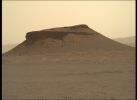
SOL0410-Mars_Perseverance_ZR0_0410_0703339797_332EBY_N0220000ZCAM03343_0340LMJ.pngSliced... - Sol 41081 visitenessun commentoMareKromium03/11/23 at 15:23Paolo C. Fienga: Vero. Questa ? solo leggermente inclinata altrimen...
|
|
| 25244 immagini su 2104 pagina(e) |
 |
|
|
|
|
38 | |
|
|
|
|





