| |
| Ultimi commenti |
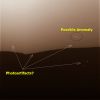
SOL1083-2P222482431EFFASCGP2749R7M1.jpgImage-Artifacts and a (candidate) "Shooting Star"?!? - Sol 1083144 visiteSe ne sono dette tante (e scritte anche di più...), ma la Verità è ancora elusiva, più che mai: il dettaglio cerchiato in questo frame è un semplice image-artifact o si tratta di qualcosa di diverso?
Certo, "quelli che sanno" diranno subito che si tratta di un difetto dell'immagine e, forse, costoro avranno anche ragione...Ma la similitudine (o somiglianza, se Vi piace di più) fra questo "candidate image-artifact/shooting star" ed una "striscia nel cielo" che ha fatto e fa ancora discutere davvero tantissimo, anche alla NASA (era nel cielo di Marte sempre dalla parte di Spirit - che allora si stava avvicinando al Cratere Bonneville), c'è ed è evidente.
E' il segno visibile di un "bolide", come dissero alla NASA ipotizzando anche la natura "artificiale" del bolide stesso - forse la Sonda Viking Orbiter 2 che, entrata in crisi orbitale, abbandonò la sua quieta orbita per precipitare e quindi incenerirsi (come una stella cadente) negli strati superiori dell'atmosfera Marziana?
E' solo una sonda (una delle tante che ruotano attorno a Marte...) in semplice transito?
E' un O.V.N.I.?
O forse - ed infine - è un mero difetto del frame?...
Decidetelo Voi, naturalmente.
Noi una certa idea ce la siamo fatta ma - come si dice? - "non vogliamo condizionare i Lettori con le nostre speculazioni"...01/04/22 at 21:00walthari: auguri!!
|
|

11-Earth and Moon.jpgCrescent Earth and a partly illuminated far-side of the Moon from Lunar Orbiter 4197 visiteCaption NASA originale:"Lunar Orbiter 4 photograph showing a crescent Earth and partly illuminated Moon. The lunar sunset terminator is at 140° E and runs through the large dark-floored crater Tsiolkovsky, about 240 Km diameter towards the bottom of the Moon. The part of the Moon visible in this image is the western far side. North is at 1:00. The frame has been turned upside down to give the correct orientation (Lunar Orbiter 4, frame M-123)".
Location & Time Information
Date/Time (UT): 1967-05-19 T 23:27:54
Distance/Range (km): 6151
Central Latitude/Longitude (deg): +1.13/168.3801/04/22 at 20:56walthari: e chi non lo sarebbe, ti capisco perfettamente, un...
|
|
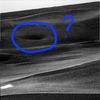
OPP-SOL668-1P187478592EFF64KCP2295L1M1.jpgDark, unusual, recent: a new crater "in the sands"?!? - Sol 668141 visiteOriginal caption:"Left Pan-Cam Non-linearized Full frame EDR acquired on Sol 668 of Opportunity's mission to Meridiani Planum at approx. 09:38:39 MLT.
Camera commanded to use Filter 1 (739 nm)".01/04/22 at 20:55walthari: potrebbe essere il cedimento di antiche cavit? lav...
|
|

Martian_Sunset.jpgTwilights153 visitenessun commentoMareKromium01/04/22 at 20:52walthari: troppo "terrestre" dici?
|
|
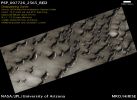
PSP_007726_2565_RED_abrowse-PCF-LXTT-IPF.jpgNorthern Dunes (Absolute Natural Colors; credits for the additional process. and color.: Dr Paolo C. Fienga/Lunar Explorer Italia/Italian Planetary Foundation)110 visiteThis NASA - Mars Reconnaissance Orbiter "HiRISE" image shows a portion of a Dunefield where many large "Barchan" (meaning "Crescent-shaped"), a few "Barchanoid" (meaning a "Non uniformly Crescent-shaped") and some smaller Dome-shaped Sand Dunes can be seen. The Dunefield that contains all these types of Sand Dunes is located in the Northern Regions of Mars and in a specific place where the first significant changes occurring to Sand Dunes was reported on the Red Planet (in the AD 2008). That study made by Dr Bourke (et al.) used a time series of NASA - Mars Global Surveyor (MGS), Mars Orbiter Camera (MOC) images taken over a period of 3 Martian Years (which are equivalent to 6 Earth Years) and showed that 2 (two) approx. 20 meter-wide Dome Dunes disappeared while a third one shrank by an estimated 15%.
Now, the HiRISE image here confirms that the first two Sand Dune studied by Dr Bourke no longer exist but, interestingly, it also suggests that the Sediment removal is still ongoing, since the third Dune has dramatically reduced its volume. On the other hand, it must be noticed and underlined that this "Dune-Changing Process" does not occur in a uniform and generalized way (at least in this specific location), since many of the other large Dunes present in the Dunefield do not show any (apparent/obvious) change; however, more time and some more precise measurements (fit to display evidence of the occurrence of an actual change of the larger Dunes, either in their shape, or their position) are needed in order to achieve a more substantiated conclusion.
In addition to that, we should also consider that it is even possible that the stability of all the other larger Dunes present in the Dunefield might be caused by the circumstance that the Sediment existing inside them is now (let us say "at present time"...) unavailable for removal, due to Induration (meaning that said Sediment became too hard to be blown away by just a simple, even though quite strong sometime, Aeolian Action, but in a future - maybe as a consequence of a dramatic variation in the Surface Temperature of this Region of Mars - its physical conditions could change again, and therefore make it fit to be remodeled, removed or, maybe, totally dispersed).
In the end, the change observed in the small Dome-shaped Dunes indicates, once and for all, that certainly not all Dunes on Mars are effectively and permanently stabilized and immobile, as it was erroneously believed for a long time.
Mars Local Time: 14:10 (Early Afternoon)
Coord. (centered): 76,182° North Lat. and 95,300° East Long.
Spacecraft altitude: 318,0 Km (such as about 198,8 miles)
Original image scale range: 63,6 cm/pixel (with 2 x 2 binning) so objects ~ 1 mt and 91 cm across are resolved
Map projected scale: 50 cm/pixel
Map projection: POLAR STEREOGRAPHIC
Emission Angle: 2,8°
Phase Angle: 62,5°
Solar Incidence Angle: 60° (meaning that the Sun was about 30° above the Local Horizon at the time the picture was taken)
Solar Longitude: 47,6° (Northern Spring- Southern Autumn)
Credits: NASA/JPL/University of Arizona
Additional process. and coloring: Lunar Explorer Italia
This picture (which is a NASA - Original Mars Reconnaissance Orbiter EDM color frame identified by the serial n. PSP_007726_2565) has been additionally processed and then colorized in Absolute Natural Colors (such as the colors that a human eye would actually perceive if someone were onboard the NASA - Mars Reconnaissance Orbiter and then looked down, towards the Surface of Mars), by using an original technique created - and, in time, dramatically improved - by the Lunar Explorer Italia Team.MareKromium01/04/22 at 19:04MareKromium: Ricevute entrambe. Guardo ora. Vi voglio bene! &qu...
|
|
PSP_007726_2565_RED_abrowse-PCF-LXTT-IPF.jpgNorthern Dunes (Absolute Natural Colors; credits for the additional process. and color.: Dr Paolo C. Fienga/Lunar Explorer Italia/Italian Planetary Foundation)110 visiteThis NASA - Mars Reconnaissance Orbiter "HiRISE" image shows a portion of a Dunefield where many large "Barchan" (meaning "Crescent-shaped"), a few "Barchanoid" (meaning a "Non uniformly Crescent-shaped") and some smaller Dome-shaped Sand Dunes can be seen. The Dunefield that contains all these types of Sand Dunes is located in the Northern Regions of Mars and in a specific place where the first significant changes occurring to Sand Dunes was reported on the Red Planet (in the AD 2008). That study made by Dr Bourke (et al.) used a time series of NASA - Mars Global Surveyor (MGS), Mars Orbiter Camera (MOC) images taken over a period of 3 Martian Years (which are equivalent to 6 Earth Years) and showed that 2 (two) approx. 20 meter-wide Dome Dunes disappeared while a third one shrank by an estimated 15%.
Now, the HiRISE image here confirms that the first two Sand Dune studied by Dr Bourke no longer exist but, interestingly, it also suggests that the Sediment removal is still ongoing, since the third Dune has dramatically reduced its volume. On the other hand, it must be noticed and underlined that this "Dune-Changing Process" does not occur in a uniform and generalized way (at least in this specific location), since many of the other large Dunes present in the Dunefield do not show any (apparent/obvious) change; however, more time and some more precise measurements (fit to display evidence of the occurrence of an actual change of the larger Dunes, either in their shape, or their position) are needed in order to achieve a more substantiated conclusion.
In addition to that, we should also consider that it is even possible that the stability of all the other larger Dunes present in the Dunefield might be caused by the circumstance that the Sediment existing inside them is now (let us say "at present time"...) unavailable for removal, due to Induration (meaning that said Sediment became too hard to be blown away by just a simple, even though quite strong sometime, Aeolian Action, but in a future - maybe as a consequence of a dramatic variation in the Surface Temperature of this Region of Mars - its physical conditions could change again, and therefore make it fit to be remodeled, removed or, maybe, totally dispersed).
In the end, the change observed in the small Dome-shaped Dunes indicates, once and for all, that certainly not all Dunes on Mars are effectively and permanently stabilized and immobile, as it was erroneously believed for a long time.
Mars Local Time: 14:10 (Early Afternoon)
Coord. (centered): 76,182° North Lat. and 95,300° East Long.
Spacecraft altitude: 318,0 Km (such as about 198,8 miles)
Original image scale range: 63,6 cm/pixel (with 2 x 2 binning) so objects ~ 1 mt and 91 cm across are resolved
Map projected scale: 50 cm/pixel
Map projection: POLAR STEREOGRAPHIC
Emission Angle: 2,8°
Phase Angle: 62,5°
Solar Incidence Angle: 60° (meaning that the Sun was about 30° above the Local Horizon at the time the picture was taken)
Solar Longitude: 47,6° (Northern Spring- Southern Autumn)
Credits: NASA/JPL/University of Arizona
Additional process. and coloring: Lunar Explorer Italia
This picture (which is a NASA - Original Mars Reconnaissance Orbiter EDM color frame identified by the serial n. PSP_007726_2565) has been additionally processed and then colorized in Absolute Natural Colors (such as the colors that a human eye would actually perceive if someone were onboard the NASA - Mars Reconnaissance Orbiter and then looked down, towards the Surface of Mars), by using an original technique created - and, in time, dramatically improved - by the Lunar Explorer Italia Team.MareKromium01/03/22 at 17:19Ufologo: massimo.staccioli@libero.it
(Ti ho inviato un pai...
|
|
PSP_007726_2565_RED_abrowse-PCF-LXTT-IPF.jpgNorthern Dunes (Absolute Natural Colors; credits for the additional process. and color.: Dr Paolo C. Fienga/Lunar Explorer Italia/Italian Planetary Foundation)110 visiteThis NASA - Mars Reconnaissance Orbiter "HiRISE" image shows a portion of a Dunefield where many large "Barchan" (meaning "Crescent-shaped"), a few "Barchanoid" (meaning a "Non uniformly Crescent-shaped") and some smaller Dome-shaped Sand Dunes can be seen. The Dunefield that contains all these types of Sand Dunes is located in the Northern Regions of Mars and in a specific place where the first significant changes occurring to Sand Dunes was reported on the Red Planet (in the AD 2008). That study made by Dr Bourke (et al.) used a time series of NASA - Mars Global Surveyor (MGS), Mars Orbiter Camera (MOC) images taken over a period of 3 Martian Years (which are equivalent to 6 Earth Years) and showed that 2 (two) approx. 20 meter-wide Dome Dunes disappeared while a third one shrank by an estimated 15%.
Now, the HiRISE image here confirms that the first two Sand Dune studied by Dr Bourke no longer exist but, interestingly, it also suggests that the Sediment removal is still ongoing, since the third Dune has dramatically reduced its volume. On the other hand, it must be noticed and underlined that this "Dune-Changing Process" does not occur in a uniform and generalized way (at least in this specific location), since many of the other large Dunes present in the Dunefield do not show any (apparent/obvious) change; however, more time and some more precise measurements (fit to display evidence of the occurrence of an actual change of the larger Dunes, either in their shape, or their position) are needed in order to achieve a more substantiated conclusion.
In addition to that, we should also consider that it is even possible that the stability of all the other larger Dunes present in the Dunefield might be caused by the circumstance that the Sediment existing inside them is now (let us say "at present time"...) unavailable for removal, due to Induration (meaning that said Sediment became too hard to be blown away by just a simple, even though quite strong sometime, Aeolian Action, but in a future - maybe as a consequence of a dramatic variation in the Surface Temperature of this Region of Mars - its physical conditions could change again, and therefore make it fit to be remodeled, removed or, maybe, totally dispersed).
In the end, the change observed in the small Dome-shaped Dunes indicates, once and for all, that certainly not all Dunes on Mars are effectively and permanently stabilized and immobile, as it was erroneously believed for a long time.
Mars Local Time: 14:10 (Early Afternoon)
Coord. (centered): 76,182° North Lat. and 95,300° East Long.
Spacecraft altitude: 318,0 Km (such as about 198,8 miles)
Original image scale range: 63,6 cm/pixel (with 2 x 2 binning) so objects ~ 1 mt and 91 cm across are resolved
Map projected scale: 50 cm/pixel
Map projection: POLAR STEREOGRAPHIC
Emission Angle: 2,8°
Phase Angle: 62,5°
Solar Incidence Angle: 60° (meaning that the Sun was about 30° above the Local Horizon at the time the picture was taken)
Solar Longitude: 47,6° (Northern Spring- Southern Autumn)
Credits: NASA/JPL/University of Arizona
Additional process. and coloring: Lunar Explorer Italia
This picture (which is a NASA - Original Mars Reconnaissance Orbiter EDM color frame identified by the serial n. PSP_007726_2565) has been additionally processed and then colorized in Absolute Natural Colors (such as the colors that a human eye would actually perceive if someone were onboard the NASA - Mars Reconnaissance Orbiter and then looked down, towards the Surface of Mars), by using an original technique created - and, in time, dramatically improved - by the Lunar Explorer Italia Team.MareKromium01/03/22 at 16:57Paolo C. Fienga: Il Piacere ? stato mio. Te lo ricordi Lando Fiorin...
|
|
PSP_007726_2565_RED_abrowse-PCF-LXTT-IPF.jpgNorthern Dunes (Absolute Natural Colors; credits for the additional process. and color.: Dr Paolo C. Fienga/Lunar Explorer Italia/Italian Planetary Foundation)110 visiteThis NASA - Mars Reconnaissance Orbiter "HiRISE" image shows a portion of a Dunefield where many large "Barchan" (meaning "Crescent-shaped"), a few "Barchanoid" (meaning a "Non uniformly Crescent-shaped") and some smaller Dome-shaped Sand Dunes can be seen. The Dunefield that contains all these types of Sand Dunes is located in the Northern Regions of Mars and in a specific place where the first significant changes occurring to Sand Dunes was reported on the Red Planet (in the AD 2008). That study made by Dr Bourke (et al.) used a time series of NASA - Mars Global Surveyor (MGS), Mars Orbiter Camera (MOC) images taken over a period of 3 Martian Years (which are equivalent to 6 Earth Years) and showed that 2 (two) approx. 20 meter-wide Dome Dunes disappeared while a third one shrank by an estimated 15%.
Now, the HiRISE image here confirms that the first two Sand Dune studied by Dr Bourke no longer exist but, interestingly, it also suggests that the Sediment removal is still ongoing, since the third Dune has dramatically reduced its volume. On the other hand, it must be noticed and underlined that this "Dune-Changing Process" does not occur in a uniform and generalized way (at least in this specific location), since many of the other large Dunes present in the Dunefield do not show any (apparent/obvious) change; however, more time and some more precise measurements (fit to display evidence of the occurrence of an actual change of the larger Dunes, either in their shape, or their position) are needed in order to achieve a more substantiated conclusion.
In addition to that, we should also consider that it is even possible that the stability of all the other larger Dunes present in the Dunefield might be caused by the circumstance that the Sediment existing inside them is now (let us say "at present time"...) unavailable for removal, due to Induration (meaning that said Sediment became too hard to be blown away by just a simple, even though quite strong sometime, Aeolian Action, but in a future - maybe as a consequence of a dramatic variation in the Surface Temperature of this Region of Mars - its physical conditions could change again, and therefore make it fit to be remodeled, removed or, maybe, totally dispersed).
In the end, the change observed in the small Dome-shaped Dunes indicates, once and for all, that certainly not all Dunes on Mars are effectively and permanently stabilized and immobile, as it was erroneously believed for a long time.
Mars Local Time: 14:10 (Early Afternoon)
Coord. (centered): 76,182° North Lat. and 95,300° East Long.
Spacecraft altitude: 318,0 Km (such as about 198,8 miles)
Original image scale range: 63,6 cm/pixel (with 2 x 2 binning) so objects ~ 1 mt and 91 cm across are resolved
Map projected scale: 50 cm/pixel
Map projection: POLAR STEREOGRAPHIC
Emission Angle: 2,8°
Phase Angle: 62,5°
Solar Incidence Angle: 60° (meaning that the Sun was about 30° above the Local Horizon at the time the picture was taken)
Solar Longitude: 47,6° (Northern Spring- Southern Autumn)
Credits: NASA/JPL/University of Arizona
Additional process. and coloring: Lunar Explorer Italia
This picture (which is a NASA - Original Mars Reconnaissance Orbiter EDM color frame identified by the serial n. PSP_007726_2565) has been additionally processed and then colorized in Absolute Natural Colors (such as the colors that a human eye would actually perceive if someone were onboard the NASA - Mars Reconnaissance Orbiter and then looked down, towards the Surface of Mars), by using an original technique created - and, in time, dramatically improved - by the Lunar Explorer Italia Team.MareKromium01/03/22 at 14:26Ufologo: Grazie di TUTTO Paolo! E' stato un vero piacer...
|
|
PSP_007726_2565_RED_abrowse-PCF-LXTT-IPF.jpgNorthern Dunes (Absolute Natural Colors; credits for the additional process. and color.: Dr Paolo C. Fienga/Lunar Explorer Italia/Italian Planetary Foundation)110 visiteThis NASA - Mars Reconnaissance Orbiter "HiRISE" image shows a portion of a Dunefield where many large "Barchan" (meaning "Crescent-shaped"), a few "Barchanoid" (meaning a "Non uniformly Crescent-shaped") and some smaller Dome-shaped Sand Dunes can be seen. The Dunefield that contains all these types of Sand Dunes is located in the Northern Regions of Mars and in a specific place where the first significant changes occurring to Sand Dunes was reported on the Red Planet (in the AD 2008). That study made by Dr Bourke (et al.) used a time series of NASA - Mars Global Surveyor (MGS), Mars Orbiter Camera (MOC) images taken over a period of 3 Martian Years (which are equivalent to 6 Earth Years) and showed that 2 (two) approx. 20 meter-wide Dome Dunes disappeared while a third one shrank by an estimated 15%.
Now, the HiRISE image here confirms that the first two Sand Dune studied by Dr Bourke no longer exist but, interestingly, it also suggests that the Sediment removal is still ongoing, since the third Dune has dramatically reduced its volume. On the other hand, it must be noticed and underlined that this "Dune-Changing Process" does not occur in a uniform and generalized way (at least in this specific location), since many of the other large Dunes present in the Dunefield do not show any (apparent/obvious) change; however, more time and some more precise measurements (fit to display evidence of the occurrence of an actual change of the larger Dunes, either in their shape, or their position) are needed in order to achieve a more substantiated conclusion.
In addition to that, we should also consider that it is even possible that the stability of all the other larger Dunes present in the Dunefield might be caused by the circumstance that the Sediment existing inside them is now (let us say "at present time"...) unavailable for removal, due to Induration (meaning that said Sediment became too hard to be blown away by just a simple, even though quite strong sometime, Aeolian Action, but in a future - maybe as a consequence of a dramatic variation in the Surface Temperature of this Region of Mars - its physical conditions could change again, and therefore make it fit to be remodeled, removed or, maybe, totally dispersed).
In the end, the change observed in the small Dome-shaped Dunes indicates, once and for all, that certainly not all Dunes on Mars are effectively and permanently stabilized and immobile, as it was erroneously believed for a long time.
Mars Local Time: 14:10 (Early Afternoon)
Coord. (centered): 76,182° North Lat. and 95,300° East Long.
Spacecraft altitude: 318,0 Km (such as about 198,8 miles)
Original image scale range: 63,6 cm/pixel (with 2 x 2 binning) so objects ~ 1 mt and 91 cm across are resolved
Map projected scale: 50 cm/pixel
Map projection: POLAR STEREOGRAPHIC
Emission Angle: 2,8°
Phase Angle: 62,5°
Solar Incidence Angle: 60° (meaning that the Sun was about 30° above the Local Horizon at the time the picture was taken)
Solar Longitude: 47,6° (Northern Spring- Southern Autumn)
Credits: NASA/JPL/University of Arizona
Additional process. and coloring: Lunar Explorer Italia
This picture (which is a NASA - Original Mars Reconnaissance Orbiter EDM color frame identified by the serial n. PSP_007726_2565) has been additionally processed and then colorized in Absolute Natural Colors (such as the colors that a human eye would actually perceive if someone were onboard the NASA - Mars Reconnaissance Orbiter and then looked down, towards the Surface of Mars), by using an original technique created - and, in time, dramatically improved - by the Lunar Explorer Italia Team.MareKromium01/03/22 at 11:52Paolo C. Fienga: Dille che prego per Lei, per favore. Magari raccon...
|
|
PSP_007726_2565_RED_abrowse-PCF-LXTT-IPF.jpgNorthern Dunes (Absolute Natural Colors; credits for the additional process. and color.: Dr Paolo C. Fienga/Lunar Explorer Italia/Italian Planetary Foundation)110 visiteThis NASA - Mars Reconnaissance Orbiter "HiRISE" image shows a portion of a Dunefield where many large "Barchan" (meaning "Crescent-shaped"), a few "Barchanoid" (meaning a "Non uniformly Crescent-shaped") and some smaller Dome-shaped Sand Dunes can be seen. The Dunefield that contains all these types of Sand Dunes is located in the Northern Regions of Mars and in a specific place where the first significant changes occurring to Sand Dunes was reported on the Red Planet (in the AD 2008). That study made by Dr Bourke (et al.) used a time series of NASA - Mars Global Surveyor (MGS), Mars Orbiter Camera (MOC) images taken over a period of 3 Martian Years (which are equivalent to 6 Earth Years) and showed that 2 (two) approx. 20 meter-wide Dome Dunes disappeared while a third one shrank by an estimated 15%.
Now, the HiRISE image here confirms that the first two Sand Dune studied by Dr Bourke no longer exist but, interestingly, it also suggests that the Sediment removal is still ongoing, since the third Dune has dramatically reduced its volume. On the other hand, it must be noticed and underlined that this "Dune-Changing Process" does not occur in a uniform and generalized way (at least in this specific location), since many of the other large Dunes present in the Dunefield do not show any (apparent/obvious) change; however, more time and some more precise measurements (fit to display evidence of the occurrence of an actual change of the larger Dunes, either in their shape, or their position) are needed in order to achieve a more substantiated conclusion.
In addition to that, we should also consider that it is even possible that the stability of all the other larger Dunes present in the Dunefield might be caused by the circumstance that the Sediment existing inside them is now (let us say "at present time"...) unavailable for removal, due to Induration (meaning that said Sediment became too hard to be blown away by just a simple, even though quite strong sometime, Aeolian Action, but in a future - maybe as a consequence of a dramatic variation in the Surface Temperature of this Region of Mars - its physical conditions could change again, and therefore make it fit to be remodeled, removed or, maybe, totally dispersed).
In the end, the change observed in the small Dome-shaped Dunes indicates, once and for all, that certainly not all Dunes on Mars are effectively and permanently stabilized and immobile, as it was erroneously believed for a long time.
Mars Local Time: 14:10 (Early Afternoon)
Coord. (centered): 76,182° North Lat. and 95,300° East Long.
Spacecraft altitude: 318,0 Km (such as about 198,8 miles)
Original image scale range: 63,6 cm/pixel (with 2 x 2 binning) so objects ~ 1 mt and 91 cm across are resolved
Map projected scale: 50 cm/pixel
Map projection: POLAR STEREOGRAPHIC
Emission Angle: 2,8°
Phase Angle: 62,5°
Solar Incidence Angle: 60° (meaning that the Sun was about 30° above the Local Horizon at the time the picture was taken)
Solar Longitude: 47,6° (Northern Spring- Southern Autumn)
Credits: NASA/JPL/University of Arizona
Additional process. and coloring: Lunar Explorer Italia
This picture (which is a NASA - Original Mars Reconnaissance Orbiter EDM color frame identified by the serial n. PSP_007726_2565) has been additionally processed and then colorized in Absolute Natural Colors (such as the colors that a human eye would actually perceive if someone were onboard the NASA - Mars Reconnaissance Orbiter and then looked down, towards the Surface of Mars), by using an original technique created - and, in time, dramatically improved - by the Lunar Explorer Italia Team.MareKromium01/03/22 at 11:43Ufologo: Mia moglie ti ringrazia! (E anche il sottoscritto ...
|
|
PSP_007726_2565_RED_abrowse-PCF-LXTT-IPF.jpgNorthern Dunes (Absolute Natural Colors; credits for the additional process. and color.: Dr Paolo C. Fienga/Lunar Explorer Italia/Italian Planetary Foundation)110 visiteThis NASA - Mars Reconnaissance Orbiter "HiRISE" image shows a portion of a Dunefield where many large "Barchan" (meaning "Crescent-shaped"), a few "Barchanoid" (meaning a "Non uniformly Crescent-shaped") and some smaller Dome-shaped Sand Dunes can be seen. The Dunefield that contains all these types of Sand Dunes is located in the Northern Regions of Mars and in a specific place where the first significant changes occurring to Sand Dunes was reported on the Red Planet (in the AD 2008). That study made by Dr Bourke (et al.) used a time series of NASA - Mars Global Surveyor (MGS), Mars Orbiter Camera (MOC) images taken over a period of 3 Martian Years (which are equivalent to 6 Earth Years) and showed that 2 (two) approx. 20 meter-wide Dome Dunes disappeared while a third one shrank by an estimated 15%.
Now, the HiRISE image here confirms that the first two Sand Dune studied by Dr Bourke no longer exist but, interestingly, it also suggests that the Sediment removal is still ongoing, since the third Dune has dramatically reduced its volume. On the other hand, it must be noticed and underlined that this "Dune-Changing Process" does not occur in a uniform and generalized way (at least in this specific location), since many of the other large Dunes present in the Dunefield do not show any (apparent/obvious) change; however, more time and some more precise measurements (fit to display evidence of the occurrence of an actual change of the larger Dunes, either in their shape, or their position) are needed in order to achieve a more substantiated conclusion.
In addition to that, we should also consider that it is even possible that the stability of all the other larger Dunes present in the Dunefield might be caused by the circumstance that the Sediment existing inside them is now (let us say "at present time"...) unavailable for removal, due to Induration (meaning that said Sediment became too hard to be blown away by just a simple, even though quite strong sometime, Aeolian Action, but in a future - maybe as a consequence of a dramatic variation in the Surface Temperature of this Region of Mars - its physical conditions could change again, and therefore make it fit to be remodeled, removed or, maybe, totally dispersed).
In the end, the change observed in the small Dome-shaped Dunes indicates, once and for all, that certainly not all Dunes on Mars are effectively and permanently stabilized and immobile, as it was erroneously believed for a long time.
Mars Local Time: 14:10 (Early Afternoon)
Coord. (centered): 76,182° North Lat. and 95,300° East Long.
Spacecraft altitude: 318,0 Km (such as about 198,8 miles)
Original image scale range: 63,6 cm/pixel (with 2 x 2 binning) so objects ~ 1 mt and 91 cm across are resolved
Map projected scale: 50 cm/pixel
Map projection: POLAR STEREOGRAPHIC
Emission Angle: 2,8°
Phase Angle: 62,5°
Solar Incidence Angle: 60° (meaning that the Sun was about 30° above the Local Horizon at the time the picture was taken)
Solar Longitude: 47,6° (Northern Spring- Southern Autumn)
Credits: NASA/JPL/University of Arizona
Additional process. and coloring: Lunar Explorer Italia
This picture (which is a NASA - Original Mars Reconnaissance Orbiter EDM color frame identified by the serial n. PSP_007726_2565) has been additionally processed and then colorized in Absolute Natural Colors (such as the colors that a human eye would actually perceive if someone were onboard the NASA - Mars Reconnaissance Orbiter and then looked down, towards the Surface of Mars), by using an original technique created - and, in time, dramatically improved - by the Lunar Explorer Italia Team.MareKromium01/02/22 at 19:25Paolo C. Fienga: Sono contento di averti fatto ridere Amico Mio. Mi...
|
|
PSP_007726_2565_RED_abrowse-PCF-LXTT-IPF.jpgNorthern Dunes (Absolute Natural Colors; credits for the additional process. and color.: Dr Paolo C. Fienga/Lunar Explorer Italia/Italian Planetary Foundation)110 visiteThis NASA - Mars Reconnaissance Orbiter "HiRISE" image shows a portion of a Dunefield where many large "Barchan" (meaning "Crescent-shaped"), a few "Barchanoid" (meaning a "Non uniformly Crescent-shaped") and some smaller Dome-shaped Sand Dunes can be seen. The Dunefield that contains all these types of Sand Dunes is located in the Northern Regions of Mars and in a specific place where the first significant changes occurring to Sand Dunes was reported on the Red Planet (in the AD 2008). That study made by Dr Bourke (et al.) used a time series of NASA - Mars Global Surveyor (MGS), Mars Orbiter Camera (MOC) images taken over a period of 3 Martian Years (which are equivalent to 6 Earth Years) and showed that 2 (two) approx. 20 meter-wide Dome Dunes disappeared while a third one shrank by an estimated 15%.
Now, the HiRISE image here confirms that the first two Sand Dune studied by Dr Bourke no longer exist but, interestingly, it also suggests that the Sediment removal is still ongoing, since the third Dune has dramatically reduced its volume. On the other hand, it must be noticed and underlined that this "Dune-Changing Process" does not occur in a uniform and generalized way (at least in this specific location), since many of the other large Dunes present in the Dunefield do not show any (apparent/obvious) change; however, more time and some more precise measurements (fit to display evidence of the occurrence of an actual change of the larger Dunes, either in their shape, or their position) are needed in order to achieve a more substantiated conclusion.
In addition to that, we should also consider that it is even possible that the stability of all the other larger Dunes present in the Dunefield might be caused by the circumstance that the Sediment existing inside them is now (let us say "at present time"...) unavailable for removal, due to Induration (meaning that said Sediment became too hard to be blown away by just a simple, even though quite strong sometime, Aeolian Action, but in a future - maybe as a consequence of a dramatic variation in the Surface Temperature of this Region of Mars - its physical conditions could change again, and therefore make it fit to be remodeled, removed or, maybe, totally dispersed).
In the end, the change observed in the small Dome-shaped Dunes indicates, once and for all, that certainly not all Dunes on Mars are effectively and permanently stabilized and immobile, as it was erroneously believed for a long time.
Mars Local Time: 14:10 (Early Afternoon)
Coord. (centered): 76,182° North Lat. and 95,300° East Long.
Spacecraft altitude: 318,0 Km (such as about 198,8 miles)
Original image scale range: 63,6 cm/pixel (with 2 x 2 binning) so objects ~ 1 mt and 91 cm across are resolved
Map projected scale: 50 cm/pixel
Map projection: POLAR STEREOGRAPHIC
Emission Angle: 2,8°
Phase Angle: 62,5°
Solar Incidence Angle: 60° (meaning that the Sun was about 30° above the Local Horizon at the time the picture was taken)
Solar Longitude: 47,6° (Northern Spring- Southern Autumn)
Credits: NASA/JPL/University of Arizona
Additional process. and coloring: Lunar Explorer Italia
This picture (which is a NASA - Original Mars Reconnaissance Orbiter EDM color frame identified by the serial n. PSP_007726_2565) has been additionally processed and then colorized in Absolute Natural Colors (such as the colors that a human eye would actually perceive if someone were onboard the NASA - Mars Reconnaissance Orbiter and then looked down, towards the Surface of Mars), by using an original technique created - and, in time, dramatically improved - by the Lunar Explorer Italia Team.MareKromium01/02/22 at 17:50Ufologo: Ahahhaahahah! Paolo! (Rido per quello che scrivi p...
|
|
| 25244 immagini su 2104 pagina(e) |
 |
|
|
|
|
203 | |
|
|
|
|
|
|





