| |
| Ultimi commenti |

Volcanoes-Arsia_Mons-03-PIA04294.jpgArsia Mons and its "clouds" (3) - 25 February 2005 (Extremely Saturated Natural Colors; credits NASA/JPL/MSSS)102 visiteOriginal caption:"The spiral dust cloud over Arsia Mons repeats each year, but observations and computer calculations indicate it can only form during a short period of time each year. Similar spiral clouds have not been seen over the other large Tharsis volcanoes, but other types of clouds have been seen. The spiral dust cloud over Arsia Mons can tower 15 to 30 Km (9 to 19 miles) above the volcano. The white and bluish areas in the images are thin clouds of water ice. In the 2005 case, more water ice was present than in the previous years at the time the pictures were obtained. For scale, the caldera of Arsia Mons is about 110 Km (about 68 miles) across, and the summit of the volcano stands about 10 Km (6 miles) above its surrounding plains"01/31/22 at 11:12Paolo C. Fienga: ...avete, correttamente, menzionato degli "ef...
|
|
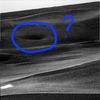
OPP-SOL668-1P187478592EFF64KCP2295L1M1.jpgDark, unusual, recent: a new crater "in the sands"?!? - Sol 668141 visiteOriginal caption:"Left Pan-Cam Non-linearized Full frame EDR acquired on Sol 668 of Opportunity's mission to Meridiani Planum at approx. 09:38:39 MLT.
Camera commanded to use Filter 1 (739 nm)".01/31/22 at 11:10Paolo C. Fienga: Non lo trovo Walt. Non risponde. Mandami, per favo...
|
|
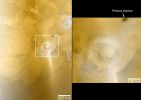
Volcanoes-Arsia_Mons.jpgArsia Mons with Water-Ice Clouds and the shadow of Phobos (credits NASA/JPL/MSSS)102 visiteCaption originale:"This pair of MGS-MOC color images shows early Autumn Clouds over the Arsia Mons Volcano, plus the shadow of the innermost of the Martain Moon Phobos. The picture on the left is taken from the MOC daily global map acquired at 7,5 km (~4,7 mi) per pixel on 28 January 2006, about a week after the start of Southern Autumn.
The picture on the right was taken at the same time, but at a higher resolution of 489 mt (~1604 ft) per pixel.
Both pictures are composites of MOC red and blue wide angle images, and both are oriented such that North is up and East is to the right. Arsia Mons and the other large Tharsis volcanoes commonly develop afternoon orographic (i.e., topographically-controlled) water ice clouds at this time of year. The equatorial Tharsis volcano, Pavonis Mons, is also under a deck of Water-Ice Clouds; it is located toward the upper right corner of the left, lower-resolution image.
Sunlight glints off the dusty Surface and the Clouds and Aerosols in the Atmosphere, producing the bright diagonal Streak located just South/East (lower right) of Arsia Mons. A Water-Ice Haze is seen on the left side of the lower-resolution image. The dark oval to the North-East of Arsia Mons, as noted above, is the shadow of Phobos".01/31/22 at 11:08Paolo C. Fienga: ...ovviamente... ;-)
|
|

Volcanoes-Arsia_Mons_and_the_Tharsis_Montes-December_2012-PCF-LXTT-IPF-2.jpgOnce again...351 visiteE' divertente. Sempre lo stesso tipo di "nuvola", sempre lo stesso tipo di conformazione ed orientazione della stessa, sempre "in partenza" dal fianco superiore Sx del gigantesco Vulcano Arsia Mons e sempre interpretata come il frutto di semplici ed ovvi eventi atmosferici. Dalle immagini NASA - Viking - ottenute poco prima dell'inserzione orbitale, negli Anni '80 - ad un'altra serie di immagini ottenute ancora dalla Sonda ESA Mars Express nel 2008.
Questo il commentino ufficiale: "It's not a plume of smoke, but rather water ice clouds condensing out over the Summit of the Arsia Mons Volcano. We see them quite often over this particular volcano" - nota: la Scienziata è una tale Tanya Harrison - Planetary Scientist - NASA - Opportunity Rover Team).
Vi suggerisco, in un Mondo che va sempre più verso il "Pensiero Unico", di guardare questa immagine in correlazione agli altri (citati) eventi similari ed eclatanti occorsi, negli anni, sempre allo stesso posto. Non dubito (o forse si...) della competenza della Dott.ssa Harrison. Dubito della Sua (e non solo) perenne esternazione di certezze. Ecco. E questo atteggiamento, oltre ad irritarmi non poco, mi fa anche paura. Pensateci su. Magari guardando gli altri frames che possediamo e ragionando.
Nota: se doveste chiederVi come mai, di questo evento, parla una Scienziata Planetaria dell'Opportunity Rover Team e non chi se ne intende (davvero) di Vulcanologia e di Scienze Atmosferiche mentre l'ESA - come sempre o quasi fa - non ha detto un tubo, apprezzerei il quesito. Ma Vi dico subito che non saprei rispondere. O meglio: potrei! Ma rischierei la querela...MareKromium01/31/22 at 11:08Paolo C. Fienga: Grande Anakin. Per quel che vale, approvo. Con dol...
|
|
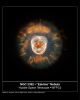
NGC-2392.jpgNGC 2392 - The "Eskimo Nebula" (HST)87 visite"...Tempora sic fugiunt pariter, pariterque sequuntur et nova sunt semper..."
(Ovidio)
"...Così, in un omogeneo e coerente fluire, si fuggono i giorni e, in egual modo, altri ne giungono: e, tutti, sono (pur) sempre (giorni) nuovi..."01/31/22 at 11:06Paolo C. Fienga: Oggi come oggi, Amico Mio, temo di si. Tralasciamo...
|
|
Volcanoes-Arsia_Mons_and_the_Tharsis_Montes-December_2012-PCF-LXTT-IPF-2.jpgOnce again...351 visiteE' divertente. Sempre lo stesso tipo di "nuvola", sempre lo stesso tipo di conformazione ed orientazione della stessa, sempre "in partenza" dal fianco superiore Sx del gigantesco Vulcano Arsia Mons e sempre interpretata come il frutto di semplici ed ovvi eventi atmosferici. Dalle immagini NASA - Viking - ottenute poco prima dell'inserzione orbitale, negli Anni '80 - ad un'altra serie di immagini ottenute ancora dalla Sonda ESA Mars Express nel 2008.
Questo il commentino ufficiale: "It's not a plume of smoke, but rather water ice clouds condensing out over the Summit of the Arsia Mons Volcano. We see them quite often over this particular volcano" - nota: la Scienziata è una tale Tanya Harrison - Planetary Scientist - NASA - Opportunity Rover Team).
Vi suggerisco, in un Mondo che va sempre più verso il "Pensiero Unico", di guardare questa immagine in correlazione agli altri (citati) eventi similari ed eclatanti occorsi, negli anni, sempre allo stesso posto. Non dubito (o forse si...) della competenza della Dott.ssa Harrison. Dubito della Sua (e non solo) perenne esternazione di certezze. Ecco. E questo atteggiamento, oltre ad irritarmi non poco, mi fa anche paura. Pensateci su. Magari guardando gli altri frames che possediamo e ragionando.
Nota: se doveste chiederVi come mai, di questo evento, parla una Scienziata Planetaria dell'Opportunity Rover Team e non chi se ne intende (davvero) di Vulcanologia e di Scienze Atmosferiche mentre l'ESA - come sempre o quasi fa - non ha detto un tubo, apprezzerei il quesito. Ma Vi dico subito che non saprei rispondere. O meglio: potrei! Ma rischierei la querela...MareKromium01/31/22 at 09:43Anakin: S? Walt, esiste, in altri ambiti non visibili agli...
|
|
Volcanoes-Arsia_Mons.jpgArsia Mons with Water-Ice Clouds and the shadow of Phobos (credits NASA/JPL/MSSS)102 visiteCaption originale:"This pair of MGS-MOC color images shows early Autumn Clouds over the Arsia Mons Volcano, plus the shadow of the innermost of the Martain Moon Phobos. The picture on the left is taken from the MOC daily global map acquired at 7,5 km (~4,7 mi) per pixel on 28 January 2006, about a week after the start of Southern Autumn.
The picture on the right was taken at the same time, but at a higher resolution of 489 mt (~1604 ft) per pixel.
Both pictures are composites of MOC red and blue wide angle images, and both are oriented such that North is up and East is to the right. Arsia Mons and the other large Tharsis volcanoes commonly develop afternoon orographic (i.e., topographically-controlled) water ice clouds at this time of year. The equatorial Tharsis volcano, Pavonis Mons, is also under a deck of Water-Ice Clouds; it is located toward the upper right corner of the left, lower-resolution image.
Sunlight glints off the dusty Surface and the Clouds and Aerosols in the Atmosphere, producing the bright diagonal Streak located just South/East (lower right) of Arsia Mons. A Water-Ice Haze is seen on the left side of the lower-resolution image. The dark oval to the North-East of Arsia Mons, as noted above, is the shadow of Phobos".01/31/22 at 09:41Anakin: un pianeta fatto passare per totalmente morto, att...
|
|
Volcanoes-Arsia_Mons-03-PIA04294.jpgArsia Mons and its "clouds" (3) - 25 February 2005 (Extremely Saturated Natural Colors; credits NASA/JPL/MSSS)102 visiteOriginal caption:"The spiral dust cloud over Arsia Mons repeats each year, but observations and computer calculations indicate it can only form during a short period of time each year. Similar spiral clouds have not been seen over the other large Tharsis volcanoes, but other types of clouds have been seen. The spiral dust cloud over Arsia Mons can tower 15 to 30 Km (9 to 19 miles) above the volcano. The white and bluish areas in the images are thin clouds of water ice. In the 2005 case, more water ice was present than in the previous years at the time the pictures were obtained. For scale, the caldera of Arsia Mons is about 110 Km (about 68 miles) across, and the summit of the volcano stands about 10 Km (6 miles) above its surrounding plains"01/31/22 at 09:38Anakin: Devono affossarla economicamente, ridurre le attiv...
|
|
OPP-SOL668-1P187478592EFF64KCP2295L1M1.jpgDark, unusual, recent: a new crater "in the sands"?!? - Sol 668141 visiteOriginal caption:"Left Pan-Cam Non-linearized Full frame EDR acquired on Sol 668 of Opportunity's mission to Meridiani Planum at approx. 09:38:39 MLT.
Camera commanded to use Filter 1 (739 nm)".01/30/22 at 19:02walthari: e queste fratture, direi recentissime nell'amm...
|
|
Volcanoes-Arsia_Mons-03-PIA04294.jpgArsia Mons and its "clouds" (3) - 25 February 2005 (Extremely Saturated Natural Colors; credits NASA/JPL/MSSS)102 visiteOriginal caption:"The spiral dust cloud over Arsia Mons repeats each year, but observations and computer calculations indicate it can only form during a short period of time each year. Similar spiral clouds have not been seen over the other large Tharsis volcanoes, but other types of clouds have been seen. The spiral dust cloud over Arsia Mons can tower 15 to 30 Km (9 to 19 miles) above the volcano. The white and bluish areas in the images are thin clouds of water ice. In the 2005 case, more water ice was present than in the previous years at the time the pictures were obtained. For scale, the caldera of Arsia Mons is about 110 Km (about 68 miles) across, and the summit of the volcano stands about 10 Km (6 miles) above its surrounding plains"01/30/22 at 18:00walthari: occorre distrarre l'opinione pubblica, la paur...
|
|
NGC-2392.jpgNGC 2392 - The "Eskimo Nebula" (HST)87 visite"...Tempora sic fugiunt pariter, pariterque sequuntur et nova sunt semper..."
(Ovidio)
"...Così, in un omogeneo e coerente fluire, si fuggono i giorni e, in egual modo, altri ne giungono: e, tutti, sono (pur) sempre (giorni) nuovi..."01/30/22 at 17:58walthari: dipende dai punti di vista Paolo...la libert? di p...
|
|
Volcanoes-Arsia_Mons-03-PIA04294.jpgArsia Mons and its "clouds" (3) - 25 February 2005 (Extremely Saturated Natural Colors; credits NASA/JPL/MSSS)102 visiteOriginal caption:"The spiral dust cloud over Arsia Mons repeats each year, but observations and computer calculations indicate it can only form during a short period of time each year. Similar spiral clouds have not been seen over the other large Tharsis volcanoes, but other types of clouds have been seen. The spiral dust cloud over Arsia Mons can tower 15 to 30 Km (9 to 19 miles) above the volcano. The white and bluish areas in the images are thin clouds of water ice. In the 2005 case, more water ice was present than in the previous years at the time the pictures were obtained. For scale, the caldera of Arsia Mons is about 110 Km (about 68 miles) across, and the summit of the volcano stands about 10 Km (6 miles) above its surrounding plains"01/30/22 at 15:24Paolo C. Fienga: Dai Ragazzi, su, non ditemi che non avete ancora c...
|
|
| 25244 immagini su 2104 pagina(e) |
 |
|
|
|
|
195 | |
|
|
|
|
|
|





