| |

| Ultimi commenti - Asteroids and Comets |
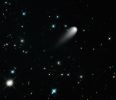
Comets-Comet_ISON-HST-30Apr-V_I-L-800.jpgComet ISON (Hubble Space Telescope's View)149 visiteAdvanced amateur astronomers are already getting good images of Comet ISON, which currently shines at around +12th magnitude in the constellation Cancer. And although NASA’s Deep Impact/EPOXI mission is down for the count, plans are afoot for the Curiosity rover and the Mars Reconnaissance Orbiter to attempt imaging the comet when it makes its closest approach to the Red Planet on October 1st at 0.0724 Astronomical Units (A.U.) or 10,830,000 kilometres distant. If MSL is successful, it would be the first time that a comet has been observed from the surface of another world.
Currently, ISON sits about a magnitude below the projected light curve, (see below) but that isn’t all that unusual for a comet. Already, there’s been increasing talk of “ISON being a dud,” but as Universe Today’s Nancy Atkinson pointed out in a recent post, these assertions are still premature. The big question is what ISON will do leading up to perihelion, and if it will survive its passage 1.1 million kilometres above the surface of the Sun on November 28th to become a fine comet in the dawn skies in the weeks leading up to Christmas.
ISON is already starting to show a short, spikey tail in amateur images. Tsutomu Seki estimated it to be shining at about magnitude +11.1 on September 16th. Keep in mind, a caveat is in order when talking about the magnitudes of comets. Unlike stars, which are essentially a point source, the brightness of a comet is spread out over a large surface area. Thus, a comet may appear visually fainter than the quoted magnitude, much like a diffuse nebula. Although +6th magnitude is usually the limit for naked eye visibility, I’ll bet that most folks won’t pick up ISON with the unaided eye from typical suburban sites until it breaks +4th magnitude or so.
The forward scattering of light also plays a key role in the predicted brightness of a comet. The November issue of Astronomy Magazine has a great article on this phenomenon. It’s interesting to note that ISON stacks up as a “9” on their accumulated point scale, right at the lower threshold of comet “greatness,” versus a 15 for sungrazing Comet C/1965 S1 Ikeya-Seki. Another famous “9” was Comet C/1996 B2 Hyakutake, which passed 0.1018 A.U. or 15.8 million kilometres from Earth on March 25, 1996.
ISON will pass 0.429 A.U. or 64.2 million kilometres from Earth the day after Christmas. Bruce Willis can stay home for this one.
Here is a blow-by-blow breakdown of some key dates to watch for as ISON makes its plunge into the inner solar system:
-September 25th: ISON crosses the border from the astronomical constellation of Cancer into Leo.
-September 27th: ISON passes 2 degrees north of the planet Mars.
-October 1st: The 12% illuminated waning crescent Moon passes 10 degrees south of Mars & ISON.
-Early October: ISON may break +10th magnitude and become visible with binoculars or a small telescope.
-October 4th: New Moon occurs. The Moon then exits the dawn sky, making for two weeks of prime viewing.
-October 10th: ISON enters view of NASA’s STEREO/SECCHI HI-2A CAMERA:
-October 16th: ISON passes just 2 degrees NNE of the bright star Regulus, making a great “guidepost” to pin it down with binoculars.
-October 18th: The Full Moon occurs, after which the Moon enters the morning sky.
-October 26th: A great photo-op for astro-imagers occurs, as ISON passes within three degrees the Leo galaxy trio of M95, M96, & M105.
-October 30th: The 17% illuminated Moon passes 6 degrees south of ISON.
-Early November: Comet ISON may make its naked eye debut for observers based at dark sky sites.
-November 3rd: A hybrid (annular-total) solar eclipse occurs, spanning the Atlantic and Central Africa. It may just be possible for well placed observers to catch sight of ISON in the daytime during totality, depending on how quickly it brightens up. The Moon reaching New phase also means that the next two weeks will be prime view time for ISON at dawn.
-November 5th: ISON crosses the border from the astronomical constellation of Leo into Virgo.
-November 7th: ISON passes less than a degree from the +3.6 magnitude star Zavijava (Beta Virginis).
-November 8th: ISON passes through the equinoctial point in Virgo around 16:00 EDT/20:00 UT, passing into the southern celestial hemisphere and south of the ecliptic.
-November 14th: ISON passes less than a degree from the 10th magnitude galaxy NGC 4697.
-November 17th: The Moon reaches Full, passing into the morning sky.
-November 18th: ISON passes just 0.38 degrees north of the bright star Spica.
-November 22nd: ISON crosses into the astronomical constellation of Libra.
-November 23rd: ISON sits 4.7 degrees SSW of the planet Mercury and 4.9 SSW of Saturn, respectively.
-November 25th: ISON pays a visit to another famous comet, passing just 1.2 degrees south of short period comet 2P/Encke which may shine at +8th magnitude.
-November 27th: ISON enters the field of view of SOHO’s LASCO C3 coronagraph.
-November 28th: ISON reaches perihelion at ~18:00 PM EST/ 23:00 UT.
After that, all bets are off. The days leading up to perihelion will be tense ones, as ISON then rounds the Sun on a date with astronomical destiny. Will it join the ranks of the great comets of the past? Will it stay intact, or shatter in a spectacular fashion? Watch this space for ISON updates… we’ll be back in late November with our post-perihelion guide!
Be sure to also enjoy recently discovered Comet C/2013 R1 Lovejoy later the year.
(source: http://www.universetoday.com/104818/comet-ison-a-viewing-guide-from-now-to-perihelion/#ixzz2fpLTKJwD)
Read more: http://www.universetoday.com/104818/comet-ison-a-viewing-guide-from-now-to-perihelion/#ixzz2fpLG75usMareKromium09/24/13 at 21:31AndreaGG: come non quotarti Paolo. ogni 3 comete la successi...
|
|
Comets-Comet_ISON-HST-30Apr-V_I-L-800.jpgComet ISON (Hubble Space Telescope's View)149 visiteAdvanced amateur astronomers are already getting good images of Comet ISON, which currently shines at around +12th magnitude in the constellation Cancer. And although NASA’s Deep Impact/EPOXI mission is down for the count, plans are afoot for the Curiosity rover and the Mars Reconnaissance Orbiter to attempt imaging the comet when it makes its closest approach to the Red Planet on October 1st at 0.0724 Astronomical Units (A.U.) or 10,830,000 kilometres distant. If MSL is successful, it would be the first time that a comet has been observed from the surface of another world.
Currently, ISON sits about a magnitude below the projected light curve, (see below) but that isn’t all that unusual for a comet. Already, there’s been increasing talk of “ISON being a dud,” but as Universe Today’s Nancy Atkinson pointed out in a recent post, these assertions are still premature. The big question is what ISON will do leading up to perihelion, and if it will survive its passage 1.1 million kilometres above the surface of the Sun on November 28th to become a fine comet in the dawn skies in the weeks leading up to Christmas.
ISON is already starting to show a short, spikey tail in amateur images. Tsutomu Seki estimated it to be shining at about magnitude +11.1 on September 16th. Keep in mind, a caveat is in order when talking about the magnitudes of comets. Unlike stars, which are essentially a point source, the brightness of a comet is spread out over a large surface area. Thus, a comet may appear visually fainter than the quoted magnitude, much like a diffuse nebula. Although +6th magnitude is usually the limit for naked eye visibility, I’ll bet that most folks won’t pick up ISON with the unaided eye from typical suburban sites until it breaks +4th magnitude or so.
The forward scattering of light also plays a key role in the predicted brightness of a comet. The November issue of Astronomy Magazine has a great article on this phenomenon. It’s interesting to note that ISON stacks up as a “9” on their accumulated point scale, right at the lower threshold of comet “greatness,” versus a 15 for sungrazing Comet C/1965 S1 Ikeya-Seki. Another famous “9” was Comet C/1996 B2 Hyakutake, which passed 0.1018 A.U. or 15.8 million kilometres from Earth on March 25, 1996.
ISON will pass 0.429 A.U. or 64.2 million kilometres from Earth the day after Christmas. Bruce Willis can stay home for this one.
Here is a blow-by-blow breakdown of some key dates to watch for as ISON makes its plunge into the inner solar system:
-September 25th: ISON crosses the border from the astronomical constellation of Cancer into Leo.
-September 27th: ISON passes 2 degrees north of the planet Mars.
-October 1st: The 12% illuminated waning crescent Moon passes 10 degrees south of Mars & ISON.
-Early October: ISON may break +10th magnitude and become visible with binoculars or a small telescope.
-October 4th: New Moon occurs. The Moon then exits the dawn sky, making for two weeks of prime viewing.
-October 10th: ISON enters view of NASA’s STEREO/SECCHI HI-2A CAMERA:
-October 16th: ISON passes just 2 degrees NNE of the bright star Regulus, making a great “guidepost” to pin it down with binoculars.
-October 18th: The Full Moon occurs, after which the Moon enters the morning sky.
-October 26th: A great photo-op for astro-imagers occurs, as ISON passes within three degrees the Leo galaxy trio of M95, M96, & M105.
-October 30th: The 17% illuminated Moon passes 6 degrees south of ISON.
-Early November: Comet ISON may make its naked eye debut for observers based at dark sky sites.
-November 3rd: A hybrid (annular-total) solar eclipse occurs, spanning the Atlantic and Central Africa. It may just be possible for well placed observers to catch sight of ISON in the daytime during totality, depending on how quickly it brightens up. The Moon reaching New phase also means that the next two weeks will be prime view time for ISON at dawn.
-November 5th: ISON crosses the border from the astronomical constellation of Leo into Virgo.
-November 7th: ISON passes less than a degree from the +3.6 magnitude star Zavijava (Beta Virginis).
-November 8th: ISON passes through the equinoctial point in Virgo around 16:00 EDT/20:00 UT, passing into the southern celestial hemisphere and south of the ecliptic.
-November 14th: ISON passes less than a degree from the 10th magnitude galaxy NGC 4697.
-November 17th: The Moon reaches Full, passing into the morning sky.
-November 18th: ISON passes just 0.38 degrees north of the bright star Spica.
-November 22nd: ISON crosses into the astronomical constellation of Libra.
-November 23rd: ISON sits 4.7 degrees SSW of the planet Mercury and 4.9 SSW of Saturn, respectively.
-November 25th: ISON pays a visit to another famous comet, passing just 1.2 degrees south of short period comet 2P/Encke which may shine at +8th magnitude.
-November 27th: ISON enters the field of view of SOHO’s LASCO C3 coronagraph.
-November 28th: ISON reaches perihelion at ~18:00 PM EST/ 23:00 UT.
After that, all bets are off. The days leading up to perihelion will be tense ones, as ISON then rounds the Sun on a date with astronomical destiny. Will it join the ranks of the great comets of the past? Will it stay intact, or shatter in a spectacular fashion? Watch this space for ISON updates… we’ll be back in late November with our post-perihelion guide!
Be sure to also enjoy recently discovered Comet C/2013 R1 Lovejoy later the year.
(source: http://www.universetoday.com/104818/comet-ison-a-viewing-guide-from-now-to-perihelion/#ixzz2fpLTKJwD)
Read more: http://www.universetoday.com/104818/comet-ison-a-viewing-guide-from-now-to-perihelion/#ixzz2fpLG75usMareKromium09/24/13 at 16:12paolocf1963: Detto e fatto: ecco a Voi la previsioni di visibil...
|
|
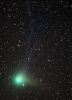
Comets-Comet_Mach_Holz.jpgThe C/2004 Q2 Comet105 visiteScoperta solo pochi mesi fa, la Cometa C/2004 Q2 (Machholz) è già chiaramente visibile (a magn. 5 o superiore) nei Cieli del Sud. Ma nessuna paura, non occorrerà viaggiare per vederla: essa si sta rapidamente portando verso i nostri Cieli e, nel frattempo, continuerà ad aumentare il suo splendore (probabilmente sino alla prima metà di Gennaio 2005). La luminosità massima che C/2004 Q2 potrà raggiungere non ci è ancora nota; ciò che sappiamo, invece, è che essa resterà nei "nostri" Cieli per buona parte del 2005 e la potremo anche vedere in prossimità della Stella Polare nei primi giorni di Marzo. L'immagine che Vi proponiamo (da "NASA - Picture of the Day" del 13.12.2004) è stata ripresa ai primi di Dicembre e, come potete vedere, la cometa già ci mostra una consistente "chioma", un'abbondante coda di polveri e detriti (di colore bianco e verde) ed un'abbastanza intricata "coda ionica" (andante verso la Dx dell'Osservatore), che presenta delle increspature verso la fine. 10/06/12 at 20:21paolocf1963: ...anche di meno... Parole Sante! (ma che sono e r...
|
|
Comets-Comet_Mach_Holz.jpgThe C/2004 Q2 Comet105 visiteScoperta solo pochi mesi fa, la Cometa C/2004 Q2 (Machholz) è già chiaramente visibile (a magn. 5 o superiore) nei Cieli del Sud. Ma nessuna paura, non occorrerà viaggiare per vederla: essa si sta rapidamente portando verso i nostri Cieli e, nel frattempo, continuerà ad aumentare il suo splendore (probabilmente sino alla prima metà di Gennaio 2005). La luminosità massima che C/2004 Q2 potrà raggiungere non ci è ancora nota; ciò che sappiamo, invece, è che essa resterà nei "nostri" Cieli per buona parte del 2005 e la potremo anche vedere in prossimità della Stella Polare nei primi giorni di Marzo. L'immagine che Vi proponiamo (da "NASA - Picture of the Day" del 13.12.2004) è stata ripresa ai primi di Dicembre e, come potete vedere, la cometa già ci mostra una consistente "chioma", un'abbondante coda di polveri e detriti (di colore bianco e verde) ed un'abbastanza intricata "coda ionica" (andante verso la Dx dell'Osservatore), che presenta delle increspature verso la fine. 10/06/12 at 19:28Anakin: S?, lui, una persona molto piacevole di persona. I...
|
|
Comets-Comet_Mach_Holz.jpgThe C/2004 Q2 Comet105 visiteScoperta solo pochi mesi fa, la Cometa C/2004 Q2 (Machholz) è già chiaramente visibile (a magn. 5 o superiore) nei Cieli del Sud. Ma nessuna paura, non occorrerà viaggiare per vederla: essa si sta rapidamente portando verso i nostri Cieli e, nel frattempo, continuerà ad aumentare il suo splendore (probabilmente sino alla prima metà di Gennaio 2005). La luminosità massima che C/2004 Q2 potrà raggiungere non ci è ancora nota; ciò che sappiamo, invece, è che essa resterà nei "nostri" Cieli per buona parte del 2005 e la potremo anche vedere in prossimità della Stella Polare nei primi giorni di Marzo. L'immagine che Vi proponiamo (da "NASA - Picture of the Day" del 13.12.2004) è stata ripresa ai primi di Dicembre e, come potete vedere, la cometa già ci mostra una consistente "chioma", un'abbondante coda di polveri e detriti (di colore bianco e verde) ed un'abbastanza intricata "coda ionica" (andante verso la Dx dell'Osservatore), che presenta delle increspature verso la fine. 10/06/12 at 15:42paolocf1963: Parli di Tom Bosco e di NEXUS? A volte il Grande T...
|
|
Comets-Comet_Mach_Holz.jpgThe C/2004 Q2 Comet105 visiteScoperta solo pochi mesi fa, la Cometa C/2004 Q2 (Machholz) è già chiaramente visibile (a magn. 5 o superiore) nei Cieli del Sud. Ma nessuna paura, non occorrerà viaggiare per vederla: essa si sta rapidamente portando verso i nostri Cieli e, nel frattempo, continuerà ad aumentare il suo splendore (probabilmente sino alla prima metà di Gennaio 2005). La luminosità massima che C/2004 Q2 potrà raggiungere non ci è ancora nota; ciò che sappiamo, invece, è che essa resterà nei "nostri" Cieli per buona parte del 2005 e la potremo anche vedere in prossimità della Stella Polare nei primi giorni di Marzo. L'immagine che Vi proponiamo (da "NASA - Picture of the Day" del 13.12.2004) è stata ripresa ai primi di Dicembre e, come potete vedere, la cometa già ci mostra una consistente "chioma", un'abbondante coda di polveri e detriti (di colore bianco e verde) ed un'abbastanza intricata "coda ionica" (andante verso la Dx dell'Osservatore), che presenta delle increspature verso la fine. 10/06/12 at 14:00Anakin: Sei un grande. Grazie. Solo 5 km? Anche il sito fa...
|
|
Comets-Comet_Mach_Holz.jpgThe C/2004 Q2 Comet105 visiteScoperta solo pochi mesi fa, la Cometa C/2004 Q2 (Machholz) è già chiaramente visibile (a magn. 5 o superiore) nei Cieli del Sud. Ma nessuna paura, non occorrerà viaggiare per vederla: essa si sta rapidamente portando verso i nostri Cieli e, nel frattempo, continuerà ad aumentare il suo splendore (probabilmente sino alla prima metà di Gennaio 2005). La luminosità massima che C/2004 Q2 potrà raggiungere non ci è ancora nota; ciò che sappiamo, invece, è che essa resterà nei "nostri" Cieli per buona parte del 2005 e la potremo anche vedere in prossimità della Stella Polare nei primi giorni di Marzo. L'immagine che Vi proponiamo (da "NASA - Picture of the Day" del 13.12.2004) è stata ripresa ai primi di Dicembre e, come potete vedere, la cometa già ci mostra una consistente "chioma", un'abbondante coda di polveri e detriti (di colore bianco e verde) ed un'abbastanza intricata "coda ionica" (andante verso la Dx dell'Osservatore), che presenta delle increspature verso la fine. 10/05/12 at 19:46paolocf1963: Caro Anakin,
ho fatto le mie verifiche e, sinc...
|
|
Comets-Comet_Mach_Holz.jpgThe C/2004 Q2 Comet105 visiteScoperta solo pochi mesi fa, la Cometa C/2004 Q2 (Machholz) è già chiaramente visibile (a magn. 5 o superiore) nei Cieli del Sud. Ma nessuna paura, non occorrerà viaggiare per vederla: essa si sta rapidamente portando verso i nostri Cieli e, nel frattempo, continuerà ad aumentare il suo splendore (probabilmente sino alla prima metà di Gennaio 2005). La luminosità massima che C/2004 Q2 potrà raggiungere non ci è ancora nota; ciò che sappiamo, invece, è che essa resterà nei "nostri" Cieli per buona parte del 2005 e la potremo anche vedere in prossimità della Stella Polare nei primi giorni di Marzo. L'immagine che Vi proponiamo (da "NASA - Picture of the Day" del 13.12.2004) è stata ripresa ai primi di Dicembre e, come potete vedere, la cometa già ci mostra una consistente "chioma", un'abbondante coda di polveri e detriti (di colore bianco e verde) ed un'abbastanza intricata "coda ionica" (andante verso la Dx dell'Osservatore), che presenta delle increspature verso la fine. 10/05/12 at 15:44Anakin: Ma grazie a Te. La cosa curiosa ? che della cometa...
|
|
Comets-Comet_Mach_Holz.jpgThe C/2004 Q2 Comet105 visiteScoperta solo pochi mesi fa, la Cometa C/2004 Q2 (Machholz) è già chiaramente visibile (a magn. 5 o superiore) nei Cieli del Sud. Ma nessuna paura, non occorrerà viaggiare per vederla: essa si sta rapidamente portando verso i nostri Cieli e, nel frattempo, continuerà ad aumentare il suo splendore (probabilmente sino alla prima metà di Gennaio 2005). La luminosità massima che C/2004 Q2 potrà raggiungere non ci è ancora nota; ciò che sappiamo, invece, è che essa resterà nei "nostri" Cieli per buona parte del 2005 e la potremo anche vedere in prossimità della Stella Polare nei primi giorni di Marzo. L'immagine che Vi proponiamo (da "NASA - Picture of the Day" del 13.12.2004) è stata ripresa ai primi di Dicembre e, come potete vedere, la cometa già ci mostra una consistente "chioma", un'abbondante coda di polveri e detriti (di colore bianco e verde) ed un'abbastanza intricata "coda ionica" (andante verso la Dx dell'Osservatore), che presenta delle increspature verso la fine. 10/05/12 at 15:33paolocf1963: Ti rispondo con la mia solita sincerit?: non mi in...
|
|
Comets-Comet_Mach_Holz.jpgThe C/2004 Q2 Comet105 visiteScoperta solo pochi mesi fa, la Cometa C/2004 Q2 (Machholz) è già chiaramente visibile (a magn. 5 o superiore) nei Cieli del Sud. Ma nessuna paura, non occorrerà viaggiare per vederla: essa si sta rapidamente portando verso i nostri Cieli e, nel frattempo, continuerà ad aumentare il suo splendore (probabilmente sino alla prima metà di Gennaio 2005). La luminosità massima che C/2004 Q2 potrà raggiungere non ci è ancora nota; ciò che sappiamo, invece, è che essa resterà nei "nostri" Cieli per buona parte del 2005 e la potremo anche vedere in prossimità della Stella Polare nei primi giorni di Marzo. L'immagine che Vi proponiamo (da "NASA - Picture of the Day" del 13.12.2004) è stata ripresa ai primi di Dicembre e, come potete vedere, la cometa già ci mostra una consistente "chioma", un'abbondante coda di polveri e detriti (di colore bianco e verde) ed un'abbastanza intricata "coda ionica" (andante verso la Dx dell'Osservatore), che presenta delle increspature verso la fine. 10/05/12 at 12:59Anakin: Come mai non ci sono immagini della cometa Neat C/...
|
|

0-The Solar System.jpgA "New" Solar System (according to IAU)? No, thanks...155 visite"Plutone non è degno di essere considerato un Pianeta": questa, con un pizzico di polemica (da parte nostra) ed in estrema sintesi, la decisione della IAU la quale, dovendo scegliere se portare (o non) da 9 a 12 il numero dei Membri Maggiori del Sistema Solare, ha " elegantemente" pensato e deliberato di ridurli ad 8!
Questa decisione, a parere di Lunar Explorer Italia, costituisce un futile, inutile e villano "sgarbo postumo" nei confronti del grande Astronomo Americano Clyde Tombaugh (lo scopritore di Plutone) e quindi abbiamo deciso, in quanto Gruppo di Ricercatori Indipendenti, di non riconoscere la "IAU Resolution n. 6-A" e pertanto continueremo a considerare il nostro Sistema Solare inclusivo di Plutone (anzi: del Pianeta "Doppio" Plutone-Caronte).
Clyde Tombaugh nacque nel 1906 da una famiglia di agricoltori dell'Illinois. da ragazzo sviluppò un forte interesse per l'osservazione del cielo, incoraggiato sia dal padre che dallo zio. Il primo telescopio con il quale osservò le stelle apparteneva a suo zio. Clyde era insoddisfatto del primo telescopio che aveva comprato in un negozio, così decise di costruirne uno lui stesso. Il padre di Clyde si trovò un secondo lavoro per pagare i materiali necessari. Il telescopio che Clyde costruì nel 1925 fu solo il primo di oltre trenta telescopi che costruì nel corso della sua vita.
Nel 1928 Clyde finì di costruire un telescopio riflettore da 23 cm, molto preciso. La montatura fu costruita con un albero a gomiti, preso da un'automobile Buick del 1910, e da parti di scarto di una macchina agricola! Tuttavia non fu con questo che Clyde compì le osservazioni che gli valsero un'offerta di lavoro dal Lowell Observatory. Clyde fece disegni molto dettagliati delle proprie osservazioni al telescopio di Marte e Giove. Inviò i suoi disegni agli astronomi del Lowell Observatory, chiedendo commenti e suggerimenti. Invece ricevette un'offerta per andare a lavorare all'osservatorio come astronomo praticante. Clyde accettò il lavoro e cominciò a dedicarsi alla ricerca del famoso "Pianeta X" di Percival Lowell, un pianeta ancora sconosciuto che avrebbe dovuto trovarsi oltre Nettuno. Il lavoro di Clyde Tombaugh consisteva nel fotografare un pezzettino di cielo per volta, poi esaminarlo attentamente e confrontare le diverse fotografie per identificarvi eventuali oggetti non identificati in movimento, che avrebbero potuto essere pianeti. Clyde Tombaugh fotografò oltre il 65% del cielo e trascorse migliaia di ore esaminando le immagini. Dopo dieci mesi di durissimo lavoro, spesso lavorando anche la notte in una cupola non riscaldata, Clyde Tombaugh scoprì il pianeta Plutone. Clyde Tombaugh morì all'età di novant'anni, il 17 gennaio 1997.
09/27/12 at 16:41paolocf1963: Grande Anakin! Si, la risoluzione dello Stato USA ...
|
|
0-The Solar System.jpgA "New" Solar System (according to IAU)? No, thanks...155 visite"Plutone non è degno di essere considerato un Pianeta": questa, con un pizzico di polemica (da parte nostra) ed in estrema sintesi, la decisione della IAU la quale, dovendo scegliere se portare (o non) da 9 a 12 il numero dei Membri Maggiori del Sistema Solare, ha " elegantemente" pensato e deliberato di ridurli ad 8!
Questa decisione, a parere di Lunar Explorer Italia, costituisce un futile, inutile e villano "sgarbo postumo" nei confronti del grande Astronomo Americano Clyde Tombaugh (lo scopritore di Plutone) e quindi abbiamo deciso, in quanto Gruppo di Ricercatori Indipendenti, di non riconoscere la "IAU Resolution n. 6-A" e pertanto continueremo a considerare il nostro Sistema Solare inclusivo di Plutone (anzi: del Pianeta "Doppio" Plutone-Caronte).
Clyde Tombaugh nacque nel 1906 da una famiglia di agricoltori dell'Illinois. da ragazzo sviluppò un forte interesse per l'osservazione del cielo, incoraggiato sia dal padre che dallo zio. Il primo telescopio con il quale osservò le stelle apparteneva a suo zio. Clyde era insoddisfatto del primo telescopio che aveva comprato in un negozio, così decise di costruirne uno lui stesso. Il padre di Clyde si trovò un secondo lavoro per pagare i materiali necessari. Il telescopio che Clyde costruì nel 1925 fu solo il primo di oltre trenta telescopi che costruì nel corso della sua vita.
Nel 1928 Clyde finì di costruire un telescopio riflettore da 23 cm, molto preciso. La montatura fu costruita con un albero a gomiti, preso da un'automobile Buick del 1910, e da parti di scarto di una macchina agricola! Tuttavia non fu con questo che Clyde compì le osservazioni che gli valsero un'offerta di lavoro dal Lowell Observatory. Clyde fece disegni molto dettagliati delle proprie osservazioni al telescopio di Marte e Giove. Inviò i suoi disegni agli astronomi del Lowell Observatory, chiedendo commenti e suggerimenti. Invece ricevette un'offerta per andare a lavorare all'osservatorio come astronomo praticante. Clyde accettò il lavoro e cominciò a dedicarsi alla ricerca del famoso "Pianeta X" di Percival Lowell, un pianeta ancora sconosciuto che avrebbe dovuto trovarsi oltre Nettuno. Il lavoro di Clyde Tombaugh consisteva nel fotografare un pezzettino di cielo per volta, poi esaminarlo attentamente e confrontare le diverse fotografie per identificarvi eventuali oggetti non identificati in movimento, che avrebbero potuto essere pianeti. Clyde Tombaugh fotografò oltre il 65% del cielo e trascorse migliaia di ore esaminando le immagini. Dopo dieci mesi di durissimo lavoro, spesso lavorando anche la notte in una cupola non riscaldata, Clyde Tombaugh scoprì il pianeta Plutone. Clyde Tombaugh morì all'età di novant'anni, il 17 gennaio 1997.
09/27/12 at 14:57Anakin: Non posso che essere d?accordo sulla tua spiegazio...
|
|
| 603 immagini su 51 pagina(e) |
|
|
|
|
|
39 | |
|
|
|
|
|
|





