| Ultimi commenti - The Moon and Mars through Hubble's "Eyes" |

Mars-8.jpg38 - Mars Oppositions: 1995-2007 (true colors; credits: NASA/HST)181 visiteCaption NASA:"Every 26 months Mars is opposite the Sun in our nighttime sky. Since 1995, Mars has been at such an "opposition" with the Sun 7 times. A color composite from each of the 7 HST opposition observations has been assembled in this mosaic to showcase the beauty and splendor that is "The Red Planet".
This mosaic of all 7 globes of Mars shows relative variations in the apparent angular size of Mars over the years. Mars was the closest in 2003 when it came within 35 MMs (about 56 MKM) from Earth. The part of Mars that is tilted towards the Earth also shifts over time, resulting in the changing visibility of the Polar caps. Clouds and dust storms, as well as the size of the Ice Caps, can change the appearance of Mars on time scales of days, weeks, and months.
Other features of Mars, such as some of the large dark markings, have remained unchanged for centuries".MareKromium07/28/18 at 13:57Ufologo: S?, per? ... dopo 2 mila sonde se ne escono con qu...
|
|
Mars-8.jpg38 - Mars Oppositions: 1995-2007 (true colors; credits: NASA/HST)181 visiteCaption NASA:"Every 26 months Mars is opposite the Sun in our nighttime sky. Since 1995, Mars has been at such an "opposition" with the Sun 7 times. A color composite from each of the 7 HST opposition observations has been assembled in this mosaic to showcase the beauty and splendor that is "The Red Planet".
This mosaic of all 7 globes of Mars shows relative variations in the apparent angular size of Mars over the years. Mars was the closest in 2003 when it came within 35 MMs (about 56 MKM) from Earth. The part of Mars that is tilted towards the Earth also shifts over time, resulting in the changing visibility of the Polar caps. Clouds and dust storms, as well as the size of the Ice Caps, can change the appearance of Mars on time scales of days, weeks, and months.
Other features of Mars, such as some of the large dark markings, have remained unchanged for centuries".MareKromium07/27/18 at 13:06Anakin: Lago di acqua salata su Marte
Fantastico. Quant...
|
|
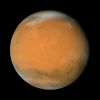
Mars-5.jpg35 - Mars on Dec. 3rd, 2007 (true colors; credits: NASA/HST)137 visiteMars observation taken Dec. 7th, 2007; Longitude ~225° MareKromium02/11/16 at 17:22MareKromium: Non riesco a collegarmi con il link. Mi mandi la f...
|
|
Mars-5.jpg35 - Mars on Dec. 3rd, 2007 (true colors; credits: NASA/HST)137 visiteMars observation taken Dec. 7th, 2007; Longitude ~225° MareKromium02/10/16 at 10:44Anakin: Il sole non ? un p? troppo grande? Io rimango dell...
|
|

Mars-2.jpg32 - Mars in December 2007 (true colors; credits: NASA/HST)181 visiteCaption NASA:"In December 2007, the Mars closest approach and opposition will occur within a week of each other. This is an exciting time for astronomers and planetary geologists to image and study our planetary neighbor. On December 18, Mars will be the closest it has been in the last two years, reaching a distance of 55 MMs fom Earth. This series of images was taken with Hubble's Wide Field Planetary Camera 2 on December 1-7, within two weeks of its December 2007 closest approach. Each image shows the Planet rotating about 90° from the next image. This gives astronomers a full-globe look at the Red Planet".
[Top Left] - Mars on Dec. 1, 2007; longitude ~50°
[Top Right] - Mars on Dec. 3, 2007; longitude ~225°
[Bottom Left] - Mars on Dec. 3, 2007; longitude ~320°
[Bottom Right] - Mars on Dec. 7, 2007; longitude ~140°
MareKromium12/23/15 at 07:11Anakin: MAIL INVIATA. La foto ? presa da Google Mars. Ho p...
|
|
Mars-2.jpg32 - Mars in December 2007 (true colors; credits: NASA/HST)181 visiteCaption NASA:"In December 2007, the Mars closest approach and opposition will occur within a week of each other. This is an exciting time for astronomers and planetary geologists to image and study our planetary neighbor. On December 18, Mars will be the closest it has been in the last two years, reaching a distance of 55 MMs fom Earth. This series of images was taken with Hubble's Wide Field Planetary Camera 2 on December 1-7, within two weeks of its December 2007 closest approach. Each image shows the Planet rotating about 90° from the next image. This gives astronomers a full-globe look at the Red Planet".
[Top Left] - Mars on Dec. 1, 2007; longitude ~50°
[Top Right] - Mars on Dec. 3, 2007; longitude ~225°
[Bottom Left] - Mars on Dec. 3, 2007; longitude ~320°
[Bottom Right] - Mars on Dec. 7, 2007; longitude ~140°
MareKromium12/22/15 at 20:26KKK: Amici, non riesco a collegarmi. Far? sicuramente q...
|
|
Mars-2.jpg32 - Mars in December 2007 (true colors; credits: NASA/HST)181 visiteCaption NASA:"In December 2007, the Mars closest approach and opposition will occur within a week of each other. This is an exciting time for astronomers and planetary geologists to image and study our planetary neighbor. On December 18, Mars will be the closest it has been in the last two years, reaching a distance of 55 MMs fom Earth. This series of images was taken with Hubble's Wide Field Planetary Camera 2 on December 1-7, within two weeks of its December 2007 closest approach. Each image shows the Planet rotating about 90° from the next image. This gives astronomers a full-globe look at the Red Planet".
[Top Left] - Mars on Dec. 1, 2007; longitude ~50°
[Top Right] - Mars on Dec. 3, 2007; longitude ~225°
[Bottom Left] - Mars on Dec. 3, 2007; longitude ~320°
[Bottom Right] - Mars on Dec. 7, 2007; longitude ~140°
MareKromium12/22/15 at 18:34walthari: se la foto è autentica è una bella anomalia....
|
|
Mars-2.jpg32 - Mars in December 2007 (true colors; credits: NASA/HST)181 visiteCaption NASA:"In December 2007, the Mars closest approach and opposition will occur within a week of each other. This is an exciting time for astronomers and planetary geologists to image and study our planetary neighbor. On December 18, Mars will be the closest it has been in the last two years, reaching a distance of 55 MMs fom Earth. This series of images was taken with Hubble's Wide Field Planetary Camera 2 on December 1-7, within two weeks of its December 2007 closest approach. Each image shows the Planet rotating about 90° from the next image. This gives astronomers a full-globe look at the Red Planet".
[Top Left] - Mars on Dec. 1, 2007; longitude ~50°
[Top Right] - Mars on Dec. 3, 2007; longitude ~225°
[Bottom Left] - Mars on Dec. 3, 2007; longitude ~320°
[Bottom Right] - Mars on Dec. 7, 2007; longitude ~140°
MareKromium12/22/15 at 17:43Ufologo: Confermo, ? un sito che ne spara .... (Per?, ogni ...
|
|
Mars-2.jpg32 - Mars in December 2007 (true colors; credits: NASA/HST)181 visiteCaption NASA:"In December 2007, the Mars closest approach and opposition will occur within a week of each other. This is an exciting time for astronomers and planetary geologists to image and study our planetary neighbor. On December 18, Mars will be the closest it has been in the last two years, reaching a distance of 55 MMs fom Earth. This series of images was taken with Hubble's Wide Field Planetary Camera 2 on December 1-7, within two weeks of its December 2007 closest approach. Each image shows the Planet rotating about 90° from the next image. This gives astronomers a full-globe look at the Red Planet".
[Top Left] - Mars on Dec. 1, 2007; longitude ~50°
[Top Right] - Mars on Dec. 3, 2007; longitude ~225°
[Bottom Left] - Mars on Dec. 3, 2007; longitude ~320°
[Bottom Right] - Mars on Dec. 7, 2007; longitude ~140°
MareKromium12/22/15 at 15:10KKK: ...provo... Anche se il Sito, come giustamente dic...
|
|
Mars-2.jpg32 - Mars in December 2007 (true colors; credits: NASA/HST)181 visiteCaption NASA:"In December 2007, the Mars closest approach and opposition will occur within a week of each other. This is an exciting time for astronomers and planetary geologists to image and study our planetary neighbor. On December 18, Mars will be the closest it has been in the last two years, reaching a distance of 55 MMs fom Earth. This series of images was taken with Hubble's Wide Field Planetary Camera 2 on December 1-7, within two weeks of its December 2007 closest approach. Each image shows the Planet rotating about 90° from the next image. This gives astronomers a full-globe look at the Red Planet".
[Top Left] - Mars on Dec. 1, 2007; longitude ~50°
[Top Right] - Mars on Dec. 3, 2007; longitude ~225°
[Bottom Left] - Mars on Dec. 3, 2007; longitude ~320°
[Bottom Right] - Mars on Dec. 7, 2007; longitude ~140°
MareKromium12/22/15 at 13:52Anakin: Avete visto queste immagini?
http : // www. seg...
|
|

Mars-1.jpg31 - Mars on Dec. 3rd, 2007 (true colors; credits: NASA/HST)156 visiteCaption NASA:"NASA's Hubble Space Telescope took this close-up of the Red Planet Mars when it was just 55 MMs – about 88 MKM – away. This color image was assembled from a series of exposures taken within 36 hours of the Mars closest approach with Hubble's Wide Field and Planetary Camera 2. Mars will be closest to Earth on December 18, 2007, at 11:45 p.m. Universal Time (6:45 p.m. EST).
Mars and Earth have a "close encounter" about every 26 months. These periodic encounters are due to the differences in the two planets' orbits. Earth goes around the Sun twice as fast as Mars, lapping the Red Planet about every two years. Both Planets have elliptical orbits, so their close encounters are not always at the same distance. In its close encounter with Earth in 2003, for example, Mars was about 20 MMs closer than it is in the 2007 closest approach, resulting in a much larger image of Mars as viewed from Earth in 2003.
The two dominant dark swatches seen just south of the Equator on this part of the Planet are well observed Regions that were originally labeled by early Mars observers. The large triangular shape to the right is Syrtis Major. The horizontal lane to the left is Sinus Meridani. One of NASA's Mars Exploration Rovers, named "Opportunity", landed at the Western End of this Region in January 2004. At the intersection of these two features is the prominent Huygens Crater with a diameter of 270 miles (about 450 Km). South of Huygens Crater, is the Hellas Impact Basin, with a diameter of about 1100 miles (such as approx. 1760 Km) and a depth of nearly 5 miles (about 8 km). Hellas was formed billions of years ago when an asteroid collided into the Mars surface.
The Planet appears free of any dust storms during this closest approach, however, there are significant clouds visible in both the Northern and Southern Polar Cap Regions.
The resolution is roughly 13 miles (about 21 Km) per pixel".MareKromium09/05/15 at 20:05walthari: quoto Anakin
|
|
Mars-1.jpg31 - Mars on Dec. 3rd, 2007 (true colors; credits: NASA/HST)156 visiteCaption NASA:"NASA's Hubble Space Telescope took this close-up of the Red Planet Mars when it was just 55 MMs – about 88 MKM – away. This color image was assembled from a series of exposures taken within 36 hours of the Mars closest approach with Hubble's Wide Field and Planetary Camera 2. Mars will be closest to Earth on December 18, 2007, at 11:45 p.m. Universal Time (6:45 p.m. EST).
Mars and Earth have a "close encounter" about every 26 months. These periodic encounters are due to the differences in the two planets' orbits. Earth goes around the Sun twice as fast as Mars, lapping the Red Planet about every two years. Both Planets have elliptical orbits, so their close encounters are not always at the same distance. In its close encounter with Earth in 2003, for example, Mars was about 20 MMs closer than it is in the 2007 closest approach, resulting in a much larger image of Mars as viewed from Earth in 2003.
The two dominant dark swatches seen just south of the Equator on this part of the Planet are well observed Regions that were originally labeled by early Mars observers. The large triangular shape to the right is Syrtis Major. The horizontal lane to the left is Sinus Meridani. One of NASA's Mars Exploration Rovers, named "Opportunity", landed at the Western End of this Region in January 2004. At the intersection of these two features is the prominent Huygens Crater with a diameter of 270 miles (about 450 Km). South of Huygens Crater, is the Hellas Impact Basin, with a diameter of about 1100 miles (such as approx. 1760 Km) and a depth of nearly 5 miles (about 8 km). Hellas was formed billions of years ago when an asteroid collided into the Mars surface.
The Planet appears free of any dust storms during this closest approach, however, there are significant clouds visible in both the Northern and Southern Polar Cap Regions.
The resolution is roughly 13 miles (about 21 Km) per pixel".MareKromium09/03/15 at 09:32Anakin: E' una mia teoria dopo aver tentato di usare d...
|
|
| 46 immagini su 4 pagina(e) |
2 |  |
|





