|
|

LLO-ST_2539423137_v.jpgThe unbelievable surface of 25143-Itokawa (HR4 - possible natural colors; elab. Lunexit)75 visitenessun commentoMareKromium
|
|

LLP-Itokawa-ST_2539482843_v.pngFarewell to Itokawa! (1 - additional processing and coloring by Lunexit)74 visitenessun commentoMareKromium
|
|

LLP-Itokawa-ST_2539489658_v.pngFarewell to Itokawa! (2 - additional processing and coloring by Lunexit)81 visitenessun commentoMareKromium
|
|

LLP-Itokawa-ST_2539496392_v.pngFarewell to Itokawa! (3 - additional processing and coloring by Lunexit)79 visitenessun commentoMareKromium
|
|

LLQ-Itokawa-ST_2482160259_v-2.jpgRectangular Surface Feature on Itokawa? (context frame)74 visiteIl bravissimo Dr Gianluigi Barca ha provato a calarsi nei panni di coloro che cercano Anomalìe di Superficie su tutti i Corpi Celesti sino ad ora esplorati (almeno fotograficamente...) e, come lui stesso immaginava, non gli è stato difficile traovare un dettaglio più che meritevole di interesse: nella cerchiatura color fucsia, infatti, "impressa" (diremmo addirittura "scolpita") sulla parte illuminata e rivolta verso lo Spazio di un picco di discrete dimensioni - il quale, per altro, proietta una splendida e ben definita ombra su una delle poche aree "lisce" di Itokawa - è ben visibile un rilievo a forma rettangolare (decisamente di colore più chiaro rispetto alla struttura alla quale esso accede) con possibile apertura alla base (una sorta di piccolo "hangar", si potrebbe dire).
E' un "segno" di attività NON naturale? E' una svista? E' una Singolarità o un'Anomalìa?
Andiamo a vedere il detail-mgnf preparatoci dal Dr Barca stesso...MareKromium
|
|

LLQ-Itokawa-ST_2482160259_v-3.jpgRectangular Surface Feature on Itokawa? (extra-detail mgnf)88 visiteAllora, fermiamoci ai fatti: il "rettangolo" esiste (e si vede bene) ed alla sua base c'è effettivamente qualcosa che non può essere altro che una apertura.
Questo rilievo - che solo un occhio attento al dettaglio poteva individuare - rientra, a nostro parere, nella Classe delle Singolarità Superficiali.
E' un rilievo affascinante, suggestivo, decisamente curioso: certo. Ma quali elementi abbiamo per poter anche solo supporre una sua origine NON naturale?
Nessuno.
L'intero Asteroide Itokawa è un campionario di Singolarità, le quali vanno dalla mancanza di crateri alla presenza, su un buon 75% della sua superficie, di una sorta di "squamatura rocciosa" (si tratta di mini-boulders a forma appuntita ed inclinati - leggermente - rispetto al piano dell'asteroide).
Itokawa (al pari di Phobos, o di 1-Ceres, o di 433-Eros, o al pari delle "unexplainable surface features" di Marte, di Giapeto, di Callisto ed Europa e così via), è una Meraviglia della Natura: è unico, è lontano, è affascinante e, per noi, è largamente inesplicabile.
Parlare di "intervento intelligente" (come sinonimo di "NON naturale") allorchè si analizzano rilievi come questo (o come quelli relativi agli altri Corpi Celesti sopra menzionati), vuol dire - a nostro parere - NEGARE la Capacità Creativa della Natura e, di fatto, significa rifiutarsi di vedere l'Universo per quello che è davvero: una Meravigliosa Opera la quale, per il suo 99,99%, era, è e - probabilmente - rimarrà uno splendido enigma per gli Uomini.
Un enigma che dovrebbe invogliarci a studiare di più e meglio, a capire di più e meglio e ad essere un pochino più umili e consapevoli dei nostri limiti e della attuale nostra incapacità di razionalizzare tutto quello che vediamo e quindi di sussumere l'Ignoto all'interno di Classi di Conoscenza ancora largamente e profondamente imperfette.
Un profondo ringraziamento all'Amico e Collega, Dr Gianluigi Barca, per l'eccezionale "occhio" e per la splendida provocazione che ha lanciato: provocazione che ci ha offerto un eccellente spunto per esprimere un pensiero che, in tanti ormai, avevamo da tempo voglia di tradurre in parole.MareKromium
|
|

LLR-Itokawa-Impacts.jpgThe Craters of Itokawa99 visiteBravissimo, come sempre anche lui, il Dr Marco Faccin il quale, attraverso questo splendido e suggestivo collage, ci mostra e dimostra che, in fondo, NON E' VERO che sul piccolo Asteroide Itokawa non ci sono crateri.
Ci sono, eccome: non molti (e difficilmente discernibili), ma ci sono.
E come mai esistono dei crateri su un mondo che, a parere della NASA, dovrebbe avere una "consistenza" (rectius: densità) bassissima; tanto bassa da farlo risultare, alla fine, come un "mucchio di detriti spaziali tenuti gravitazionalmente assieme"? Un mondo che, laddove impattato da un macigno vagante, dovrebbe - semplicemente - andare in pezzi?
Ebbene la risposta è duplice e (relativamente) facile, a nostro avviso:
1) l'impatto fra Itokawa ed un corpo vagante di dimensioni ridottissime e/o avente una densità bassissima si potrebbe risolvere tranquillamente nella creazione di un cratere poco profondo e di piccole dimensioni;
2) le stime NASA sulla densità di Itokawa sono errate e questo piccolo asteroide - al pari di innumerevoli altri - è un grande macigno errante il quale può sopportare con relativa tranquillità gli impatti con altri corpi vaganti rocciosi e compatti, purchè aventi dimensioni (comunque) modeste.
Avete altre idee? Scriveteci! ...E, per adesso, GRANDI complimenti al bravissimo Dr Faccin!MareKromium
|
|

LLR-Itokawa-ST_2485860275_v.jpgItokawa: the First (and, so far, the only) "Space Potato" (MULTISPECTRUM; credits: Lunexit)69 visitenessun commentoMareKromium
|
|

Lutetia-01.jpgAsteroid "Lutetia"92 visiteAsteroid Lutetia will no longer remain a mystery as the European Space Agency's (ESA) Rosetta has captured the first close-up images of this Celestial Body, which will help them gain insights into the composition of the space rock that has long puzzled the scientists.
In what can be termed as the closest encounter with one of the largest asteroid, ever visited ESA led robotic spacecraft mission, Rosetta, raced past Lutetia as close as 3200 Km, with the closest encounter at 18:10 CEST (Central Europe Standard Time), when the spacecraft was just 3162 Km away from the giant asteroid.
Rosetta, which had a first look of Lutetia in January 2007, has this time “triumphed at asteroid” and captured images like never before.MareKromium
|
|

Lutetia-02.jpgAsteroid "Lutetia"77 visiteThough the first look of the giant asteroid, through nearly 400 images, has revealed a lot about the primitive survivor's cratered surface, a lot more needs to be unlocked.
The data collected by Rosetta Spacecraft, with the help of multi-wavelength cameras, spectrometers etc., will unravel the mysteries surrounding the composition of Lutetia. Some asteroids are a broken part of iron-rich cores of proto-planets or they may just be composed of Carbon.MareKromium
|
|

Lutetia-03.jpgAsteroid "Lutetia"82 visiteA closer look at the asteroid that orbits between Mars and Jupiter reveals that Lutetia's Surface is battered with many craters, indicating that during the 4,5 BY (Billion Years) of existence, the primitive survivor has suffered many impacts.
The information gathered also confirm that Lutetia, discovered by French painter turned astronomer Hermann Goldschmidt in 1852, is approx. 100 Km in diameter, has a elongated body, and its longest side measures about 130 Km.
In a statement, David Southwood, ESA Director of Science and Robotic Exploration, said:“It has been a great day for exploration, a great day for European science. The clockwork precision is a great tribute to the scientists and engineers in our Member States in our industry and, not least, in ESA itself”.MareKromium
|
|
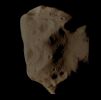
Lutetia-04-PCF-LXTT.jpgAsteroid "Lutetia" (possible Natural Colors; credits for the additional process. and color.: Dr Paolo C. Fienga - Lunexit Team)119 visiteMareKromium
|
|
| 289 immagini su 25 pagina(e) |
 |
|
|
|
|
19 | |
|
|
|
|








