| |

|
|
|
|
|
|
|
|
|
|
|
|
|
|
|
|
| 24 album su 2 pagina(e) |
1 |
|
| Immagini a caso - MARS |
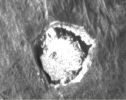
PSP_007055_2015_RED_abrowse-1.jpgVolcanic and Clay Materials near Nili Fossae (edm n. 1)65 visitenessun commentoMareKromium
|
|
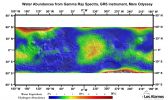
023-Mars_Water-2.jpgWhere is the "Water" of Mars? (Equatorial and Middle Latitude Regions)64 visiteA Neutron Spectrometer on the Mars Odyssey Spacecraft measures the abundances of neutrons of various energies emitted from Mars' Surface.
The ratio of low- to high-energy neutrons is a sensitive test of water abundances within a meter of Mars' surface.
There is LOTS of water. No one had expected any where near this much water near the Martian Surface.
All this is BETTER described in a press release from the Los Alamos National Laboratory, home of the Neutron Spectrometer and the scientists who run it (http://www.lanl.gov/news/releases/archive/03-101.shtml). MareKromium
|
|
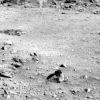
SOL427-2P164276575ESFA8B3P2585R5M1.jpgJaws (2)62 visitevedi il commento al frame che precede
|
|

SOU-SOL022.jpgEnd of the day, time to "rest"... - Sol 2272 visiteCaption NASA originale:"An End-Of-Sol Soujourner image. This was taken on Sol 22 after the Rover had placed its APXS in the dark soil surrounding the rock named Lamb".
|
|

Channels-Unnamed_Channel_in_Arabia_Terra-PIA08086-PCF-LXTT.jpgSinuous Channel in Arabia Terra Region (Absolute Natural Colors; credits: Dr Paolo C. Fienga - Lunexit Team)335 visitenessun commentoMareKromium
|
|
SOL1481-1.jpgDusty Paving... - Sol 1481 (True Colors; credits: Dr G. Barca)73 visitenessun commentoMareKromium
|
|

OPP-SOL2151-MF1.jpgFragments of the Martian Underworld - Sol 2151 (Image-Mosaic; credits: Dr M. Faccin)63 visitenessun commentoMareKromium
|
|

OPP-SOL1358-B.gifColor "INFO"?!?... - Sol 1358 (GIF-Movie; credits: Dr Marco Faccin)63 visiteUn GIF-Movie "dedicato" a tutti coloro che credono che le immagini "NASA from Mars" arrivino integralmente sulla Scala dei Grigi (insomma: in b/n, e poi vengono colorate a tavolino): ebbene no, non sembra essere così.
Come notato dal Dr Faccin, facendo un'analisi - davvero - meticolosa ed ai limiti dell'allucinante, i RAW-Frames NASA SEMBRANO CONTENERE, a decorrere dal Sol 994 per il MER Spirit, delle INFO di un qualche tipo.
Ma si tratterà di INFO collegate ai colori visibili nei vari frames?
O forse si tratta di INFO di altro genere e/o di altra Natura?
Quello che vedrete in questo GIF-Movie è un'evidenza del modo in cui queste INFO si manifestano: quadratini colorati.
Si tratta di un vizio della trasmissione ("noise")? O sono tracce di un sub-segnale (o di un retro-segnale)?
O non sono nulla e ci stiamo sbagliando noi?
Voi che dite? Guardate e poi scriveteci...
Nota Lunexit: abbiamo motivo di ritenere, dopo aver effettuato un piccolo studio al riguardo, che i frames MER Spirit ed Opportunity, nonchè i frames MRO, arrivino sulla Terra GIA' a colori, mentre i frames MGS ed Odyssey arrivano in b/n. Curioso, vero?!?MareKromium
|
|
| Ultimi arrivi - MARS |

SOL872-1152281618_30555-2_Sol872A_P2263_L257F-A893R1-1.jpgThe Surface of Gusev - Sol 872 (Possible Natural Colors; Credits: NASA/JPL-Caltech; Credits for the add. process. and color.: Dr. Paolo C. Fienga/LXTT/IPF))180 visitenessun commentoMareKromiumAgo 10, 2026
|
|

SOL872-1152281618_30555-2_Sol872A_P2263_L257F-A893R1-3.jpgThe Surface of Gusev - Sol 872 (Possible Natural Colors; credits: Dr. Paolo C. Fienga/LXTT/IPF)107 visitenessun commentoMareKromiumAgo 02, 2026
|
|

SOL4992-Turtl_Rock.jpgTurtle Rock (Credits: NASA/JPL-Caltech/MSSS; Processing & License: Thomas Thomopoulos)127 visiteIs this a fossilized turtle on Mars? No. Although resembling a large Earth tortoise, this is a layered rock outcrop on Mars that is estimated to span about 15 meters, making it much larger than turtles on Earth. NASA’s robotic Curiosity rover came across this unusual mound, dubbed Miraflores, last month during its 4922nd Martian day exploring Mars. The small butte may survive because it was somehow more resistant to erosion than surrounding rock. More recent wind has now covered its top with orange Martian sand. Below the top shell, many layers of stratified rock are visible, possibly indicating a long history of intermittent wind-blown sand being deposited and then hardened by ground water. Similar wind-eroded layered landforms, such as yardangs in the Qaidam Desert of China, exist here on Earth. Curiosity and its companion rover Perseverance continue to investigate the ancient history of Mars as well as searching for signs of primeval life.
(Note: It's with great pain that I note the increasingly ridiculous color processing of images coming from Mars. However, if they and the Space Enthusiasts are happy, that's fine...)MareKromiumLug 24, 2026
|
|

Zz-Mars_Global_Surveyor.jpgFarewell MGS!...115 visiteThe Mars Global Surveyor (MGS) failed on November 2, 2006, due to a software error uploaded five months earlier.
This bug accidentally pointed the spacecraft's battery directly at the sun. The intense heat caused the battery to overheat and drain, permanently cutting off power and communication.
The Breakdown of EventsThe Software Flaw: in June 2006, engineers sent a software update designed to synchronize the spacecraft's two flight computers. The code accidentally wrote two memory addresses in the wrong place.
The First Glitch: This error caused a solar panel to drive against its mechanical limit (or "hard stop"). The spacecraft then entered "safe mode," which is a protective state that shuts down non-essential systems.
The Fatal Reorientation: In safe mode, the spacecraft reoriented itself. Unfortunately, this new position pointed its battery radiator directly at the sun.Total Power Loss: The battery quickly overheated and failed, which caused the second battery to drain as well.
Within 12 hours, the spacecraft lost all power, went completely silent, and was declared lost.MareKromiumLug 12, 2026
|
|

SOL-0009-50993990326_48348a165d_b.jpgSetting Sun over Jazero Crater - Sol 9 (possible True Colors - Credits for the additional process. and color.: Elisabetta Bonora & Marco Faccin)95 visiteImmagine splendidamente processata.
Peccato che gli Autori di questo piccolo capolavoro (vecchi "Amici" di Lunexit) non abbiano aggiunto nulla in sede esplicativa del frame. Peccato davvero. Comunque (e di sicuro) non lo farò io (perché di fare il lavoro degli altri, specie di quelli che non si "sbottonano" mai per poi prendermi anche dello scemo, mi sono stancato).
Bravi loro.MareKromiumGiu 24, 2026
|
|

SOL0832-53021711488_bd0292cc36.jpgTwo-tone Rock - Sol 832 (possible True Colors - Credits for the additional process. and color.: Elisabetta Bonora & Marco Faccin)100 visiteImmagine splendidamente processata. Peccato che gli Autori di questo piccolo capolavoro non abbiano aggiunto nulla in sede esplicativa del frame. Peccato davvero.
Ad esempio: come mai la roccia inquadrata è bicolore?
Ipotesi? No?!? Ok, amen.
Comunque (e di sicuro) non ipotizzerò io (perché anche la mia "stupidità" - così mi venne riferito - ha un limite).
Bravi loro, quindi. In tutto. Certo, magari, in un lontano futuro, uno "sforzino" in più potrebbero anche farlo ma...parlando liberamente, è noto, si rischia di far figuracce.
E quindi, tanto per restare grandi amici di qualcuno che "conta" all'ESA, è meglio starsene buoni e produrre solo delle bellissime "cartoline" a gogò...MareKromiumGiu 24, 2026
|
|

SOL0714-52739052217_46e15dfa34_c.jpgLow Sun - Sol 714 (possible True Colors - Credits for the additional process. and color.: Elisabetta Bonora & Marco Faccin)87 visiteImmagine splendidamente processata. Come sempre. Peccato che, per l'ennesima volta, gli Autori di questo piccolo capolavoro non abbiano aggiunto nulla in sede esplicativa del frame. Peccato davvero.MareKromiumGiu 24, 2026
|
|

SOL0708-52711661976_7422eb394c_c.jpgDimming Light - Sol 708 (possible True Colors - Credits for the additional process. and color.: Elisabetta Bonora & Marco Faccin)102 visiteStupenda elaborazione. Mi chiedo solo se sia un'alba o un tramonto. In ogni caso non vedo l'alone azzurrognolo/celustrino che, in accordo alla NASA, dovrebbe caratterizzare sempre il Sole quando è basso all'orizzonte (che poi si tratti di dawn o di twilights, è indifferente).
Mah.MareKromiumGiu 24, 2026
|
|
|
|