|
|
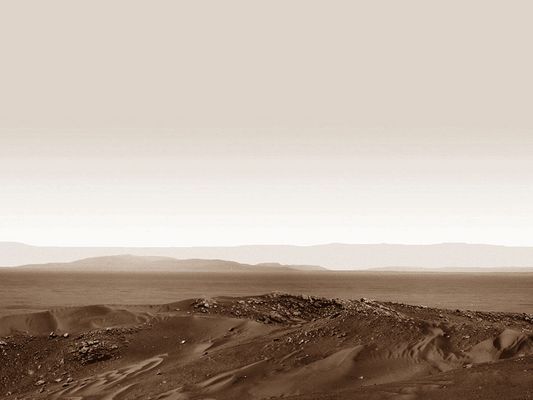
Gusev Crater: an artistic interpretation
|
"...The landing site and the Columbia Hills are within Gusev Crater, a bowl about 150 Km (about 95 miles) in diameter. It was selected for the Spirit mission because the shape of the terrain suggests the crater once held a lake. Volcanic deposits appear to have covered any sign of ancient lakebed geology out on the plain, but scientists say the hills expose older layers that have been lifted and tipped by a meteorite impact or other event...".
"Spirit has climbed to the hilltop and looked over the other side, but NASA did not do this just to say we can do it. The Mars rovers are addressing fundamental questions about Martian history and planetary environments," said NASA's Mars Exploration Program Director Doug McCuistion.
The crest of "Husband Hill" offers Spirit's views of possible routes into a basin to the south with apparently layered outcrops. Shortly after Spirit landed, it observed a cluster of seven hills about 3 kilometers (2 miles) east of its landing site. NASA proposed naming the range "Columbia Hills" in tribute to the last crew of Space Shuttle Columbia. The tallest of the hills commemorates Rick Husband, Columbia's commander.
|
|