Inizio Registrati Login

Elenco album Ultimi arrivi Ultimi commenti Più viste Più votate Preferiti Cerca

Inizio > SOLAR SYSTEM > Pluto and Charon: The "Double Planet"
Ritorna alla pagina delle miniature FILE 76/79 Torna all'inizio Guarda foto precedente Guarda foto successiva Salta alla fine
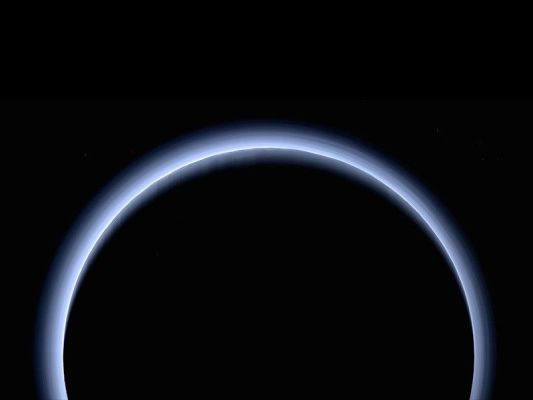
A "Blue-rayed" Farewell to Pluto
New Horizons is a NASA mission to study the dwarf planet Pluto, its moons, and other objects in the Kuiper Belt, a region of the solar system that extends from about 30 AU, near the orbit of Neptune, to about 50 AU from the Sun.

It was the first mission in NASA’s New Frontiers program, a medium-class, competitively selected, and principal investigator-led series of missions. (The program also includes Juno and OSIRIS-REx.)

New Horizons was the first spacecraft to encounter Pluto, a relic from the formation of the solar system. By the time it reached the Pluto system, the spacecraft had traveled farther away and for a longer time period (more than nine years) than any previous deep space spacecraft ever launched.

The design of the spacecraft was based on a lineage traced back to the CONTOUR and TIMED spacecraft, both also built by the Applied Physics Laboratory at Johns Hopkins University.

Besides its suite of scientific instruments, New Horizons carries a cylindrical radioisotope thermoelectric generator (a spare from the Cassini mission) that provided about 250 watts of power at launch (decaying to 200 watts by the time of the Pluto encounter).

After reaching initial Earth orbit at about 105 × 130 miles (167 × 213 kilometers), the Centaur upper stage fired (for a second time) for nine minutes to boost the payload to an elliptical orbit that stretched to the asteroid belt.

A second firing of the Star 48B solid rocket accelerated the spacecraft to a velocity of about 36,400 miles per hour (58,536 kilometers per hour), the highest launch velocity attained by a human-made object relative to Earth. The spacecraft was now set on a trajectory to the outer reaches of the solar system.

Controllers implemented course corrections on Jan. 28, Jan. 30, and March 9, 2006. A month later, on April 7, 2006, New Horizons passed the orbit of Mars.

A fortuitous chance to test some of the spacecraft’s instruments – especially Ralph (the visible and infrared imager and spectrometer) – occurred June 13, 2006, when New Horizons passed by a tiny asteroid named 132524 APL at a range of about 63,300 miles (101,867 kilometers).

The spacecraft flew by the solar system’s largest planet, Jupiter, for a gravity assist maneuver on Feb. 28, 2007, with the closest approach at 05:43:40 UT. The encounter increased the spacecraft’s velocity by about 9,000 miles per hour (14,000 kilometers per hour), shortening its trip to Pluto by three years.

During the flyby, New Horizons carried out a detailed set of observations over a period of four months in early 2007. These observations were designed to gather new data on Jupiter’s atmosphere, ring system, and moons (building on research from Galileo) and to test out New Horizon’s instruments.

Although observing the moons from distances much farther than Galileo, New Horizons was still able to return impressive pictures of Io (including eruptions on its surface), Europa, and Ganymede.

After the Jupiter encounter, New Horizons sped toward the Kuiper Belt, performing a course correction on Sept. 25, 2007.

The spacecraft was put in hibernation mode starting June 28, 2007, during which time the spacecraft’s onboard computer kept tabs on mission systems, transmitting special codes indicating that operations were either nominal or anomalous. During hibernation, most major systems of New Horizons were deactivated and revived only about two months every year. The second, third, and fourth hibernation cycles were Dec. 16, 2008, Aug. 27, 2009, and Aug. 29, 2014.

New Horizons passed the halfway point to Pluto on Feb. 25, 2010.

The discovery of new Pluto moons Kerberos and Styx during the mission added to concerns that there might be debris or dust around Pluto. Mission planners devised two possible contingency plans in case debris increased as the spacecraft approached Pluto, either using its antenna facing the incoming particles as a shield or flying closer to Pluto where there might be less debris.

On Dec. 6, 2014, ground controllers revived New Horizons from hibernation for the last time to initiate its active encounter with Pluto. At that time, it took four hours and 25 minutes for a signal to reach Earth from the spacecraft.

The spacecraft began its approach phase toward Pluto on Jan. 15, 2015, and its trajectory was adjusted with a 93-second thruster burn on March 10. Two days later, with about four months remaining before its close encounter, New Horizons finally became closer to Pluto than Earth is to the Sun.

Pictures of Pluto began to reveal distinct features by April 29, 2015, with detail increasing week by week into the approach. A final 23-second engine burn on June 29, 2015, accelerated New Horizons toward its target by about 11 inches per second (27 centimeters per second) and fine-tuned its trajectory.

There was concern on July 4, 2015, when New Horizons entered safe mode due to a timing flaw in the spacecraft command sequence. Fortunately, the spacecraft returned to normal science operations by July 7.

Three days later, data from New Horizons was used to conclusively answer one of the most basic mysteries about Pluto: its size. Mission scientists concluded that Pluto is about 1,470 miles (2,370 kilometers) in diameter, slightly larger than prior estimates. Its moon Charon was confirmed to be about 750 miles (1,208 kilometers) in diameter.
Parole chiave: Pluto

A "Blue-rayed" Farewell to Pluto

New Horizons is a NASA mission to study the dwarf planet Pluto, its moons, and other objects in the Kuiper Belt, a region of the solar system that extends from about 30 AU, near the orbit of Neptune, to about 50 AU from the Sun.

It was the first mission in NASA’s New Frontiers program, a medium-class, competitively selected, and principal investigator-led series of missions. (The program also includes Juno and OSIRIS-REx.)

New Horizons was the first spacecraft to encounter Pluto, a relic from the formation of the solar system. By the time it reached the Pluto system, the spacecraft had traveled farther away and for a longer time period (more than nine years) than any previous deep space spacecraft ever launched.

The design of the spacecraft was based on a lineage traced back to the CONTOUR and TIMED spacecraft, both also built by the Applied Physics Laboratory at Johns Hopkins University.

Besides its suite of scientific instruments, New Horizons carries a cylindrical radioisotope thermoelectric generator (a spare from the Cassini mission) that provided about 250 watts of power at launch (decaying to 200 watts by the time of the Pluto encounter).

After reaching initial Earth orbit at about 105 × 130 miles (167 × 213 kilometers), the Centaur upper stage fired (for a second time) for nine minutes to boost the payload to an elliptical orbit that stretched to the asteroid belt.

A second firing of the Star 48B solid rocket accelerated the spacecraft to a velocity of about 36,400 miles per hour (58,536 kilometers per hour), the highest launch velocity attained by a human-made object relative to Earth. The spacecraft was now set on a trajectory to the outer reaches of the solar system.

Controllers implemented course corrections on Jan. 28, Jan. 30, and March 9, 2006. A month later, on April 7, 2006, New Horizons passed the orbit of Mars.

A fortuitous chance to test some of the spacecraft’s instruments – especially Ralph (the visible and infrared imager and spectrometer) – occurred June 13, 2006, when New Horizons passed by a tiny asteroid named 132524 APL at a range of about 63,300 miles (101,867 kilometers).

The spacecraft flew by the solar system’s largest planet, Jupiter, for a gravity assist maneuver on Feb. 28, 2007, with the closest approach at 05:43:40 UT. The encounter increased the spacecraft’s velocity by about 9,000 miles per hour (14,000 kilometers per hour), shortening its trip to Pluto by three years.

During the flyby, New Horizons carried out a detailed set of observations over a period of four months in early 2007. These observations were designed to gather new data on Jupiter’s atmosphere, ring system, and moons (building on research from Galileo) and to test out New Horizon’s instruments.

Although observing the moons from distances much farther than Galileo, New Horizons was still able to return impressive pictures of Io (including eruptions on its surface), Europa, and Ganymede.

After the Jupiter encounter, New Horizons sped toward the Kuiper Belt, performing a course correction on Sept. 25, 2007.

The spacecraft was put in hibernation mode starting June 28, 2007, during which time the spacecraft’s onboard computer kept tabs on mission systems, transmitting special codes indicating that operations were either nominal or anomalous. During hibernation, most major systems of New Horizons were deactivated and revived only about two months every year. The second, third, and fourth hibernation cycles were Dec. 16, 2008, Aug. 27, 2009, and Aug. 29, 2014.

New Horizons passed the halfway point to Pluto on Feb. 25, 2010.

The discovery of new Pluto moons Kerberos and Styx during the mission added to concerns that there might be debris or dust around Pluto. Mission planners devised two possible contingency plans in case debris increased as the spacecraft approached Pluto, either using its antenna facing the incoming particles as a shield or flying closer to Pluto where there might be less debris.

On Dec. 6, 2014, ground controllers revived New Horizons from hibernation for the last time to initiate its active encounter with Pluto. At that time, it took four hours and 25 minutes for a signal to reach Earth from the spacecraft.

The spacecraft began its approach phase toward Pluto on Jan. 15, 2015, and its trajectory was adjusted with a 93-second thruster burn on March 10. Two days later, with about four months remaining before its close encounter, New Horizons finally became closer to Pluto than Earth is to the Sun.

Pictures of Pluto began to reveal distinct features by April 29, 2015, with detail increasing week by week into the approach. A final 23-second engine burn on June 29, 2015, accelerated New Horizons toward its target by about 11 inches per second (27 centimeters per second) and fine-tuned its trajectory.

There was concern on July 4, 2015, when New Horizons entered safe mode due to a timing flaw in the spacecraft command sequence. Fortunately, the spacecraft returned to normal science operations by July 7.

Three days later, data from New Horizons was used to conclusively answer one of the most basic mysteries about Pluto: its size. Mission scientists concluded that Pluto is about 1,470 miles (2,370 kilometers) in diameter, slightly larger than prior estimates. Its moon Charon was confirmed to be about 750 miles (1,208 kilometers) in diameter.

ZZ-ZZ-ZZ-ZZ-ZZ-ZZ-ZZ-ZZ-Pluto-nh_01_stern_05_pluto_hazenew-PCF-LXTT-IPF-00.jpg ZZ-ZZ-ZZ-ZZ-ZZ-ZZ-ZZ-ZZ-Pluto-nh_01_stern_05_pluto_hazenew-PCF-LXTT-IPF-1.jpg ZZ-ZZ-ZZ-ZZ-ZZ-ZZ-ZZ-ZZ-Pluto-nh_01_stern_05_pluto_hazenew-PCF-LXTT-IPF-2.jpg ZZ-ZZ-ZZ-ZZ-ZZ-ZZ-ZZ-ZZ-Pluto_and_Charon-01-NewHorizons-1422.jpg ZZ-ZZ-ZZ-ZZ-ZZ-ZZ-ZZ-ZZ-ZZ-Pluto-PIA21863.jpg
Informazioni sul file
Nome del file:ZZ-ZZ-ZZ-ZZ-ZZ-ZZ-ZZ-ZZ-Pluto-nh_01_stern_05_pluto_hazenew-PCF-LXTT-IPF-2.jpg
Nome album:MareKromium / Pluto and Charon: The "Double Planet"
Valutazione (1 voti):55555(Mostra dettagli)
Parole chiave:Pluto
Copyright:NASA/JPL - New Horizons Mission
Dimensione del file:15 KiB
Data di inserimento:Mag 20, 2026
Dimensioni:800 x 600 pixels
Visualizzato:179 volte
URL:https://www.lunexit.it/gallery/displayimage.php?pid=32075
Preferiti:Aggiungi ai preferiti


Powered by Coppermine Photo Gallery