Inizio Registrati Login

Elenco album Ultimi arrivi Ultimi commenti Più viste Più votate Preferiti Cerca

Inizio > MARS > Mars Reconnaissance Orbiter (MRO)
Ritorna alla pagina delle miniature FILE 2196/2237 Torna all'inizio Guarda foto precedente Guarda foto successiva Salta alla fine
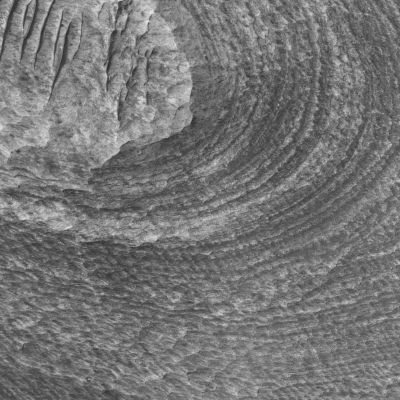
Candor Chasma
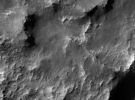
Candor Chasma is one of several large troughs that make up Valles Marineris, the largest canyon system in the Solar System. Much of Candor Chasma is filled with layered deposits, like those shown in this HiRISE sub-image. Layers only 1-2 meters thick can be resolved by HiRISE and provide details on the processes that emplaced and modified these sediments. The layered deposits could be volcanic, lacustrine, or eolian sediments that filled in some portions of the trough of Valles Marineris. The variations in brightness of the layers could represent compositional differences in the layers or the thickness of overlying debris, such as sand or dust. This area was targeted because minerals rich in sulfur were detected here by the OMEGA instrument on Mars Express. By using HiRISE images to look at specific geologic units that correspond to these locations of sulfate, it may be possible to determine the origin of the sediments, particularly those that contain the sulfates. The paucity of impact craters on the layered deposits suggests either a young age for the sediments or erosion has removed much of the upper layers to reveal a fresher-looking surface. Dark dunes and ripples indicate that wind has been, and still may be, moving debris across the sedimentary deposits.
Parole chiave: Mars from orbit - Candor Chasma (Valles Marineris T.S.) Region

Candor Chasma

Candor Chasma is one of several large troughs that make up Valles Marineris, the largest canyon system in the Solar System. Much of Candor Chasma is filled with layered deposits, like those shown in this HiRISE sub-image. Layers only 1-2 meters thick can be resolved by HiRISE and provide details on the processes that emplaced and modified these sediments. The layered deposits could be volcanic, lacustrine, or eolian sediments that filled in some portions of the trough of Valles Marineris. The variations in brightness of the layers could represent compositional differences in the layers or the thickness of overlying debris, such as sand or dust. This area was targeted because minerals rich in sulfur were detected here by the OMEGA instrument on Mars Express. By using HiRISE images to look at specific geologic units that correspond to these locations of sulfate, it may be possible to determine the origin of the sediments, particularly those that contain the sulfates. The paucity of impact craters on the layered deposits suggests either a young age for the sediments or erosion has removed much of the upper layers to reveal a fresher-looking surface. Dark dunes and ripples indicate that wind has been, and still may be, moving debris across the sedimentary deposits.

T-TRA_000833_1800_RED.jpg T-TRA_000834_1835_RED.jpg T-TRA_000836_1740_RED_CandorChasma_01.jpg T-TRA_000849_1675_RED.jpg T-TRA_000853_1450_RED_AtlantisChaos_01.jpg
Informazioni sul file
Nome del file:T-TRA_000836_1740_RED_CandorChasma_01.jpg
Nome album:Mars Reconnaissance Orbiter (MRO)
Valutazione (2 voti):55555(Mostra dettagli)
Parole chiave:Mars / from / orbit / - / Candor / Chasma / (Valles / Marineris / T.S.) / Region
Copyright:NASA - Mars Reconnaissance Orbiter
Dimensione del file:667 KiB
Data di inserimento:Ott 07, 2006
Dimensioni:2048 x 2048 pixels
Visualizzato:56 volte
URL:https://www.lunexit.it/gallery/displayimage.php?pid=13204
Preferiti:Aggiungi ai preferiti


Powered by Coppermine Photo Gallery