Inizio Registrati Login

Elenco album Ultimi arrivi Ultimi commenti Più viste Più votate Preferiti Cerca

Inizio > SOLAR SYSTEM > Asteroids and Comets
Ritorna alla pagina delle miniature FILE 76/282 Torna all'inizio Guarda foto precedente Guarda foto successiva Salta alla fine
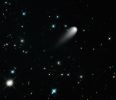
Comet ISON (Hubble Space Telescope's View)
Advanced amateur astronomers are already getting good images of Comet ISON, which currently shines at around +12th magnitude in the constellation Cancer. And although NASA’s Deep Impact/EPOXI mission is down for the count, plans are afoot for the Curiosity rover and the Mars Reconnaissance Orbiter to attempt imaging the comet when it makes its closest approach to the Red Planet on October 1st at 0.0724 Astronomical Units (A.U.) or 10,830,000 kilometres distant. If MSL is successful, it would be the first time that a comet has been observed from the surface of another world.

Currently, ISON sits about a magnitude below the projected light curve, (see below) but that isn’t all that unusual for a comet. Already, there’s been increasing talk of “ISON being a dud,” but as Universe Today’s Nancy Atkinson pointed out in a recent post, these assertions are still premature. The big question is what ISON will do leading up to perihelion, and if it will survive its passage 1.1 million kilometres above the surface of the Sun on November 28th to become a fine comet in the dawn skies in the weeks leading up to Christmas.

ISON is already starting to show a short, spikey tail in amateur images. Tsutomu Seki estimated it to be shining at about magnitude +11.1 on September 16th. Keep in mind, a caveat is in order when talking about the magnitudes of comets. Unlike stars, which are essentially a point source, the brightness of a comet is spread out over a large surface area. Thus, a comet may appear visually fainter than the quoted magnitude, much like a diffuse nebula. Although +6th magnitude is usually the limit for naked eye visibility, I’ll bet that most folks won’t pick up ISON with the unaided eye from typical suburban sites until it breaks +4th magnitude or so.

The forward scattering of light also plays a key role in the predicted brightness of a comet. The November issue of Astronomy Magazine has a great article on this phenomenon. It’s interesting to note that ISON stacks up as a “9” on their accumulated point scale, right at the lower threshold of comet “greatness,” versus a 15 for sungrazing Comet C/1965 S1 Ikeya-Seki. Another famous “9” was Comet C/1996 B2 Hyakutake, which passed 0.1018 A.U. or 15.8 million kilometres from Earth on March 25, 1996.

ISON will pass 0.429 A.U. or 64.2 million kilometres from Earth the day after Christmas. Bruce Willis can stay home for this one.

Here is a blow-by-blow breakdown of some key dates to watch for as ISON makes its plunge into the inner solar system:

-September 25th: ISON crosses the border from the astronomical constellation of Cancer into Leo.

-September 27th: ISON passes 2 degrees north of the planet Mars.

-October 1st: The 12% illuminated waning crescent Moon passes 10 degrees south of Mars & ISON.

-Early October: ISON may break +10th magnitude and become visible with binoculars or a small telescope.

-October 4th: New Moon occurs. The Moon then exits the dawn sky, making for two weeks of prime viewing.

-October 10th: ISON enters view of NASA’s STEREO/SECCHI HI-2A CAMERA:

-October 16th: ISON passes just 2 degrees NNE of the bright star Regulus, making a great “guidepost” to pin it down with binoculars.

-October 18th: The Full Moon occurs, after which the Moon enters the morning sky.

-October 26th: A great photo-op for astro-imagers occurs, as ISON passes within three degrees the Leo galaxy trio of M95, M96, & M105.

-October 30th: The 17% illuminated Moon passes 6 degrees south of ISON.

-Early November: Comet ISON may make its naked eye debut for observers based at dark sky sites.

-November 3rd: A hybrid (annular-total) solar eclipse occurs, spanning the Atlantic and Central Africa. It may just be possible for well placed observers to catch sight of ISON in the daytime during totality, depending on how quickly it brightens up. The Moon reaching New phase also means that the next two weeks will be prime view time for ISON at dawn.

-November 5th: ISON crosses the border from the astronomical constellation of Leo into Virgo.

-November 7th: ISON passes less than a degree from the +3.6 magnitude star Zavijava (Beta Virginis).

-November 8th: ISON passes through the equinoctial point in Virgo around 16:00 EDT/20:00 UT, passing into the southern celestial hemisphere and south of the ecliptic.

-November 14th: ISON passes less than a degree from the 10th magnitude galaxy NGC 4697.

-November 17th: The Moon reaches Full, passing into the morning sky.

-November 18th: ISON passes just 0.38 degrees north of the bright star Spica.

-November 22nd: ISON crosses into the astronomical constellation of Libra.

-November 23rd: ISON sits 4.7 degrees SSW of the planet Mercury and 4.9 SSW of Saturn, respectively.

-November 25th: ISON pays a visit to another famous comet, passing just 1.2 degrees south of short period comet 2P/Encke which may shine at +8th magnitude.

-November 27th: ISON enters the field of view of SOHO’s LASCO C3 coronagraph.

-November 28th: ISON reaches perihelion at ~18:00 PM EST/ 23:00 UT.

After that, all bets are off. The days leading up to perihelion will be tense ones, as ISON then rounds the Sun on a date with astronomical destiny. Will it join the ranks of the great comets of the past? Will it stay intact, or shatter in a spectacular fashion? Watch this space for ISON updates… we’ll be back in late November with our post-perihelion guide!

Be sure to also enjoy recently discovered Comet C/2013 R1 Lovejoy later the year.

(source: http://www.universetoday.com/104818/comet-ison-a-viewing-guide-from-now-to-perihelion/#ixzz2fpLTKJwD)


Read more: http://www.universetoday.com/104818/comet-ison-a-viewing-guide-from-now-to-perihelion/#ixzz2fpLG75us
Parole chiave: Comets - ISON

Comet ISON (Hubble Space Telescope's View)

Advanced amateur astronomers are already getting good images of Comet ISON, which currently shines at around +12th magnitude in the constellation Cancer. And although NASA’s Deep Impact/EPOXI mission is down for the count, plans are afoot for the Curiosity rover and the Mars Reconnaissance Orbiter to attempt imaging the comet when it makes its closest approach to the Red Planet on October 1st at 0.0724 Astronomical Units (A.U.) or 10,830,000 kilometres distant. If MSL is successful, it would be the first time that a comet has been observed from the surface of another world.

Currently, ISON sits about a magnitude below the projected light curve, (see below) but that isn’t all that unusual for a comet. Already, there’s been increasing talk of “ISON being a dud,” but as Universe Today’s Nancy Atkinson pointed out in a recent post, these assertions are still premature. The big question is what ISON will do leading up to perihelion, and if it will survive its passage 1.1 million kilometres above the surface of the Sun on November 28th to become a fine comet in the dawn skies in the weeks leading up to Christmas.

ISON is already starting to show a short, spikey tail in amateur images. Tsutomu Seki estimated it to be shining at about magnitude +11.1 on September 16th. Keep in mind, a caveat is in order when talking about the magnitudes of comets. Unlike stars, which are essentially a point source, the brightness of a comet is spread out over a large surface area. Thus, a comet may appear visually fainter than the quoted magnitude, much like a diffuse nebula. Although +6th magnitude is usually the limit for naked eye visibility, I’ll bet that most folks won’t pick up ISON with the unaided eye from typical suburban sites until it breaks +4th magnitude or so.

The forward scattering of light also plays a key role in the predicted brightness of a comet. The November issue of Astronomy Magazine has a great article on this phenomenon. It’s interesting to note that ISON stacks up as a “9” on their accumulated point scale, right at the lower threshold of comet “greatness,” versus a 15 for sungrazing Comet C/1965 S1 Ikeya-Seki. Another famous “9” was Comet C/1996 B2 Hyakutake, which passed 0.1018 A.U. or 15.8 million kilometres from Earth on March 25, 1996.

ISON will pass 0.429 A.U. or 64.2 million kilometres from Earth the day after Christmas. Bruce Willis can stay home for this one.

Here is a blow-by-blow breakdown of some key dates to watch for as ISON makes its plunge into the inner solar system:

-September 25th: ISON crosses the border from the astronomical constellation of Cancer into Leo.

-September 27th: ISON passes 2 degrees north of the planet Mars.

-October 1st: The 12% illuminated waning crescent Moon passes 10 degrees south of Mars & ISON.

-Early October: ISON may break +10th magnitude and become visible with binoculars or a small telescope.

-October 4th: New Moon occurs. The Moon then exits the dawn sky, making for two weeks of prime viewing.

-October 10th: ISON enters view of NASA’s STEREO/SECCHI HI-2A CAMERA:

-October 16th: ISON passes just 2 degrees NNE of the bright star Regulus, making a great “guidepost” to pin it down with binoculars.

-October 18th: The Full Moon occurs, after which the Moon enters the morning sky.

-October 26th: A great photo-op for astro-imagers occurs, as ISON passes within three degrees the Leo galaxy trio of M95, M96, & M105.

-October 30th: The 17% illuminated Moon passes 6 degrees south of ISON.

-Early November: Comet ISON may make its naked eye debut for observers based at dark sky sites.

-November 3rd: A hybrid (annular-total) solar eclipse occurs, spanning the Atlantic and Central Africa. It may just be possible for well placed observers to catch sight of ISON in the daytime during totality, depending on how quickly it brightens up. The Moon reaching New phase also means that the next two weeks will be prime view time for ISON at dawn.

-November 5th: ISON crosses the border from the astronomical constellation of Leo into Virgo.

-November 7th: ISON passes less than a degree from the +3.6 magnitude star Zavijava (Beta Virginis).

-November 8th: ISON passes through the equinoctial point in Virgo around 16:00 EDT/20:00 UT, passing into the southern celestial hemisphere and south of the ecliptic.

-November 14th: ISON passes less than a degree from the 10th magnitude galaxy NGC 4697.

-November 17th: The Moon reaches Full, passing into the morning sky.

-November 18th: ISON passes just 0.38 degrees north of the bright star Spica.

-November 22nd: ISON crosses into the astronomical constellation of Libra.

-November 23rd: ISON sits 4.7 degrees SSW of the planet Mercury and 4.9 SSW of Saturn, respectively.

-November 25th: ISON pays a visit to another famous comet, passing just 1.2 degrees south of short period comet 2P/Encke which may shine at +8th magnitude.

-November 27th: ISON enters the field of view of SOHO’s LASCO C3 coronagraph.

-November 28th: ISON reaches perihelion at ~18:00 PM EST/ 23:00 UT.

After that, all bets are off. The days leading up to perihelion will be tense ones, as ISON then rounds the Sun on a date with astronomical destiny. Will it join the ranks of the great comets of the past? Will it stay intact, or shatter in a spectacular fashion? Watch this space for ISON updates… we’ll be back in late November with our post-perihelion guide!

Be sure to also enjoy recently discovered Comet C/2013 R1 Lovejoy later the year.

(source: http://www.universetoday.com/104818/comet-ison-a-viewing-guide-from-now-to-perihelion/#ixzz2fpLTKJwD)


Read more: http://www.universetoday.com/104818/comet-ison-a-viewing-guide-from-now-to-perihelion/#ixzz2fpLG75us

Comets-Comet_Hyakutake.jpg Comets-Comet_ISON-4-10-2013-HST.jpg Comets-Comet_ISON-HST-30Apr-V_I-L-800.jpg Comets-Comet_ISON-Nucleus.jpg Comets-Comet_ISON-Nucleus_Crop_Chumack.jpg
Informazioni sul file
Nome del file:Comets-Comet_ISON-HST-30Apr-V_I-L-800.jpg
Nome album:MareKromium / Asteroids and Comets
Valutazione (4 voti):55555(Mostra dettagli)
Parole chiave:Comets / - / ISON
Copyright:NASA/HST
Dimensione del file:92 KiB
Data di inserimento:Set 24, 2013
Dimensioni:783 x 671 pixels
Visualizzato:146 volte
URL:https://www.lunexit.it/gallery/displayimage.php?pid=31143
Preferiti:Aggiungi ai preferiti

Commento 32 a 51 di 51
Pagina: 1 - 2 - 3

Ufologo   [Ott 14, 2013 at 11:46 AM]
Bisogna vedere cosa stiamo ... guardando ...
Anche se fosse un frammento alquanto strano sia il suo colore che il suo comportamento ...
Ecco perch dovremo conoscere la vera provenienza del filmato ..
E proprio i cinesimostrerebbero un particolare del genere? E nessuno al mondo ne ha parlato?
ubatuba   [Ott 14, 2013 at 11:55 AM]
innanzitutto sarebbe opportuno sapere la provenienza del filmato,poi spiegazioni al riguardo erano state dette....
Ufologo   [Ott 14, 2013 at 11:59 AM]
Solo che sembra proprio un Oggetto. Quindi, o un fake, o .....
Anakin   [Ott 14, 2013 at 12:33 PM]
La descrizione del filmato riporta questa didascalia:
"Comet Ison with 2 objects new feed this time from the Chinese Space Radar from September 03, 2013."

Io ho provato a cercare sui siti cinesi ma...............................sono scritti in cinese :-D
ubatuba   [Ott 14, 2013 at 01:59 PM]
ma sti filmati,dovrebbero essere ufficiale, da quale fonte escono...............?poi a me sembra strano che solo segni dal cielo la presenti......
Ufologo   [Ott 14, 2013 at 02:11 PM]
(Se per questo, per me era gi una bufala che si sarebbe vista in modo spettacolare! E che, arrivano cos, tutt'ad un tratto .....?!
paolocf1963   [Ott 14, 2013 at 08:29 PM]
Ok, mi son fatto un'idea della questione. Oggi non ho avuto il tempo materiale per pubblicare le immagini, ma domani ne parleremo...
AndreaGG   [Ott 15, 2013 at 06:35 AM]
Ragazzi, una domanda: delle altre comete (recenti) abbiamo immagini simili del nucleo? Se mi dite di si, vi potrebbe essere la possibilit di avere immagini genuine oppure un fake su base reale... se non ne abbiamo, quasi sicuramente fasulla...
Anakin   [Ott 15, 2013 at 07:23 AM]
il 13 marzo 1986 (27 anni fa) la sonda Giotto ad una distanza minima di 596 km ha ripreso in primo piano il nucleo della cometa di Halley
Questo il video dell'epoca

http : / / www . youtube . com / watch? v = G5WITe_q7BQ
AndreaGG   [Ott 15, 2013 at 08:30 AM]
Ma stiamo parlando di una sonda a 600km dal nucleo. La Ison invece a distanze ancora astronomiche. Il mio dubbio se vi sono immagini di nuclei cometari a tali distanze (ricordo che quando sar vicino alla Terra ed ai satelliti in orbita si trover a 60 milioni di chilometri)
Anakin   [Ott 15, 2013 at 08:56 AM]
Il primo dubbio : con quali strumenti i cinesi sarebbero riusciti a riprendere il nucleo della cometa Ison che al momento nei paraggi di Marte?
Si dice che sia attraverso il satrellite Tian Lain B1

E' possibile nel 2013 effettuare una ripresa simile con i moderni mezzi? Hubble o telescopi similari, potrebbero mai arrivare ad inquadrare il nucleo in quel modo? (secondo me s)
AndreaGG   [Ott 15, 2013 at 09:14 AM]
Vuoi dirmi che l'unica volta che hanno sfruttato la tecnologia per fotografare il nucleo hanno beccato subito quella con 2 astronavi? Se la giriamo a statistica, tutte le comete hanno astronavi vicino il nucleo! E poi non hanno fotografato i nuclei delle altre comete degli ultimi mesi? Mi sembra assurdo... perci ho chiesto se vi sono foto di altri nuclei!
Anakin   [Ott 15, 2013 at 09:20 AM]
La sonda Deep Impact della NASA, ribattezzata EPOXI (Extrasolar Planet Observation / eXtended Investigation of comets) dopo lincontro con la cometa Tempel 1, contro il cui nucleo il 4 luglio 2005 scagli un proiettile di rame di quasi 4 quintali di massa alla velocit di circa 10 km/s (quasi 40.000 km/h), passata ad una distanza di soli 700 km dal nucleo della cometa Hartley 2

Ma anche in questo caso la sonda era vicina alla meta.

Quindi al momento abbiamo le immagini dei nuclei di

Halley
Hartley 2
Tempel 1
Wild 2
MareKromium   [Ott 15, 2013 at 10:57 AM]
Cari Amici,

tutte le immagini dei Nuclei le ho "commentate", cos Vi verr facile beccarle subito. In verit, i Nuclei si assomigliano un p tutti e quello che ho visto nel filmato, e che rapresenterebbe il Nucleo di ISON, mi pare credibile. Insomma: se un fake (guardatelo attentamente!) fatto DAVVERO BENE!

Circa gli Oggetti che ruotano attorno ad ISON, se vogliamo restare razionali, potrebbero benissimo essere due "Ciottoli Spaziali" (due mini-Asteroidi, insomma) Gravitazionalmente catturati da ISON. Pensate ad Ida e Dactyl, se volete una immagine di un Asteroide intorno al quale orbita un altro Asteroide...

L'ipotesi UFO, insomma, non certo l'unica a cui attaccarsi. Comunque sia, per adesso abbiamo informazioni veramente scarse.

L'unica cosa certa che ISON ha "qualcosa che non va", infatti, sebbene ora (anzi: gi da giorni) avrebbe dovuto iniziare a variare la sua Luminosit (in positivo, ma a volte pu anche variare in negativo), nulla successo. ISON non ha avuto ancora alcuna variazione di Luminosit, e questo un evento anomalo, visto che, una volta superato Giove ed entrata nel "Cuore" del Sistema Solare, avrebbe dovuto "accendersi" ed iniziare a mostrare la "Coda". E invece nulla.

Mia opinione? O questa storia , anche scientificamente parlando (ISON "Cometa del Secolo" ed "Evento Cosmico del Secolo"...), una bufala colossale, oppure potremmo trovarci davanti a qualcosa di interessante davvero...
Anakin   [Ott 15, 2013 at 11:15 AM]
Ma non potrebbe essere solo un asteroide piuttosto che una cometa? (oppure ho detto una caxxata?)

Grazie per aver riportato tutte le comete viste "da vicino"
AndreaGG   [Ott 15, 2013 at 12:39 PM]
Grazie Paolo. So che abbiamo le immagini, ma tutte da sonde nei loro paraggi... qui sorge il mio dubbio sull'autenticit del frame. Se invece si appura che abbiamo immagini cos risolute anche da questa distanza, allora possiamo indagare sull'autenticit o manomissione della foto.
Anakin   [Ott 15, 2013 at 01:23 PM]
Effettuando delle elaborazioni (nel mio piccolo) non ho trovato stranezze nelle immagini. Sembrano autentiche o davvero ben fatte
Ufologo   [Ott 15, 2013 at 02:23 PM]
Paolo, possibile davvero che un corpo, anche piccolo, possa ruotare attorno ad un altro davvero piccolo anche lui? Tutt'alpi avrebbero un punto di gravit in comune ... o no.
paolocf1963   [Ott 15, 2013 at 02:25 PM]
Per Anakin: l'Asteroide un Corpo Celeste roccioso e simile - per composizione - ad un oggetto di "Tipo Terrestre"; esso tuttavia sostanzialmente pi piccolo e, generalmente, a-sferico. Un Asteroide vero e proprio ha un diametro ridotto (da 0,5/1 Km sino a 5 Km - poco pi, o poco meno), si muove a Gravit Zero (o meglio: pu possedere una "Micro-Gravit") ed asseconda orbite fortemente ellittiche.
La Cometa, invece, un Corpo Celeste composto FONDAMENTALMENTE di ghiaccio, e solo MINIMAMENTE di roccia (o polveri, o pietrisco aggregato gravitazionalmente).
Anche le Comete presentano delle orbite fortemente ellittiche e, per quelle definite "Sun-Grazers" (o " Sfiora-Sole", come ISON), la loro storia tende a finire con il passaggio al perielio (Punto di Massima Vicinanza al Sole), in seguito al quale si sciolgono, o disintegrano. Possono poi anche disintegrarsi allorch incontrano il Limite di Roche del Sole, ossa quella zona di Spazio circum-Solare in cui le Onde Mareali provenienti dal Sole sono cos forti che possono squassare un Corpo Celeste "fragile".
ISON, per i motivi suddetti ( fatta prevalentemente di ghiaccio, ha un'orbita di tipo Sun-Grazing etc.) una Cometa.

Per Andrea: ti quoto. Ed infatti, prima di "sbilanciarmi", devo vedere immagini ravvicinate. Altrimenti si pu dire tutto ed il contrario di tutto.

Ancora per Anakin: si, se si tratta di "tarocchi" son fatti davvero bene!

Per Ufologo: si, possibile. Pensa al duo "Ida and Dactyl" che ho citato recentemente. I Punti di Gravit in "comune" non esistono. Esistono invece i Punti di Lagrange (ossia di Equlibrio Gravitazionale, all'interno di un Sistema Planetario Binario o Multiplo). Ma in questo caso la problematica non rilevante.

Un abbraccio Circolare! paolo
AndreaGG   [Ott 15, 2013 at 08:10 PM]
Forse Max intendeva un centro di gravit comune, come per le stelle binarie... penso che in scala cometaria o asteroidale un simile effetto si potrebbe avere in caso di collisione, per cui 2 parti dello stesso oggetto potrebbero rivolvere come appunto gli astri prima citati (elucubrazione senza il minimo studio!)

Commento 32 a 51 di 51
Pagina: 1 - 2 - 3


Powered by Coppermine Photo Gallery