Inizio Registrati Login

Elenco album Ultimi arrivi Ultimi commenti Più viste Più votate Preferiti Cerca

Inizio > MOON > The Soviet "Moon Programme"
Ritorna alla pagina delle miniature FILE 76/84 Torna all'inizio Guarda foto precedente Guarda foto successiva Salta alla fine
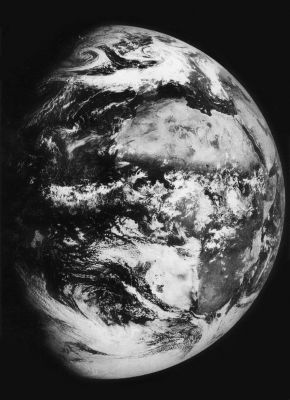
ZOND-5 and the first Turtle, Wine-fly and Worm Astronauts!
Zond-5 was launched from a Tyazheliy Sputnik (68-076B) in Earth parking orbit to make scientific studies during a Lunar Fly-by and to return to Earth. En route to the Moon the main stellar attitude control optical surface became contaminated and was rendered unusable. Backup sensors were used to guide the spacecraft. On Sept. 18, 1968, the spacecraft flew around the Moon. The closest distance was 1.950 Km. High quality photographs of the Earth were taken at a distance of 90.000 Km. 
A biological payload of turtles, wine flies, meal worms, plants, seeds, bacteria and other living matter was included in the flight. Additionally, according to the Russian Academy of Sciences, in the pilot's seat was a 175 cm tall, 70 kg mannequin containing radiation detectors. Returning to Earth another attitude control sensor failed, making the planned guided entry impossible and forcing the spacecraft controllers to use a direct ballistic entry. On Sept. 21, 1968, the reentry capsule entered the Earth's atmosphere, braked aerodynamically, and deployed parachutes at 7 km. The capsule splashed down in the backup area in the Indian Ocean at 32.63 degrees S, 65.55 degrees E and was successfully recovered, safely returning the biological payload. It was announced that the turtles (steppe tortoises) had lost about 10% of their body weight but remained active and showed no loss of appetite. The spacecraft was planned as a precursor to crewed lunar spacecraft. It represented the first successful Soviet circumlunar mission.
Parole chiave: The Earth from Space

ZOND-5 and the first Turtle, Wine-fly and Worm Astronauts!

Zond-5 was launched from a Tyazheliy Sputnik (68-076B) in Earth parking orbit to make scientific studies during a Lunar Fly-by and to return to Earth. En route to the Moon the main stellar attitude control optical surface became contaminated and was rendered unusable. Backup sensors were used to guide the spacecraft. On Sept. 18, 1968, the spacecraft flew around the Moon. The closest distance was 1.950 Km. High quality photographs of the Earth were taken at a distance of 90.000 Km.
A biological payload of turtles, wine flies, meal worms, plants, seeds, bacteria and other living matter was included in the flight. Additionally, according to the Russian Academy of Sciences, in the pilot's seat was a 175 cm tall, 70 kg mannequin containing radiation detectors. Returning to Earth another attitude control sensor failed, making the planned guided entry impossible and forcing the spacecraft controllers to use a direct ballistic entry. On Sept. 21, 1968, the reentry capsule entered the Earth's atmosphere, braked aerodynamically, and deployed parachutes at 7 km. The capsule splashed down in the backup area in the Indian Ocean at 32.63 degrees S, 65.55 degrees E and was successfully recovered, safely returning the biological payload. It was announced that the turtles (steppe tortoises) had lost about 10% of their body weight but remained active and showed no loss of appetite. The spacecraft was planned as a precursor to crewed lunar spacecraft. It represented the first successful Soviet circumlunar mission.

Luna21-Horz12-1.jpg Zond-06-02.jpg Zond-05-01.jpg Luna17-Horz33.jpg Luna17-Horz28c.jpg
Informazioni sul file
Nome del file:Zond-05-01.jpg
Nome album:The Soviet "Moon Programme"
Valutazione (2 voti):55555(Mostra dettagli)
Parole chiave:The / Earth / from / Space
Copyright:Soviet Space Agency - Zond 5 Project
Dimensione del file:212 KiB
Data di inserimento:Feb 07, 2006
Dimensioni:853 x 1176 pixels
Visualizzato:85 volte
URL:https://www.lunexit.it/gallery/displayimage.php?pid=9611
Preferiti:Aggiungi ai preferiti


Powered by Coppermine Photo Gallery