Inizio Registrati Login

Elenco album Ultimi arrivi Ultimi commenti Più viste Più votate Preferiti Cerca

Inizio > MOON > The Lunar Surface in HR
Ritorna alla pagina delle miniature FILE 2165/2195 Torna all'inizio Guarda foto precedente Guarda foto successiva Salta alla fine
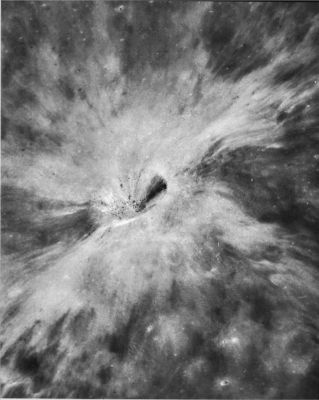
AS 17-2744 - Crater's "Rays"
This is an oblique view of another crater that probably was formed by a meteoroid following a relatively low-angle trajectory. This crater, 4 Km in diameter, is located in the highlands East of Mare Serenitatis. Compared to the crater described in AS 15-9524, this one is less elliptical and its bilobate ray pattern is much less pronounced. The differences may be attributed to a higher trajectory angle of the impacting body that formed this crater as it struck the surface. 
H. J. Moore (1976), in his study of craters formed by impacting missiles at White Sands Missile Range, recognized a characteristic asymmetric profile along the axis of trajectory for craters formed in this manner. 
The wall beneath the missile trajectory is typically less steep than the opposite or down-trajectory wall, and its rim crest is lower and more rounded. These observations, when applied to the lunar crater in this photograph, indicate that the impacting body was traveling toward the East when it struck the Moon.
Parole chiave: The Moon from orbit - Craters - Unnamed Crater

AS 17-2744 - Crater's "Rays"

This is an oblique view of another crater that probably was formed by a meteoroid following a relatively low-angle trajectory. This crater, 4 Km in diameter, is located in the highlands East of Mare Serenitatis. Compared to the crater described in AS 15-9524, this one is less elliptical and its bilobate ray pattern is much less pronounced. The differences may be attributed to a higher trajectory angle of the impacting body that formed this crater as it struck the surface.
H. J. Moore (1976), in his study of craters formed by impacting missiles at White Sands Missile Range, recognized a characteristic asymmetric profile along the axis of trajectory for craters formed in this manner.
The wall beneath the missile trajectory is typically less steep than the opposite or down-trajectory wall, and its rim crest is lower and more rounded. These observations, when applied to the lunar crater in this photograph, indicate that the impacting body was traveling toward the East when it struck the Moon.

APOLLO 16-0692.jpg APOLLO 16-4136-B.jpg APOLLO 15 AS 15-9254.jpg APOLLO 15 AS 15-0018.jpg APOLLO 17 AS 17-3107.jpg
Informazioni sul file
Nome del file:APOLLO 17 AS 17-2744.jpg
Nome album:The Lunar Surface in HR
Valutazione (2 voti):55555(Mostra dettagli)
Parole chiave:The / Moon / from / orbit / - / Craters / - / Unnamed / Crater
Copyright:NASA - Apollo Programme - Apollo 17
Dimensione del file:109 KiB
Data di inserimento:Ago 16, 2006
Dimensioni:760 x 952 pixels
Visualizzato:53 volte
URL:https://www.lunexit.it/gallery/displayimage.php?pid=12312
Preferiti:Aggiungi ai preferiti


Powered by Coppermine Photo Gallery