Inizio Registrati Login

Elenco album Ultimi arrivi Ultimi commenti Più viste Più votate Preferiti Cerca

Inizio > MOON > The Moon from JAXA - The "Kaguya" Lunar Probe
Ritorna alla pagina delle miniature FILE 20/55 Torna all'inizio Guarda foto precedente Guarda foto successiva Salta alla fine
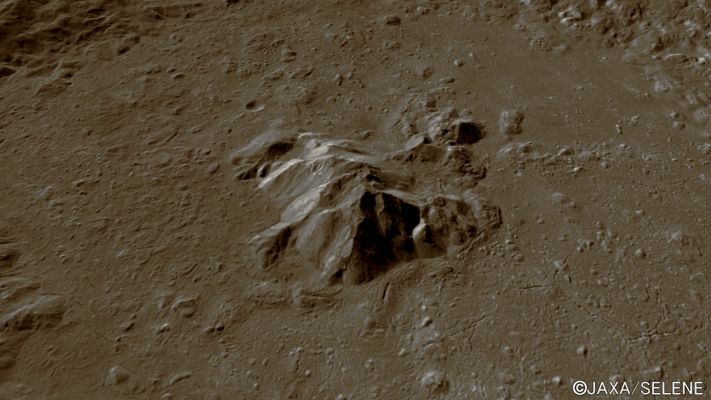
Tycho: the Central Peak (perspective view - natural colors; credits: Lunexit)
Caption JAXA:"Tycho Crater, located on the Lunar Nearside in the Highlands of the Southern Hemisphere at about 43° South Lat. and 7° West Long. is a young crater formed by an impact about 100 Million Years ago. On nights when the Moon is fully lighted, you can see bright rays coming out from Tycho Crater.
The study of Tycho Crater contributed to the development of Lunar Science. The first data on the chemical composition of the Lunar Highlands were obtained by the analytical instrument onboard Surveyor 7, which soft-landed about 20 Km North of the Rim of Tycho, in 1968 (see Note n. 1). 

Dr. J. A. Wood of the Smithsonian Astrophysical Laboratory discovered some tiny fragment of Anorthosite in the regolith (soil) samples collected by the Apollo 11 Astronauts. Because of the observation that the chemical composition of the fragments was similar to that of Tycho taken by the Surveyor, Dr. Wood inferred that these fragment were ejected from Tycho by the impact. He proposed the "Lunar Magma Ocean Hypothesis" (see Note n. 2) in order to account for his finding that the Lunar Highlands are composed of Anorthosite. 
One of the major objectives of the subsequent Apollo Missions was to find a pristine Anorthosite rock in the Highlands.

The impact that created Tycho Crater ejected highland anorthositic crust all over the Near Side of the Moon. This impact by a small asteroidal body took place, as we said, about 100 MY ago, when the dinosaurs inhabited the Earth. It was, however, still a relatively recent event in Lunar History, and the effects of the impact event can still be seen.

Note 1) In preparation for the manned Lunar Missions of the Apollo Program, NASA developed soft-landing techniques with the Surveyor Program. Surveyor 7 was the final spacecraft of the series and landed near the north rim of Tycho Crater on 10 January 1968 (UT). During this mission, many photographs of the Lunar Highland landscape were taken and a geological survey was performed.

Note 2) “Lunar magma ocean hypothesis”: To explain the formation of Anorthosite that the Lunar Surface was once completely molten to a depth of about 200 Km, thus forming a “lunar magma ocean”. This hypothesis has contributed not only to Lunar Science but also to ideas about the formation of the Earth. 
Parole chiave: The Moon from orbit - Tycho

Tycho: the Central Peak (perspective view - natural colors; credits: Lunexit)

Caption JAXA:"Tycho Crater, located on the Lunar Nearside in the Highlands of the Southern Hemisphere at about 43° South Lat. and 7° West Long. is a young crater formed by an impact about 100 Million Years ago. On nights when the Moon is fully lighted, you can see bright rays coming out from Tycho Crater.
The study of Tycho Crater contributed to the development of Lunar Science. The first data on the chemical composition of the Lunar Highlands were obtained by the analytical instrument onboard Surveyor 7, which soft-landed about 20 Km North of the Rim of Tycho, in 1968 (see Note n. 1).

Dr. J. A. Wood of the Smithsonian Astrophysical Laboratory discovered some tiny fragment of Anorthosite in the regolith (soil) samples collected by the Apollo 11 Astronauts. Because of the observation that the chemical composition of the fragments was similar to that of Tycho taken by the Surveyor, Dr. Wood inferred that these fragment were ejected from Tycho by the impact. He proposed the "Lunar Magma Ocean Hypothesis" (see Note n. 2) in order to account for his finding that the Lunar Highlands are composed of Anorthosite.
One of the major objectives of the subsequent Apollo Missions was to find a pristine Anorthosite rock in the Highlands.

The impact that created Tycho Crater ejected highland anorthositic crust all over the Near Side of the Moon. This impact by a small asteroidal body took place, as we said, about 100 MY ago, when the dinosaurs inhabited the Earth. It was, however, still a relatively recent event in Lunar History, and the effects of the impact event can still be seen.

Note 1) In preparation for the manned Lunar Missions of the Apollo Program, NASA developed soft-landing techniques with the Surveyor Program. Surveyor 7 was the final spacecraft of the series and landed near the north rim of Tycho Crater on 10 January 1968 (UT). During this mission, many photographs of the Lunar Highland landscape were taken and a geological survey was performed.

Note 2) “Lunar magma ocean hypothesis”: To explain the formation of Anorthosite that the Lunar Surface was once completely molten to a depth of about 200 Km, thus forming a “lunar magma ocean”. This hypothesis has contributed not only to Lunar Science but also to ideas about the formation of the Earth.

Kaguya-050-20090611_kaguya_2_e.jpg Kaguya-040-hdtv_057_l.jpg Kaguya-029-Tycho-tc_012_a_l.jpg Kaguya-030-Tycho-tc_012_c_l.jpg Kaguya-031-Tycho-tc_012_d_l.jpg
Informazioni sul file
Nome del file:Kaguya-029-Tycho-tc_012_a_l.jpg
Nome album:MareKromium / The Moon from JAXA - The "Kaguya" Lunar Probe
Valutazione (3 voti):55555(Mostra dettagli)
Parole chiave:The / Moon / from / orbit / - / Tycho
Copyright:JAXA - Kaguya/Selene Mission e Lunar Explorer Italia per il process. addizionale e la colorizzazione
Dimensione del file:317 KiB
Data di inserimento:Ago 31, 2008
Dimensioni:1920 x 1080 pixels
Visualizzato:57 volte
URL:https://www.lunexit.it/gallery/displayimage.php?pid=21647
Preferiti:Aggiungi ai preferiti


Powered by Coppermine Photo Gallery