|
|
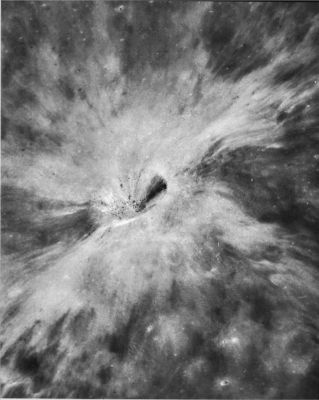
AS 17-2744 - Crater's "Rays"
|
This is an oblique view of another crater that probably was formed by a meteoroid following a relatively low-angle trajectory. This crater, 4 Km in diameter, is located in the highlands East of Mare Serenitatis. Compared to the crater described in AS 15-9524, this one is less elliptical and its bilobate ray pattern is much less pronounced. The differences may be attributed to a higher trajectory angle of the impacting body that formed this crater as it struck the surface.
H. J. Moore (1976), in his study of craters formed by impacting missiles at White Sands Missile Range, recognized a characteristic asymmetric profile along the axis of trajectory for craters formed in this manner.
The wall beneath the missile trajectory is typically less steep than the opposite or down-trajectory wall, and its rim crest is lower and more rounded. These observations, when applied to the lunar crater in this photograph, indicate that the impacting body was traveling toward the East when it struck the Moon.
|
|