Inizio Registrati Login

Elenco album Ultimi arrivi Ultimi commenti Più viste Più votate Preferiti Cerca

Inizio > SOLAR SYSTEM > Asteroids and Comets
Ritorna alla pagina delle miniature FILE 37/282 Torna all'inizio Guarda foto precedente Guarda foto successiva Salta alla fine
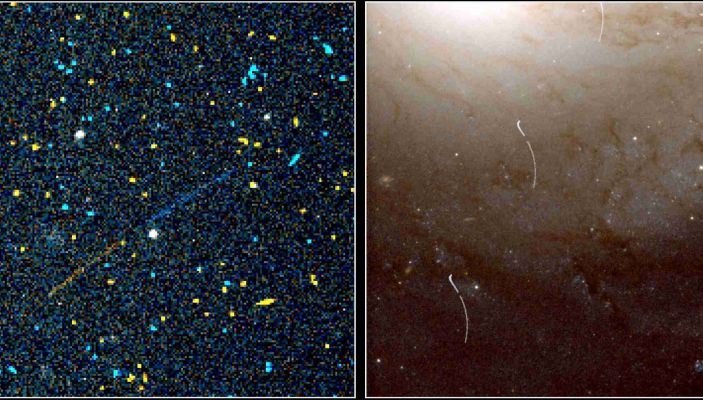
Asteroids, from HST (2)
"Many asteroids remain undiscovered. In fact, 1 was discovered in 1998 as the long blue streak in the above archival image taken by the Hubble Space Telescope. In 2002 June, the small 100-mt asteroid 2002 MN was discovered only after it whizzed by the Earth, passing well within the orbit of the Moon. 2002 MN passed closer than any asteroid since 1994 XM1 but not as close as 2004 MN4 will pass in 2029. A collision with a large asteroid would not affect Earth's orbit so much as raise dust that would affect Earth's climate. One likely result is a global extinction of many species of life, possibly dwarfing the ongoing extinction occurring now".
Dopo aver letto questi commenti la nostra memoria ritorna allo tsunami del Dicembre 2004 ed al paventato spostamento dell'asse terrestre: l'ipotesi più plausibile per spiegare l'accaduto sembra essere proprio quella che la NASA stessa ci suggerisce commentando questi frames HST: un asteroide di circa 100 metri potrebbe aver impattato l'Oceano Indiano.
C'è da riflettere.
Parole chiave: Hubble Images - Asteroid

Asteroids, from HST (2)

"Many asteroids remain undiscovered. In fact, 1 was discovered in 1998 as the long blue streak in the above archival image taken by the Hubble Space Telescope. In 2002 June, the small 100-mt asteroid 2002 MN was discovered only after it whizzed by the Earth, passing well within the orbit of the Moon. 2002 MN passed closer than any asteroid since 1994 XM1 but not as close as 2004 MN4 will pass in 2029. A collision with a large asteroid would not affect Earth's orbit so much as raise dust that would affect Earth's climate. One likely result is a global extinction of many species of life, possibly dwarfing the ongoing extinction occurring now".
Dopo aver letto questi commenti la nostra memoria ritorna allo tsunami del Dicembre 2004 ed al paventato spostamento dell'asse terrestre: l'ipotesi più plausibile per spiegare l'accaduto sembra essere proprio quella che la NASA stessa ci suggerisce commentando questi frames HST: un asteroide di circa 100 metri potrebbe aver impattato l'Oceano Indiano.
C'è da riflettere.

Asteroids.jpg Asteroids_from_HST-00.jpg Asteroids_from_HST-01.jpg Comet_Borisov_-_GIF.gif Comet_Borisov_-_GIF_3.gif
Informazioni sul file
Nome del file:Asteroids_from_HST-01.jpg
Nome album:Asteroids and Comets
Valutazione (8 voti):55555(Mostra dettagli)
Parole chiave:Hubble / Images / - / Asteroid
Copyright:R. Evans & K. Stapelfeldt (JPL), WFPC2, HST, NASA
Dimensione del file:646 KiB
Data di inserimento:Apr 18, 2005
Dimensioni:1972 x 1122 pixels
Visualizzato:56 volte
URL:https://www.lunexit.it/gallery/displayimage.php?pid=5263
Preferiti:Aggiungi ai preferiti


Powered by Coppermine Photo Gallery