| Piú votate - SOLAR SYSTEM |

Io-PIA01070.jpgAs Time Goes By...On Io! (1)68 visiteDetail of changes on Jupiter's moon Io in the Region around Volund as seen by the Voyager 1 spacecraft in April 1979 (left frame) and NASA's Galileo spacecraft in September 1996 (right frame). North is to the top of both frames which are approx. 600 by 600 Km. Note the new linear feature, which may be a volcanic fissure, trending east from the southern end of Volund. Dark diffuse material lies to the west and a ring of bright material which may be SO2- rich plume deposits appears to be centered near the middle of the new linear feature.
(11 voti)
|
|

Jupiter_s Rings-PIA01628.jpgThe Rings of Jupiter (2)61 visiteScientists studying data from Galileo spacecraft have found that the Ring System is made up of impact debris created when meteoroids, which are fragments of comets and asteroids, slam into Jupiter`s four smallest satellites. The top panel shows that the Main Ring (red) is formed mostly from meteoroid impact debris kicked up from the innermost moons, Metis (m) and Adrastea (a). Since both satellites orbit in paths not inclined to Jupiter's equator, the Main Ring appears as a narrow line. The middle panel shows the additional effect of dust ejected from the satellite Amalthea (A), responsible for producing 1 of the 2 moon components of the Gossamer Ring. Amalthea's orbit is inclined to Jupiter's equatorial plane and at different times the satellite's vertical position can range anywhere between the 2 extreme limits shown. Dust ejected from Amalthea (orange) produces a ring whose thickness equals Amalthea's vertical projections beyond Jupiter's equatorial plane. The lower panel shows the additional effect of dust ejected from Thebe (T), which makes up the second component (shown in green) of the gossamer ring. Again, the two positions shown represent the maximum projections of Thebe from Jupiter's equatorial plane. This component of the gossamer ring is thicker than the component due to Amaltheas dust because Thebe's orbit is more inclined than that of Amalthea.
(11 voti)
|
|

Image056-Mercury.jpgThe secret of Hun-Kal253 visiteRELAZIONE TECNICA
1) L'immagine ci prova che di Mercurio esistono foto molto più dettagliate di quanto abitualmente diffuso su Internet e altri media;
2) Il posizionamento del cratere principale nella foto è "casualmente" coincidente con la posizione in cui si concentra abitualmente l'attenzione dell'occhio umano (cioè nell'area compresa tra il centro e i 2/3 dell'immagine), in modo che eventuali commenti dei profani si indirizzino verso l'imponente struttura verticale laminare che emerge dall'ombra e di cui è impossibile decifrare l'esatta natura.
3) Negli anni '70 gli scienziati ancora pensavano e speravano che il cover-up fosse temporaneo, per cui ai margini delle foto lasciavano sempre qualche indizio. In questo caso basta guardare all'estremità superiore dell'immagine, di cui possiamo vedere un dettaglio: Le strutture reticolari sinaptiche sono veramente splendide e l'origine biogenica è inequivocabile anche per l'osservatore più disattento.
CONCLUSIONI
L'immagine è autentica, in quanto le strutture sinaptiche radiali sono perfettamente identiche a quelle già riscontrate in altre circostanze nei vari corpi del sistema solare. Da altre foto di Mercurio si evince poi una presenza molto importante di reti sinaptiche su tutto il pianeta, a mio parere in parte dovuta alle forti escursioni termiche.
(11 voti)
|
|

Hyperion-N00040356.jpgHyperion (19)78 visiteConto alla rovescia per il passaggio ravvicinatissimo di Cassini accanto ad Hyperion: ora siamo a circa 9000 Km di distanza dalla sua superficie...
(11 voti)
|
|

Image053-Ukert-6.jpgUkert: the "pseudo-triangular" Lunar Crater222 visite"...la NASA ha tentato molto debolmente di attribuire le perforazioni sulle lastre a non ben precisate piogge di meteore ma poi qualcuno ha pensato bene di non scivolare nel ridicolo e tutto è caduto nel dimenticatoio, laddove è rimasto da circa 40 anni...
Ma, se la tesi avanzata dai Thunderbolts - e basata sugli effetti delle correnti 'Birkeland' al suolo - fosse corretta al 100% e queste formazioni avessero un'origine elettromagnetica del tutto naturale, perché allora affannarsi a truccare le foto? Certo non perché c'é chi ha paura che, prima o poi, verremo tutti "cotti a microonde"...
Ma no, è impossibile: in fondo, sulla Terra, un'evenienza del genere dovrebbe essere preceduta e preannunciata da perforazioni dello strato di ozono ai poli e da anormali recrudescenze degli uragani tropicali.
Tutti eventi assurdi..."
(11 voti)
|
|
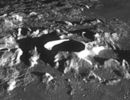
Image052-Ukert-5.jpgUkert: the "pseudo-triangular" Lunar Crater238 visite"...La censura che appare nel punto identificato come 'A' e le strane lastre che appaiono in 'B' (si tratta del frame precedente) sono elementi i quali vengono confermati da questa immagine Apollo 17, in cui la solita ombra - che vogliamo definire "provvidenziale" e che, come si vede benissimo, è stata estesa ad hoc ma in modo alquanto approssimativo... - corrisponde ai "puntini censori" di cui si è parlato e che si sono visti benissimo in uno dei frames precedenti.
Vogliamo fare dell'ironia? Sarà malizioso, ma il Lunar Orbiter risale agli anni '60 e, proprio in quel periodo, i "puntini censori" erano molto usati negli USA - e non solo - per coprire le "zone critiche" e perciò più "interessanti"... delle spogliarelliste!
E poi, in fondo, le stranezze (anche) nei dintorni di Ukert non mancano davvero...il LO 3, infatti, aveva già individuato nell'area di Ukert un evidente intreccio a maglia quadrangolare (o intreccio 'sinaptico') ben visibile al centro dell'ingrandimento di cui al frame che segue...".
(11 voti)
|
|

Image048-Ukert-4.jpgUkert: the "pseudo-triangular" Lunar Crater238 visite"...In questa tavola (che abbiamo dovuto frammentare in quattro sub-tavole - nota Lunar Explorer) ho indicato con dei riquadri rossi l'area più censurata/taroccata nelle varie foto 'ufficiali', mentre la linea verde serve a relazionare la foto planimetrica con quella obliqua...".
(11 voti)
|
|

Tempel1-ZZ-ZI.jpgA few seconds before the "Space-Fireworks"67 visiteDa "NASA - Picture of the Day" del 15 Settembre 2005:"Approaching the nucleus of comet Tempel 1 at 10 Km/sec., the Deep Impact probe's targeting camera recorded a truly dramatic series of images. Successive pictures improve in resolution and have been composited here at a scale of 5 mt per pixel - including images taken within a few meters of the surface moments before the July 4th impact. Analyzing the resulting cloud of debris, researchers are directly exploring the makeup of a comet, a primordial chunk of Solar System material. Described as a recipe for primordial soup, the list of Tempel 1's ingredients - tiny grains of silicates, iron compounds, complex hydrocarbons and clay and carbonates thought to require liquid water to form - might be more appropriate for a cosmic souffle, as the nucleus is apparently porous and fluffy.
Seen here, Tempel 1's nucleus is about 5 Km long, with the impact site between the two large craters near the bottom".
(11 voti)
|
|

Saturn-PIA03559.jpgSaturn's clouds in 3D89 visiteSaturn's clouds and hazes at three different levels in the atmosphere are depicted in the image on the right, as observed by the visual infrared mapping spectrometer on the Cassini spacecraft.
In the image, red represents the deepest clouds yet found on Saturn. They are at an altitude where pressure is nearly double Earth's sea-level air pressure. The spectrometer saw these clouds using a 5.1 micron wavelength. Brightness levels in the original image were inverted to show cloud as bright features. Green is an image taken simultaneously at 1.6 micron wavelength, showing upper-level clouds near and above the altitude where atmospheric pressure equals Earth's sea-level air pressure, a pressure expressed as 1 bar. Blue is an image taken at 2.05 micron, a wavelength which is limited to showing only higher cloud level due to absorption of light by the hydrogen gas comprising the bulk of Saturn's atmosphere. Blue indicated clouds of an altitude where atmospheric pressure is only about 70 percent of Earth's sea-level air pressure. Thus, the aqua-colored feature over the equator is high-altitude haze residing 10 kilometers (6 miles) altitude above the typical zonal features seen in reflected sunlight over the planet (green).
The image on the left shows only the upperatmosphere above the 1-bar level, and is the view seen in reflected sunlight as observed by cameras not capable of seeing the thermal radiation of Saturn. Red in this image was taken at 2.79 micron, a wavelength that absorbs ammonia. The greenish appearance of the south pole indicates that ammonia gas is enhanced there.
As opposed to the uniform bands of hazes and clouds seen over the planet at pressures near and less than 1 bar, clouds at the 2-bar level (red, in right-hand image) are distinct, and come in a variety of shapes and sizes.
(11 voti)
|
|

Saturn-PIA03557.jpgSaturn's pressure76 visiteOriginal NASA caption:"This new view on the right side shows clouds at an altitude where pressure is nearly 2 bars. (nota---->1 bar rappresenta l'unità di misura della pressione atmosferica terrestre esistente al livello del mare). These clouds are about 30 Km underneath the clouds usually observed on Saturn. This is distinctly different from the typical view of Saturn in reflected sunlight, shown on the left.
The left view is characterized by broad expanses of clouds near the 1-bar level, such as the white cloud seen circling the Equator, with little hint of the discrete cloud complexes lying underneath (...)".
(11 voti)
|
|

Mimas-PIA07534.jpgRound? Not really...65 visiteCaption NASA originale:"Saturn's moon Mimas, whose low density suggests that it is primarily composed of ice, has a flattened or oblate shape reminiscent of Saturn's. The moon's equatorial dimension is nearly 10% larger than the polar one due to the satellite's rapid rotation. This view shows principally the leading hemisphere on Mimas. Mimas' largest crater, Herschel (130 Km, or 80 miles wide), is centered roughly on the equator and can be seen here. North on Mimas is toward upper left.
The moon's oblateness is exaggerated by Cassini's viewing angle here -- the Sun-Mimas-spacecraft, or phase, angle was only 5° leaving a sliver of the moon's disk in shadow on the northwest limb.
The image was taken in visible light with the Cassini spacecraft narrow-angle camera on May 20, 2005, at a distance of approx. 916.000 Km (about 569.000 miles) from Mimas. Resolution in the original image was 5 Km (about 3 miles) per pixel".
(11 voti)
|
|

Tempel1-U-HST.jpgDeep-impact from HST78 visiteCaption NASA originale:"These 2 pictures of comet Tempel-1 were taken by NASA's HST. They show the comet before and after it ran over NASA's Deep Impact probe".
(11 voti)
|
|
| 4547 immagini su 379 pagina(e) |
 |
|
|
|
|
15 | |
|
|
|
|





