| Piú votate - MARS |
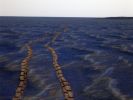
OPP-SOL367-MyTracks.jpgFarewell Endurance! (false colors)114 visiteGrazie alla fantasia e ad una buona dose di inventiva di qualche Collaboratore del Sito "Mars Daily", abbiamo il piacere di offrirVi questa visione in falsi (ma comunque credibili) colori delle tracce lasciate dal Rover Opportunity durante il suo cammino verso il Vostok Crater.
In questo frame, in maniera particolare, si possono vedere ancora bene le pareti esterne del Cratere Endurance. Eravamo nel Sol 367 di Opportunity. 
(9 voti)
|
|
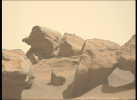
SOL1009-Mars_Perseverance_ZL0_1009_0756513826_443EBY_N0482404ZCAM09020_1100LMJ.pngSol 1009 - Rocks (NASA Original Colors - Credits: NASA/JPL)96 visiteNASA's Mars Perseverance rover acquired this image using its Left MastCam-Z camera. MastCam-Z is a pair of cameras located high on the rover's mast.
This image was acquired on Dec. 22, 2023 (Sol 1009) at the Local Mean Solar Time of 12:28:42.
MareKromium
(5 voti)
|
|
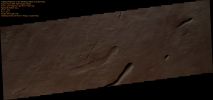
Volcanoes-Arsia_Mons-PIA13348.jpgCollapse Features on the Northern Flank of Arsia Mons (Absolute Natural Colors; credits for the additional process. and color.: Dr Paolo C. Fienga - Lunexit Team)90 visitenessun commentoMareKromium
(4 voti)
|
|
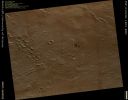
PSP_010200_1805_RED_abrowse-00.jpgFresh Crater Cluster (CTX Frame - Natural Colors; credits: Dr Paolo C. Fienga - Lunexit Team)64 visiteAlthough most of the craters HiRISE usually images are ancient, impact cratering is an ongoing process on the Martian Surface.
While very large craters are rare, smaller ones with diameters of a few meters form on timescales rapid enough for Mars missions to confirm the presence of a new crater. Data from the Mars Orbiter Camera (MOC) on the (now defunct) Mars Global Surveyor, the Context Camera (CTX) on MRO, and HiRISE have dated craters to within a few years or even months, based on repeat images that show no craters in the earlier image and craters present in the later image.
Most of the new craters identified by CTX and HiRISE have been located in Mars' dustiest areas, where a new impact will scour dust from the Surface and reveal darker underlying rock. This color difference makes the craters easier to spot. Other, less dusty areas of Mars are certainly being bombarded as well, but the size of the craters makes them difficult to detect without stark color contrasts.
Once a new dark spot has been identified by CTX, HiRISE will take a follow-up image to confirm that the dark spots are in fact Impact Craters.MareKromium
(4 voti)
|
|
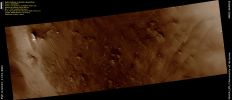
PSP_010397_1725_RED_abrowse-00.jpgLight-Toned Rock Exposures in Noctis Labyrinthus OR Salty "Outlines"? (ctx frame - Natural Colors; credits: Lunar Explorer Italia)76 visitenessun commentoMareKromium
(4 voti)
|
|

PSP_010505_2725_RED_abrowse.jpgNorth Polar Residual Cap (Natural Colors; credits: Lunar Explorer Italia)73 visitenessun commentoMareKromium
(4 voti)
|
|
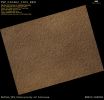
PSP_010462_2505_RED_abrowse.jpgOlivine-rich Terrain in Vastitas Borealis (Natural Colors; credits: Lunar Explorer Italia)86 visitenessun commentoMareKromium
(4 voti)
|
|
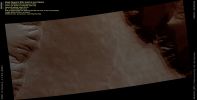
PSP_010423_1720_RED_abrowse.jpgSteep Canyon's Wall, South of Jus Chasma (Natural - but enhanced - Colors; credits: Lunar Explorer Italia)86 visitenessun commentoMareKromium
(4 voti)
|
|
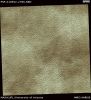
PSP_010492_2780_RED_abrowse.jpgColor and Morphology of the North Polar Residual Cap (Natural Colors; credits: Lunar Explorer Italia)87 visiteMars Local Time: 04:49 (night hours)
Coord. (centered): 82,0° North Lat. and 20,0° East Long.
Spacecraft altitude: 318,7 Km (such as about 199,2 miles)
Original image scale range: 31,9 cm/pixel (with 1 x 1 binning) so objects ~ 96 cm across are resolved
Map projected scale: 25 cm/pixel
Map projection: EQUIRECTANGULAR
Emission Angle: 3,0°
Phase Angle: 76,2°
Solar Incidence Angle: 79° (meaning that the Sun is about 11° above the Local Horizon)
Solar Longitude: 145,5° (Northern Summer)
Credits: NASA/JPL/University of Arizona
Additional process. and coloring: Lunar Explorer ItaliaMareKromium
(4 voti)
|
|
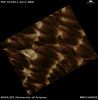
PSP_010501_2615_RED_abrowse.jpgAbalos Undae (Natural Colors; credits: Lunar Explorer Italia)77 visiteMars Local Time: 14:25 (early afternoon)
Coord. (centered): 81,6° North Lat. and 279,6° East Long.
Spacecraft altitude: 318,7 Km (such as about 199,2 miles)
Original image scale range: 63,8 cm/pixel (with 1 x 1 binning) so objects ~ 1,91 mt across are resolved
Map projected scale: 50 cm/pixel
Map projection: EQUIRECTANGULAR
Emission Angle: 0,1°
Phase Angle: 69,6°
Solar Incidence Angle: 70° (meaning that the Sun is about 20° above the Local Horizon)
Solar Longitude: 145,8° (Northern Summer)
Credits: NASA/JPL/University of Arizona
Additional process. and coloring: Lunar Explorer ItaliaMareKromium
(4 voti)
|
|
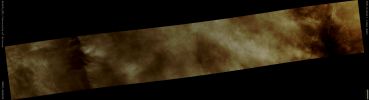
PSP_010417_1460_RED_abrowse.jpgUnnamed Crater in Hellas Planitia (Natural Colors; credits: Lunar Explorer Italia)73 visiteMars Local Time: 15:49 (middle afternoon)
Coord. (centered): 33,5° South Lat. and 83,0° East Long.
Spacecraft altitude: 260,8 Km (such as about 163,0 miles)
Original image scale range: 52,2 cm/pixel (with 1 x 1 binning) so objects ~ 1,57 mt across are resolved
Map projected scale: 50 cm/pixel
Map projection: EQUIRECTANGULAR
Emission Angle: 9,3°
Phase Angle: 66,2°
Solar Incidence Angle: 73° (meaning that the Sun is about 17° above the Local Horizon)
Solar Longitude: 142,5° (Northern Summer)
Credits: NASA/JPL/University of Arizona
Additional process. and coloring: Lunar Explorer ItaliaMareKromium
(4 voti)
|
|
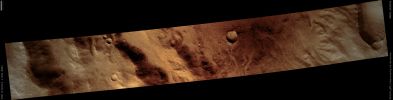
PSP_010435_1700_RED_abrowse.jpgPossible "Paleo-Lake" in Ophir Planum (Natural Colors; credits: Lunar Explorer Italia)95 visiteMars Local Time: 15:35 (middle afternoon)
Coord. (centered): 10,0° South Lat. and 306,2° East Long.
Spacecraft altitude: 274,2 Km (such as about 171,4 miles)
Original image scale range: 54,9 cm/pixel (with 1 x 1 binning) so objects ~ 1,65 mt across are resolved
Map projected scale: 50 cm/pixel
Map projection: EQUIRECTANGULAR
Emission Angle: 19,1°
Phase Angle: 75,7°
Solar Incidence Angle: 59° (meaning that the Sun is about 31° above the Local Horizon)
Solar Longitude: 143,2° (Northern Summer)
Credits: NASA/JPL/University of Arizona
Additional process. and coloring: Lunar Explorer ItaliaMareKromium
(4 voti)
|
|
| 13505 immagini su 1126 pagina(e) |
 |
|
|
|
|
1119 | |
|
|
|
|





