| Piú votate - MARS |
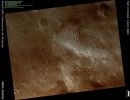
PSP_010430_1605_RED_abrowse.jpgUnusually-looking "Ripples" (Natural Colors; credits: Lunar Explorer Italia)80 visitenessun commentoMareKromium 
(7 voti)
|
|
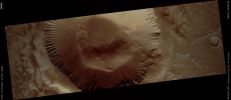
PSP_010402_2050_RED_abrowse.jpgUnnamed Fresh Crater in Utopia Planitia (Natural Colors; credits: Lunar Explorer Italia)73 visiteMars Local Time: 15:35 (middle afternoon)
Coord. (centered): 24,6° North Lat. and 124,5° East Long.
Spacecraft altitude: 287,2 Km (such as about 179,5 miles)
Original image scale range: 28,7 cm/pixel (with 1 x 1 binning) so objects ~ 86 cm across are resolved
Map projected scale: 25 cm/pixel
Map projection: EQUIRECTANGULAR
Emission Angle: 3,1°
Phase Angle: 48,0°
Solar Incidence Angle: 51° (meaning that the Sun is about 39° above the Local Horizon)
Solar Longitude: 142,0° (Northern Summer)
Credits: NASA/JPL/University of Arizona
Additional process. and coloring: Lunar Explorer ItaliaMareKromium
(7 voti)
|
|
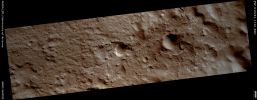
PSP_010281_1510_RED_abrowse-00.jpgSedimentary Layers in Columbus Crater (ctx frame - possible True Colors; credits: Lunar Explorer Italia)66 visiteThis image covers a portion of the North-Eastern Inner Wall of Columbus Crater, located in the Southern Hemisphere of Mars and is approx. 100 Km (about 60 miles) in diameter.
Layered sedimentary rocks are found on the Crater Walls and Floor, and may have been deposited by water or by wind. These rocks have subsequently been eroded to expose their successive layers in cross-section.
The near-infrared spectrometer CRISM has revealed that these layers contain various hydrated minerals.
Mars Local Time: 15:42 (middle afternoon)
Coord. (centered): 28,6° South Lat. and 194,3° East Long.
Spacecraft altitude: 256,0 Km (such as about 160,0 miles)
Original image scale range: 25,6 cm/pixel (with 1 x 1 binning) so objects ~77 cm across are resolved
Map projected scale: 25 cm/pixel
Map projection: EQUIRECTANGULAR
Emission Angle: 0,5°
Phase Angle: 70,9°
Solar Incidence Angle: 70° (meaning that the Sun is about 20° above the Local Horizon)
Solar Longitude: 137,3° (Northern Summer)
Credits: NASA/JPL/University of Arizona
Additional process. and coloring: Lunar Explorer ItaliaMareKromium
(7 voti)
|
|
SOL1180-1.jpgTransistors in the "Open"... - Sol 1180 (credits: Dr Marco Faccin)95 visiteMarte e le sue “condizioni superficiali estreme”: della loro oggettiva esistenza, tutti (dagli Scienziati “Positivi” agli Appassionati – anch’essi “Positivi”) ne sono convinti.
Ma noi, non senza averci riflettuto profondamente, Vi diciamo solo questo: ma davvero?
EccoVi un altro bellissimo Lavoro del Dr Faccin il quale, senza avere la pretesa di essere definitivo sull’argomento, ci fornisce dei sani e costruttivi alimenti per sostenere le nostre riflessioni su quanto – forse – quello che si dice e si scrive (ufficialmente) su Marte, sia DIVERSO da come Marte, effettivamente, è.
Buona lettura!
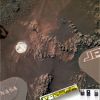
“…giusto per parlare ancora delle presunte Condizioni Estreme dell’Ambiente Marziano, ho preso questo frame. Guardate bene: evidenziati in giallo – centro frame, in basso – si vedono 4 componenti elettronici attivi del Rover Spirit.
Ora, visti così, sembrerebbero dei finali di potenza per il controllo dei motori (o magari qualche attuatore), in quanto sono accoppiati a 2 a 2.
Finali di potenza: ovvero transistor; oppure, con lo stesso case, potrebbero esserci integrati dei regolatori di tensione et sim.
Comunque sia, sono tutti e 4 "rivettati" ad un unico piano di metallo che ha la funzione di dissipazione del calore
E già: perchè tutti i componenti elettronici che terminano con un’aletta – solitamente di rame stagnato – ed un foro, sono da posizionare su di un dissipatore.
Ecco: questo dato ritengo che avvalori l'ipotesi per cui si tratti effettivamente di “finali di potenza".
Ma anche tralasciando questo aspetto tecnico, notiamo un dato FONDAMENTALE: questi componenti sono “componenti a vista".
Ora io dico (per esperienza) che le componenti elettroniche in generale non è che siano proprio il massimo della robustezza: esse, infatti, patiscono gli urti, le escursioni termiche repentine ed eccessive, il troppo caldo come il gelo etc.; basti pensare che un componente elettronico ha una tolleranza propria espressa su molte variabili, quali la capacità, la resistività et sim.
Variabili che sono funzione dello scopo per il quale la componente venne costruita.
Adesso, se io prendo il mio computer, apro il case, vado su un regolatore di tensione (ad esempio) il quale è (o almeno “sembra”) essere stato fatto proprio come uno di quei 4 che vediamo sul Rover, e quindi lo scaldo un bel pò oppure lo metto per un’ora in frigorifero e poi lo reinstallo, l’unica certezza che avrò è che il mio computer tirerà le cuoia…
Guardate ancora il frame, adesso; guardate le componenti ”a vista” (e guardatele per quello che SONO!) e poi riflettete su questo dato (uno solo, ma molto significativo): la temperatura superficiale UFFICIALE di Marte di giorno, va dai -10/-15 ai + 10/12° Celsius – che possono diventare anche + 30 in Estate). Di notte, sempre dati UFFICIALI, si può capitolare sino ad oltre – 100° Celsius.
Ma come fanno, mi domando, dico e chiedo, quelle “componenti a vista” a restare attive ed operative se queste temperature fossero realistiche?!?
Deduzione (e scusatemi la franchezza): alla NASA ci stanno raccontando un sacco di balle (o panzane, se Vi piace di più). Per Vostra miglior comprensione, ho inserito nel frame (in basso a Dx) l’immagine di alcuni fra i più comuni tipi di transistor. Così, tanto per rendere l'idea…”.
MareKromium
(7 voti)
|
|
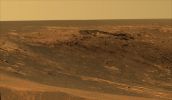
OPP-SOL952-PIA08809-1.jpgCape Verde (1)69 visiteCaption NASA originale:"This view of Victoria Crater is looking North from Duck Bay towards the dramatic promontory called Cape Verde. The dramatic cliff of layered rocks is about 50 mt (about 165 feet) away from the Rover and is about 6 mt (about 20 feet) tall. The taller promontory beyond that is about 100 mt (about 325 feet) away, and the vista beyond that extends away for more than 400 mt (about 1300 feet) into the distance. This is an approximately true color rendering of images taken by the PanCam on NASA's Mars Exploration Rover Opportunity during the rover's 952nd Sol (Sept. 28, 2006) using the camera's 750-nanometer, 530-nanometer and 430-nanometer filters".
(7 voti)
|
|
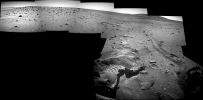
SOL2148-MF.jpgThe "End of the Line" - Sol 2148 (Image-Mosaic; credits: Dr M. Faccin - Lunexit Team)64 visitenessun commentoMareKromium
(5 voti)
|
|
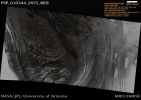
PSP_010344_2655_RED_abrowse.jpgScarp-fed Dark Dunes and NPLD (Natural Colors; credits: Lunexit)65 visiteMultiple levels within the North Polar Layered Deposits (NPLD) are visible in this HiRISE image.
The NPLD are a stack of dusty water-ice layers that are thought to record information about past Martian climates in the same way that Ice-Caps on the Earth record variations in our climate. These Martian layers are visible in the walls of troughs and scarps eroded into the stack.
One such scarp-face is visible on the far left of the full image and decreases in height from left to right.
Scientists continue to debate the length of time required to accumulate this stack of layers with estimates ranging from a few million years to about a billion years. Although we don’t yet know which layer corresponds to which time in Mars’ History, we can still use these layers to try to understand how the climate has changed over this period.
The topmost layers, which are the most recent (far left of the image), are brighter and appear gray-ish in this Natural Color view. They are interpreted to be a mixture of water ice and dust. The lower layering is more complex and appears to be a mixture of bright whiteiish layers (that we think are ice) and dark blue-ish layers (which we think are mostly sand).
A large pit in the center of the image penetrates deeply into this stack of layers and shows these alternating sandy and icy layers extending to depths of hundreds of meters (about 1000 feet).
Erosion of the dark sandy layers releases sandy material which collects into dunes such as the linear example that stretches across the middle of this image.MareKromium
(5 voti)
|
|
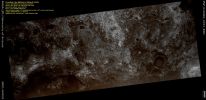
PSP_010460_2055_RED_abrowse.jpgEscarpment with Possible Clays in Mawrth Vallis (Natural Colors; credits: Lunar Explorer Italia)107 visitenessun commentoMareKromium
(5 voti)
|
|
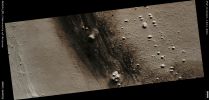
PSP_010420_1855_RED_abrowse.jpgDark Layers in Vernal Crater (Natural Colors; credits: Lunar Explorer Italia)65 visiteMars Local Time: 15:39 (middle afternoon)
Coord. (centered): 5,7° North Lat. and 355,6° East Long.
Spacecraft altitude: 273,4 Km (such as about 170,9 miles)
Original image scale range: 27,4 cm/pixel (with 1 x 1 binning) so objects ~ 82 cm across are resolved
Map projected scale: 25 cm/pixel
Map projection: EQUIRECTANGULAR
Emission Angle: 4,0°
Phase Angle: 50,8°
Solar Incidence Angle: 55° (meaning that the Sun is about 35° above the Local Horizon)
Solar Longitude: 142,7° (Northern Summer)
Credits: NASA/JPL/University of Arizona
Additional process. and coloring: Lunar Explorer ItaliaMareKromium
(5 voti)
|
|
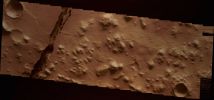
Volcanic_and_Tectonic_Features-Fissures-Cerberus_Fossae-20090213a-PCF-LXTT.jpgFeatures of Cerberus Fossae: Fissures (Saturated Natural Colors; credits for the additional process. and color.: Dr Paolo C. Fienga - Lunar Explorer Italia)61 visiteCaption NASA:"The depression seen in this image is part of the fracture system called Cerberus Fossae. The Fossae cut through hills as well as plains materials".
Coord.: 10,4° North Lat. and 159,9° East Long.MareKromium
(5 voti)
|
|
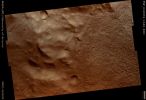
PSP_010059_1640_RED.jpgOlivine Deposits (possible True Colors; credits: Lunar Explorer Italia)85 visiteMars Local Time: 15:38 (middle afternoon)
Coord. (centered): 16,1° South Lat. and 133,7° East Long.
Spacecraft altitude: 259,9 Km (such as about 162,5 miles)
Original image scale range: 26 cm/pixel (with 1 x 1 binning) so objects ~1,04 mt across are resolved
Map projected scale: 25 cm/pixel
Map projection: EQUIRECTANGULAR
Emission Angle: 3,2°
Phase Angle: 61,9°
Solar Incidence Angle: 64° (meaning that the Sun is about 26° above the Local Horizon)
Solar Longitude: 128,9° (Northern Summer)
Credits: NASA/JPL/University of Arizona
Additional process. and coloring: Lunar Explorer ItaliaMareKromium
(5 voti)
|
|
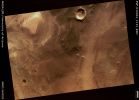
PSP_010063_2135_RED.jpgIsmenius Lacus (possible True Colors; credits: Lunar Explorer Italia)76 visiteMars Local Time: 14:16 (early afternoon)
Coord. (centered): 33,2° North Lat. and 17,4° East Long.
Spacecraft altitude: 296,7 Km (such as about 185,5 miles)
Original image scale range: 29,7 cm/pixel (with 1 x 1 binning) so objects ~59,4 cm across are resolved
Map projected scale: 25 cm/pixel
Map projection: EQUIRECTANGULAR
Emission Angle: 6,9°
Phase Angle: 54,4°
Solar Incidence Angle: 47° (meaning that the Sun is about 43° above the Local Horizon)
Solar Longitude: 129,0° (Northern Summer)
Credits: NASA/JPL/University of Arizona
Additional process. and coloring: Lunar Explorer ItaliaMareKromium
(5 voti)
|
|
| 13505 immagini su 1126 pagina(e) |
 |
|
|
|
|
1113 | |
|
|
|
|





