| Piú votate - 1-Ceres and 4-Vesta |

080-Craters-Tuccia_Crater-TQ-PIA15081-PCF-LXTT.jpgTuccia Crater (Absolute Natural Colors; credits for the additional process. and color.: Drr Gianluigi Barca and Paolo C. Fienga - Lunexit Team)158 visiteThis Dawn FC (framing camera) image is dominated by bright Rayed Craters of different sizes. The most prominent bright Rayed Crater is the approximately 8 Km diameter crater in roughly the center of the image. This Crater is named Tuccia and the Quadrangle in which it is located is named after it. Towards the bottom of the image its bright rays extend for over 10 Km but towards the top the Rays are much less extensive. Tuccia Crater has a smaller, fresher, younger Crater on its Rim which also seems to have bright rays emanating from it. It is clear that this smaller Crater is younger because it overprints the larger one and has a fresher, sharper Rim than Tuccia's. Slightly above these Craters is a much smaller, roughly 2 Km diameter, bright Rayed Crater. To the left of this Crater there is a patch of bright material that is associated with Craters that are only a few pixels in diameter. There is also a good example of the Hummocky (---> wavy/undulating) Terrain of Vesta's South Polar Region (visible at the bottom left of the frame). Tuccia Crater has been emplaced onto this Hummocky Terrain.
This image is in Vesta's Tuccia Quadrangle and the center Latitude and Longitude of the image is 38,8° South and 200,2° East. NASA's Dawn Spacecraft obtained this image with its framing camera on October 17th 2011. This image was taken through the camera's clear filter. The distance to the Surface of Vesta is about 702 Km and the image has a resolution of about 70 meters per pixel. This image was acquired during the HAMO (High Altitude Mapping Orbit) phase of the mission.MareKromium
(6 voti)
|
|

081-Craters-Sextilia_Crater-PIA15085-PCF-LXTT.jpgSextilia Crater and Surroundings (Absolute Natural Colors; credits for the additonal process. and color.: Dr Paolo C. Fienga - Lunar Explorer Italia)159 visiteThis Dawn FC (framing camera) image is centered on the Sextilia Crater in Vesta's Southern Hemisphere. Craters on Vesta are named after Vestal virgins, priestesses of the Roman goddess Vesta. The Sextilia Crater is a large, approximately 15 Km diameter and distinctive Crater, therefore its name was used to name the whole Quadrangle in which it is located. Sextilia Crater is distinctive because it has a fresh, sharp Rim which is also scalloped in shape. It also contains Rocky Outcrops of both bright and dark material. These originate along its Rim and sides and slump towards the center of the Crater. There are some especially large slumps of material on the right side of it. Surrounding Sextilia Crater is the Hummocky (---> wavy/undulating) Terrain of Vesta's Southern Hemisphere and some dark and bright Rayed Craters.
This image is in Vesta's Sextilia Quadrangle and the center Latitude and Longitude of the image is 39,5° South and 155,7° East. NASA's Dawn Spacecraft obtained this image with its framing camera on October 10th 2011. This image was taken through the camera's clear filter. The distance to the surface of Vesta is approx. 702 Km and the image has a resolution of about 70 meters per pixel. This image was acquired during the HAMO (High Altitude Mapping Orbit) phase of the mission.MareKromium
(6 voti)
|
|

087-Craters-Unnamed_Craters-PIA14974.jpgUnnamed Craters in the Northern Regions (Absolute Natural Colors; credits for the additional process. and color.: Dr Paolo C. Fienga - Lunexit Team)236 visitenessun commentoMareKromium
(6 voti)
|
|

064-Vesta-Dawn_1024-PCF-LXTT.jpgFeatures of 4-Vesta (Enhanced Natural Colors; credits for the additional process. and color.: Dr Paolo C. Fienga - Lunar Explorer Italia)183 visiteCaption NASA:"Why is the Northern Half of Asteroid 4-Vesta more heavily cratered than the Southern one? No one is yet sure. This unexpected mystery has come to light only in the past few weeks since the robotic Dawn Mission became the first Spacecraft to orbit the second largest object in the Asteroid Belt between Mars and Jupiter. The Northern Half of 4-Vesta, seen on the upper left of the above image, appears to show some of the densest cratering in the Solar System, while the Southern Half is unexpectedly smooth. Also unknown is the origin of Grooves that circle the Asteroid nears its Equator, and the nature of the Dark Streaks that delineate some of 4-Vesta's Craters (for example the Crater just above the the image center). As Dawn spirals in toward 4-Vesta over the coming months, some answers may emerge, as well as Higher Resolution and color images".MareKromium
(6 voti)
|
|

022-Vesta-4.jpg4-Vesta (computer generated imaging - credits: Ben Zellner - Georgia Southern University -, Peter Thomas - Cornell University - and NASA)80 visiteUn'immagine decisamente bella, precisa, distinta. Ma è un'immagine "vera"? NO! Questa immagine dell'Asteroide 4-Vesta è "computer generated", così come sono "computer generated" TUTTE LE IMMAGINI CHE RITRAGGONO - IN CHIAVE PROSPETTICA - DELLE SEZIONI ISOLATE DELLA SUPERFICIE DI MARTE E CHE SONO STATE OTTENUTE DALLA SONDA ESA "MARS EXPRESS".
La differenza?
La differenza è nella "qualità" dell'immagine "computer generated": le immagini ESA sono - e lo ripeteremo sino alla nausea - alquanto dozzinali (Voi sapete che la pixellatura dei frames ESA ottenuti con questa tecnica è talmente grezza che, alla fine dell'opera, gli image-artifacts che li caratterizzano sono così tanti che, come è già accaduto tantissime volte, le sviste e le traveggole che essi ingenerano e suggeriscono sono davvero allucinanti); le immagini NASA, invece, sono di gran lunga più "smooth" (lisce, nel senso di prive di difettosità palesi ed artifacts) e, globalmente parlando, di fattura enormemente superiore.
Ma in ENTRAMBI I CASI SI TRATTA DI PSEUDO-IMMAGINI! Non lo dimenticate...
Caption NASA:"A 3-D computer model of the asteroid Vesta synthesized from Hubble topographic data. The crater's 8-mile high central peak can clearly be seen near the pole. The surface texture on the model is artificial, and is not representative of the true brightness variations on the asteroid. Elevation features have not been exaggerated". MareKromium
(6 voti)
|
|

010-1-Ceres-PIA19898-PCF-LXTT-IPF.jpgUnnamed Crater on the Terminator of 1-Ceres (Absolute Natural Colors; credits for the additional process. and color.: Dr Paolo C. Fienga/Lunar Explorer Italia/Italian Planetary Foundation)62 visiteThis simply beautiful Contextual (or "CTX", for short) Frame, taken by the NASA - Dawn Spacecraft on August, 26, 2015, shows us, among other interesting things, an Ancient and extremely Complex Unnamed Impact Crater (which seems to be characterized by the presence of an unusually-looking - we would say, as IPF, "columnarly-shaped", maybe? - Central Peak) that is located near the Terminator Line of the Dwarf Planet named 1-Ceres.
If you will pay attention to the frame, you might agree on the fact that the long shadows - which are very well visible all over the picture - make the whole scene - with its deeply complex Surface Details - even more suggestive.
The picture was taken from an altitude of approx. 915 miles (such as about 1472,5461 Km) from the Surface, with a resolution of roughly 450 feet (such as about 137,16 meters) per pixel, was taken on August 21, 2015.
This image (which is an Original NASA - Dawn Spacecraft's b/w and NON Map-Projected frame published on the NASA - Planetary Photojournal with the ID n. PIA 19898 - Dawn HAMO Image 20) has been additionally processed, extra-magnified to aid the visibility of the details, contrast enhanced and sharpened, Gamma corrected and then colorized (according to an educated guess carried out by Dr Paolo C. Fienga-LXTT-IPF) in Absolute Natural Colors (such as the colors that a normal human eye would actually perceive if someone were onboard the NASA - Dawn Spacecraft and then looked ahead, towards the Surface of 1-Ceres), by using an original technique created - and, in time, dramatically improved - by the Lunar Explorer Italia Team.MareKromium
(5 voti)
|
|

086-Craters-Fabia_Crater-PIA15900-PCF-LXTT-IPF-2.jpgFabia Crater and Surroundings (Absolute Natural Colors; credits for the additional process. and color.: Dr Paolo C. Fienga - Lunar Explorer Italia - Italian Planetary Foundation)61 visiteThis Dawn framing camera (FC) image of Vesta shows Fabia crater, which is the large crater offset to the bottom right of the center of the image. Fabia crater is very distinctive because the two sides of its rim have very different states of freshness. In this image the bottom part of the rim is distinct and fresh but the top part of the rim is much more rounded and degraded. This dichotomy between the rims is possibly due to material slumping over the top part of Fabia's rim, which caused the rim to become obscured and look more degraded. There are linear features visible on the illuminated part of Fabia crater, which were probably created by material cascading towards the center of the crater. There is also a distinguishing band of bright material along the bottom rim of the crater.
This image is located in Vesta's Numisia quadrangle, in Vesta's northern hemisphere. NASA's Dawn spacecraft obtained this image with its framing camera on Oct. 19, 2011. This image was taken through the camera's clear filter. The distance to the surface of Vesta is 700 kilometers (435 miles) and the image has a resolution of about 63 meters (207 feet) per pixel. This image was acquired during the HAMO (high-altitude mapping orbit) phase of the mission.
MareKromium
(5 voti)
|
|
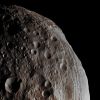
072-Vesta-Striations-PIA14678-PCF-LXTT.jpgStriations on Vesta (Absolute Natural Colors; credits for the additional process. and color.: Drr Gianluigi Barca and Paolo C. Fienga - Lunexit Team)177 visitenessun commentoMareKromium
(5 voti)
|
|
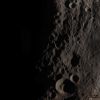
074-Vesta-PIA14776.jpgNight and Day on 4-Vesta (Absolute Natural Colors; credits for the additional process. and color.: Dr Paolo C. Fienga - Lunexit Team)182 visitenessun commentoMareKromium
(5 voti)
|
|

088-Craters-Unnamed_Crater-PIA15044-PCF-LXTT-1.jpgUnnamed Crater in Floronia Quadrant (Absolute Natural Colors; credits for the additional process. and color.: Dr Paolo C. Fienga - Lunexit Team)187 visiteThis Dawn FC (framing camera) image is dominated by an approx. 20 Km-wide, young, fresh Unnamed Impact Crater. Surrounding this Unnamed Crater is its Ejecta Blanket, which is a covering of small particles that were thrown out during the impact that formed it and the Ejecta Blanket is the cause of the smooth Surface visible all around the Crater itself. This Ejecta Blanket buried many older, degraded craters, but some of them can be seen poking through the Blanket. Old and degraded craters are less clear or not visible directly next to the Unnamed Crater dominating the frame and this suggests that its Ejecta Blanket is very thick and fit to bury almost all the other (relatively small) impact craters located next to the bigger one.
There are also several distinctive Chains of small Craters running obliquely across the image on top of the Ejecta Blanket. They were not buried by the Ejecta Blanket and this means that they must be younger than it. These Crater Chains likely formed due to Secondary Impacts, when material thrown out of previous impacts re-impacted Vesta. Similarly, material ejected from the Unnamed approx. 20 Km-wide Crater has fallen back into the Crater itself and created several Pit-like features on its Floor.
This image is in Vesta's Floronia Quadrangle and the center latitude and longitude of the image is 32,5° North and 1,2° East. NASA's Dawn Spacecraft obtained this image with its framing camera on October 24th, 2011. This image was taken through the camera's clear filter. The distance to the Surface of 4-Vesta is 662 Km and the image has a resolution of about 62 meters per pixel. This image was acquired during the HAMO (High Altitude Mapping Orbit) phase of the mission.MareKromium
(5 voti)
|
|

070-Vesta-PIA14973.jpgVesta's Northern and Equatorial Regions (Absolute Natural Colors; credits for the additional process. and color.: Dr Paolo C. Fienga - Lunexit Team)223 visitenessun commentoMareKromium
(5 voti)
|
|
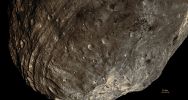
065-Vesta-PIA14322-PCF-LXTT.jpgThe South Pole of 4-Vesta (Enhanced Natural Colors; credits for the additional process. and color.: Dr Paolo C. Fienga - Lunar Explorer Italia) 189 visitenessun commentoMareKromium
(5 voti)
|
|
| 55 immagini su 5 pagina(e) |
2 |  |
|
|





