| |

| Piú votate - 1-Ceres and 4-Vesta |

024-Vesta.jpg4-Vesta56 visite4-Vesta (o anche solo Vesta) è uno dei tanti asteroidi conosciuti da tantissimo tempo e che sembra, di quando in quando, avvicinarsi (in senso cosmico...) in maniera "perigliosa" al nostro pianeta.
Ma lo sanno tutti - gli Scienziati per primi - che, un giorno o l'altro, da oggi a fra qualche milione di anni nel futuro, qualche "roccia vagante" finirà con l'incrociare la sua orbita con quella della Terra e, quindi, con il produrre - con ogni probabilità - una catastrofe di dimensioni globali la quale sarà causa di sostanziali cambiamenti dell'intero ecosistema.
E' inevitabile, si sa.
Così come si sa che, quando questo momento arriverà, gli ultimi a prenderne atto saranno proprio quelli che, questo Pianeta, lo abitano...
(12 voti)
|
|
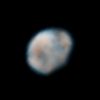
021-Vesta-2.jpg4-Vesta, from HST55 visiteHubble observation of Vesta: picture taken with the Wide Field Planetary Camera 2 on May 14 and 16, 2007.
MareKromium
(10 voti)
|
|

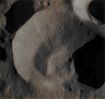
083-Craters-Caparronia_Crater-PIA15129-PCF-LXTT.jpgCaparronia Crater and Surroundings (Natural Colors; credits for the additional process. and color.: Dr Paolo C. Fienga - Lunexit Team)229 visiteThis Dawn FC (framing camera) image is dominated by Caparronia Impact Crater. Caparronia Crater is approximately 55 Km in diameter and has a mostly fresh, irregularly shaped Rim. It also has a curved, linear mound running across most of its base. For all of these reasons Caparronia is a distinctive Crater and this is why it was chosen to name the Quadrangle in which it is situated. The smooth region around Caparronia Crater is most likely fine Impact Ejecta, which were thrown out from the Crater at the time of its formation. Other impact related features are the linear chains of small, less than 1 km wide, Secondary Craters that occur throughout the image. Some particularly distinctive Crater Chains are in the bottom part of the frame.
Secondary Crater Chains are formed when relatively large debris are ejected from an impact and skip along the Surface, much like a stone skipping across a lake. There are also some linear scars running diagonally across the image, which are due to debris scouring across the Surface.
This image is centered in Vesta's Caparronia Quadrangle and the center Latitude and Longitude of the image is 52,5° North and 149.2° East. NASA's Dawn Spacecraft obtained this image with its framing camera on October 23rd 2011. This image was taken through the camera's clear filter. The distance to the Surface of Vesta, at the time the picture was taken, was approx. 700 km and the image has a resolution of about 70 meters per pixel. This image was acquired during the HAMO (High Altitude Mapping Orbit) phase of the mission.MareKromium
(8 voti)
|
|

021-Vesta-3.jpgMoments of 4-Vesta55 visiteTo prepare for the Dawn spacecraft's visit to Vesta, astronomers used Hubble's Wide Field Planetary Camera 2 to snap new images of the asteroid. These images were taken on May 14 and 16, 2007. Each frame shows time in hours and minutes based on Vesta's 5,34-hour rotation period. Using Hubble, astronomers mapped Vesta's Southern Hemisphere, a Region dominated by a giant impact crater formed by a collision billions of years ago. The crater is 285 miles (456 Km) across, which is nearly equal to Vesta's 330-mile (530-Km) diameter.
Hubble's sharp "eye" can see features as small as about 37 miles (60 Km) across. The images show the difference in brightness and color on the asteroid's surface. These characteristics hint at the large-scale features that the Dawn spacecraft will see when it arrives at Vesta in 2011.
Hubble's view reveals extensive global features stretching longitudinally from the Northern Hemisphere to the Southern Hemisphere.
The images also show widespread differences in brightness in the east and west, which probably reflects compositional changes. Both of these characteristics could reveal volcanic activity throughout Vesta. The size of these different regions varies. Some are hundreds of miles across.
The brightness differences could be similar to the effect seen on the Moon, where smooth, dark regions are more iron-rich than the brighter highlands that contain minerals richer in calcium and aluminum. When Vesta was forming 4.5 billion years ago, it was heated to the melting temperatures of rock. This heating allowed heavier material to sink to Vesta's center and lighter minerals to rise to the surface.
Astronomers combined images of Vesta in two colors to study the variations in iron-bearing minerals. From these minerals, they hope to learn more about Vesta's surface structure and composition. Astronomers expect that Dawn will provide rich details about the asteroid's surface and interior structure.
MareKromium
(8 voti)
|
|

015-Ceres_and_Vesta.jpg4-Vesta and 1-Ceres from HST (natural colors)57 visiteThese Hubble Space Telescope images of Vesta and 1-Ceres show two of the most massive asteroids in the Asteroid Belt, a Region between Mars and Jupiter.
The images are helping astronomers plan for the Dawn spacecraft’s tour of these hefty asteroids. On July 7, 2007, NASA is scheduled to launch the spacecraft on a 4-year journey to the Asteroid Belt. Once there, Dawn will do some asteroid-hopping, going into orbit around Vesta in 2011 and Ceres in 2015. Dawn will be the first spacecraft to orbit two targets. At least 100.000 asteroids inhabit the Asteroid Belt, a reservoir of leftover material from the formation of our Solar-System planets some 4,6 Billion Years (BY) ago.MareKromium
(8 voti)
|
|

004-Ceres.jpgMoments of 1-Ceres (1)54 visiteDa "NASA - Picture of the Day", del 21 Agosto 2006:"Is 1-Ceres an Asteroid or a Planet?
Although a trivial designation to some, the recent suggestion by the Planet Definition Committee of the International Astronomical Union would have 1-Ceres reclassified from Asteroid to Planet.
A change in taxonomy might lead to more notoriety for the frequently overlooked world. Ceres, at about 1000 Km across, is the largest object in the main Asteroid Belt between Mars and Jupiter. Under the newly proposed criteria, Ceres would qualify as a planet because it is nearly spherical and sufficiently distant from other planets. Pictured above is the best picture yet of Ceres, taken by the Hubble Space Telescope as part of a series of exposures ending in 2004 January. Currently, NASA's Dawn mission is scheduled to launch in 2007 June to explore Ceres and Vesta, regardless of their future designations".
(8 voti)
|
|

082-Craters-Unnamed_Crater-PIA15222-PCF-LXTT.jpgIn the Shadows... (Absolute Natural Colors; credits for the additional process. and color.: Dr Paolo C. Fienga - Lunexit Team)219 visiteThis image, one of the first obtained by NASA's Dawn Spacecraft in its low altitude mapping orbit, shows part of the Rim of a (relatively) fresh Unnamed Crater. The Terrain shown here is located in an area known as the Heavily Cratered Terrain in the Northern Hemisphere of 4-Vesta.
The image, taken by Dawn's framing camera, is centered at around 17° North Latitude and 77° East Longitude. It was obtained on Dec. 13, 2011, from an altitude of approx. 119 miles (about 191 Km). It covers an area of about 11 by 11 miles (such as approx. 18 by 18 Km).MareKromium
(7 voti)
|
|

006-Ceres.jpg1-Ceres (natural colors, from HST - credits: NASA/ESA et al.)55 visiteThe Hubble image of Ceres on the reveals bright and dark regions on the asteroid's surface that could be topographic features, such as craters, and/or areas containing different surface material. Large impacts may have caused some of these features and potentially added new material to the landscape. The Texas-sized asteroid holds about 30 to 40% of the mass in the Asteroid Belt.
Ceres' round shape suggests that its interior is layered like those of terrestrial planets such as Earth. The asteroid may have a rocky inner core, an icy mantle, and a thin, dusty outer crust. The asteroid may even have water locked beneath its surface. It is approx. 590 miles (950 Km) across and was the first asteroid discovered in 1801.
The observation was made in visible and ultraviolet light between December 2003 and January 2004 with the HST Advanced Camera for Surveys. The color variations in the image show either a difference in texture or composition on Ceres' surface.
Astronomers need the close-up views of the Dawn spacecraft to determine the characteristics of these regional differences.
MareKromium
(7 voti)
|
|

005-Ceres.jpgMoments of 1-Ceres (2)56 visiteFor 2 centuries it was the largest known rock in the Solar System. The Texas-sized asteroid Ceres, about 930 Km (about 580 miles) across, was the first asteroid ever detected. The space rock was identified in 1801 by astronomer Giuseppe Piazzi, a monk in Sicily and the founding director of the Palermo Astronomical Observatory. He noted over a few nights a shifting point in the sky that wasn't one of the planets, their moons or a star. Thus, he discovered the rock.
After discovering the asteroid, Piazzi was invited to join the Celestial Police, a group of 24 international astronomers looking for what they called "guest planets" between Mars and Jupiter. The Celestial Police noted that the spacing between planets was fairly regular, but that there was a large gap between Mars and Jupiter.
Soon other small bodies were discovered in that region (Pallas in 1802, Juno in 1804 and Vesta in 1807), so the Celestial Police concluded that not just one, but many minor planets had to exist in a Main Asteroid Belt.
(7 voti)
|
|

000-Ceres~0.jpgBig Asteroid or Small Planet?68 visiteLa decisione non è stata ancora presa, ma il problema rimane: 1-Cerere è un "grande" Asteroide o un "piccolo" Pianeta?
A parte tutto, Cerere sembra proprio essere un mondo a sè: le sue dimensioni (circa 930 Km di iametro) sono modeste ma, per un asteroide, alquanto consistenti (Cerere è comunque l'oggetto conosciuto più grande fra le (decine di) migliaia che si trovano in quella regione di spazio compresa fra le orbite di Marte e Giove e che è comunemente conosciuta come "Cintura degli Asteroidi" (o Asteroids' Belt).
Di 1-Cerere si parla molto in questi giorni perchè la IAU (International Astronomical Union) sta valutando se conferire a questo Corpo Celeste lo "status" di Pianeta vero e proprio oppure no, ma la NASA - a quanto si sa - era già da tempo interessata a questo piccolo mondo ed infatti, proprio in questi giorni, è in fase di completamento la preparazione della Sonda "Dawn" (alba) la quale verrà lanciata nel 2007 (forse a Giugno) e che dovrebbe raggiungere e studiare MOLTO da vicino l'asteroide Vesta (nel 2011) e - guarda caso... - proprio 1-Cerere, nel 2015 (l'Anno del possibile - ed auspicabile - "contatto" fra l'altra Sonda New Horizons ed il Doppio Pianeta - o Sistema Binario formato da - Plutone e Caronte.
(7 voti)
|
|

012-1-Ceres-PIA19620-PCF-LXTT-IPF.jpgHuge Mountain on 1-Ceres (Absolute Natural Colors; credits for the additional process. and color.: Dr Paolo C. Fienga/Lunar Explorer Italia/Italian Planetary Foundation)66 visiteLocated just on the Limb (obviously, only from our point of view) of the so-called "Dwarf Planet" 1-Ceres, at about 7 o'clock of 1-Ceres' (highly uneven) disk, we can see - once again - the large Flat-Topped Mountain - about 3 miles (such as approx. 4,82802 Km) high, surrounded by (relatively) smooth Terrain - that we have already shown you in yesterday's APOD. Probably it is useless to say - but it is a good thing, in our opinion, as IPF, to underline this specific circumstance - the so-called Emission Angle here is very high. The "new" White Spot, as well as the white Material that we have noticed still in yesterday's APOD, are also clearly visible here, in this picture.
As we have already said in the past, also this specific frame is just one among the first snapshots coming from Dawn's second Mapping Orbit of 1-Ceres, which is carried out from an altitude of approx. 2700 miles (such as about 4345,218 Km). Even in this case, the Resolution is roughly 1400 feet (such as approx. 426,72 meters) per pixel.
The image (which is an Original NASA - Dawn Spacecraft's b/w and NON Map-Projected frame published on the NASA - Planetary Photojournal with the ID n. PIA 19587 - Dawn Survey Orbit Image 19) has been additionally processed, magnified to aid the visibility of the details, contrast enhanced and sharpened, Gamma corrected and then colorized (according to an educated guess carried out by Dr Paolo C. Fienga-LXTT-IPF) in Absolute Natural Colors (such as the colors that a normal human eye would actually perceive if someone were onboard the NASA - Dawn Spacecraft and then looked ahead, towards the Limb and Surface of 1-Ceres), by using an original technique created - and, in time, dramatically improved - by the Lunar Explorer Italia Team.MareKromium
(6 voti)
|
|
085-Craters-Caparronia_Crater-PIA15129-PCF-LXTT.jpgMineral Diversity inside Caparronia Crater and Surroundings (Enhanced Absolute Natural Colors; credits for the additional process. and color.: Dr Paolo C. Fienga - Lunexit Team)238 visitenessun commentoMareKromium
(6 voti)
|
|
| 55 immagini su 5 pagina(e) |
1 |
|
|
|
|
|





