| Piú votate - Mars Reconnaissance Orbiter (MRO) |
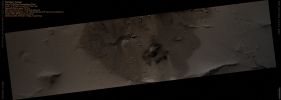
PSP_003450_1975_RED_abrowse-PCF-LXTT.jpgOlympus' Aureole (Absolute Natural Colors; credits for the additional process. and color.: Dr Paolo C. Fienga - Lunexit Team)97 visitenessun commentoMareKromium
(3 voti)
|
|
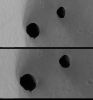
PSP_003317_1975_and_ESP_003317_1975-EB-LXTT-01.jpgThe "OO Pits" - Rimless Collapse Pits in Tharsis (High-Def-3D; credits for the additional process.: Elisabetta Bonora - Lunexit Team)81 visitenessun commentoMareKromium
(3 voti)
|
|

ESP_019599_1445_RED_abrowse-01.jpgBright Bedrock inside Hale Crater (Absolute Natural Colors; additional process. and color.: Dr Paolo C. Fienga - Lunexit Team)69 visitenessun commentoMareKromium
(3 voti)
|
|

ESP_019599_1445_RED_abrowse-00.jpgBright Bedrock inside Hale Crater (Absolute Natural Colors; additional process. and color.: Dr Paolo C. Fienga - Lunexit Team)74 visitenessun commentoMareKromium
(3 voti)
|
|
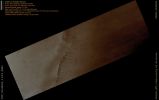
PSP_004804_1105_RED_abrowse.jpgGullies in Sisyphi Planum (Absolute Natural Colors; credits for the additional process. and color.: Dr Paolo C. Fienga - Lunexit Team)72 visiteImage PSP_004804_1105 shows the Walls of a large Pit inside Lyell Crater, near the South Polar Region.
This image was acquired during a period of elevated Atmospheric Dust, following a series of Dust Storms that encircled the Planet; this is the cause of the longitudinal bands of contrasting gray levels in the image. We can still see through the thick Atmosphere, though, Gullies and other subtle features which could have been produced by water and ice present at or near the Surface.
The otherwise subdued Surface in this Region is criss-crossed by numerous fissures, forming Polygons some 10 mt (9 yards) across. Similar features in both shape and scale can be found in terrestrial Periglacial Regions such as Antarctica, where ice is present at or near the Surface. Antarctica's features are the product of repeated expansion and contraction of the soil-ice mixture due to seasonal temperature oscillations. This results in Polygonal Networks of Stress Fractures. MareKromium
(3 voti)
|
|

PSP_002070_2250_RED_abrowse-03.jpgPolygons in Utopia Planitia (EDM - Absolute Natural Colors; credits for the additional process. and color.: Dr Paolo C. Fienga - Lunexit Team) 111 visiteOn the Surface surrounding the "Scalloped Depressions" there are several large Boulders (see this EDM). Sources for these rocks may include Ejecta from nearby Craters, Volcanic Floods, or Boulders emplaced by Glaciers or Periglacial Processes.
Also on the surrounding Surface is a Polygonal Pattern of Fractures. This is commonly associated with Scalloped Terrain, and indicates that the Surface has undergone stress, potentially caused by Subsidence, Desiccation, or Thermal Contraction.
Variations in the sizes of the Polygons seems to be partly dependant on their location with small Polygons appearing within the Scallops and larger Polygons appearing outside the Scallops on the Surface of the Mantle. Several cracks cut through the side of the Scallops indicating that they must be at least as deep as the Scallops. The Polygons may have been present previous to the erosion of the Mantle. The formation of some Scalloped Depressions is believed to be an ongoing process today. MareKromium
(3 voti)
|
|
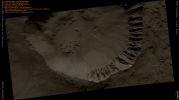
PSP_004060_1440_RED_abrowse-00.jpgUnnamed Southern Crater with deep Gullies (CTX Frame - Absolute Natural Colors; credits for the additional process. and color.: Dr Paolo C. Fienga - Lunexit Team)103 visitenessun commentoMareKromium
(3 voti)
|
|

ESP_019569_1640_RED_abrowse-PCF-LXTT.jpgPortion of Huygens Crater (Absolute Natural Colors; credits for the additional process. and color.: Dr Paolo C. Fienga - Lunexit Team)94 visitenessun commentoMareKromium
(3 voti)
|
|

PSP_002932_1445_RED_abrowse-00.jpgSection of the Outer Rim of Hale Crater (CTX Frame - Absolute Natural Colors; credits for the additional process. and color.: Dr Paolo C. Fienga - Lunexit Team)99 visiteThis observation shows Hale Crater, a rather large, pristine elliptical crater approximately 125 x 150 Km in diameter. Hale Crater possesses sharp features, impact melt bodies ponded through out the structure and few overprinting Impact Craters. These attributes indicate that it is relatively young and certainly well-preserved - likely the youngest crater of this size on Mars.
Present on the Crater Walls are a large number of Gullies, some with Light-Toned Deposits. The Gullies visible here are very well developed, and many are cut deeply into the Hale's Walls. Several have "Braided Channels" suggestive of repeated flow. Some of the Gullies have Boulders littered throughout their Channels. This could be a result of a fluid preferentially transporting smaller particles and leaving larger rubble behind.
The composition of the Light-Toned Deposits are currently unknown. The CRISM Visible-InfraRed Spectrometer, HiRISE's sister instrument on MRO, may be able to shed some light on the composition of these materials.
In one place along the Crater Rim, Gullies are visible on both sides of the Rim (see the EDM that follows). This has only been seen in a few locations on Mars.MareKromium
(3 voti)
|
|

PSP_002932_1445_RED_abrowse-01.jpgSection of the Outer Rim of Hale Crater (EDM - Absolute Natural Colors; credits for the additional process. and color.: Dr Paolo C. Fienga - Lunexit Team)81 visitenessun commentoMareKromium
(3 voti)
|
|
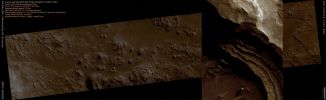
PSP_008338_1525_Erratic_Boulder-EB-LXTT-0.jpgLayers and "Monolith-like" Erratic Boulder in Uzboi Vallis (CTX Frame and EDM - an Image-Mosaic in Absolute Natural Colors by Elisabetta Bonora and Paolo C. Fienga - Lunexit Team)94 visiteMareKromium
(3 voti)
|
|

ESP_019541_2325_RED_abrowse.jpgNorhern Plains (Absolute Natural Colors; credits for the additional process. and color.: Dr Paolo C. Fienga - Lunexit Team:)96 visitenessun commentoMareKromium
(3 voti)
|
|
| 2235 immagini su 187 pagina(e) |
 |
|
|
|
|
99 | |
|
|
|
|





