| Piú votate - Mars Reconnaissance Orbiter (MRO) |
ESP_022657_1260_RED_abrowse-PCF-LXTT-01.jpgUnnamed Crater in Noachis Terra (EDM n.1 - Absolute Natural Colors; credits for the additional process. and color.: Dr Paolo C. Fienga - Lunexit Team)155 visitenessun commentoMareKromium
(3 voti)
|
|
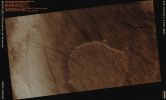
ESP_022657_1260_RED_abrowse-PCF-LXTT-00.jpgUnnamed Crater in Noachis Terra (CTX Frame - Absolute Natural Colors; credits for the additional process. and color.: Dr Paolo C. Fienga - Lunexit Team)110 visitenessun commentoMareKromium
(3 voti)
|
|

ESP_022998_0980_RED_abrowse-PCF-LXTT.jpgErosional South Polar Features (Natural Colors; credits for the additional process. and color.: Dr Paolo C. Fienga - Lunexit Team)144 visitenessun commentoMareKromium
(3 voti)
|
|

ESP_022691_1145_RED_abrowse-PCF-LXTT.jpgSouthern Dunefield and DD Tracks (Absolute Natural Colors; credits for the additional process. and color.: Dr Paolo C. Fienga - Lunexit Team)134 visitenessun commentoMareKromium
(3 voti)
|
|
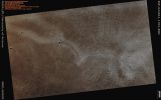
ESP_022661_1705_RED_abrowse-PCF-LXTT.jpgFeatures of Arsia Mons: Reticulate Bedform Monitoring (Natural Colors; credits for the additional process. and color: Dr Paolo C. Fienga - Lunexit Team)154 visitenessun commentoMareKromium
(3 voti)
|
|

ESP_022658_0945_RED_abrowse-PCF-LXTT.jpgSouth Polar Features' Monitoring (Natural Colors; credits for the additional process. and color.: Dr Paolo C. Fienga - Lunexit Team)140 visitenessun commentoMareKromium
(3 voti)
|
|

PSP_008842_1705_red-PCF-LXTT.jpgSmall Shield-Volcano and Caldera (Enhanced Natural Colors; credits for the additional process. and color.: Dr Paolo C. Fienga - Lunar Explorer Italia)207 visiteThis image is centered on the vent area of a small shield volcano located within the Summit Caldera of Arsia Mons, the southernmost of the large three Tharsis Montes Volcanoes.
Since the first details of the volcano were revealed by the Viking orbiters 30 years ago, the presence of a string of several small Shield Volcanoes across the Floor of the Caldera has been known. The resolution of the Viking images was insufficient to show more than the mere presence of small Shield Volcanoes and the fact that they appeared to line up along a linear trend across the Floor. And, it was suspected that the small Shield Volcanoes were the source of the lava flows that appeared to cover the floor of the Caldera, but details have been elusive.
This HiRISE image of the central small Shield Volcano on the Caldera Floor shows that there are numerous lava flows radiating from a small summit crater. To the North and South, the lavas have accumulated in lobes, some of which radiate smaller channels and lobes. About midway from the crater, to both left and right of the image, the surface appears very smooth and there are few details visible. Until detailed geologic mapping is done, it is difficult to conclude whether these smooth areas represent distal ponding of lavas that erupted from the summit crater of the small Shield Volcano, lava flows that have invaded from outside the image area at a time later than the formation of the small Shield Volcano, or later deposits of dust and ash that have simply covered the surface.
Whatever the relationships, it is clear that the Floor of the Largest Caldera on Mars is far from a bland surface of old lava flows. Numerous flows and multiple vents have all interacted to create a complex series of surfaces that record the geologic development of the Caldera Floor. MareKromium
(3 voti)
|
|

Craters-Holden_Crater-PCF-LXTT.jpgFeatures of Holden Crater (Absolute Natural Colors; credits for the additional process. and color.: Dr Paolo C. Fienga - Lunexit Team)132 visitenessun commentoMareKromium
(3 voti)
|
|

ESP_022494_1385_RED_abrowse-PCF-LXTT.jpgLobate "Flow Feature" in Eastern Hellas Planitia (Absolute Natural Colors; credits for the additional process. and color.: Dr Paolo C. Fienga - Lunexit Team)114 visitenessun commentoMareKromium
(3 voti)
|
|
ESP_022848_1595_RED_abrowse-PCF-LXTT-01.jpgLike Waterfalls... (EDM - Absolute Natural Colors; credits for the additional process. and color.: Dr Paolo C. Fienga - Lunexit Team)125 visitenessun commentoMareKromium
(3 voti)
|
|

PSP_009087_2550_RED-PCF-LXTT.jpgUnnamed Crater with Dunefield in Vastitas Borealis (Absolute Natural Colors; credits for the additional process. and color: Dr Paolo C. Fienga - Lunexit Team)56 visiteThis North Polar Dunefield is bounded by a small Unnamed Crater about 11 Km in diameter in the Vastitas Borealis Region. This crater captured deposits of basaltic sand that may have been transported from the North Polar Erg, a massive sea of sand that surrounds the Martian North Pole.
This Region experiences a variety of winds that blow from various directions during different seasons and times of day, and the winds are also affected by the topography of the crater itself. This influences the movement of sand within the crater and the dunes that they shape.
This image shows many transitioning dunes which indicate changes of wind direction. The wind direction can be inferred from the location of the steeper side of the dune (called the slip-face) which is downwind of the dominant wind direction. The barchans and barchanoid dunes form crescent shapes and are consistent with dominant winds from the South-West.
Towards the center of the Dunefield, the barchans transition from crescent shapes into irregular, more elongated dunes and merge.
The more northern part of the Dunefield consists of longitudinal dunes which extend from the horns of the modified barchans residing in its central part.
These longitudinal dunes form along the trend of southerly-southeasterly winds.
Because it is early Summer, solar radiation has heated the sand and there are only a few small patches of frost remaining on the dunes at this season. However, evidence of the arctic climate is visible in the polygons surrounding the dune field.
The polygons, like those found at the Phoenix Mission Landing Site, are produced by freeze-thaw cycles as the polar soil expands and contracts. MareKromium
(3 voti)
|
|

PSP_009708_1770_red-PCF-LXTT-1.jpgSouthern Meridiani Planum (Absolute Natural Colors; credits for the additional process. and color.: Dr Paolo C. Fienga - Lunexit Team)188 visitenessun commentoMareKromium
(3 voti)
|
|
| 2235 immagini su 187 pagina(e) |
 |
|
|
|
|
91 | |
|
|
|
|





