| Piú votate - Mars Reconnaissance Orbiter (MRO) |

PSP_005388_1975_RED_abrowse-00-PCF-LXTT.jpgPang Boche Crater (CTX Frame - Absolute Natural Colors; credits for the additional process. and color.: Dr Paolo C. Fienga - Lunexit Team) 100 visitenessun commentoMareKromium
(4 voti)
|
|

PSP_005149_1715_RED_browse-PCF-LXTT.jpgLight-toned Layering and a huge Collapse Feature near Jus Chasma (Absolute Natural Colors; additional process.: Dr Paolo C. Fienga - Lunexit Team)106 visitenessun commentoMareKromium
(4 voti)
|
|
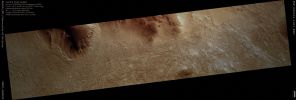
PSP_006162_1365_RED_abrowse-PCF-LXTT.jpgCentral Peak Gullies (Absolute Natural Colors; credits for the additional process. and color.: Dr Paolo C. Fienga - Lunexit Team)115 visitenessun commentoMareKromium
(4 voti)
|
|

PSP_005514_1360_RED_abrowse.jpgDunes on Rabe Crater's Floor (Absolute Natural Colors; credits for the additional process. and color.: Dr Paolo C. Fienga - Lunexit Team)80 visitenessun commentoMareKromium
(4 voti)
|
|

ESP_019991_2440_RED_abrowse.jpgPossible Ice-Exposure in Vastitas Borealis (Absolute Natural Colors; credits for the additional process. and color.: Dr Paolo C. Fienga - Lunexit Team) 79 visitenessun commentoMareKromium
(4 voti)
|
|
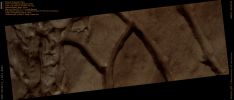
PSP_004071_1425_RED_abrowse.jpgMesas in Gorgonum Chaos (CTX Frame - Absolute Natural Colors; credits for the additional process. and color.: Dr Paolo C. Fienga - Lunexit Team) 89 visitePSP_004071_1425 shows Mesas that are part of Gorgonum Chaos, a Region of Chaotic Terrain, which is a jumble of Mounds and Mesas grouped together. Chaotic Terrain is most commonly found in Mars near the sources of the gigantic Outflow Channels. Gorgonum Chaos is one of the few exceptions.
Some of the Troughs between the Mesas appear to have V-shaped bottoms; there is no obvious flat floor in between. Others have Dunes running down their centers probably indicating flat floors.
It is possible that the Mesas were once connected and that something caused fractures in the original Mesa's Surface that were then preferentially eroded.MareKromium
(4 voti)
|
|

PSP_005418_1075_RED_abrowse-00.jpgSouth Polar Features (Absolute Natural Colors; credits for the additional process. and color.: Dr Paolo C. Fienga - Lunexit Team)85 visitenessun commentoMareKromium
(4 voti)
|
|

Dunes_and_DD_Tracks-PIA13538-PCF-LXTT-003.jpgSouthern Dunes and DD Tracks: the Anomaly (an Image-Mosaic by Dr Paolo C. Fienga - Lunexit Team)139 visiteChe il "Disco Nero" sia un oggetto reale o un (nuovo e bizzarro) image-artifact, molto probabilmente noi non verremo mai a saperlo; ma che la NASA, spesso e volentieri, faccia dei pasticci i quali - agli occhi degli Appassionati e a volte, anche degli Studiosi - ci fanno rabbrividire, lo sappiamo, ormai, da molto tempo.
Ma, per il momento, lasciamo perdere ogni "dietrologia" ed andiamo a vedere la questione in dettaglio: l'immagine con il "Disco Nero" (con l'Anomalìa, insomma) è il Prodotto NASA "Full-Res JPEG" da 1,1 MB, estratto dal "NASA - Planetary Photojournal" (laddove venne pubblicato in data 25 Ottobre 2010), contrassegnato dal seriale n. PIA13538 ed estratto, dice la NASA, dal Prodotto NASA "Hi-Rise" PSP_003695_1250 (un Prodotto al quale la NASA stessa fa rimando nella pagina dedicata al frame PIA13538).
Tuttavia, se si va a guardare il Prodotto Hi-Rise PSP_003695_1250, seguendo il link fornito dalla NASA (e che porta effettivamente al Prodotto Hi-Rise PSP_003695_1250) il Disco Nero non risulta visibile. Non c'è. E' "sparito".
Perchè?
Forse perchè abbiamo sbagliato qualcosa noi e, di conseguenza, abbiamo "frainteso" l'immagine?
O perchè l'Anomalia è, palesemente, un image-artifact creatosi durante la "trasformazione" del Prodotto PSP_003695_1250 in Prodotto PIA13538?
No.
L'Anomalìa "scompare" perchè, molto semplicemente, il Prodotto PIA13538 ed il Prodotto Hi-Rise PSP_003695_1250 NON SONO lo stesso prodotto!
L'angolo di Fase - che, Vi ricordiamo, è l'Angolo disegnato dal Sole, l'Oggetto Ripreso (ivi, il Suolo di Marte e l'Anomalìa) e la Sonda che lo riprende (ivi, il Mars Reconnaissance Orbiter) - è palesemente diverso, come il nostro mosaico dimostra - riteniamo - in maniera evidente ed inequivocabile.
Conclusioni: si tratta di un Cover-up venuto malissimo? Di un (mega)-pasticcio NASA? O di un semplice errore (ancorchè piuttosto grossolano)?
Questo, ovviamente, noi non lo sappiamo e non lo possiamo sapere. Però il nostro compito, che è quello di osservare, analizzare e riportare alla Vostra attenzione i dati disponibili in chiave "informativa e divulgativa", lo abbiamo svolto: bene ed al 100%.
E queste nostre considerazioni non sono "complottismo": esse sono semplice e pura Professionalità nell'adempimento delle nostre mansioni.
Una "professionalità" che anche la NASA (ma non solo), allorchè produce Informazione e Divulgazione, dovrebbe imparare ad usare: perchè i "grandi (se non "immensi") mezzi", da soli, non bastano!
Meditateci sopra e poi, se volete, scrivete qualche commento...MareKromium
(4 voti)
|
|
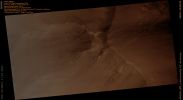
PSP_004805_1710_RED_abrowse.jpgOn the Edge of Ganges Chasma (Absolute Natural Colors; credits for the additional process. and color.: Dr Paolo C. Fienga - Lunexit Team)80 visiteThe Troughs and Chasms of the Valles Marineris Canyon System contain Light-Toned Deposits of enigmatic origin. The light materials, often layered, have variously been proposed to be Volcanic Ash or Sediments laid down by Rivers, Lakes or Sand Dunes.
One aspect of the Light-Toned material that has remained unclear is the timing of its deposition relative to canyon formation - was the material deposited in the Troughs, or does it crop out in the Walls, indicating that it existed before the Valles Marineris Canyon System formed?
This HiRISE image shows a part of the wall of Ganges Chasma. (This image, taken during the major Dust Storms which have raged through the summer of 2007, is grainy and low-contrast because of Dust in the Atmosphere). The Plateau above the Chasm is on the right side of the image, with the Wall of the Trough descending to the North. A few fine Layers, likely Basalt Flows, form the cap layers.
In the Spur, at the center of the image, light material appears to crop out, contrasting with the relatively dark material elsewhere in the Wall of the trough. At least some of this material is inherently lighter than other Wallrock; changes in tone occur at several sites where there are no breaks in Slope.
The light material appears be forming Spurs and Ridges similar to the surrounding rock, suggesting that it comprises at least some part of the Walls. However, darker, bouldery material occurs at the same level just to the West (up) of the light patch, indicating that the light outcrop may not extend very far.
Images like this provide clues to help unravel the history of deposition and deformation in Valles Marineris, and may eventually tell a complex story. In order to fully understand what this image means, several questions must be addressed: is this light material the same as intensively Layered Deposits observed elsewhere?
How extensive are light Wall Materials?
Are these materials conformable (part of a continuous sequence) with the rest of the Wall?
More HiRISE imaging will help address these questions. MareKromium
(4 voti)
|
|

PSP_002070_2250_RED_abrowse-00.jpgPolygons in Utopia Planitia (Absolute Natural Colors; credits for the additional process. and color.: Dr Paolo C. Fienga - Lunexit Team) 86 visiteThis observation, in the Utopia Planitia, is marked by Depressions in the Mantle, several of which have coalesced together and now possess Scalloped edges and Layers.
Scalloped pits, such as these, are typical features of the Mid-Latitude Mantle and are most commonly found at approx. 55° both North and South Latitude; in the Utopia Planitia, Scalloped Terrain is found between 45-50° North latitude where the Mantle is highly discontinuous. The presence of Scalloped Pits has led to hypotheses of the removal of Sub-Surface material, possibly interstitial ice, by Sublimation. Scalloped Depressions in the Utopia Planitia have also been interpreted to be "Thermokarst Lakes" created by melting of Permafrost (frozen ground) and collapse of the dry Surface Layer.
Scalloped Pits typically have a steep Pole-facing Scarp and a gentler Equator-facing Slope. This is most likely due to differences in solar heating.MareKromium
(4 voti)
|
|

Dunes_and_DD_Tracks-PIA13538-PCF-LXTT-000.jpgUnnamed Southern Crater with Large Dunefield and DD Streaks (CTX Frame - Absolute Natural Colors; credits for the additional process. and color.: Dr Paolo C. Fienga - Lunexit Team) 111 visitenessun commentoMareKromium
(4 voti)
|
|

Dunes_and_DD_Tracks-PIA13538-PCF-LXTT-001.jpgSouthern Dunes and DD Tracks (Absolute Natural Colors; credits for the additional process. and color.: Dr Paolo C. Fienga - Lunexit Team)139 visiteUna "singolare" Anomalìa che non può e non deve passare inosservata (di qualsiasi evento o fenomeno - naturale o artificiale - Essa costituisca l'espressione visibile).MareKromium
(4 voti)
|
|
| 2235 immagini su 187 pagina(e) |
 |
|
|
|
|
52 | |
|
|
|
|





