| |

| Piú votate - Mars Reconnaissance Orbiter (MRO) |

Craters-Unnamed_Crater_in_Terra_Sirenum_12m-00.jpgCrater in Terra Sirenum (1)58 visiteThe largest number of gullies on Mars occur on the walls of southern hemisphere craters. During southern winter, many of the gullied walls are in shadow. It has been known for many years from Mars Global Surveyor Mars Orbiter Camera images that frost forms on these shadowed slopes and that differences in the amount or nature of the frost deposits highlight the gully floors and deposits. Such differences may occur because the materials are of different particle sizes, or have other differing attributes that affect their thermophysical properties. To investigate this phenomenon, CTX acquired this image of a crater at 39.3°S, 136.5°W, where gullies were known to display frost during winter. To see the gullies, download the image and view it in an image processing program, as they are nearly invisible in the normal contrast image.
(5 voti)
|
|

Craters-Holden_Crater-TRA_000861_1530_RED_Holden_Delta_00.jpgThe beautiful Holden Crater59 visiteThis HiRISE image covers a portion of the floor of Holden Crater situated in southwest Margaritifer Terra. Holden crater has likely experienced extensive modification by running water, which is supported by observations of drainage and deposition into the crater from a large channel breaching Holden's rim and the alluvial fans that built out along the floor of the crater. The HiRISE sub-image shows relatively bright finely layered deposits that are capped by relatively darker materials. Unlike previous images, the HiRISE image shows that the thickness of some of the individual layers are on the order of a meter or even less in thickness and are laterally uniform and continuous over the extent of the imaged outcrop. Some of the layers in the outcrop display an orthogonal pattern or what may be fractures or joints. The "layer-cake" appearance of these layers suggests that they may have been deposited into a lake that once occupied the crater floor and have seen little in the way of deformation since that time. By contrast, the darker materials overlying the layers are younger and may have been sediments deposited off the nearby alluvial fans. Alternatively, they may represent wind-blown deposits lain down during a later much drier period similar to the conditions that currently exist at the surface today. In some locations, the darker materials have been stripped and expose the lighter finely layered sediments underneath, thereby implying the finely layered materials extend much farther than what is visible along the large outcrop.
(5 voti)
|
|

S-PIA08812.jpgCape Verde and Cabo Frio (1)57 visiteThis image from the High Resolution Imaging Science Experiment on NASA's Mars Reconnaissance Orbiter shows the Mars Exploration Rover Opportunity near the rim of "Victoria Crater." Victoria is an impact crater about 800 meters (half a mile) in diameter at Meridiani Planum near the equator of Mars. Opportunity has been operating on Mars since January, 2004. Five days before this image was taken, Opportunity arrived at the rim of Victoria, after a drive of more than 9 kilometers (over 5 miles). It then drove to the position where it is seen in this image.
Shown in the image are "Duck Bay," the eroded segment of the crater rim where Opportunity first arrived at the crater; "Cabo Frio," a sharp promontory to the south of Duck Bay; and "Cape Verde," another promontory to the north. When viewed at the highest resolution, this image shows the rover itself, wheel tracks in the soil behind it, and the rover's shadow, including the shadow of the camera mast. After this image was taken, Opportunity moved to the very tip of Cape Verde to perform more imaging of the interior of the crater.
This view is a portion of an image taken by the High Resolution Imaging Science Experiment (HiRISE) camera onboard the Mars Reconnaissance Orbiter spacecraft on Oct. 3, 2006. The complete image is centered at minus7.8 degrees latitude, 279.5 degrees East longitude. The range to the target site was 297 kilometers (185.6 miles). At this distance the image scale is 29.7 centimeters (12 inches) per pixel (with 1 x 1 binning) so objects about 89 centimeters (35 inches) across are resolved. North is up. The image was taken at a local Mars time of 3:30 PM and the scene is illuminated from the west with a solar incidence angle of 59.7 degrees, thus the sun was about 30.3 degrees above the horizon. At a solar longitude of 113.6 degrees, the season on Mars is northern summer.
Images from the High Resolution Imaging Science Experiment and additional information about the Mars Reconnaissance Orbiter are available online at: http://www.nasa.gov/mro or http://HiRISE.lpl.arizona.edu.
(5 voti)
|
|

North_Polar_Regions-Olympia_Undae-PIA18243-PCF-LXTT-IPF.jpgOlympia Undae (Absolute Natural Colors; credits for the additional process. and color. Dr Paolo C. Fienga/Lunar Explorer Italia/Italian Planetary Foundation)67 visiteOlympia Undae is a large Field of Sand Dunes surrounding the North Polar Ice Cap of Mars. Because of the High Latitude of the Dunes, they are covered with Water and Carbon Dioxide (CO2) Frost for the whole Winter, Springtime and part of Summer as well (remember that during the Wintertime the Dunes are also poorly illuminated). Said that, it comes natural to understand that these Dunes are are best viewed during Summertime (from mid, to late Summer, to be more precise), when some of their most obvious Features - such as the Ripples that form on the Dunes' Surface - can be seen in detail.
In this sub-image, taken by the NASA - Mars Reconnaissance Orbiter on April, 9, 2014, we can see the Dunes in the Early Martian Summer. The Dark (Gray, with Reddish nuances here) Material visible here is the Sand that makes up the Dunes. Between them, Bright Bedrock as well as some lingering Patches of Frost (White-colored) that has not yet sublimated, are also well visible. If you look carefully, you will be able to see small Ripples that formed on the Dunes' Flat Surfaces, as well as Bright so-called "Inter-Dune Areas".
This specific area has been viewed several times by HiRISE, so NASA was able to compare this image to other past ones (from about 2 years ago); the most obvious difference between these images was simply found in the Illumination, which was much better in the AD 2012 (it is possible to say so once it has been noticed that the 2012 images showed much finer details). However, and despite that beforementioned difference, several changes in the Boundaries of the Sand and Ripple positions were also found, and this last circumstance showed - and proved - that (the Dominant and very strong North Polar) Winds, perhaps assisted by the Sublimation of the Frost that covers most of the Dunes (an event, the latter, that actually contributes in loosening Sand), are continuously modifying the Landforms of Olympia Undae, from one year to another.
Mars Local Time: 13:52 (Early Afternoon)
Coord. (centered): 81,633° North Lat. and 178,830° East Long.
Spacecraft altitude: 321,8 Km (such as about 199,837 miles)
Original image scale range: 32,2 cm/pixel (with 1 x 1 binning) so objects ~ 97 cm across are resolved
Map projected scale: 25 cm/pixel
Map projection: POLAR STEREOGRAPHIC
Emission Angle: 17,9°
Phase Angle: 8,0°
Solar Incidence Angle: 60° (meaning that the Sun was about 30° above the Local Horizon at the time the picture was taken)
Solar Longitude: 113,9° (Northern Summer - Southern Winter)
Credits: NASA/JPL/University of Arizona
Additional process. and coloring: Lunar Explorer Italia
This picture (which is a NASA - Original Mars Reconnaissance Orbiter False Colors and NON Map-Projected sub-frame identified by the serial n. ESP_036099_2615-1) has been additionally processed, magnified to aid the visibility of the details, contrast enhanced, Gamma corrected, and then re-colorized in Absolute Natural Colors (such as the colors that a human eye would actually perceive if someone were onboard the NASA - Mars Reconnaissance Orbiter and then looked down, towards the Surface of Mars), by using an original technique created - and, in time, dramatically improved - by the Lunar Explorer Italia Team.MareKromium
(4 voti)
|
|

Chasma-Ophir_Chasma-PIA17702-PCF-LXTT-IPF.jpgFeatures of Ophir Chasma (EDM - Absolute Natural Colors; credits for the additional process. and color.: Dr Paolo C. Fienga/Lunar Explorer Italia/Italian Planetary Foundation)70 visiteThe really huge Landslides existing along the Walls of Ophir Chasma (which is nothing else but a deep Canyon located in the Coprates Quadrangle of Mars, at about 4° South Latitude and 72,5° West Longitude. It is approx. 317 km long and it was so named after a "Classical Albedo Feature") host a variety of Geologic Surfaces and Mineralogies.
Some of them possess a variety of Hydrated Sulfate Minerals that formed, eons ago, in the presence of Partially Acidic Liquid Water. This NASA - Mars Reconnaissance Orbiter's Contextual (or "CTX", for short) Image, which is representing an ancient (possibly and approximately 3 Billion Years-old) Landslide, shows us the presence, within it, of 2 (two) very distinct Surface Albedoes, which, in fact, mark a Transition Zone from one Sulfate Mineralogy to another (a circumstance that proves beyod doubts the occurrence, in a far and distant past, of some remarkable variations in the evolution of the visible Surface).
The Upper Slopes (such as the ones located towards the North) are light-toned, and this fact is due to the concurrent abundance of Hydrated Sulfate Minerals and Bright Surface Dust. On the other hand, the Surfaces that make up the Southern Portion of the Landslide, are darker in tone, and this is due to the greater abundance of Dark Sediment that, in time, formed "Strings of Sand Drifts" (extremely well visible in this Extra Detail Magnification). In addition to the above, the underlying Units of Bedrock consist of Darker Minerals that received a lesser hydration then the Northern ones, and this further circumstance implies the occurrence of a strong (and, perhaps, sudden) change in the Ancient Aqueous Environments that formed them.
Mars Local Time: 14:52 (Early Afternoon)
Coord. (centered): 4,328° South Lat. and 288,657° East Long.
Spacecraft altitude: 271,0 Km (such as about 168,291 miles)
Original image scale range: 27,1 cm/pixel (with 1 x 1 binning) so objects ~ 81 cm across are resolved
Map projected scale: 25 cm/pixel
Map projection: EQUIRECTANGULAR
Emission Angle: 6,3°
Phase Angle: 52,7°
Solar Incidence Angle: 47° (meaning that the Sun was about 43° above the Local Horizon at the time the picture was taken)
Solar Longitude: 27,0° (Northern Spring - Southern Fall)
Credits: NASA/JPL/University of Arizona
Additional process. and coloring: Lunar Explorer Italia
This picture (which is an Original NASA - Original Mars Reconnaissance Orbiter - False Colors and NON-Map Projected sub-frame identified by the serial n. PSP_007535_1755-1) has been additionally processed, magnified, contrast enhanced, Gamma corrected, and then re-colorized in Absolute Natural Colors (such as the colors that a human eye would actually perceive if someone were onboard the NASA - Mars Reconnaissance Orbiter and then looked down, towards the Surface of Mars), by using an original technique created - and, in time, dramatically improved - by the Lunar Explorer Italia Team.MareKromium
(4 voti)
|
|

ESP_027758_1530-1-PCF-LXTT-IPF.jpgWater-Ice in a Chlorite-bearing Escarpment in North/Western Hellas Planitia (CTX Fframe and EDM - Absolute Natural Colors; credits for the additional process. and color.: Dr Paolo C. Fienga/Lunar Explorer Italia/Italian Planetary Foundation)89 visiteA South-facing Escarpment located in the North/Western part of the Martian Region known as Hellas Planitia (a target that was chosen for the research of Phyllosilicates) showed us the presence, inside the Rocks (---> mostly in their horizontal cracks) forming it, of a pale bluish Material, barely visible in this Absolute Natural Color image. The CRISM Spectra of such Material showed that it consists of a combination of Chlorite and Water Ice. This image was captured by the NASA - Mars Reconnaissance Orbiter during the Southern Martian Winter, such as in the time period when the Southern Hemisphere's South-facing Escarpments (just like this one) of the Red Planet retain Water Ice Deposits that formed during that dark, long and extremely cold Season.
Mars Local Time: 15:36 (Middle Afternoon)
Coord. (centered): 26,501° South Lat. and 55,094° East Long.
Spacecraft altitude: 268,2 Km (such as about 166,552 miles)
Original image scale range: 26,8 cm/pixel (with 1 x 1 binning) so objects ~ 80 cm across are resolved
Map projected scale: 25 cm/pixel
Map projection: EQUIRECTANGULAR
Emission Angle: 18,0°
Phase Angle: 56,7°
Solar Incidence Angle: 69° (meaning that the Sun was about 21° above the Local Horizon at the time the picture was taken)
Solar Longitude: 131,4° (Northern Summer - Southern Winter)
Credits: NASA/JPL/University of Arizona
Additional process. and coloring: Lunar Explorer Italia
This picture (which is a NASA - Original Mars Reconnaissance Orbiter NON-Map Projected false color EDM frame identified by the serial n. ESP_027758_1530-1) has been additionally processed, magnified to aid the visibility of the details, contrast enhanced and then re-colorized in Absolute Natural Colors (such as the colors that a human eye would actually perceive if someone were onboard the NASA - Mars Reconnaissance Orbiter and then looked down, towards the Surface of Mars), by using an original technique created - and, in time, dramatically improved - by the Lunar Explorer Italia Team.MareKromium
(4 voti)
|
|

ESP_027758_1530-2-PCF-LXTT-IPF.jpgWater-Ice in a Chlorite-bearing Escarpment in North/Western Hellas Planitia (EDM - Absolute Natural Colors; credits for the additional process. and color.: Dr Paolo C. Fienga/Lunar Explorer Italia/Italian Planetary Foundation)107 visiteA South-facing Escarpment located in the North/Western part of the Martian Region known as Hellas Planitia (a target that was chosen for the research of Phyllosilicates) showed us the presence, inside the Rocks (---> mostly in their horizontal cracks) forming it, of a pale bluish Material, barely visible in this Absolute Natural Color image. The CRISM Spectra of such Material showed that it consists of a combination of Chlorite and Water Ice. This image was captured by the NASA - Mars Reconnaissance Orbiter during the Southern Martian Winter, such as in the time period when the Southern Hemisphere's South-facing Escarpments (just like this one) of the Red Planet retain Water Ice Deposits that formed during that dark, long and extremely cold Season.
Mars Local Time: 15:36 (Middle Afternoon)
Coord. (centered): 26,501° South Lat. and 55,094° East Long.
Spacecraft altitude: 268,2 Km (such as about 166,552 miles)
Original image scale range: 26,8 cm/pixel (with 1 x 1 binning) so objects ~ 80 cm across are resolved
Map projected scale: 25 cm/pixel
Map projection: EQUIRECTANGULAR
Emission Angle: 18,0°
Phase Angle: 56,7°
Solar Incidence Angle: 69° (meaning that the Sun was about 21° above the Local Horizon at the time the picture was taken)
Solar Longitude: 131,4° (Northern Summer - Southern Winter)
Credits: NASA/JPL/University of Arizona
Additional process. and coloring: Lunar Explorer Italia
This picture (which is a NASA - Original Mars Reconnaissance Orbiter NON-Map Projected false color EDM frame identified by the serial n. ESP_027758_1530-1) has been additionally processed, magnified to aid the visibility of the details, contrast enhanced and then re-colorized in Absolute Natural Colors (such as the colors that a human eye would actually perceive if someone were onboard the NASA - Mars Reconnaissance Orbiter and then looked down, towards the Surface of Mars), by using an original technique created - and, in time, dramatically improved - by the Lunar Explorer Italia Team.MareKromium
(4 voti)
|
|
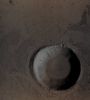
ESP_028321_1785_RED_NOMAP_browse-PCF-LXTT-IPF.jpgUnnamed Crater with "Lava-carved Gullies" (Absolute Natural Colors; credits for the additional process. and color.: Dr Paolo C. Fienga/Lunar Explorer Italia/Italian Planetary Foundation)129 visiteMars Local Time: 15:33 (Middle Afternoon)
Coord. (centered): 1,258° South Lat. and 161,856° East Long.
Spacecraft altitude: 270,3 Km (such as about 168,9 miles)
Original image scale range: 27,0 cm/pixel (with 1 x 1 binning) so objects ~ 81 cm across are resolved
Map projected scale: 25 cm/pixel
Map projection: EQUIRECTANGULAR
Emission Angle: 3,6°
Sun-Mars-MRO (or "Phase") Angle: 51,0°
Solar Incidence Angle: 54° (meaning that the Sun was about 36° above the Local Horizon of the imaged Region, at the time that the picture was taken)
Solar Longitude: 153,3° (Northern Summer- Southern Winter)
Credits: NASA/JPL/University of Arizona
Additional process. and coloring: Lunar Explorer ItaliaMareKromium
(4 voti)
|
|
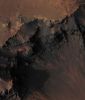
ESP_028962_1645-PCF-LXTT-IPF.jpgFeatures of Coprates Chasma (Absolute Natural Colors; credits for the additional process. and color.: Dr Paolo C. Fienga/Lunar Explorer Italia/Italian Planetary Foundation)104 visiteMars Local Time: 15:39 (Middle Afternoon)
Coord. (centered): 15,450° South Lat. and 303,273° East Long.
Spacecraft altitude: 260,5 Km (such as about 162,8 miles)
Original image scale range: 52,1 cm/pixel (with 2 x 2 binning) so objects ~ 1 mt and 56 cm across are resolved
Map projected scale: 50 cm/pixel
Map projection: EQUIRECTANGULAR
Emission Angle: 5,5°
Phase Angle: 61,5°
Solar Incidence Angle: 56° (meaning that the Sun was about 34° above the Local Horizon of the imaged Region, at the time that the picture was taken)
Solar Longitude: 180,3° (Northern Autumn - Southern Spring)
Credits: NASA/JPL/University of Arizona
Additional process. and coloring: Lunar Explorer ItaliaMareKromium
(4 voti)
|
|
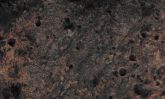
ESP_028367_2085-PCF-LXTT-IPF.jpgClay-rich Bedrock (Absolute Natural Colors; credits for the additional process. and color.: Dr Paolo C. Fienga/Lunar Explorer Italia/Italian Planetary Foundation)87 visiteThis image covers an exposure of Clay-rich Bedrock on the "shore" of the Northern Plains, North of Mawrth Vallis. The relatively bright areas reveal a Complex Terrain with a wide range of textures and colors.MareKromium
(4 voti)
|
|

ESP_027451_2635_RED-PCF-LXTT-IPF.jpgFeatures of the North Polar Regions (Absolute Natural Colors; credits for the additional process. and color.: Dr Paolo C. Fienga/Lunexit Team)102 visiteThere is an Ice-Sheet at the North Pole of Mars that is a few miles thick at its center. At some places (like in this image) it ends in steep Cliffs that can be about 800 meters (2600 feet) high.
The Slopes of these Cliffs are almost vertical, which causes "Slab-like Blocks" of Ice to periodically (and, actually, quite often) break off and crash down onto the Surrounding Plains.
A dense Network of Cracks covers these Icy Cliff faces, thus making it easier for these Blocks to break free. New piles of Debris (located at the base of many of these Cliffs) have appeared in successive HiRISE images, and so the MRO Team shall regularly monitor sites like this in order to check for new Blocks that might have fallen. Understanding how these Cliffs are formed can help Scientists to better understand the "Climatic Record" which are stored in the Ice-Sheet itself.
Mars Local Time: 13:44 (Early Afternoon)
Coord. (centered): 83,618° North Lat. and 119,827° East Long.
Spacecraft altitude: 320,5 Km (such as about 200,3 miles)
Original image scale range: 32,1 cm/pixel (with 1 x 1 binning) so objects ~ 96 cm across are resolved
Map projected scale: 25 cm/pixel
Map projection: POLAR STEREOGRAPHIC
Emission Angle: 0,1°
Sun - Mars - MRO (or "Phase") Angle: 62,8°
Solar Incidence Angle: 63° (meaning that the Sun is about 27° above the Local Horizon)
Solar Longitude: 120,0° (Northern Summer - Southern Winter)
Credits: NASA/JPL/University of Arizona
Additional process. and coloring: Lunar Explorer ItaliaMareKromium
(4 voti)
|
|

PSP_007805_2505-PCF-LXTT-IPF-00.jpgFrost all over Louth Crater (Absolute Natural Colors; credits for the additional process. and color.: Dr Paolo C. Fienga - Lunexit Team)85 visiteThis image shows the changing Seasonal Frost Patterns on Louth Crater, located at about 70° North Latitude, in the Martian Region of Vastitas Borealis. This Crater contains a Mound (---> terrapieno) covered by Water Frost that persists throughout the year (which is an unusual circumstance for this Latitude); however, even the Seasonal Carbon Dioxide (CO2) Frost deposited during the Northern Winter can reach such a Latitude. At the time this image was acquired (such as during the Northern Spring), the Carbon Dioxide Frost was in the process of sublimating back into the Martian Atmosphere. Note that there are Sand Dunes near the edge of the Mound, which become clear of Frost in the Summer.
Mars Local Time: 14:32 (Early Afternoon)
Coord. (centered): 70,228° North Lat. and 103,538° East Long.
Spacecraft altitude: 316,2 Km (such as about 197,6 miles)
Original image scale range: 31,6 cm/pixel (with 1 x 1 binning) so objects ~ 95 cm across are resolved
Map projected scale: 25 cm/pixel
Map projection: POLAR STEREOGRAPHIC
Emission Angle: 1,7°
Sun - Mars - MRO (or "Phase") Angle: 54,7°
Solar Incidence Angle: 56° (meaning that the Sun is about 34° above the Local Horizon)
Solar Longitude: 50,3° (Northern Spring - Southern Autumn)
Credits: NASA/JPL/University of Arizona
Additional process. and coloring: Lunar Explorer ItaliaMareKromium
(4 voti)
|
|
| 2235 immagini su 187 pagina(e) |
|
|
|
|
|
45 | |
|
|
|
|
|
|





