| Piú votate - Mars Reconnaissance Orbiter (MRO) |

ESP_011526_0980_RED_abrowse.jpgMonitor Seasonal Changes at a South Polar Cracked and Gullied Site (Natural Colors; credits: Lunar Explorer Italia)59 visiteMars Local Time: 17:10 (middle afternoon)
Coord. (centered): 81,7° South Lat. and 66,3° East Long.
Spacecraft altitude: 246,5 Km (such as about 154,1 miles)
Original image scale range: 49,3 cm/pixel (with 1 x 1 binning) so objects ~ 1,48 mt across are resolved
Map projected scale: 50 cm/pixel
Map projection: EQUIRECTANGULAR
Emission Angle: 2,6°
Phase Angle: 82,3°
Solar Incidence Angle: 84° (meaning that the Sun is about 6° above the Local Horizon)
Solar Longitude: 189,1° (Northern Autumn)
Credits: NASA/JPL/University of Arizona
Additional process. and coloring: Lunar Explorer ItaliaMareKromium
(5 voti)
|
|

PSP_010460_2500_RED_abrowse.jpgVastitas' Texture (Enhanced Natural Colors; credits: Lunar Explorer Italia)72 visiteMars Local Time: 15:11 (early afternoon)
Coord. (centered): 69,6° North Lat. and 331,4° East Long.
Spacecraft altitude: 314,8 Km (such as about 196,7 miles)
Original image scale range: 63,0 cm/pixel (with 1 x 1 binning) so objects ~ 1,89 mt across are resolved
Map projected scale: 50 cm/pixel
Map projection: EQUIRECTANGULAR
Emission Angle: 0,2°
Phase Angle: 62,8°
Solar Incidence Angle: 63° (meaning that the Sun is about 27° above the Local Horizon)
Solar Longitude: 144,2° (Northern Summer)
Credits: NASA/JPL/University of Arizona
Additional process. and coloring: Lunar Explorer ItaliaMareKromium
(5 voti)
|
|
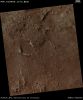
PSP_010409_1575_RED_abrowse.jpgSample of Area in East Thaumasia Planum with Lighter-Toned Rock Outcrops (Natural Colors; credits: Lunar Explorer Italia)64 visiteMars Local Time: 15:43 (middle afternoon)
Coord. (centered): 22,1° South Lat. and 299,0° East Long.
Spacecraft altitude: 253,6 Km (such as about 158,5 miles)
Original image scale range: 25,4 cm/pixel (with 1 x 1 binning) so objects ~ 76 cm across are resolved
Map projected scale: 25 cm/pixel
Map projection: EQUIRECTANGULAR
Emission Angle: 0,4°
Phase Angle: 66,5°
Solar Incidence Angle: 66° (meaning that the Sun is about 24° above the Local Horizon)
Solar Longitude: 142,2° (Northern Summer)
Credits: NASA/JPL/University of Arizona
Additional process. and coloring: Lunar Explorer ItaliaMareKromium
(5 voti)
|
|
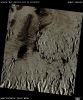
PSP_010425_1975_RED_abrowse.jpgSample of Olympus Mons West Flank (Natural Colors; credits: Lunar Explorer Italia)57 visiteMars Local Time: 15:38 (middle afternoon)
Coord. (centered): 17,3° North Lat. and 217,9° East Long.
Spacecraft altitude: 281,5 Km (such as about 175,9 miles)
Original image scale range: 28,2 cm/pixel (with 1 x 1 binning) so objects ~ 84 cm across are resolved
Map projected scale: 25 cm/pixel
Map projection: EQUIRECTANGULAR
Emission Angle: 7,1°
Phase Angle: 45,3°
Solar Incidence Angle: 52° (meaning that the Sun is about 38° above the Local Horizon)
Solar Longitude: 142,9° (Northern Summer)
Credits: NASA/JPL/University of Arizona
Additional process. and coloring: Lunar Explorer ItaliaMareKromium
(5 voti)
|
|

PSP_010406_2095_RED_abrowse.jpgArabia Terra (Natural Colors; credits: Lunar Explorer Italia)57 visiteMars Local Time: 15:31 (middle afternoon)
Coord. (centered): 29,3° North Lat. and 14,1° East Long.
Spacecraft altitude: 289,1 Km (such as about 180,7 miles)
Original image scale range: 28,9 cm/pixel (with 1 x 1 binning) so objects ~ 87 cm across are resolved
Map projected scale: 25 cm/pixel
Map projection: EQUIRECTANGULAR
Emission Angle: 4,2°
Phase Angle: 54,7°
Solar Incidence Angle: 51° (meaning that the Sun is about 39° above the Local Horizon)
Solar Longitude: 142,1° (Northern Summer)
Credits: NASA/JPL/University of Arizona
Additional process. and coloring: Lunar Explorer ItaliaMareKromium
(5 voti)
|
|

Deimos-HiRISE-090309.jpgDeimos in Natural Colors and HR (credits: NASA/JPL-Caltech and Univ. of Arizona)81 visiteThese color-enhanced views of Deimos, the smaller of the two moons of Mars, result from imaging on Feb. 21, 2009, by the High Resolution Imaging Science Experiment (HiRISE) camera on NASA's Mars Reconnaissance Orbiter.
Deimos has a smooth surface due to a blanket of fragmental rock or regolith, except for the most recent impact craters. It is a dark, reddish object, very similar to Mars' other moon, Phobos. For a comparison, see HiRISE images of Phobos taken on March 23, 2008.
These Deimos images combine HiRISE exposures in Near-InfraRed, Red and Blue-Green wavelengths. In the enhanced color, subtle color variations are visible -- redder in the smoothest areas and less red near the fresh impact craters and over ridges of topographic highs (relative to Deimos' center of gravity). The color variations are probably caused by exposure of surface material to the space environment, which leads to darkening and reddening. Brighter and less-red surface materials have seen less exposure to space due to recent impacts or downslope movement of regolith.
Deimos is about 12 Km (approx. 7,5 miles) in diameter. Its orbital period is 1 day, 6 hours, 17' and 54".
These two images were acquired 5 hours and 35 minutes apart.
The Sun was to the upper left in the first (left) image, and to the right in the second image. The viewing geometry is similar in the two images, but surface features appear very different due to the change in illumination.
With an image scale of about 20 mt (66 feet) per pixel, features 60 mt (197 feet) or larger can be discerned.
These images are products from observations catalogued by the HiRISE team as ESP_012065_9000 and ESP_012068_9000. Other products from these observations are available at http://hirise.lpl.arizona.edu/deimos.php .MareKromium
(5 voti)
|
|

Esp_012065_9000_color.jpgDeimos (possible True Colors; credits: Lunar Explorer Italia)60 visitenessun commentoMareKromium
(5 voti)
|
|
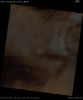
PSP_010420_2505_RED_abrowse.jpgSummer Ice in Vastitas Borealis (Natural Colors; credits: Lunar Explorer Italia)58 visiteMars Local Time: 15:02 (early afternoon)
Coord. (centered): 70,3° North Lat. and 341,4° East Long.
Spacecraft altitude: 317,0 Km (such as about 198,1 miles)
Original image scale range: 31,7 cm/pixel (with 1 x 1 binning) so objects ~ 95 cm across are resolved
Map projected scale: 25 cm/pixel
Map projection: EQUIRECTANGULAR
Emission Angle: 7,3°
Phase Angle: 68,5°
Solar Incidence Angle: 62° (meaning that the Sun is about 28° above the Local Horizon)
Solar Longitude: 142,7° (Northern Summer)
Credits: NASA/JPL/University of Arizona
Additional process. and coloring: Lunar Explorer ItaliaMareKromium
(5 voti)
|
|

ESP_012068_9000_COLOR5.JPGDeimos (Natural - but enhanced - Colors; credits: NASA/JPL/Univ. of Arizona)59 visiteThis second image of Deimos was acquired 5 h. and 35' after the first one; so the Sun was to the upper left in the first (ESP_01265_9000) image and to the right in this second one (ESP_01268_9000). Although the viewing geometry is similar in the two images, surface features appear very different due to the changes in illumination.
Nota Lunexit: il concetto sancito dagli Amici di Pasadena nell'ultima riga (...Although the viewing geometry is similar in the two images, surface features appear very different due to the changes in illumination...) è ASSOLUTAMENTE FONDAMENTALE per la corretta visione, comprensione ed analisi di quanto mostrato da immagini orbitali o, comunque, ottenute da notevoli distanze rispetto al luogo/rilievo osservato. MareKromium
(5 voti)
|
|

PSP_003492_1405_RED_abrowse~0.jpgUnnamed Southern Mid-Latitude Crater with "unusually bright" Gullies (MULTISPECTRUM; credits: Lunexit)58 visiteThis image shows a Southern Mid-Latitude (unnamed) crater: it has bright landslides on its South-East and West walls, some of which have noticeable boulder tracks where boulders rolled down the slopes.
The most noticeable features of this crater are the gullies on the North wall. A couple of small gullies appear to emanate from an overhang.
The others originate at or near layers up-slope.
The layers are sturdy and resistant from erosion: the layers that appear to be decaying into resolvable boulders, instead of particles easily moved by the wind, are evidence of this.MareKromium
(5 voti)
|
|
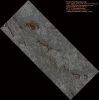
PSP_005095_0935_RED_browse~0.jpgSouth Pole Residual Cap (Swiss-Cheese Terrain Monitoring) - (Natural Colors; credits: Lunar Explorer Italia)57 visitenessun commentoMareKromium
(5 voti)
|
|

ESP_011351_0945_RED_abrowse.jpgFans on Ice (Natural Colors; credits: Lunar Explorer Italia)58 visiteEvery Southern Winter the South Polar Region of Mars is covered with an approximately 1 meter deep layer of frozen CO2 (dry ice). In the Spring, when the Sun begins to warm the surface below the translucent ice, gas flow under the ice carries loose dust from the surface up onto the top.
The dust falls to the surface in "Fans", whose orientation is determined by the direction of the local wind flow. Fans from one source region pointing in multiple directions show how the wind direction has changed. Narrow Fans pointing in just one direction are the most recent. Alternatively, the vent from the surface may have re-annealed, such that these Fans were formed over a very limited time span.
Mars Local Time: 18:19 (sunset - early evening)
Coord. (centered): 85,2° South Lat. and 181,6° East Long.
Spacecraft altitude: 247,4 Km (such as about 154,6 miles)
Original image scale range: 99,0 cm/pixel (with 1 x 1 binning) so objects ~2,97 mt across are resolved
Map projected scale: 1 mt/pixel
Map projection: EQUIRECTANGULAR
Emission Angle: 4,2°
Phase Angle: 86,4°
Solar Incidence Angle: 90° (meaning that the Sun is about 0° on the Local Horizon)
Solar Longitude: 181,2° (Northern Autumn)
Credits: NASA/JPL/University of Arizona
Additional process. and coloring: Lunar Explorer ItaliaMareKromium
(5 voti)
|
|
| 2235 immagini su 187 pagina(e) |
 |
|
|
|
|
35 | |
|
|
|
|





