| Piú votate - Mars Reconnaissance Orbiter (MRO) |

ESP_014083_0945_RED_abrowse-01.jpgActive Geyser on Mars: the "Geysers' Field" (Natural Colors; credits: Dr M. Faccin & Lunexit)70 visitenessun commentoMareKromium
(5 voti)
|
|

ESP_012625_1720_RED_abrowse.jpgSulfate Strata in Ius Chasma (Natural Colors; credits: Lunexit)58 visite...Ed ora, dato che al peggio ed al ridicolo non c'è mai fine, ci aspettiamo che qualcuno trovi una "Scritta", da qualche parte, che indichi questi depositi di Solfati...MareKromium
(5 voti)
|
|

ESP_014077_0930_RED_abrowse.jpgSouth Polar Residual Cap Monitoring (Natural Colors; credits: Lunexit)57 visitenessun commentoMareKromium
(5 voti)
|
|
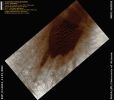
ESP_014041_1145_RED_abrowse.jpgUnusually-looking Dunefield (Natural Colors; credits: Lunexit)61 visitenessun commentoMareKromium
(5 voti)
|
|

ESP_014072_1380_RED_abrowse.jpgStratigraphy exposed in Crater Slope (Natural Colors; credits: Lunexit)56 visitenessun commentoMareKromium
(5 voti)
|
|

ESP_014126_2120_RED_abrowse.jpgNorthern Crater with Windstreak (Natural Colors; credits: Lunexit)59 visitenessun commentoMareKromium
(5 voti)
|
|

ESP_014159_1670_RED_abrowse-00.jpg"Worm-like" Surface Feature in the Southern Highlands (ctx frame - Natural Colors; credits: Lunexit)62 visitenessun commentoMareKromium
(5 voti)
|
|

ESP_013499_1650-0.jpgHusband Hill - Gusev Crater (CTX Frame- Natural Colors; credits: Lunexit)58 visitenessun commentoMareKromium
(5 voti)
|
|
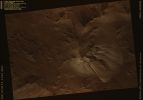
ESP_014153_1430_RED_abrowse.jpgGullies at the Edge of Hale Crater (Natural Colors; credits: Lunexit)58 visiteSeveral years ago, Gullies carved into hill-slopes and the walls of impact craters like the ones pictured here were discovered. Scientists are excited to study these features because, on Earth, they usually form through the action of liquid water - long thought to be absent on the Martian Surface.
Whether Gullies form under today's cold dry conditions is a major question that planetary scientists are trying to answer.
The Gullies pictured here are great examples of what a typical Martian Gully looks like. You can see wide V-shaped channels running downhill (from top to bottom) where the material that carved the Gully flowed. At the bottom of the channel this material empties out onto a fan-shaped mound. Several Gullies are visible here and the fans from each gully overlap one other in complicated ways.
At the tops of the channels, large amphitheater-shaped alcoves are carved in the rock. The material removed from these alcoves likely flowed downhill to the aprons through the Gullies.
Gullies at this site are especially interesting because scientists recently discovered examples at similar locations to be still active. Images separated by several years showed changes in the appearance of some of these Gullies.
Today, planetary scientists are using the HiRISE camera to examine Gullies for ongoing change and investigate what that might mean for the occurrence of liquid water on the Surface of Mars.MareKromium
(5 voti)
|
|
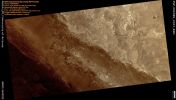
PSP_006989_2025_RED_abrowse.jpgWell-exposed Scarp along Nili Fossae (Natural Colors; credits: Lunexit)58 visitenessun commentoMareKromium
(5 voti)
|
|
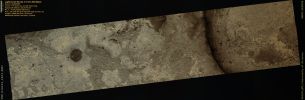
PSP_010222_1815_RED_abrowse.jpgLight-Toned Rock and Dunes in Meridiani Planum (Natural Colors; credits: Lunexit)59 visiteNote Lunexit: in questo frame, un esempio di come il processing in Natural Colors (cioè i colori che percepirebbe un essere umano il quale si trovasse in loco) possa condurre a risultati radicalmente differenti rispetto al processing in (possible) True Colors (frame precedente).
ATTENZIONE: entrambi i processing sono veritieri (nel senso di eseguiti "A Regola d'Arte" e senza alterazioni intenzionali dei dati), eppure i colori che si vedono sono PROFONDAMENTE diversi!
E' - anche - per questo motivo che la diatriba sui "Colori Veri" di un Mondo (un qualsiasi Mondo) è intrinsecamente complessa, contraddittoria e, per certi versi, anche fuorviante - oltre che, a nostro avviso, tendenzialmente infinita...).
Pensateci sopra...MareKromium
(5 voti)
|
|

PSP_001348_1770_RED_abrowse-00.jpgUnusual Crater in Meridiani Planum (Natural Colors; credits: Lunar Explorer Italia)74 visiteQuesto è il context frame dal quale è stato estratto il particolare controverso che potete vedere nella Sezione "X-Mars" (frame "What is THAT???"). La colorizzazione è quanto di più realistico si possa ottenere usando la metodologia Made by Lunexit denominata "MULTISPECTRUM".
In questo frame, oltre al dettaglio che ha "intrigato" tanti Amici Lettori, potete vedere (e BENE) anche un elemento che, di fatto, supporta la nostra idea/ipotesi per cui, (poco) al di sotto della Superficie di Meridiani Planum, vi potrebbe essere un ulteriore ambiente (una sorta di intercapedine) destinato ad ospitare - magari stagionalmente - delle acque correnti e - chissà - forse anche delle Forme Vitali Indigene.
Il bolide che ha scavato questo cratere senza nome, infatti, se ci fate caso, pare aver sfondato l'ambiente-intercapedine il quale, per come appare in questa immagine, potrebbe trovarsi a non più di 8/10 metri al di sotto del Datum (o Altitudine Zero).
Solo "Fantasie"? Staremo a vedere...MareKromium
(5 voti)
|
|
| 2235 immagini su 187 pagina(e) |
 |
|
|
|
|
31 | |
|
|
|
|





