| Piú votate - Mars Reconnaissance Orbiter (MRO) |
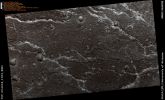
PSP_004018_1505_RED_abrowse.jpgLayers in Columbus Crater (Natural Colors; credits for the additional process. and color.: Dr Paolo C. Fienga - Lunexit Team)84 visiteThis HiRISE image shows bright Layers on the Floor of Columbus Crater, a large Impact Basin in the Southern Highlands of Mars.
The Crater is very old and has gone through much modification. Its Rim is relatively low and the Floor is flat, and it is likely that material has been eroded from the Rim and deposited on the Crater Floor.
The bright stripes that appear in this image at low resolution are likely Sedimentary Deposits. This bright material also includes dark patches which may be embedded within it, or the dark material could be covering the light one. The small-scale topography is rugged, likely an erosional characteristic of the dark material which covers much of the Surface.
Bright materials like those visible here are found in many places on Mars. In this case, it is likely that they are part of the Sediments that have filled the Basin, but it is not certain how they were deposited.
In many places, bright Sediments exhibit fine horizontal banding, suggesting that they were once part of more extensive, flat-lying Layers of rock. In the bright materials here, Layering is rare and the original geometry somewhat more obscure. Impact Craters in the scene have excavated the Dark Surface, but in several cases this has neither exposed layering nor bright material.MareKromium
(1 voti)
|
|
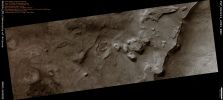
PSP_003231_2095_RED_abrowse-00.jpgRocky Mesas in Nilosyrtis Mensae (CTX Frame - Absolute Natural Colors; credits for the additional process. and color.: Dr Paolo C. Fienga - Lunexit Team)125 visiteMareKromium
(1 voti)
|
|

PSP_003231_2095_RED_abrowse-01.jpgRocky Mesas in Nilosyrtis Mensae (EDM - Absolute Natural Colors; credits for the additional process. and color.: Dr Paolo C. Fienga - Lunexit Team)107 visiteMareKromium
(1 voti)
|
|

ESP_019151_1385_RED_abrowse-01.jpgUnnamed Shallow Craters in Northern Argyre Planitia (EDM n.1 - Absolute Natural Colors; credits for the additional process. and color.: Dr Marco Faccin - Lunexit Team)91 visitenessun commento
MareKromium
(1 voti)
|
|
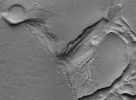
ESP_019570_2240-MF-LXTT-1.jpgPits and Fractures in Deuteronilus Mensae (EDM; credits for the additional process. and color.: Elisabetta Bonora - Lunexit Team) 113 visiteAcquisition Date: 29 September 2010
Mars Local Time (M.L.T.): 15:31 (middle afternoon)
Latitude (centered): 43,8° North
Longitude (East): 25,2°
Range to Target Site: 310 km (such as 193,7 miles)
Original image scale range: 31 cm/pixel (with 1 x 1 binning) so objects ~93 cm across are resolved
Map Projected Scale: 25 cm/pixel
Map projection: EQUIRECTANGULAR
Emission Angle: 14,4°
Phase Angle: 43,0°
Solar Incidence Angle (S.I.A.): 57°, with the Sun about 33° above the Local Horizon
Solar longitude: 156° (Northern Summer)MareKromium
(1 voti)
|
|

ESP_019570_2240-MF-LXTT-2.jpgPits and Fractures in Deuteronilus Mensae (Image-Mosaic; credits for the additional process. and color.: Elisabetta Bonora - Lunexit Team) 111 visitenessun commentoMareKromium
(1 voti)
|
|

ESP_019570_2240-MF-PCF-LXTT-1.jpgPits and Fractures in Deuteronilus Mensae (Absolute Natural Colors; credits for the additional process. and color.: Dr Paolo C. Fienga - Lunexit Team) 104 visiteAcquisition Date: 29 September 2010
Mars Local Time (M.L.T.): 15:31 (middle afternoon)
Latitude (centered): 43,8° North
Longitude (East): 25,2°
Range to Target Site: 310 km (such as 193,7 miles)
Original image scale range: 31 cm/pixel (with 1 x 1 binning) so objects ~93 cm across are resolved
Map Projected Scale: 25 cm/pixel
Map projection: EQUIRECTANGULAR
Emission Angle: 14,4°
Phase Angle: 43,0°
Solar Incidence Angle (S.I.A.): 57°, with the Sun about 33° above the Local Horizon
Solar longitude: 156° (Northern Summer)MareKromium
(1 voti)
|
|

ESP_020077_1915_RED_abrowse-00.jpgRelatively fresh "Lunar-like" Unnamed Crater (Absolute Natural Colors; credits for the additional process. and color.: Dr Paolo C. Fienga - Lunexit Team)86 visitenessun commentoMareKromium
(1 voti)
|
|

PSP_004052_2045_RED_abrowse-00.jpgUnnamed Crater with Layers near Mawrth Vallis (Absolute Natural Colors; credits for the additional process. and color.: Dr Paolo C. Fienga - Lunexit Team)89 visitenessun commentoMareKromium
(1 voti)
|
|
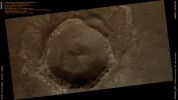
ESP_020086_2020_RED_abrowse-00.jpgUnnamed Crater with Light-toned Layered Bedrock (Absolute Natural Colors; credits for the additional process. and color.: Dr Paolo C. Fienga - Lunexit Team)81 visitenessun commentoMareKromium
(1 voti)
|
|
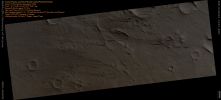
ESP_016916_1655_RED_abrowse-00.jpgLinear Dunes and Sand Sheets inside Herschel Crater (Natural Colors; credits for the additional process. and color.: Dr Paolo C. Fienga - Lunexit Team)109 visitenessun commentoMareKromium
(1 voti)
|
|
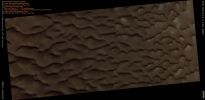
PSP_003141_1330_RED_abrowse-00-PCF-LXTT.jpgThe Dunes of Kaiser Crater (CTX Frame - Natural Colors; credits for the additional process. and color.: Dr Paolo C. Fienga - Lunexit Team)112 visiteCaption NASA:"Image PSP_003141_1330 shows a Sand Dunefield in Kaiser Crater, a 210 Km (such as about 130 miles) wide Impact Basin in the Hellespontus Region of Mars.Winds have trapped massive quantities of Sand on the Floors of broad Craters in this Region.
The steepest slopes on each Dune, such as the Slip-Faces, point to the East indicating that the dominant wind direction in this part of the Dunefield is from West to East. Patches of seasonal frost can be seen in the low areas between the Dunes".
Nota Lunexit: noi non crediamo che che le aree ad albedo più elevata (e che appaiono di un bel color bianco/argento nel frame colorizzato) le quali sono chiaramente individuabili fra le dune sìano, come dice la NASA, "chiazze di brine ghiacciate".
O meglio: può darsi che esse lo sìano, così come è pure plausibile che si tratti di sabbie cristalline (ne abbiamo già incontrate nei Campi di Dune) o di porzioni di suolo libere dalle sabbie (e che magari evidenziano il "Martian Paving"...) MareKromium
(1 voti)
|
|
| 2235 immagini su 187 pagina(e) |
 |
|
|
|
|
178 | |
|
|
|
|





