| Piú votate - Mars Reconnaissance Orbiter (MRO) |
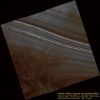
North_Polar_Layers-PSP_001332_2620_RED.jpgUnconformity in the North Polar Layered Deposits (Absolute Natural Colors; credits for the additional process. and color.: Dr Paolo C. Fienga - Lunexit Team)68 visitenessun commentoMareKromium
(1 voti)
|
|
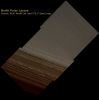
North_Polar_Layers-Tra_000825_2665_red.jpgNorth Polar Layered Deposits (Absolute Natural Colors; credits for the additional process. and color.: Dr Paolo C. Fienga - Lunexit Team:)66 visitenessun commentoMareKromium
(1 voti)
|
|
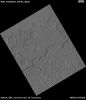
PSP_004000_0945_RED_abrowse-00.jpgChangings... (CTX Frame - credits: NASA/JPL/University of Arizona)91 visiteHiRISE is monitoring the Residual Carbon Dioxide Cap on (or near) the South Pole of Mars to see how it changes over time.
Some of this Terrain contains many Pits, earning it the nickname "Swiss Cheese Terrain". One of our monitoring spots is over what looks like a deranged "Happy Face". If you look closely, you'll see many changes since the first HiRISE image, PSP_004000_0945, was acquired in 2007. The news is that the Pits have grown larger. When this Pit growth was first discovered, it was suggested to be an indication of climate change on Mars. However, we now suspect that the CO2 that sublimates from the Pit Walls recondenses on the nearby surfaces, so there is no net change in the total amount of frozen CO2.
Acquisition date: December, 30th, 2010
Mars Local Time (M.L.T.): 18:03 (Late Afternoon)
Latitude (centered): 85,7° South
Longitude (East): 6,5°
Spacecraft Altitude (or Range to Target Site): 247,6 km (154,8 miles)
Original image scale range: 24,8 cm/pixel (with 1 x 1 binning) so objects ~74 cm across are resolved
Map Projected Scale: 25 cm/pixel
Map Projection: POLAR STEREOGRAPHIC
Emission Angle: 0,2°
Phase Angle: 78,9°
Solar Incidence Angle: 79° (with the Sun about 11° above the Local Horizon)
Solar Longitude: 207,7° (Northern Autumn)MareKromium
(1 voti)
|
|
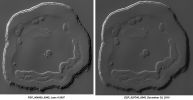
PSP_004000_0945_RED_abrowse-01.jpgChangings... (EDM - credits: NASA/JPL/University of Arizona)96 visitenessun commentoMareKromium
(1 voti)
|
|

PSP_003063_2050_red.jpgProposed MSL Landing Site in Mawrth Vallis (Natural Colors; credits for the additional process. and color.: Dr Paolo C. Fienga - Lunexit Team) 150 visitenessun commentoMareKromium
(1 voti)
|
|

PSP_003086_2015_red-PCF-LXTT.jpgProposed MSL Landing Site in Nili Fossae (Natural Colors; credits for the additional process. and color.: Dr Paolo C. Fienga - Lunexit Team) 134 visitenessun commentoMareKromium
(1 voti)
|
|
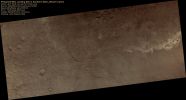
PSP_003972_1305_RED_browse-PCF-LXTT.jpgProposed MSL Landing Site in an Unnamed Southern Crater (Natural Colors; credits for the additional process. and color.: Dr Paolo C. Fienga - Lunexit Team) 93 visitenessun commentoMareKromium
(1 voti)
|
|

PSP_004052_2045_RED_abrowse-02-PIA13726.jpgUnnamed Crater with Layers near Mawrth Vallis (Enhanced Natural Colors; credits: NASA/JPL-Caltech/University of Arizona)111 visiteThis image covers part of an Unnamed Impact Crater roughly 4 Km (approx. 2,5 miles) in diameter; the upper portion of the picture shows a one Km segment of the Crater's Inner Wall and Rim.
The Surface outside the Crater is relatively dark, while the Inner Wall of the Crater exposes lighter, Layered Bedrock of diverse colors. A few dark patches on the Crater Wall have small Dunes or Ripples on their surfaces, and are likely Pits filled with Dark Sand. This Crater provides a window into the Sub-Surface of Mars, revealing Layered Sedimentary Deposits.
Just about 30 Km (approx. 18,6 miles) to the East of this Crater lies Mawrth Vallis, an ancient Channel that may have been carved by catastrophic Floods.
In Layered Deposits surrounding Mawrth Vallis, the orbiting spectrometers OMEGA (on Mars Express) and CRISM (on MRO) have detected Phyllosilicate (such as Clay) minerals, which must have formed in the presence of water.
In this Region on Mars, the colors of the Layers seen by HiRISE often correlate with distinct water-bearing minerals observed by CRISM, so the color diversity seen here may reflect a dynamic environment at this location on early Mars.
Note: the color in these images is enhanced; it is not as it would normally appear to the human eye.MareKromium
(1 voti)
|
|
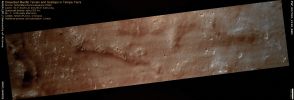
PSP_007930_2310_RED_abrowse-PCF-LXTT.jpgFeatures of Tempe Terra (Absolute Natural Colors; credits for the additional process. and color.: Dr Paolo C. Fienga - Lunexit Team)76 visitenessun commentoMareKromium
(1 voti)
|
|

ESP_020061_1720_RED_abrowse-PCF-LXTT.jpgBright and Dark Plains (Absolute Natural Colors; additional process. and color.: Dr Paolo C. Fienga - Lunexit Team)125 visiteThis HiRISE image shows a mixture of bright and dark Terrain along the plains just West of Ganges Chasma.
The concentration of these bright patches adjacent to an old Impact Crater suggests that the bright patches could represent Ejecta from when the crater formed.
This would be an interesting discovery because it would mean that a different unit underlies the Surface we now see. Alternatively, much of the Plains in this Region seem to have a dark surficial cover (probably aeolian debris). Where this darker debris has been removed by the wind, the underlying brighter substrate would be exposed.
Mineralogic information from the CRISM instrument would be very useful for determining if the bright patches contain minerals indicative of water - such as Clays - or if they are Basalts (produced from Volcanic Eruptions).MareKromium
(1 voti)
|
|
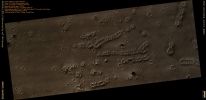
PSP_003494_2075_RED_abrowse.jpgCrater Cluster with Cones and Ridges in Utopia Planitia (Natural Colors; credits for the additional process. and color.: Dr Paolo C. Fienga - Lunexit Team)117 visiteThis image shows Cratered Cones in Utopia Planitia. Cones with Summit Craters join together in places to form Ridges up to several kilometers long, with Troughs running along the Summit.
In many of these cases it is evident that the Ridge Systems formed by merging of multiple Cones, since the arcs of individual Cones can be distinguished.
These features are probably formed by eruption of Subsurface material-Mud or Lava. Lava can form Cinder or Spatter Cones, and eruptions from localized sources along a single Fissure could produce the Ridges.
The absence of obvious (---> evidenti) Lava Flows near the Cones may argue against this mechanism, but ascending Lava could have interacted with Subsurface Water or Ice, leading to a more explosive eruption.
An alternative is eruptions of pressurized Mud from depth ("Mud Volcanism"), a process which occurs in certain environments on Earth.
This observation has a few minor gaps where transmission errors caused data to be lost. These appear as narrow black bars.MareKromium
(1 voti)
|
|

PSP_004052_2045_RED_abrowse-01.jpgUnnamed Crater with Layers near Mawrth Vallis (EDM - Absolute Natural Colors; credits for the additional process. and color.: Dr Paolo C. Fienga - Lunexit Team)102 visitenessun commentoMareKromium
(1 voti)
|
|
| 2235 immagini su 187 pagina(e) |
 |
|
|
|
|
177 | |
|
|
|
|





