| Piú votate - Mars Reconnaissance Orbiter (MRO) |
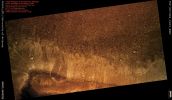
PSP_007492_2265_RED_abrowse-PCF-LXTT.jpgPolygons in Deuteronilus Mensae (Enhanced Absolute Natural Colors; credits for the additional process. and color.: Dr Paolo C. Fienga - Lunexit Team)317 visiteThis image reveals hexagonal and polygonal patterns formed by networks of soil troughs on the floor of a valley in the Deuteronilus Mensae Region, located on the Northern edge of Arabia Terra and borders the Martian Southern Highlands and Northern Lowlands.
The polygonal patterns indicate that the surface has undergone stress, potentially caused by subsidence (sinking), desiccation (drying out), or thermal contraction. These polygon features are similar to permafrost thermal-contraction polygons that form in Polar and High Alpine Regions on Earth by seasonal-to-annual contraction of the subsoil. On Earth, such polygon features are indicative of the presence of ground ice and are commonly referred to as “patterned ground”. The patterns are the result of thermal contraction in ice-cemented soil or permafrost that forms a honeycomb network of small fractures below the surface.
The network of fractures is eventually manifested as shallow troughs at the surface, forming the hexagonal and polygonal patterns visible in this image.
The polygons in this scene average approx. 100 meters (110 yards) in size and appear to be higher in elevation in the center than in the surrounding troughs. Boulders are accumulated in the center of the polygons and dunes are visible in several of the troughs.
The landforms we observe here most likely indicate that ice-rich permafrost is present or has been present in the past.MareKromium
(1 voti)
|
|

PSP_002291_1335_red-PCF-LXTT~0.jpgGullies in Terra Sirenum (Natural Colors; credits for the additional process. and color.: Dr Paolo C. Fienga - Lunexit Team)250 visitenessun commentoMareKromium
(1 voti)
|
|
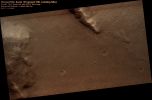
PSP_002193_1670_red-PCF-LXTT.jpgFeatures of Margaritifer Terra (Natural Colors; credits for the additional process. and color.: Dr Paolo C. Fienga - Lunexit Team)316 visitenessun commentoMareKromium
(1 voti)
|
|
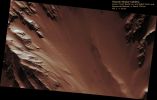
PSP_002169_1940_red-PCF-LXTT.jpgTharsis Tholus Caldera (Enhanced Natural Colors; credits for the additional process. and color.: Dr Paolo C. Fienga - Lunexit Team)302 visitenessun commentoMareKromium
(1 voti)
|
|
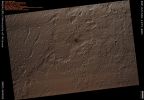
ESP_021566_1975_RED_abrowse-PCF-LXTT.jpgFresh Impact Site (Natural Colors; credits for the additional process. and color.: Dr Paolo C. Fienga - Lunexit Team)302 visitenessun commentoMareKromium
(1 voti)
|
|
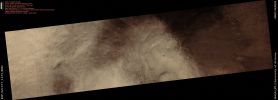
ESP_021577_1375_RED_abrowse-PCF-LXTT.jpgKnob in Argyre Planitia (Absolute Natural Colors; credits for the additional process. and color.: Dr Paolo C. Fienga - Lunexit Team)309 visitenessun commentoMareKromium
(1 voti)
|
|

South_Pole-PIA13985.jpgCross-Section of buried Carbon-Dioxide (CO2) Ice on Mars271 visiteCaption NASA:"This cross-section view of underground layers near Mars' South Pole is a radargram based on data from the Shallow Subsurface Radar (SHARAD) instrument on NASA's Mars Reconnaissance Orbiter. Researchers interpret the zone that is nearly free of radio-wave reflections (hence dark in the radargram) to be composed of frozen Carbon Dioxide, or "dry ice."
The newly found deposit of dry ice contains enough CO2 to dramatically increase the total amount of Atmosphere on Mars when it will vaporize, as climate models suggest it does at times when the Planet's Tilt increases. Mars' current Atmosphere is about 95% Carbon Dioxide, and this deposit contains up to about 80% as much Carbon Dioxide as the Atmosphere does.
This cross-section covers a transect about 330 Km (approx. 205 miles) long in a Region from about 86° to 87° South Latitude and 280° to 10° East Longitude. The vertical dimension of the graphic is time delay of the radar echoes. The depth of the tallest portion of the cross-section corresponds to about 20 microseconds difference in time delay, which can be converted to roughly 1,7 Km (a little more than 1 mile).
(SHARAD was provided by the Italian Space Agency. Its operations are led by Sapienza University of Rome, and its data are analyzed by a joint U.S.-Italian science team. NASA's Jet Propulsion Laboratory, a division of the California Institute of Technology in Pasadena, manages the Mars Reconnaissance Orbiter for the NASA Science Mission Directorate, Washington. Lockheed Martin Space Systems, Denver, built the Spacecraft)MareKromium
(1 voti)
|
|
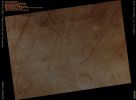
ESP_021862_1175_RED_abrowse.jpgSouthern Boulderfield (Natural Colors; credits for the additional process. and color.: Dr Paolo C. Fienga - Lunexit Team)216 visitenessun commentoMareKromium
(1 voti)
|
|
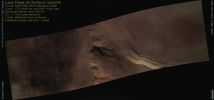
PSP_007959_1980_RED_abrowse-PCF-LXTT.jpgThe Beautiful Colors of Olympus Mons' Summit (Absolute Natural Colors; credits for the additional process. and color.: Dr Paolo C. Fienga - Lunexit Team)258 visiteOlympus Mons, the largest Volcano in the Solar System, has a large depression at its top. This depression, called “Caldera” by geologists, is caused by the collapse of the top of the Volcano as magma is drained out from an underground Holding Chamber.
Previous studies have demonstrated multiple collapses, indicating that there were Holding Chambers in slightly different locations within the Volcano that emptied at various times.
This HiRISE image examines the walls of one such collapse which exposes the Layers of rock within the uppermost part of Olympus Mons.
In the sections not covered by Dust, hundreds of thin discontinuous Layers are visible. The thicknesses and widths of these Layers are similar to those of the Lava Flows seen on the Surface of Olympus Mons. This confirms the assumption that the Volcano is built up of many thousands of similar Lava Flows.
There is also at least one Layer cutting diagonally across the stack of Lava Flows. This is an intrusion of magma, most likely a feeder to some of the uppermost Lava Flows. However, this HiRISE image indicates that such intrusions make up only a minor part of the upper section of the Volcano.MareKromium
(1 voti)
|
|

PSP_007946_2035_RED_abrowse-PCF-LXTT.jpgOlympus' Lava (Absolute Natural Colors; credits for the additional process. and color.: Dr Paolo C. Fienga - Lunexit Team)167 visitenessun commentoMareKromium
(1 voti)
|
|

PSP_006679_1680_RED_abrowse-PCF-LXTT.jpgLayered Features in Noctis Labyrinthus (Absolute Natural Colors; credits for the additional process. and color.: Dr Paolo C. Fienga - Lunexit Team)252 visitenessun commentoMareKromium
(1 voti)
|
|

ESP_021569_1650_RED_abrowse-PCF-LXTT-2.jpgOver the Columbia Hills (Enhanced Natural Colors; credits: Dr Paolo C. Fienga - Lunexit Team)196 visiteAcquisition date: 04 March 2011
Mars Local Time (M.L.T.): 15:11 (Early Afternoon)
Latitude (centered): 14,6° South
Longitude (East): 175,6°
Spacecraft Altitude: approx. 264 Km (163,944 miles)
Original Image Scale Range: 26,4 cm/pixel (with 1 x 1 binning) so objects ~79 cm across are resolved
Map Projected Scale: 25 cm/pixel and North is up
Map Projection: EQUIRECTANGULAR
Emission Angle: 2,9°
Sun-Surface-Spacecraft Angle (i.e.: Phase Angle): 48,7°
Solar Incidence Angle (S.I.A.): 46°, with the Sun about 44° above the Local Horizon
Solar Longitude: 247,7° - Northern AutumnMareKromium
(1 voti)
|
|
| 2235 immagini su 187 pagina(e) |
 |
|
|
|
|
173 | |
|
|
|
|





