| Piú votate - Mars Reconnaissance Orbiter (MRO) |

ESP_023492_0885_RED_abrowse-PCF-LXTT.jpgSouth Polar Features: Residual Cap (Absolute Natural Colors; credits for the additional process. and color.: Dr Paolo C. Fienga - Lunexit Team)113 visiteMars Local Time: 20:36 (early evening hours)
Coord. (centered): 88,5° South Lat. and 337,3° East Long.
Spacecraft altitude: 255,6 Km (such as about 159,8 miles)
Original image scale range: 51,1 cm/pixel (with 2 x 2 binning) so objects ~ 1 mt and 53 cm across are resolved
Map projected scale: 50 cm/pixel
Map projection: POLAR STEREOGRAPHIC
Emission Angle: 17,3°
Sun-Mars-Spacecraft (or "Phase") Angle: 90,9°
Solar Incidence Angle: 82° (meaning that the Sun is about 8° above the Local Horizon)
Solar Longitude: 337,4° (Northern Winter)
Credits: NASA/JPL/University of Arizona
Additional process. and coloring: Dr Paolo C. Fienga - Lunar Explorer ItaliaMareKromium
(1 voti)
|
|
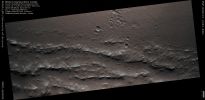
PSP_008197_2045_RED_abrowse.jpgFeatures of Olympus Mons' Aureole (Absolute Natural Colors; credits for the additional process. and color: Dr Paolo C. Fienga - Lunexit Team)121 visitenessun commentoMareKromium
(1 voti)
|
|
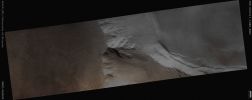
Psp_009317_1980_red~0.jpgPortion of the Southern Wall of Olympus Mons Caldera (Absolute Natural Colors; credits for the additional process. and color: Dr Paolo C. Fienga - Lunexit Team)135 visiteMars Local Time: 15:21 (early afternoon)
Coord. (centered): 17,8° North Lat. and 226,6° East Long.
Spacecraft altitude: 259,3 Km (such as about 162,1 miles)
Original image scale range: 51,9 cm/pixel (with 1 x 1 binning) so objects ~1,56 mt across are resolved
Map projected scale: 50 cm/pixel
Map projection: EQUIRECTANGULAR
Emission Angle: 3,3°
Phase Angle: 50,1°
Solar Incidence Angle: 47° (meaning that the Sun is about 43° above the Local Horizon)
Solar Longitude: 102,1° (Northern Summer)
Credits: NASA/JPL/University of Arizona
Additional process. and coloring: Dr Paolo C. Fienga - Lunar Explorer Italia MareKromium
(1 voti)
|
|

PSP_002542_1080_red-1.jpgDefrosting Dunefield (Absolute Natural Colors; credits for the additional process. and color.: Dr Paolo C. Fienga - Lunexit Team)108 visiteThis image is a close-up view of defrosting patterns on the Dunes located at the bottom of Richardson Crater. The Frost is a combination of frozen CO2 and some water ice that covers the Dunes in the Winter and Spring. As the seasonal Frost sublimes away, odd features such as Spots, Fans and Streaks form. Small Dark Streaks on the Dune "Slip-Face" Slopes may be where recent avalanches of sand, or perhaps wind, has moved the dark sand underlying the Frost, or where frost has been removed to expose the sand. Alternatively, the Dark Streaks may be patches of coarse-grained ice that are clear enough so that the dark material below the ice is visible. The Slip-Faces indicate that the general direction of sand transport is (meaning the that the Dominant Winds blow) from the right to the left across the image.
It has been hypothesized that the Dark Spots and Fans may be "Geysers" or "Cold Gas Jets" that form when sublimation processes trap gas at the bottom of the ice. The gas is released through cracks in the ice, entraining Dust from below the ice and scattering it onto the Surface to form the Dark Spots and Fans. The high resolution, stereo, and low light imaging capabilities of HiRISE has provided new insight into the processes that form these features. Repeated imaging in a variety of locations will provide a record of their development and evolution. MareKromium
(1 voti)
|
|
ESP_021527_1960_RED_abrowse-01-PCF-LXTT.jpgFeatures of Tharsis (EDM - Absolute Natural Colors; credits for the additional process. and color: Dr Paolo C. Fienga - Lunexit Team)190 visitenessun commentoMareKromium
(1 voti)
|
|
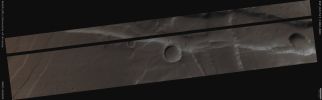
ESP_021527_1960_RED_abrowse-00-PCF-LXTT.jpgFeatures of Tharsis (CTX Frame - Absolute Natural Colors; credits for the additional process. and color: Dr Paolo C. Fienga - Lunexit Team)176 visiteMars Local Time: 15:06 (Early Afternoon)
Coord. (centered): 15,8° North Lat. and 238,2° East Long.
Spacecraft altitude: 275,1 Km (such as about 171,9 miles)
Original image scale range: 55 cm/pixel (with 2 x 2 binning) so objects ~1 mt and 65 cm across are resolved
Map projected scale: 50 cm/pixel
Map projection: EQUIRECTANGULAR
Emission Angle: 6,2°
Sun-Mars-Spacecraft (or "Phase") Angle: 65,2°
Solar Incidence Angle: 60° (meaning that the Sun is about 30° above the Local Horizon)
Solar Longitude: 245,6° (Northern Fall)
Credits: NASA/JPL/University of Arizona
Additional process. and coloring: Dr Paolo C. Fienga - Lunar Explorer ItaliaMareKromium
(1 voti)
|
|
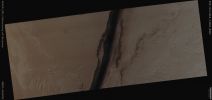
ESP_021464_1900_RED_abrowse-PCF-LXTT-00.jpgFissure in Cerberus Fossae (CTX Frame - Absolute Natural Colors; credits for the additional process. and color.: Dr Paolo C. Fienga - Lunar Explorer Italia)178 visiteMars Local Time: 15:05 (Early Afternoon)
Coord. (centered): 10,1° North Lat. and 157,6° East Long.
Spacecraft altitude: 295,6 Km (such as about 184,7 miles)
Original image scale range: 29,6 cm/pixel (with 1 x 1 binning) so objects ~89 cm across are resolved
Map projected scale: 25 cm/pixel
Map projection: EQUIRECTANGULAR
Emission Angle: 21,2°
Sun-Mars-Spacecraft (or "Phase") Angle: 74,9°
Solar Incidence Angle: 56° (meaning that the Sun is about 34° above the Local Horizon)
Solar Longitude: 242,5° (Northern Fall)
Credits: NASA/JPL/University of Arizona
Additional process. and coloring: Dr Paolo C. Fienga - Lunar Explorer ItaliaMareKromium
(1 voti)
|
|
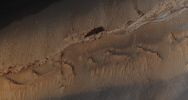
ESP_021464_1900_RED_abrowse-PCF-LXTT-01.jpgFissure in Cerberus Fossae (EDM - Absolute Natural Colors; credits for the additional process. and color.: Dr Paolo C. Fienga - Lunar Explorer Italia)194 visitenessun commentoMareKromium
(1 voti)
|
|

PSP_005160_1150_RED_abrowse-PCF-LXTT-01.jpgGullies in Mantle Terrain in Sisyphi Planum (EDM - Absolute Natural Colors; credits for the additional process. and color.: Dr Paolo C. Fienga - Lunexit Team) 223 visiteCaption NASA:"This EDM shows the Boundary between one of the Alcoves and the surrounding Mantled Terrain. Numerous Fissures arranged forming Polygons some 3 to 10 meters (3,3 to 11 yards) across are visible in the image. These are similar to features found in Terrestrial Periglacial Regions such as Antarctica, where ice is present at or near the Surface. Antarctica's Polygons form by repeated expansion and contraction of the soil-ice mixture due to seasonal temperature oscillations; this results in Polygonal Networks of Stress Fractures".MareKromium
(1 voti)
|
|

ESP_022999_1335_RED_abrowse-PCF-LXTT-00.jpgUnnamed Crater with Gullies (CTX Frame - Absolute Natural Colors; credits for the additional process. and color.: Dr Paolo C . Fienga - Lunar Explorer Italia)312 visitenessun commentoMareKromium
(1 voti)
|
|
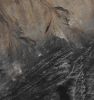
ESP_022999_1335_RED_abrowse-PCF-LXTT-01.jpgUnnamed Crater with Gullies (EDM - Absolute Natural Colors; credits for the additional process. and color.: Dr Paolo C . Fienga - Lunar Explorer Italia)241 visitenessun commentoMareKromium
(1 voti)
|
|

ESP_022593_1595_RED_abrowse-PCF-LXTT.jpgBright Southern Dunes (Absolute Natural Colors; credits for the additional process. and color.: Dr Paolo C. Fienga - Lunexit Team)123 visitenessun commentoMareKromium
(1 voti)
|
|
| 2235 immagini su 187 pagina(e) |
 |
|
|
|
|
169 | |
|
|
|
|





