| Piú votate - Mars Reconnaissance Orbiter (MRO) |

ESP_011792_0980_RED_abrowse.jpgFans and Polygons (Natural Colors; credits: Lunar Explorer Italia)56 visitenessun commentoMareKromium
(2 voti)
|
|
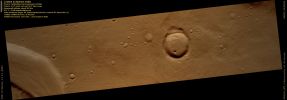
PSP_010630_2115_RED_abrowse-00.jpgCraters and possible "Pingo" in Mamers Vallis (ctx frame - Natural Colors; credits: Lunar Explorer Italia)67 visiteThis image was suggested by Mr. Dennis Mitchell's 8th grade NASA team, Evergreen Middle School, Cottonwood, CA, as part of the HiRISE Quest Student Image Challenge.
They write: "Located near Mamers Valles, this image shows numerous fluvial features that indicate this area was once rich with water. The lineated valley fill suggests an ice-rich soil. [Of particular interest] is a small cone-like feature [located on the floor of a 2 Km-diameter] impact crater in the center of the ctx frame.MareKromium
(2 voti)
|
|

ESP_011775_2230_RED_abrowse.jpgDome and Crater (Natural Colors; credits: Lunar Explorer Italia)57 visitenessun commentoMareKromium
(2 voti)
|
|

ESP_012252_1245_RED_abrowse.jpgDust Devils Tracks (Natural Colors; credits: Lunar Explorer Italia)77 visiteThis image is located in a crater in the Hellespontus region that displays dunes and dust devil tracks.
The larger barchan-like dunes are surrounded by linear ripples and dark coarse material. The dunes are composed of basaltic sands that have accumulated in the troughs of the dunes. The dunes themselves run in a northeast to southwest direction. The steep west facing slip face indicates that the dune is controlled by a southeasterly direction and that the winds here tend to blow from left to right.
Both the sandy and rough textured surfaces are crisscrossed by the tracks of dust devils. These tracks form when dust devils abrade the surface exposing the underlying darker surface. The tracks appear to be clustered since dust devils frequently form in areas that have been previously scoured. The lighter tracks are older tracks that are fading or have been overprinted by other dust devils.
It is possible that the dunes are stable as many of the dust devils appear to be going to the southeast direction (based on scallop patterns- dust devil leaves behind dark circular patterns and erase the frost as it moves forward by local winds). This is an indication of change of wind especially since the dune field is in a crater.
MareKromium
(2 voti)
|
|

ESP_011711_0930_RED_abrowse.jpgSouth Polar Spiders (Natural Colors; credits: Lunar Explorer Italia)58 visitenessun commentoMareKromium
(2 voti)
|
|

ESP_011633_1195_RED_abrowse.jpgDunes (Natural Colors; credits: Lunar Explorer Italia)60 visitenessun commentoMareKromium
(2 voti)
|
|
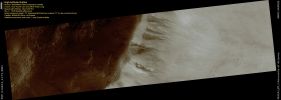
PSP_010833_1275_RED_abrowse.jpgHigh-Latitude Gullies (Natural Colors; credits: Lunar Explorer Italia)71 visitenessun commentoMareKromium
(2 voti)
|
|
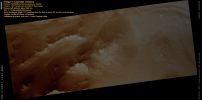
PSP_010857_1650_RED_abrowse.jpgRidge in Coprates Chasma (Natural Colors; credits: Lunar Explorer Italia)76 visitenessun commentoMareKromium
(2 voti)
|
|
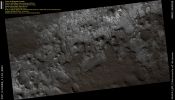
PSP_010888_1510_RED_abrowse.jpgClays and other "Hydrated Materials" in Sirenum Fossae Region (Natural Colors; credits: Lunar Explorer Italia)81 visitenessun commentoMareKromium
(2 voti)
|
|
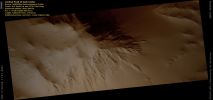
PSP_010428_1745_RED_abrowse.jpgThe Central Peak of Gale Crater (Natural Colors; credits: Lunar Explorer Italia)71 visitenessun commentoMareKromium
(2 voti)
|
|
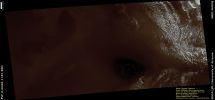
PSP_010449_1745_RED_abrowse.jpgPossible Hematite Deposits in West Candor Chasma (Natural Colors; credits: Lunar Explorer Italia)70 visitenessun commentoMareKromium
(2 voti)
|
|
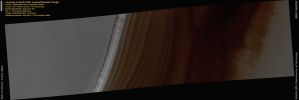
PSP_010525_2595_RED_abrowse.jpgLayering in North Polar Layered Deposit Trough (Natural Colors; credits: Lunar Explorer Italia)86 visitenessun commentoMareKromium
(2 voti)
|
|
| 2235 immagini su 187 pagina(e) |
 |
|
|
|
|
156 | |
|
|
|
|





