| Piú votate - Mars Reconnaissance Orbiter (MRO) |

ESP_019181_2655_RED_abrowse.jpgNorth Polar Boundary (Absolute Natural Colors; credits for the additional process. and color.: Dr Paolo C. Fienga - Lunexit Team:)78 visitenessun commentoMareKromium
(2 voti)
|
|

ESP_019188_2595_RED_abrowse.jpgNorth Presso-Polar Layers (Absolute Natural Colors; credits for the additional process. and color.: Dr Paolo C. Fienga - Lunexit Team:)77 visitenessun commentoMareKromium
(2 voti)
|
|

ESP_019193_2665_RED_abrowse.jpgExposed NPLD (Absolute Natural Colors; credits for the additional process. and color.: Dr Paolo C. Fienga - Lunexit Team)63 visitenessun commentoMareKromium
(2 voti)
|
|
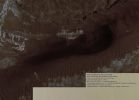
PSP_004026_1765_RED_abrowse-10-MF-PCF-LXTT.jpgVery strange "Dark Spot" in Aureum Chaos (EDM - RAW Natural Colors; credits for the additional process. and color.: Drr Marco Faccin and Paolo C. Fienga - Lunexit Team) 70 visitenessun commentoMareKromium
(2 voti)
|
|
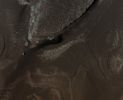
PSP_004026_1765-3-GB-PCF-LXTT.jpgVery strange "Dark Spot" in Aureum Chaos (EDM - Absolute Natural Colors; credits for the additional process. and color.: Dr Paolo C. Fienga - Lunexit Team)151 visiteAll'interno di questo canalone - uno dei tanti che si trovano nella Regione peri-Equatoriale conosciuta come Aureum Chaos (situata ad approx. 4° di Lat. Sud ed approx. 334° di Long. Est) -, assieme alle solite "ripples" (dunette), ho scorto una chiazza scura (che è emersa di un denso color nero, a seguito del processing Multispettrale da me abitualmente usato) la quale mi ha lasciato perplesso.
In attesa di esaminare il dettaglio in formato JP2, posso comunque dire che POTREBBE trattarsi di un'area infossata la quale si è, nel tempo, riempita di polveri sottilissime (tipo il nostro "particolato").
Polveri che, come sapete bene, se osservate a risoluzione modesta, appaiono come una (appunto) "chiazza scura" che ha, vagamente, le sembianze di un laghetto (o meglio: di una sorta di palude...).
Ritengo di poter ESCLUDERE l'eventualità per cui si tratti di una semplice ombra e mi piace considerare l'ipotesi (vista la curiosa - ma, a mio parere, davvero FORTISSIMA - somiglianza fra questa "chiazza nera" e le "chiazze nere" presenti sulla butterata Superficie della Luna Saturniana Iperione - Hyperion) per cui si possa trattare di un autentico affioramento di idrocarburi (surfacing hydrocarbons). Un "laghetto di petrolio" (o di sabbie intrise di petrolio), insomma...
Un'eventualità, quest'ultima, da me già ipotizzata (non solo per Iperione e Titano, ma anche per il Pianeta Rosso) da qualche anno e, al momento, non confermata nè smentita dalla NASA (sempre e solo per quanto attinente Marte).
Le Vostre opinioni saranno, come sempre, apprezzate.
Dr Paolo C. Fienga - Lunar Explorer ItaliaMareKromium
(2 voti)
|
|

ESP_019360_1780_RED_abrowse-00.jpgFeatures of Meridiani Planum (CTX Frame - Natural Colors; credits for the additional process. and color.: Dr Paolo C. Fienga - Lunexit Team)108 visitenessun commentoMareKromium
(2 voti)
|
|

ESP_019360_1780_RED_abrowse-02.jpgFeatures of Meridiani Planum (EDM n.2 - Natural Colors; credits for the additional process. and color.: Dr Paolo C. Fienga - Lunexit Team)85 visitenessun commentoMareKromium
(2 voti)
|
|

ESP_019186_1525_RED_abrowse.jpgThe Central Structure of Jorn Crater (Absolute Natural Colors; credits for the additional process. and color.: Dr Paolo C. Fienga - Lunexit Team:)88 visitenessun commentoMareKromium
(2 voti)
|
|
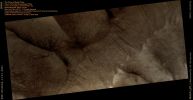
PSP_004038_1255_RED_abrowse.jpgDunes inside Russel Crater (Absolute Natural Colors; credits for the additional process. and color.: Dr Paolo C. Fienga - Lunexit Team)60 visiteThe Russell Crater Dunefield is covered seasonally by Carbon Dioxide (CO2) Frost, and this image shows the Dunefield after the Frost has sublimated (evaporated directly from solid to gas). There are just a few patches left of the bright seasonal frost.
Numerous dark DD Tracks can be seen meandering across the Dunes. The face of the largest dune is lined with Gullies. The source of the Gullies is unclear but could involve erosion by the seasonal CO2 Ice. MareKromium
(2 voti)
|
|

ESP_019060_1330-LXTT0.jpgSouthern Gullies (CTX Frame - Natural Colors; credits for the additional process. and color.: Dr Paolo C. Fienga - Lunexit Team)72 visitenessun commentoMareKromium
(2 voti)
|
|
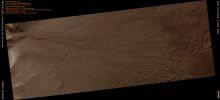
PSP_003269_1600_RED_abrowse.jpgSouthern Alluvial Fan (Natural Colors; credits for the additional process. and color.: Dr Paolo C. Fienga - Lunexit Team)100 visiteHiRISE image PSP_003269_1600 covers an Alluvial Fan along the wall of a large Unnamed Crater in the Mid Latitudes of the Southern Hemisphere of Mars.
The Fan was formed when water and sediments drained down the steep wall of the Crater creating a cone-shaped pile of debris at the base.
As the Fan grew with time, the Channels carrying water and sediment across its Surface changed locations, thus producing a Layered Deposit capped by Channels radiating from the Fan apex along the Crater Wall.
Subsequent stripping of the Fan Surface by the wind has left the coarser Channel Deposits in relief and exposed the fine scale layering within the Fan in many locations.
While is it is not known whether the source of the water responsible for creating the Fan was related runoff from precipitation or groundwater or perhaps both, Alluvial Fans of broadly similar form are observed in many locations on Earth and are usually formed by runoff from precipitation. MareKromium
(2 voti)
|
|
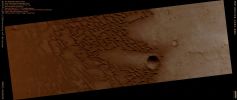
PSP_002728_1645_RED_abrowse.jpgThe Dunes of Herschel Crater (Saturated Natural Colors; credits for the additional process. and color.: Dr Paolo C. Fienga - Lunexit Team)98 visiteThis image shows Dunes on the floor of Herschel Crater. The Steep Faces (a.k.a.: "Slip-Faces") of the Dunes are oriented downwind, in the direction of their motion. One feature of particular interest is the dune-free area downwind of the Crater towards the right side of the frame. Some sand has been trapped in the Crater, but the Crater prevents the Dunes from migrating directly downwind. Sand Dunes form naturally as a result of the transport of sand by the wind.
The Dunes in this image are somewhat crescent-shaped, but are being extended and distorted downwind and merging with nearby Dunes; this complex behavior is common in Dunefields on Earth.
In the left side of the image the sand lies in sheets rather than well-defined Dunes. At high resolution, the Dunes' Surface are covered in small Ripples and Scallops, also shaped by the wind. MareKromium
(2 voti)
|
|
| 2235 immagini su 187 pagina(e) |
 |
|
|
|
|
148 | |
|
|
|
|





