| Piú votate - Mars Reconnaissance Orbiter (MRO) |

PSP_005980_1725_RED_abrowse-PCF-LXTT.jpgLayered Collapse Pit in Noctis Labyrinthus (Absolute Natural Colors; credits for the additional process. and color.: Dr Paolo C. Fienga - Lunexit Team)108 visitenessun commentoMareKromium
(2 voti)
|
|

PSP_003830_1740_RED_abrowse-00.jpgLayered Bedrock in Candor Chasma (CTX Frame - Absolute Natural Colors; credits for the additional process. and color.: Dr Paolo C. Fienga - Lunexit Team)118 visiteThis image shows an area of Layered Deposits in Candor Chasma. Here, Sheets and Dunes of dark-toned Sand cover the light-toned, Layered Bedrock. Accumulations of dark Sand accentuate bedding within the light-toned Bedrock, giving some areas a sort of "zebra-striped" pattern.
In the left side of the scene, the Bedrock has been eroded into steep, craggy Cliffs. Some sections of these Cliffs are covered by triangular-shaped Debris Fans that are intermediate in color between the dark-toned Sand and light-toned Bedrock. These Fans may contain a mix of light-toned Bedrock that has crumbled away from the surrounding Cliffs as well as wind-blown Sand and Dust.
The Surfaces of some Fans are dissected by Gullies, which most likely formed through Dry Avalanching. The bottoms of the Gully Channels are often darker in tone than the surrounding Fan Surface. This may be due to accumulations of wind-blown Sand in the Gully Floor.MareKromium
(2 voti)
|
|
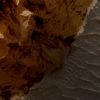
PSP_003830_1740_RED_abrowse-01.jpgLayered Bedrock in Candor Chasma (EDM n.1 - Absolute and Enhanced Natural Colors; credits for the additional process. and color.: Dr Paolo C. Fienga - Lunexit Team)124 visiteThis EDM shows a clear example of a "Gullied Fan", taken from the left (Northern) portion of the whole scene.MareKromium
(2 voti)
|
|

PSP_003655_1885_RED_abrowse-00.jpgBeautiful Windworks (Natural Colors; credits for the additional process. and color.: Dr Paolo C. Fienga)122 visiteThis image shows a portion of a Mound partly filling an Unnamed Impact Crater.
The Impact Crater is a little more than 60 Km (approx. 37 miles) across while the Central Mound is about half that figure (since it extends itself well beyond the area shown here).
Large Impact Craters typically have Central Peaks which surge upwards in the last stage of crater formation. However, Mounds like this represent a different process: Sedimentary Infill of the Crater AFTER its formation.
At this site, the Mound appears to be Layered. Step-forming Layers crop out throughout the center of the image. This indicates that the Mound material was deposited in a series of events, likely the same process repeating many times. Many processes could form Layers like this, including Aeolian Deposition, Volcanic Ash or Lake Sedimentation.
Unfortunately, fine details of the Layers are obscured by Dust which covers most of the Mound. Avalanches in this Dust Layer are responsible for the many small Dark Streaks that can be seen in the image.
Anyway, however the material in the Mound formed, it was once even more extensive, perhaps entirely filling the Crater. Wind Erosion has caused the formation of these elongated shapes (called "Yardangs").MareKromium
(2 voti)
|
|
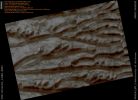
PSP_004230_1080_RED_abrowse.jpgDefrosting Dunefield inside Richardson Crater (Absolute Natural Colors; credits for the additional process. and color.: Dr Paolo C. Fienga - Lunexit Team)84 visiteCovered by Seasonal CO2 Frost, the Dunefield here in Richardson Crater has only partially defrosted, although the image was acquired late in Mars' Southern Spring.
Large patches of Carbon Dioxide Frost can be observed, linked in some places by Channels possibly carved into the ground by the erosion of CO2 gas, as blocks dry ice slide down slope and sublimate.
Numerous Dust Devil Tracks (or DDT for short) have left their mark.
MareKromium
(2 voti)
|
|

PSP_003077_1530_RED_abrowse-1.jpgThe "White Cliffs" of Holden Crater (Absolute Natural Colors; credits for the additional process. and color.: Dr Paolo C. Fienga - Lunexit Team)90 visitenessun commentoMareKromium
(2 voti)
|
|

PSP_003086_2015_RED_abrowse.jpgFeatures of Nili Fossae (Absolute Natural Colors; credits for the additional process. and color.: Dr Paolo C. Fienga - Lunexit Team:)114 visitenessun commentoMareKromium
(2 voti)
|
|
ESP_017950_2205_RED_abrowse.jpgMore "Mud-Volcanoes" (?) in Acidalia Planitia (Absolute Natural Colors; credits for the additional process. and color.: Dr Paolo C. Fienga - Lunexit Team)105 visiteMareKromium
(2 voti)
|
|

ESP_019151_1385_RED_abrowse-00.jpgUnnamed Shallow Craters in Northern Argyre Planitia (CTX Frame - Absolute Natural Colors; credits for the additional process. and color.: Dr Marco Faccin - Lunexit Team)94 visitenessun commentoMareKromium
(2 voti)
|
|
Mawrth_Vallis.jpgExtremely unusually-looking Surface Feature in Mawrth Vallis (an Image-Mosaic by Dr Marco Faccin - Lunexit Team)110 visitenessun commentoMareKromium
(2 voti)
|
|
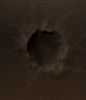
Santa_Maria_Crater-PIA13706-PCF-LXTT.jpgOrbital View of Santa Maria Crater (Absolute Natural Colors; credits for the additional process. and color.: Dr Paolo C. Fienga - Lunexit Team)114 visiteCaption NASA:"NASA's Mars Exploration Rover Opportunity approached Santa Maria Crater in December 2010. With a diameter of about 90 meters (295 feet), this Crater is slightly smaller than Endurance Crater, which Opportunity explored for about six months in 2004.
This image of Santa Maria Crater was taken by the High Resolution Imaging Science Experiment (HiRISE) camera on Mars Reconnaissance Orbiter".MareKromium
(2 voti)
|
|

PSP_005349_0930_RED_abrowse-0.jpgCircular Feature in the South Polar Residual Cap (Absolute Natural Colors; credits for the additional process. and color.: Dr Paolo C. Fienga - Lunexit Team)115 visiteThis 4 Km-diameter Circular Surface Feature near the Edge of the South Polar Residual Cap was recognized in Mariner 9 and Viking Orbiter images taken in the '70s, but its origin could not be inferred. It was therefore targeted for HiRISE stereo imaging.
The bright areas in this image are covered by CO2 frost, and the "Swiss Cheese" terrain typical of the South Polar Residual Cap covers much of the imaged area.
The Dark Walls of the Circular Depression do not have as much Frost on them, and are fractured in a polygonal pattern. Apparently the Surface of the Walls has been extensively modified by thermal expansion and contraction of water ice. It also appears that the "Swiss Cheese" Terrain of the Residual Cap has buried the Floor of the Circular Depression, as well as the Terrain surrounding the Feature, making it difficult to infer its origin.
Its circular symmetry is consistent with an impact origin, but there is no evidence of a Crater Rim or Ejecta Blanket (perhaps because they have been buried).
The Depression may also have formed by collapse, but there is little evidence of extensional fractures that would be expected around a Collapse Pit. Analysis of HiRISE stereo data may help the interpretation of this Feature.MareKromium
(2 voti)
|
|
| 2235 immagini su 187 pagina(e) |
 |
|
|
|
|
145 | |
|
|
|
|





