| Piú votate - Mars Reconnaissance Orbiter (MRO) |

ESP_016032_2600_RED_abrowse-01.jpgNorthern Spring (EDM - Natural Colors; credits: Dr Paolo C. Fienga - Lunexit Team)55 visiteIn this EDM, Streaks of dark Basaltic Sand have been carried from below the ice layer to form Fan-shaped Deposits on top of the seasonal ice.
The similarity in the directions of the fans suggests that they formed at the same time, when the wind direction and speed was the same. They often form along the boundary between the dune and the Surface below the Dunes.MareKromium
(6 voti)
|
|

PIA12882.jpgNorthern Meridiani Planum (Natural Colors; credits: Dr Paolo C. Fienga - Lunexit Team)55 visitenessun commentoMareKromium
(6 voti)
|
|

PSP_001808_1875_RED_abrowse-01.jpgSlope Streaks in Terra Sabaea (EDM - Natural Colors; credits: Dr Paolo C. Fienga - Lunexit Team)55 visiteThis EDM is a close-up view of the Crater Rim revealing dark and light-toned Slope Streaks. Slope Streaks' formation is among the few known processes currently active on Mars. While their mechanism of formation and triggering is debated, they are most commonly believed to form by downslope movement of extremely dry sand or very fine-grained dust in an almost fluidlike manner (analogous to a terrestrial snow avalanche) exposing darker underlying material.
Other ideas include the triggering of Slope Streaks' formation by possible concentrations of near-Surface ice or scouring of the Surface by running water from aquifers intercepting slope faces, Spring Discharge (perhaps brines) and/or hydrothermal activity.
Several of the Slope Streaks seen here, particularly the 3 longest darker Streaks, show evidence that downslope movement is being diverted around obstacles such as large boulders. Several Streaks also appear to originate at boulders or clumps of rocky material.
In general, the Slope Streaks do not have large deposits of displaced material at their downslope ends and do not run out onto the Crater Floor suggesting that they have little reserve kinetic energy. The darkest Slope Streaks are the youngest and can be seen to cross cut and superpose older and lighter-toned Streaks.
The lighter-toned streaks are believed to be dark streaks that have lightened with time as new dust is deposited on their surface.MareKromium
(6 voti)
|
|

PSP_001916_2220_RED_abrowse.jpgKnobs and Mounds on the Northern Plains (Natural Colors; credits: Dr Paolo C. Fienga - Lunexit Team)54 visiteLight-toned Mounds occur across the image.
The northern part of the image is dominated by small Knobs or Patches, while there are features hundreds of meters across to the South. The larger features frequently have one or more craters and an irregular shape; it has been proposed that these features are Mud Volcanoes, which erupt mud instead of lava.
On Earth, Mud Volcanoes usually form in conditions of tectonic pressurization or rapid burial of sediments.
At high resolution, the Knobs show some fine lineations which may be wind-blown material, but are otherwise very smooth. In between the Mounds, the Surface is rough and rich in Boulders. The few Boulders on the Mounds were likely ejected from nearby Impact Craters.
Information like this from HiRISE images provides useful constraints on the formation and material of these Knobs and Cones.MareKromium
(6 voti)
|
|

ESP_014342_0930-00.jpgSouth Polar Residual Cap Intraseasonal Change Monitoring (CTX Frame - Natural Colors; credits: Lunexit)55 visitenessun commentoMareKromium
(6 voti)
|
|

ESP_014103_2485-ESP_014393_2485.jpgLook who's there: the Phoenix Lander! (Natural Colors; credits: Lunexit)58 visiteThe High Resolution Imaging Science Experiment (HiRISE) camera on NASA's Mars Reconnaissance Orbiter captured Winter images of NASA's Phoenix Mars Lander surrounded by dry-ice frost on Mars.
As the Sun began to reappear on the horizon following the deepest, darkest days of North Polar Winter on Mars, the HiRISE camera imaged the Phoenix Landing Site on July 30, 2009, (left image) and in Aug. 22, 2009 (right).
The Sun was only 1° above the Local Horizon when the July image was taken at approximately 14:00 M.L.T. .-
In the August image the Sun was 6° above the L.H. when the image was taken, at about 13:44 M.L.T. .
By matching up the images with the known location of the Lander, the HiRISE team identified the hardware, disguised by frost, despite the fact that the views were hindered by poor lighting and atmospheric haze, which often obscures the Martian Surface at this location and season.
Carbon Dioxide frost completely blankets the Surface in both images. The amount of brightness doesn't necessarily indicate the amount of frost seen in the image because of the way the images are processed to produce optical contrast. Each of these images is stretched differently for optimal contrast, so "bright" and "dark" can't be compared directly between images without doing complex calibrations. In fact, if you stretched all of them exactly the same, the darker areas in the frost covered images are still brighter than typical soil, like that surrounding the Lander in the frost-free image.
Other factors affect the relative brightness, such as the size of individual grains of CO2 ice, the amount of dust mixed in with the ice, the amount of sunlight hitting the Surface, and different lighting angles and slopes. The winds are also changing direction and strength, moving loose frost and dust around over time.
Studying these changes will help scientists understand the nature of the seasonal frost and Winter Weather Patterns in this area of Mars.
The amount of CO2 frost is increasing as late Winter transitions to early Spring, so the layer of frost is getting thicker in each image, slowly encasing the Lander. The maximum thickness was expected to be on the order of tens of centimeters, which would have reached its peak in September 2009. The thickness has not been confirmed yet because the MRO Spacecraft suspended taking images when it entered safe mode on August 26.
Oct. 26, 2009, marked the first day of Spring in the Northern Hemisphere of Mars.
The Planetary Society has put together an animation comparing the hardware at different times. (see ---> http://www.planetary.org/blog/article/00002182/).
The Phoenix Mars Lander ceased communications last November (2008), after successfully completing its mission and returning unprecedented science data to Earth. Launched Aug. 4, 2007, Phoenix safely touched down on Mars on May 25, 2008, at a site farther North than where any previous Spacecraft had landed. During the first quarter of 2010, teams at JPL will listen to see if Phoenix is still able to communicate with Earth. Springtime thaw images may also be available.
These views are a portion of a HiRISE image which is available in full-frame at http://hirise.lpl.arizona.edu/ESP_014393_2485.
MareKromium
(6 voti)
|
|
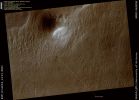
ESP_014264_2235_RED_abrowse-00.jpgSigns of a possible (and recent) "Mid-Air Meteor Strike" (CTX Frame - Natural Colors; credits: Lunexit)61 visitenessun commentoMareKromium
(6 voti)
|
|
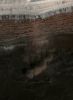
PSP_007338_2640-Frana1.jpgCaught in the Act: Martian Landslides (Natural Colors; credits: NASA & Lunexit)56 visitenessun commentoMareKromium
(6 voti)
|
|

ESP_014404_1275-GB-LXT-01.jpgExtremely Unusual Surface Feature in Argyre Planitia (Natural Colors - SuperEDM n.1 - credits: Dr G. Barca & Lunexit)57 visitenessun commentoMareKromium
(6 voti)
|
|
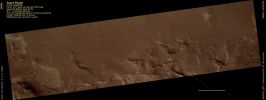
ESP_014404_1275-GB-LXT-00.jpgArgyre Planitia (Natural Colors; credits: Lunexit)57 visitenessun commentoMareKromium
(6 voti)
|
|

ESP_014404_1765_RED_abrowse-00.jpgUSGS Dune Database Entry Number 3076-032 (Natural Colors; credits: Lunexit)55 visitenessun commentoMareKromium
(6 voti)
|
|

ESP_014426_1580_RED_abrowse.jpgTerra Sabaea and Terra Tyrrhena Boundary (Natural Colors; credits: Lunexit)60 visitenessun commentoMareKromium
(6 voti)
|
|
| 2235 immagini su 187 pagina(e) |
 |
|
|
|
|
12 | |
|
|
|
|





