| Piú votate - Mars Reconnaissance Orbiter (MRO) |

PSP_009039_1660_RED.jpgCraters in South-Eastern Syria Planum (natural colors; credits: Lunexit)59 visiteThis image shows two landforms that appear similar, but are the result of two very different geologic processes.
These two depressions are craters. The smaller, rounder crater formed when an asteroid collided with Mars. This impact blasted out the pre-existing rocks, forming this quasi-circular crater.
The larger, more irregular-shaped crater is a Pit Crater. These types of craters form through collapse of the ground surface into large underground voids. In this Region of Mars, these underground voids are likely caused by the movement of magma (molten rock) through the subsurface. As the magma moves underground, it forces the rock apart and forms large “caverns.” These voids are structurally unstable and can lead to collapse of the overlying rock, forming pit craters at the surface.
Impact Craters are distinguished from Pit Craters by the presence of a raised rim. Rock blasted out during the impact falls back to the ground and accumulates near the crater, forming this raised rim. Upward warping of the ground during the impact process also contributes to the raised appearance of the crater rim. Since Pit Craters form through collapse, their rims are at the same level, or perhaps slightly lower, than surrounding ground surface.
The Impact Crater has a bright streak extending South-East (toward the upper right). The bright material is dust, deposited downwind of the crater by prevailing winds. Zooming into the streak, small bedforms, presumably composed of dust or dust aggregates, are visible. Similar features are seen in other dusty regions of Mars.MareKromium
(3 voti)
|
|

PSP_009003_1890_RED.jpgPseudo-Pyramid and Fissures in Cerberus Fossae (Extremely Enhanced and Saturated Natural Colors; credits for the additional process. and color.: Dr Paolo C. Fienga - Lunexit Team)137 visiteThis image shows a part of the Cerberus Fossae Region, a system of aligned fissures that lays East of Elysium.
The fissures were probably the source of floods of both water and lava. The most recent event was a massive outpouring of basaltic lava (a fluid-type of lava like that commonly erupted by Kilauea in Hawaii), which produced a host of volcanic features in the Region, as described by Jaeger et al. (2007).
Here, as at other locations, the fossae appear a dark red in the Lunexit Natural Color image. Dark red tones are usually associated with basaltic rock. The reddish ripples found on the trough floor could be wind-blown sand comprised of fine fragments of basalt. The upper plains are a relatively bland tone, perhaps due to a thin coating of dust; however, impact craters in the image also show reddish boulders and ripples, indicating that they have excavated the same basaltic rock layers cut by the fossae. This is typical of the Region, as floods of lava coat much of the area.
The mesas of older rock on the left side of the fissures are remnants of a former surface, now eroded. The surrounding Region has many knobs and larger protruding topography, which may be remnants of the same materials. The topmost layer in each mesa is very resistant to weathering, as in places it actually overhangs the lower rocks. This cap layer could be solidified lava, although it appears somewhat bland in color.
Although the mesa is clearly eroded and the cap rock breaks up into boulders, few rocks are visible at the bottom of the slope. The lava plains may have buried the former basal slope, or debris may have been swept away by lava or floodwater, that could also have contributed to eroding the mesa.MareKromium
(3 voti)
|
|

PSP_006278_2225_RED_abrowse.jpgUnusual Surface Patterns inside Moreux Crater (MULTISPECTRUM; credits: Lunexit)65 visiteUnusual surface patterns near the center of Moreux Crater suggest a complicated history of glacial flow. A series of ridges and troughs originating from the crater’s central peak to the west of this image terminate in this area in a jumble of twisted patterns and circular depressions.
The superposition of impact craters and sand dunes on top of these ridges and troughs suggests that the flow patterns are old and that any ice may be largely gone. The round depressions may have formed when large sections of relatively clean ice were left in place to melt or sublimate. The ridges would be analogous to moraines in Earth glaciers, formed from rock and debris mixed with the ice that flow with the glacier.
The complicated and twisting patterns indicate that the ice flowed into this area, which is at a lower elevation on the crater floor, and piled up behind itself as the flow stalled. Numerous boulders are also scattered over the surface of ridges and troughs.
Boulders may have been carried into place with the ice and as the ice was removed, the boulders were left in place.
MareKromium
(3 voti)
|
|

Psp_009011_1705_red.jpg"Apparent Valley", West of Ganges Chasma (natural colors; credits: Lunexit)64 visiteThis image shows an "Apparent Valley" North of a 37-Km long pit called Ophir Cavus. This valley is just West of another 155-Km long valley system called Allegheny Vallis, that also emanates from the pit.
The association of valleys with the pit suggests that water was released when the pit formed, perhaps when volcanic eruptions melted ice in the surface or subsurface.
The HiRISE image reveals light-toned units along portions of the plains and these could be minerals deposited by the flowing water or alteration of the plains by the water that once flowed here.MareKromium
(3 voti)
|
|

Mawrth_Vallis-The_Waterfall-CC.gifZooming on the "Waterfall" - Mawrth Vallis (GIF-Movie, by Carlo Contu)60 visiteAcquisition date: January, 04, 2008
Local Mars Time: 14:19
Latitude: 23,0° North
Longitude: 341,6° East
Range to target site: 309,9 Km
Original image scale range: 31 cm/pixel (with 1 x 1 binning) so objects ~93 cm across are resolved
Map projected scale: 25 cm/pixel and North is up
Map projection: EQUIRECTANGULAR
Emission angle: 22,7°
Phase angle: 60,1°
Solar incidence angle: 38°, with the Sun about 52° above the horizonMareKromium
(3 voti)
|
|

Mawrth_Vallis-The_Pyramid-GIF.gifZooming on a "Pseudo-Pyramid" - Mawrth Vallis (GIF-Movie, by Carlo Contu)64 visiteAcquisition date: January, 05, 2007
Local Mars Time: 15:32
Latitude: 22,5° North
Longitude: 341,8° East
Range to target site: 286,8 Km
Original image scale range: 28,7 cm/pixel (with 1 x 1 binning) so objects ~86 cm across are resolved
Emission angle: 6,3 °
Phase angle: 59,4 °
Solar incidence angle: 53°, with the Sun about 37° above the horizon MareKromium
(3 voti)
|
|
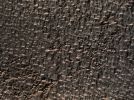
PSP_008427_1380_RED_abrowse-02.jpgAutumn in Hellas Basin (edm n. 2 - MULTISPECTRUM-2; credits: Lunexit)65 visitenessun commentoMareKromium
(3 voti)
|
|
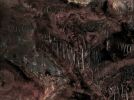
PSP_007055_2015_RED_abrowse-4.jpgVolcanic and Clay Materials near Nili Fossae (edm n. 3 - natural colors; credits: Lunexit)58 visiteChe ne dite di queste "dune"? "Curiose", vero? MareKromium
(3 voti)
|
|
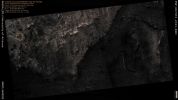
PSP_007055_2015_RED_abrowse-0.jpgVolcanic and Clay Materials near Nili Fossae (ctx frame - MULTISPECTRUM; credits: Lunexit)58 visiteThis image is located West of the Nili Fossae Trough, one of the proposed Landing Sites for the Mars Science Laboratory. Here, we combine information from two other MRO instruments, the Context Camera (CTX) and the Compact Reconnaissance Imaging Spectrometer for Mars (CRISM), to provide insight into the geology of the Region.
Nota Lunexit: sicuramente le informazioni NASA su questo frame sono interessanti e preziose, ma noi Vi invitiamo a prestare un PARTICOLARE ATTENZIONE alla struttura ed alla configurazione superficiale delle dune che caratterizzano tutta la zona ripresa.
Si tratta, in effetti, di dune che, in passato, a causa della loro conformazione ed albedo, hanno ingannato innumerevoli Ricercatori i quali le avevano scambiate per "tubazioni" affioranti.
L'edt n. 3 (elaborato in colori naturali) Vi permetterà di cogliere al meglio non solo la - riteniamo incredibile - conformazione di queste mega-dune, ma anche la loro del tutto peculiare colorazione.MareKromium
(3 voti)
|
|
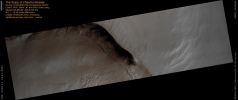
PSP_008191_2645_RED_abrowse.jpgNorth Polar Scarp (MULTISPECTRUM; credits: Lunexit)58 visitenessun commentoMareKromium
(3 voti)
|
|
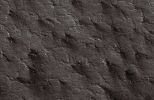
PSP_003520_1010_RED_abrowse-01.jpgSouth Polar Spiders (edt - MULTISPECTRUM-2; credits: Lunexit)59 visitenessun commentoMareKromium
(3 voti)
|
|
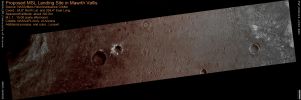
PSP_008324_2050_RED_abrowse.jpgProposed MSL Landing Site in Mawrth Vallis - ellipse 4 (MULTISPECTRUM; credits: Lunexit)58 visiteMawrth Vallis has a rich mineral diversity, including clay minerals that formed by the chemical alteration of rocks by water. The CRISM instrument detects a variety of clay minerals here, which could signify different processes of formation. The high resolution of the HiRISE camera helps us to see and trace out layers, polygonal fractures, and with CRISM, examine the distribution of various minerals across the surface.
This surface is scientifically compelling for the MSL Rover, although some of the terrain can be somewhat rough. Scientists use HiRISE images to find the safest possible Landing Site for the Rover.MareKromium
(3 voti)
|
|
| 2235 immagini su 187 pagina(e) |
 |
|
|
|
|
118 | |
|
|
|
|





