| |

| Piú votate - Mars Reconnaissance Orbiter (MRO) |

ESP_011664_2015_RED_abrowse-00.jpgAt the base of Olympus Mons... (ctx frame - Natural Colors; credits: Lunar Explorer Italia)61 visiteThis image is located at the foot of the largest volcano of the Solar System: Olympus Mons.
The entire scene is covered with a multitude of Lava Flows. Most of the Flows consisted of relatively sticky lava that froze after flowing for only a short distance (often less than 1 Km, or about 1/2 a mile). However, a few of the Flows were more fluid and actually drained out of their Channels, leaving Troughs with distinct levees. These “Channelized” Flows extend out of the HiRISE image so they must be at least several kilometers (a few miles) long.
In all likelihood, both the short and long Lava Flows have very similar chemical compositions.
Based on experience with Lava Flows on Earth, the Channelized Flows were probably fed by more vigorous eruptions. That is, the Lava Flow was fed so quickly that the lava traveled a long distance before it solidified. With the shorter flows, a slow dribble of lava froze before going more than the equivalent of a few city blocks.MareKromium
(3 voti)
|
|
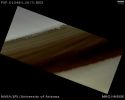
PSP_010483_2675_RED_abrowse.jpgHigh-Latitude Exposure of North Polar Layered Deposits (Natural Colors; credits: Lunar Explorer Italia)88 visiteMars Local Time: 14:44 (early afternoon)
Coord. (centered): 87,3° North Lat. and 55,2° East Long.
Spacecraft altitude: 340,6 Km (such as about 212,9 miles)
Original image scale range: 68,2 cm/pixel (with 1 x 1 binning) so objects ~2,04 mt across are resolved
Map projected scale: 50 cm/pixel
Map projection: EQUIRECTANGULAR
Emission Angle: 23,5°
Phase Angle: 55,2°
Solar Incidence Angle: 74° (meaning that the Sun is about 16° above the Local Horizon)
Solar Longitude: 145,1° (Northern Summer)
Credits: NASA/JPL/University of Arizona
Additional process. and coloring: Lunar Explorer ItaliaMareKromium
(3 voti)
|
|
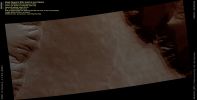
PSP_010423_1720_RED_abrowse.jpgSteep Canyon's Wall, South of Jus Chasma (Natural - but enhanced - Colors; credits: Lunar Explorer Italia)58 visitenessun commentoMareKromium
(3 voti)
|
|

SouthPole-PIA11987.jpgThe South Pole of Mars in Spring (1)60 visitenessun commentoMareKromium
(3 voti)
|
|

ESP_011575_1105_RED_abrowse.jpgSeasonal Haloes and Fractal Patterns (Natural Colors; credits: Lunar Explorer Italia)64 visiteNote Lunexit:
gli "Haloes" sono gli "Aloni di Sublimazione" ossìa quelle porzioni di terreno che, quando la temperatura superficiale del Pianeta va ad alzarsi, si scoprono/liberano dei ghiacci e delle brine di CO2 o d'acqua che li ricoprono - per sublimazione, appunto (ossìa mediante il passaggio diretto di un elemento dalla forma solida a quella gassosa).
Questo disgelo (---> "thaw"), di regola (ed a seguito delle osservazioni che abbiamo fatto) procede in maniera aureolare, partendo da un'area leggermente dislivellata (in altezza - dossi, rim di cratero ed altri rilievi) rispetto al Datum e quindi allargandosi a "macchia di leopardo" (e dando quindi l'impressione, nelle osservazioni fatte dall'alto e da distanze sensibili, che si formino, sulla superfcie, dei veri e propri aloni).
I "Fractal Patterns" sono, invece, i "Disegni Frattali" ossìa quelle configurazioni del suolo a sembianza di figura frattale (ossìa eternamente ripetitiva di se stessa) che si producono sempre durante la fase di disgelo del Suolo Marziano (e che possiamo vedere nelle Regioni Polari e presso-Polari, durante la Primavera di Marte, sia a Nord, sia a Sud).
La loro osservazione dall'alto e da grandi distanze (nell'ordine delle centinaia di Km) è produttiva di incredibili effetti ottici i quali hanno suggerito - a molti Ricercatori di Frontiera (su tutti: Skipper ed Hoagland) - l'idea che, su Marte, possano esistere delle forme esotiche di vegetazione (exx.: gli "Arthur Clarke Trees" ed i "Polar Pine Trees"). I "Fractal Patterns", però - e come capite bene - non sono rilievi che si sviluppano in altezza (come alberi), ma sono dei semplici "disegni" che appaiono al suolo e che sviluppano sempre e solo in mera estensione.
Se vogliamo, essi possono essere assimilati - da un punto di vista meramente visivo - alle famose "Piste di Nazca" (anche se, lo ripetiamo, i Disegni Frattali sono "Surface Features" DEL TUTTO ed ASSOLUTAMENTE NATURALI).MareKromium
(3 voti)
|
|

SouthPolarSpiders-PIA11857.jpgSouth Polar Fans (Natural Colors; credits: Lunar Explorer Italia)58 visiteCaption NASA:"Every Winter, Mars' Polar Region is covered with a layer of seasonal CO2 (Carbon Dioxide ice - a.k.a. "dry ice"). In the Spring, jets of gas carry dust from the ground up through openings in the ice.
The dust gets carried downwind by the prevailing wind and falls on top of the Seasonal Ice Layer in a fan-shaped deposit. Many jets appear to be active at the same time since numerous Fans are all deposited in the same direction.
This image from the High Resolution Imaging Science Experiment (HiRISE) camera on NASA's Mars Reconnaissance Orbiter appears to show several times at which jets were active. At the top of this image the Fans are oriented in one direction while at the bottom they are going in a different direction. This suggests that as the ice layer thins, a set of gas jets becomes active, they die down, then further away another set starts up at a later time with a different prevailing wind direction.
This is a reduced-resolution image from the HiRISE Observation observation catalogued as ESP_011934_0945, taken on Feb. 11, 2009. The observation is centered at 85,4° South Latitude and 104,0° East Longitude.
The image was taken at a Local Mars Time of 18:12 and the scene is illuminated from the West, with a Solar Incidence Angle of 79° (meaning that the Sun was about 11° above the Local Horizon).
At a Solar Longitude of 207,9°, the season on Mars is Northern Autumn".MareKromium
(3 voti)
|
|

SouthPolarSpiders-PIA11858.jpgStarburst Spiders (Natural Colors; credits: Lunar Explorer Italia)60 visiteCaption NASA:"Mars' Seasonal Cap of Carbon Dioxide (CO2) ice has eroded many beautiful terrains as it sublimates (meaning that goes directly from ice to vapor) every Spring.
In the region where the High Resolution Imaging Science Experiment (HiRISE) camera on NASA's Mars Reconnaissance Orbiter took this image, we see Troughs (---> canali) that form a Starburst Pattern (---> disegno a forma di stella che esplode). In other areas these Radial Troughs have been refered to as "Spiders", simply because of their shape. In this Region the pattern looks more dendritic as channels branch out numerous times as they get further from the center.
The Troughs are believed to be formed by gas flowing beneath the seasonal ice to openings where the gas escapes, carrying along dust from the surface below. The dust falls to the surface of the ice in fan-shaped deposits.
This image, covering an area of about 1 Km (approx. 0,6 mile) across, is a portion of the HiRISE observation catalogued as ESP_011842_0980, and taken on Feb. 4, 2009.
The observation is centered at 81,8° South Latitude and 76,2° East Longitude. MLT was 16:56 and the scene is illuminated from the West with a Solar Incidence Angle of 78° (meaning that the Sun was about 12° above the Local Horizon).
At a Solar Longitude of 203,6°, the season on Mars is Northern Autumn".MareKromium
(3 voti)
|
|
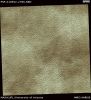
PSP_010492_2780_RED_abrowse.jpgColor and Morphology of the North Polar Residual Cap (Natural Colors; credits: Lunar Explorer Italia)74 visiteMars Local Time: 04:49 (night hours)
Coord. (centered): 82,0° North Lat. and 20,0° East Long.
Spacecraft altitude: 318,7 Km (such as about 199,2 miles)
Original image scale range: 31,9 cm/pixel (with 1 x 1 binning) so objects ~ 96 cm across are resolved
Map projected scale: 25 cm/pixel
Map projection: EQUIRECTANGULAR
Emission Angle: 3,0°
Phase Angle: 76,2°
Solar Incidence Angle: 79° (meaning that the Sun is about 11° above the Local Horizon)
Solar Longitude: 145,5° (Northern Summer)
Credits: NASA/JPL/University of Arizona
Additional process. and coloring: Lunar Explorer ItaliaMareKromium
(3 voti)
|
|
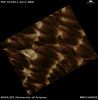
PSP_010501_2615_RED_abrowse.jpgAbalos Undae (Natural Colors; credits: Lunar Explorer Italia)71 visiteMars Local Time: 14:25 (early afternoon)
Coord. (centered): 81,6° North Lat. and 279,6° East Long.
Spacecraft altitude: 318,7 Km (such as about 199,2 miles)
Original image scale range: 63,8 cm/pixel (with 1 x 1 binning) so objects ~ 1,91 mt across are resolved
Map projected scale: 50 cm/pixel
Map projection: EQUIRECTANGULAR
Emission Angle: 0,1°
Phase Angle: 69,6°
Solar Incidence Angle: 70° (meaning that the Sun is about 20° above the Local Horizon)
Solar Longitude: 145,8° (Northern Summer)
Credits: NASA/JPL/University of Arizona
Additional process. and coloring: Lunar Explorer ItaliaMareKromium
(3 voti)
|
|
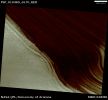
PSP_010489_2670_RED_abrowse.jpgTrough on the North Polar Layered Deposits (Natural Colors; credits: Lunar Explorer Italia)68 visiteMars Local Time: 11:00 (late morning)
Coord. (centered): 87,0° North Lat. and 195,5° East Long.
Spacecraft altitude: 316,1 Km (such as about 197,6 miles)
Original image scale range: 31,6 cm/pixel (with 1 x 1 binning) so objects ~ 95 cm across are resolved
Map projected scale: 25 cm/pixel
Map projection: EQUIRECTANGULAR
Emission Angle: 0,7°
Phase Angle: 73,7°
Solar Incidence Angle: 73° (meaning that the Sun is about 17° above the Local Horizon)
Solar Longitude: 145,4° (Northern Summer)
Credits: NASA/JPL/University of Arizona
Additional process. and coloring: Lunar Explorer ItaliaMareKromium
(3 voti)
|
|
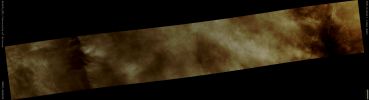
PSP_010417_1460_RED_abrowse.jpgUnnamed Crater in Hellas Planitia (Natural Colors; credits: Lunar Explorer Italia)62 visiteMars Local Time: 15:49 (middle afternoon)
Coord. (centered): 33,5° South Lat. and 83,0° East Long.
Spacecraft altitude: 260,8 Km (such as about 163,0 miles)
Original image scale range: 52,2 cm/pixel (with 1 x 1 binning) so objects ~ 1,57 mt across are resolved
Map projected scale: 50 cm/pixel
Map projection: EQUIRECTANGULAR
Emission Angle: 9,3°
Phase Angle: 66,2°
Solar Incidence Angle: 73° (meaning that the Sun is about 17° above the Local Horizon)
Solar Longitude: 142,5° (Northern Summer)
Credits: NASA/JPL/University of Arizona
Additional process. and coloring: Lunar Explorer ItaliaMareKromium
(3 voti)
|
|

PSP_010494_1790_RED_abrowse.jpgMound in Aeolis (Natural Colors; credits: Lunar Explorer Italia)77 visiteMars Local Time: 15:40 (middle afternoon)
Coord. (centered): 1,1° South Lat. and 135,7° East Long.
Spacecraft altitude: 268,1 Km (such as about 167,6 miles)
Original image scale range: 53,6 cm/pixel (with 1 x 1 binning) so objects ~ 1,61 mt across are resolved
Map projected scale: 50 cm/pixel
Map projection: EQUIRECTANGULAR
Emission Angle: 0,0°
Phase Angle: 56,6°
Solar Incidence Angle: 57° (meaning that the Sun is about 33° above the Local Horizon)
Solar Longitude: 145,6° (Northern Summer)
Credits: NASA/JPL/University of Arizona
Additional process. and coloring: Lunar Explorer ItaliaMareKromium
(3 voti)
|
|
| 2235 immagini su 187 pagina(e) |
|
|
|
|
|
111 | |
|
|
|
|
|
|





