| Piú votate - Mars Reconnaissance Orbiter (MRO) |

Psp_001700_2505_red-00~0.jpgLauth Crater and the Frozen "Pseudo-Lake" of Vastitas Borealis (CTX Frame - Absolute Natural Colors; credits for the additional process. and color.: Dr Paolo C. Fienga - Lunexit Team)308 visiteThe right side of PSP_001700_2505 shows a portion of a Frost Patch on a Mound inside a Northern Hemisphere Crater (unofficially known as "Lauth Crater").
The Frost Patch has remained largely stable at least since the Viking era (late 1970s). The bright Frost Region is bounded by a Dunefield on the North-East. Several sizes of Dunes are visible. The size classes probably represent generations of Dunes that formed under a variety of dominant wind conditions. MareKromium
(6 voti)
|
|

PSP_004072_1845_RED_abrowse-00.jpgThe "End" of Lethe Vallis (CTX Frame - Enhanced Natural Colors; credits for the additional process. and color.: Dr Paolo C. Fienga - Lunexit Team)103 visiteHiRISE image PSP_004072_1845 shows the funnel-shaped Terminus of Lethe Vallis, a winding Channel in the Elysium Planitia Region of Mars.
Lethe Vallis flows from South-West to North-East between 2 basins: Cerberus Palus and Eastern Elysium Plantia. Where it empties into the latter, the Channel abruptly widens (see the EDM n.1).
On the West side (up) of this HiRISE image, Lethe Vallis is approx. 800 mt wide; on the East side (down), it is more than 7 Km in width. As the fluid that carved the Channel spread out, its erosive power diminished. Thus, where the Channel is wider, it contains numerous high-standing Mesas that are primarily composed of pre-existing material that was not fully eroded away.
The Floor of Lethe Vallis is covered in solidified Lava and blanketed by a thin layer of light-toned Dust. The Lava has a rough, ridged appearance where its surface buckled as it cooled, and a smoother polygonal texture where it was not significantly deformed. Interestingly, Lava textures are visible high on the Banks and Terraces of the Lethe Vallis. Farther away from the Channel, the Terrain is older and more heavily cratered.MareKromium
(6 voti)
|
|

PSP_004072_1845_RED_abrowse-01.jpgThe "End" of Lethe Vallis (EDM n.1 - Enhanced Natural Colors; credits for the additional process. and color.: Dr Paolo C. Fienga - Lunexit Team)109 visitenessun commentoMareKromium
(6 voti)
|
|

PSP_003695_1250_RED_abrowse-00.jpgUnnamed Southern Crater with Large Dunefield and DD Streaks (CTX Frame - Natural Colors; credits for the additional process. and color.: Dr Paolo C. Fienga - Lunexit Team)61 visitePSP_003695_1250 shows a Southern Hemisphere crater with gullies, dunes, periglacial modification, bright rock deposits and Dust Devil Tracks.
Although these features are all common on Mars, there are not many places that have all of them together as viewed here.
The gullies seen at the top of the image are likely caused by wet debris flows. They have deposits of multiple ages. The gully on the left has bright deposits that have been modified by periglacial processes overlain by slightly darker deposits that have not been modified. Periglacial processes, such as seasonal freezing and thawing, are responsible for the polygonal fractures seen near the gullies and around the image.
The dark material in the center of the image is a dune field.
There are several different sizes and orientations of dunes — these different orientations indicate that the dominant winds in the area have changed throughout time.
The dark streaks that criss-cross on the outskirts of the dune field are DDT.
DDs are spinning cells of dust that travel across the Martian Surface. As they move, they pick up and redeposit particles, as well as disturbing dust on the surface.
They are responsible elsewhere on Mars for removing dust from the solar panels of the Mars Exploration Rovers Spirit and Opportunity, which has helped to extend their missions way beyond the 90-day primary mission.
Note that the black rectangular feature near the top right of the image is a data gap resulting from data transmission problems; it is not a real feature. MareKromium
(6 voti)
|
|

PSP_009342_1725_RED_abrowse-08.jpgWorm-like Indigenous Lifeform? (Enhanced Natural Colors; credits for the additional process. and color.: Dr Paolo C. Fienga - Lunexit Team) 431 visitenessun commentoMareKromium
(6 voti)
|
|
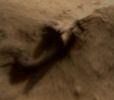
PSP_009342_1725_RED_abrowse-09.jpgWorm-like Indigenous Lifeform? (Natural Colors; credits for the additional process. and color.: Dr Paolo C. Fienga - Lunexit Team) 221 visitenessun commentoMareKromium
(6 voti)
|
|
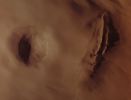
PSP_002922_1725_RED_abrowse-03.jpgPossible Volcanic "Mouth", on Arsia Mons' Flank (EDM - Natural Colors - credits for the additional process.: Dr Paolo C. Fienga)94 visitenessun commentoMareKromium
(6 voti)
|
|

Dunes-PIA13268-PCF-LXTT.jpgDunes in Richardson Crater (EDM - Natural Colors; credits for the additional process. and color.: Dr Paolo C. Fienga - Lunexit Team)58 visiteThis observation from NASA's Mars Reconnaissance Orbiter (MRO) is a view of the Sand Dunefield in Richardson Crater, still partually covered with seasonal frost.
This EDM is a close-up view of defrosting patterns on the Dunes. The frost is a combination of frozen CO2 and some water ice that covers the Dunes in the Winter and Spring. As the seasonal frost sublimes away, odd features such as spots, fans, and streaks form.
Small dark streaks on the dune slip-face slopes may be where recent avalanches of sand, or perhaps wind, has moved the dark sand underlying the frost, or where frost has been removed to expose the sand. Alternatively, the dark streaks may be patches of coarse-grained ice that are clear enough so that the dark material below the ice is visible.
The slip-faces indicate the general direction of sand transport.
It has been hypothesized that the Dark Spots and Fans may be "geysers" or "cold gas jets" that form when sublimation processes trap gas at the bottom of the ice. The gas is released through cracks in the ice, entraining dust from below the ice and scattering it onto the Surface to form the Dark Spots and Fans.MareKromium
(6 voti)
|
|

Noachis_Terra-PIA13074.jpgNoachis Terra (Natural Colors; credits for the additional process. and color.: Dr Paolo C. Fienga - Lunexit Team)54 visiteThis observation shows Gullies in a semi-circular Trough in Noachis Terra. The Gullies are observed to face all directions.
It is interesting to note that the Gully Morphology seen here depends on the orientation of the Gullies. The morphology differences are most pronounced on the sunlit slope, with the Gullies facing South (down) being more deeply incised than those facing the West. It is unknown what caused the different Gully Morphologies, but there are several possibilities.
Gullies are proposed to form at locations determined by the availability of a forming liquid (thought to be water) and/or the amount of insolation the Slope receives, among other factors. It is possible that the deeper Gullies experienced more erosional events or that their erosional events were more effective for undetermined reasons. It is also possible that the Gullies formed at different times such that they did not have the same amount of water -- either for an individual flow or total -- available to them. Also, the underlying topography could make the Gullies appear relatively more incised without this actually being the case.
The majority of the Gullies on both sides of the Trough appear to originate at a boulder-rich layer visible in the subimage. The layer appears dark on the sunlit slope because the boulders sticking out from the slopes cast shadows. If these Gullies formed by water from the Subsurface, then it is possible that this layer is a permeable layer that conducted water to the Surface.
The layer is deteriorating and traveling down slope in the form of Boulders. These Boulders can clearly be seen in the alcoves of the Gullies on both sides of the Trough.MareKromium
(6 voti)
|
|

Deuteronilus_Mensae-PIA12996.jpgDeuteronilus Mensae (Natural Colors; credits for the add. process, and color.: Dr Paolo C. Fienga - Lunexit Team)84 visiteThe Terrain in this image lies in the Deuteronilus Mensae Region, along the highland-lowland Dichotomy Boundary in the Northern Hemisphere of Mars.
The High Resolution Imaging Science Experiment (HiRISE) camera on NASA's Mars Reconnaissance Orbiter recorded this image on March 9, 2010.
The target for this HiRISE observation was a suggestion submitted through the camera team's HiWish public-suggestion program. For more information about how to submit target suggestions, see http://uahirise.org/hiwish/.
This Region contains many Mesas surrounded by Lobate Debris Aprons that are thought to be ice-rich. These Aprons have been interpreted as a variety of possible features including rock glaciers, ice-rich mass movements, or debris-covered glacial flows. Recent radar data from the Shallow Radar instrument on the Mars Reconnaissance Orbiter has shown them to be composed of nearly pure ice. This image shows an area at the edge of one of these Mesas with a Lobate Debris Apron extending from its base.
Both the Mesa top and the Surface of the Debris Apron appear covered with ice-rich mantling materials characteristic of the Martian Mid-Latitudes and thought to have been deposited around 10 million years ago during a period of high obliquity.
This image covers a swath of ground about 1 Km (about two-thirds of a mile) wide. It is a portion of HiRISE observation ESP_016959_2240, which is centered at 43,62° North Latitude and 28,62° East Longitude. The season on Mars is Northern-Hemisphere Spring. MareKromium
(6 voti)
|
|
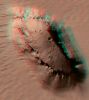
ESP_16978_1730-MF-LXTT2.jpgFalling Down... (High-Def-3D; credits: Dr Marco Faccin - Lunexit Team)71 visiteAcquisition date: 11 March 2010
Local Mars Time (m.l.t.): 15:07 (early afternoon)
Latitude (centered): 6,8° South
Longitude: 236,6° East
Range to target site: 255,4 km (159,6 miles)
Original image scale range: 25,6 cm/pixel (with 1 x 1 binning) so objects ~77 cm across are resolved
Map projected scale: 25 cm/pixel and North is up
Map projection: EQUIRECTANGULAR
Emission Angle: 1,5°
Phase Angle: 53,2 °
Solar Incidence Angle (S.I.A.): 54° - meaning that the Sun is about 36° above the Local Horizon
Solar Longitude: 62,5° (Northern Spring)MareKromium
(6 voti)
|
|

ESP_016032_2600_RED_abrowse-00.jpgNorthern Spring (CTX Frame - Natural Colors; credits: Dr Paolo C. Fienga - Lunexit Team)55 visiteIn the Winter a layer of Carbon Dioxide (CO2) ice (such as Dry Ice) covers the North Polar Sand Dunes.
In the Spring the sublimation of the ice causes a host of uniquely Martian Phenomena.MareKromium
(6 voti)
|
|
| 2235 immagini su 187 pagina(e) |
 |
|
|
|
|
11 | |
|
|
|
|





