| Piú votate - Mars Reconnaissance Orbiter (MRO) |
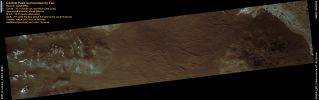
ESP_014320_1465_RED_abrowse.jpgCentral Peak surrounded by Fan (Natural Colors; credits: Lunexit)58 visitenessun commentoMareKromium
(3 voti)
|
|
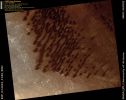
ESP_014429_1940_RED_abrowse.jpgDark Orange and Reddish Dunes (Natural Colors; credits: Lunar Explorer Italia)72 visitenessun commentoMareKromium
(3 voti)
|
|
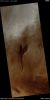
ESP_014312_1320_RED_abrowse.jpgGully in Massif in the Nereidum Montes (Natural Colors; credits: Lunexit)130 visiteSource: NASA/MRO
Coord.: 47,4° South Lat. and 305,3° East Long.
Spacecraft altitude: about 253 Km
M.L.T.: 14:28 (early afternoon)
S.I.A.: 44° (with the Sun about 46° above the Local Horizon)
Credits: NASA/JPL/Univ. of Arizona
Additional process. and color.: LunexitMareKromium
(3 voti)
|
|
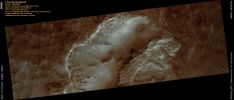
ESP_014320_1840_RED_abrowse.jpgLibya Montes' Massif (Natural Colors; credits: Lunexit)57 visitenessun commentoMareKromium
(3 voti)
|
|
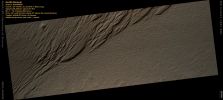
ESP_014315_1845_RED_abrowse.jpgGordii Dorsum (Natural Colors; credits: Lunexit)59 visitenessun commentoMareKromium
(3 voti)
|
|
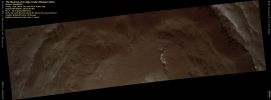
ESP_014324_1555_RED_abrowse.jpgThe Western Rim of Alga Crater (Natural Colors; credits: Lunexit)58 visitenessun commentoMareKromium
(3 voti)
|
|
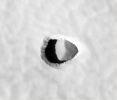
ESP_014380_1775_RED_abrowse-01.jpgExtremely Unusually-looking Skylight (SuperEDM n.1 - credits: Dr G. Barca)62 visitenessun commentoMareKromium
(3 voti)
|
|
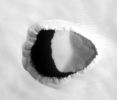
ESP_014380_1775_RED_abrowse-02.jpgExtremely Unusually-looking Skylight (SuperEDM n.2 - credits: Dr G. Barca)74 visitenessun commentoMareKromium
(3 voti)
|
|

ESP_014380_1775_RED_abrowse-03.jpgExtremely Unusually-looking Skylight (SuperEDM n.3 - credits: Dr G. Barca)60 visitenessun commentoMareKromium
(3 voti)
|
|
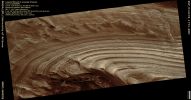
ESP_014378_1755_RED_abrowse.jpgLayered Mound in Juventae Chasma (Natural Colors; credits: Lunexit)85 visitenessun commentoMareKromium
(3 voti)
|
|
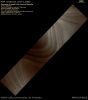
PSP_004650_0975_RED_abrowse.jpgExposure of South Polar Layered Deposits (Natural Colors; credits: Lunexit)57 visiteExtensive Layered Deposits are found in both Polar Regions of Mars and are thought to contain evidence of recent climate changes like ice ages on Earth.
Radar observations suggest that the NPLD - as well as the SPLD - are composed mostly of water ice, but many layered exposures, including this one, appear to be covered by a layer of dust that protects the underlying water ice from further erosion. The SPLD are more extensive than the NPLD, and have generally been less active recently.
The greater age of the SPLD is indicated by the higher density of craters on its Surface; as a matter of fact, a cluster of small craters is visible above center in this image. Also visible are widespread polygonal fractures, evidence of water ice expansion/contraction below the Surface.MareKromium
(3 voti)
|
|
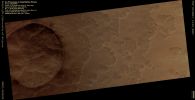
PSP_004867_1220_RED_abrowse-00.jpgIce Processes in Amphitrites Patera (CTX Frame - Natural Colors; elab. Lunexit)86 visiteThis image captures an impact crater on the surface of Amphitrites Patera, an ancient volcano on the southern margin of the giant Hellas Basin. The Hellas Basin was formed by a very large impact into the Southern Highlands early in the geologic history of Mars. The basin has a number of volcanoes along its margin, perhaps because magma could take advantage of the deep cracks in the crust that resulted from the impact.
Amphitrites Patera is far enough South to approach the Martian Antarctic and there is evidence for large amounts of ice in the ground. As in the Polar Regions of Earth, the icy ground (permafrost) is able to move and be modified by a variety of processes. In this case, the rim of the small impact crater is filled with a honeycomb of cracks. These are likely to have formed where dust- and soil-covered ice or ice cemented soil was cracked by thermal contraction in the winter. Subsequently, the underlying ice was able to escape into the atmosphere (sublimate) allowing the ground along the cracks to collapse. The only place where large boulders are visible is along the rim of the crater; this is probably where the boulders were not so deeply buried by the icy layer. MareKromium
(3 voti)
|
|
| 2235 immagini su 187 pagina(e) |
 |
|
|
|
|
106 | |
|
|
|
|





