| Piú votate - Mars Reconnaissance Orbiter (MRO) |

ESP_013948_1410_RED_abrowse-00.jpgUnnamed Craters with Gullies in Sirenum Fossae (Natural Colors; credits: Lunexit)58 visiteThis image covers parts of two different Unnamed Craters, both with Gullies in the Inner Walls. Gullies are a popular target because their formation is still being debated.
The powerful HiRISE camera reveals many details of Gullies that have never been seen before. Some hypotheses about the formation of Gullies involve the flow of some amount of liquid (water, brine, or some other substance - Nota Lunexit: QUALE???), and others postulate that Gullies could be formed by the downhill movement of dry material such as Dust or Sand.
To further complicate things, different Gullies could have formed by different methods.
The many Gullies visible in this image look quite different from each other. This EDM n.1 - from the South/Western part of the Crater to the South - Dx) shows a Gully with a smaller Alcove (source region at the top) and a deep Main Channel. The material in the Channel is a different color than the Alcove, indicating they may contain different minerals or different grain sizes.
Another Gully (EDM n.2), located in the Northern side of the same Crater, has almost no Alcove and very little material deposited at the bottom. However, this Gully is marked by a distinct bright-colored deposit along its length. This could be a sign of recent activity where material has moved downhill.
And yet another site nearby (EDM n.3) within the same Crater has multiple overlapping Gullies of different types. Most of these have large fan-shaped deposits at the bottom, and a few to the left side of the EDM n.3 have bright deposits where new material may have been deposited or exposed.
Some of the Channels and Fans contain Ripples; this might be where wind eroded loose material, or it may be a texture that formed as sand or liquid moved down the slope. Some of the gully-like features in this image are more likely Dry Landslide Chutes (Dust Avalanches).MareKromium
(3 voti)
|
|

ESP_013948_1410_RED_abrowse-01.jpgGullies in Sirenum Fossae (EDM n.1 - Natural Colors; credits: Lunexit)57 visitenessun commentoMareKromium
(3 voti)
|
|

ESP_013948_1410_RED_abrowse-02.jpgGullies in Sirenum Fossae (EDM n.2 - Natural Colors; credits: Lunexit)58 visitenessun commentoMareKromium
(3 voti)
|
|

ESP_013948_1410_RED_abrowse-03.jpgGullies in Sirenum Fossae (EDM n.3 - Natural Colors; credits: Lunexit)58 visitenessun commentoMareKromium
(3 voti)
|
|

PSP_001558_1325_RED_abrowse.jpgSouthern Dunefield (Natural Colors; credits: Lunexit)58 visitenessun commentoMareKromium
(3 voti)
|
|

PSP_002066_1425_RED_browse-00~0.jpgGullies and Ice-rich Material (CTX Frame - Natural Colors; credits: Lunexit)58 visiteThis picture shows Gullies in an Unnamed Southern Crater.
Gullies typically form when flowing water has sufficient energy to erode soil and soft rock in a channelized flow.
The Gullies in this image have narrow, overlapping channels and are deeply incised into the slope. Overlapping channels may suggest multiple flow events on this slope wall.
It is unknown what happened to the water that flowed in these Gullies. Some of the water may have evaporated or gradually sublimated into the Atmosphere or became incorporated as ice in the Gully Debris Aprons located downslope at their Termini.
Sublimation is a process similar to evaporation, except that solid ice (instead of liquid water) returns to the atmosphere as a gas. Sublimation is common on Mars because the temperature and pressure are so low on Mars today that liquid water is only rarely stable.
Nota Lunexit: la NASA dice che "...liquid water on Mars is only RARELY stable...". Raramente, quindi, e NON "mai"!
A questo punto ci piacerebbe davvero sapere quando ed a quali condizioni occorre questa "stabilità" (che, a nostro parere, potrebbe e dovrebbe occorrere ANCHE oggi)...MareKromium
(3 voti)
|
|
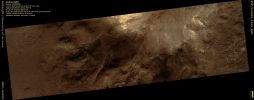
ESP_014439_1505_RED_abrowse.jpgCentral Uplift (Natural Colors; credits: Lunexit)58 visitenessun commentoMareKromium
(3 voti)
|
|
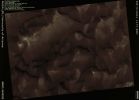
ESP_014441_1275_RED_abrowse.jpgHellespontus' Dunefield (Natural Colors; credits: Lunexit)59 visitenessun commentoMareKromium
(3 voti)
|
|

ESP_013557_1245_RED_abrowse-03.jpgThe "Argyre Lineae" (EDM n.2 - Natural Colors; credits: Dr G. Barca & Lunexit)58 visitenessun commentoMareKromium
(3 voti)
|
|

ESP_013533_1560_RED_abrowse.jpgProposed MSL Landing Site inside Eberswalde Crater (Natural Colors; credits: Lunexit)59 visitenessun commentoMareKromium
(3 voti)
|
|
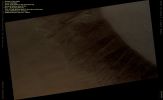
ESP_014267_1460_RED_abrowse.jpgGullies in Dao Vallis (Natural Colors; credits: Lunexit)85 visitenessun commentoMareKromium
(3 voti)
|
|

ESP_014285_1825_RED_abrowse.jpgUnnamed Crater flooded with Landslides (Natural Colors; credits: Lunexit)58 visitenessun commentoMareKromium
(3 voti)
|
|
| 2235 immagini su 187 pagina(e) |
 |
|
|
|
|
105 | |
|
|
|
|





